
Do You Really Have to Carry ID Everywhere?
Understand when the law requires you to carry identification, when it does not, and how rules differ for citizens and noncitizens.
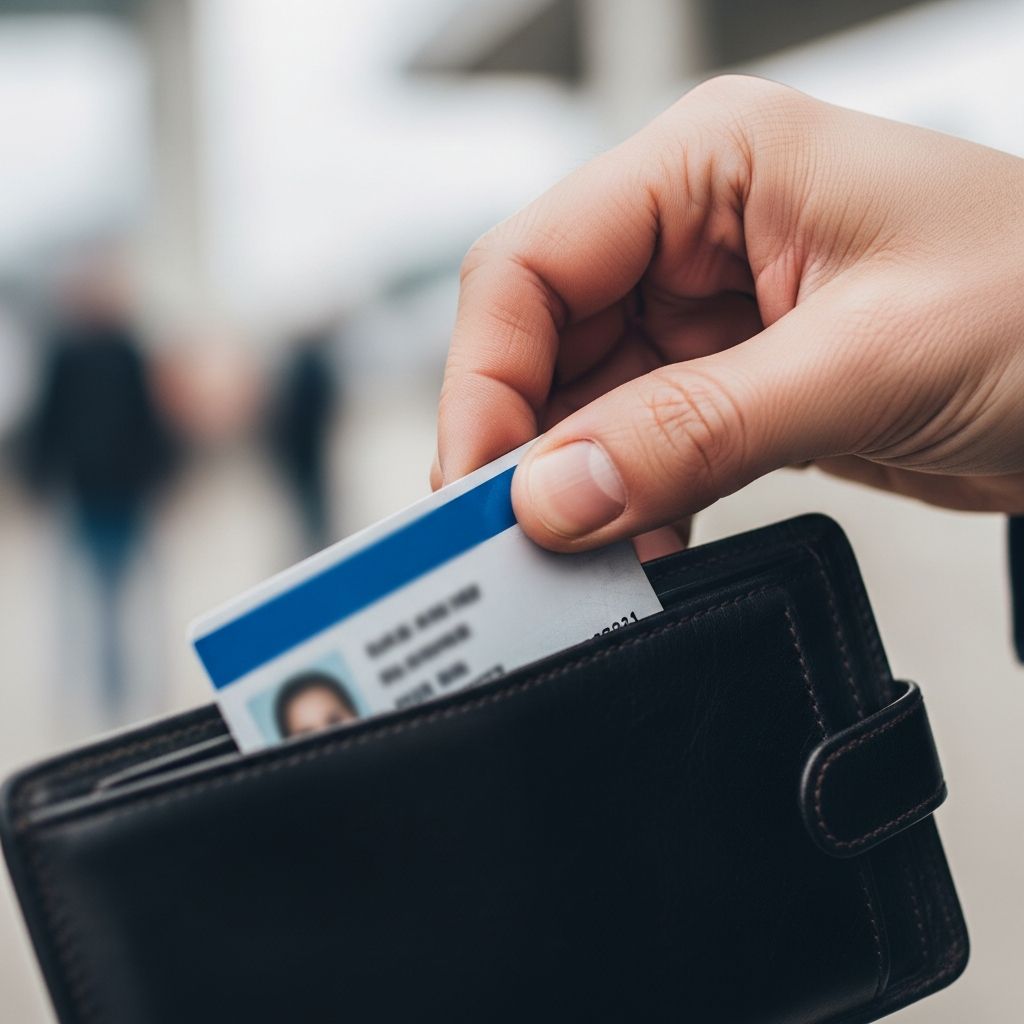
Whether you are walking down the street, driving to work, or traveling as a foreign national, the rules about carrying identification in the United States can be confusing. Some people assume they must always have a physical ID in their pocket, while others believe they never have to show anything to law enforcement. The truth lies somewhere in between and varies by situation, by state law, and by immigration status.
This guide explains when you are legally required to carry ID, what happens during police encounters, how the rules differ for U.S. citizens and noncitizens, and how you can protect your rights while staying compliant.
Core Idea: Identification vs. Carrying a Physical Card
Two distinct questions often get mixed together:
- Do you have to identify yourself? — In many states, if an officer lawfully stops you and reasonably suspects a crime, you can be required to state your name, and in some places, additional basic information.
- Do you have to carry a physical ID document? — In most situations, U.S. citizens are not required by federal law to carry an ID at all times, but there are important exceptions for drivers and for noncitizens subject to federal registration rules.
Understanding this difference is the key to understanding your actual legal obligations.
Situations Where Carrying ID Is Legally Required
In certain situations, the law does more than merely encourage you to carry ID – it makes it a legal obligation.
1. Driving a Motor Vehicle
Every U.S. state requires drivers to be licensed, and you must be able to present your license when legally stopped by law enforcement. States treat it as a traffic offense to drive without a license in your immediate possession, even if you are otherwise validly licensed.
- When it applies: Whenever you operate a motor vehicle on public roads.
- What you must carry: A valid driver’s license; in some states, proof of insurance and registration must also be shown upon request.
- Potential consequences: Tickets, fines, or in some cases arrest if you cannot provide documentation and officers cannot confirm your identity or driving status.
2. Noncitizens Required to Carry Proof of Registration
Federal immigration law requires many noncitizens to register with the U.S. government and to carry proof of registration with them at all times once they are 18 or older. These rules are administered by the Department of Homeland Security (DHS) and U.S. Citizenship and Immigration Services (USCIS).
Noncitizens commonly affected include:
- Lawful permanent residents (green card holders), who must carry their Permanent Resident Card as evidence of registration.
- Nonimmigrants such as F-1 students, J-1 exchange visitors, H-1B workers, L-1 transferees, and similar categories, who generally must carry proof of admission or registration, such as a Form I-94, plus status-specific documents.
- Other foreign nationals issued DHS registration documentation in connection with removal proceedings, parole, or employment authorization.
Educational institutions and immigration law resources often summarize the legal rule this way: U.S. law requires noncitizens to register and to carry evidence of that registration once they are over 18.
| Status or Category | Common Evidence of Registration |
|---|---|
| Lawful Permanent Resident | Form I-551 (green card) |
| Temporary Worker (H-1B, L-1, etc.) | Form I-94 record plus underlying approval notice (e.g., I-797) |
| F-1 Student or J-1 Exchange Visitor | Form I-94 with status-specific form (I-20 for F-1, DS-2019 for J-1) |
| Persons in Removal Proceedings | Notices such as Form I-221 or Form I-862 evidencing registration with DHS |
Failure to carry required immigration documentation can, in some circumstances, be treated as a federal misdemeanor, and legal alerts warn that willful failure to register or comply with biometric requirements can lead to fines and possible imprisonment.
3. Accessing Federal Facilities and Certain Secure Areas
When you attempt to enter secure federal buildings or board commercial aircraft, federal regulations require you to present acceptable identification. Implementation of federal identification standards, such as REAL ID, means that state driver’s licenses or ID cards used for certain federal purposes must comply with specific security requirements, or an alternative federal document (such as a passport) must be presented.
- Air travel and secure facilities: Adults must present an acceptable ID to clear security checkpoints or access certain facilities.
- Not a general street requirement: These rules apply at points of access (for example, airports or federal buildings), not simply walking in public.
Situations Where You May Be Asked to Identify Yourself
Even where you are not strictly required to carry a physical ID, law enforcement may legally request information about your identity. How you are required to respond depends on state law and the nature of the encounter.
1. Casual Encounters vs. Legal Detentions
Police interactions generally fall into three broad categories recognized in U.S. constitutional law:
- Consensual encounters: You are free to walk away, and you generally do not have to provide identification at all.
- Investigative detentions (“Terry” stops): If officers have reasonable suspicion that you are involved in criminal activity, some states allow them to require you to state your name and possibly other basic identifying information.
- Arrests: Once you are lawfully arrested, officers will typically attempt to verify your identity, and refusing to provide it may lead to additional complications or charges under state law.
These rules come from constitutional doctrine under the Fourth Amendment and are shaped by decisions of the U.S. Supreme Court and state courts. Whether you must provide a name often depends on whether your state has a specific “stop and identify” statute and whether the detention itself is lawful.
2. “Stop and Identify” Laws
Several states have statutes that allow officers who have reasonable suspicion of a crime to demand that a detained person identify themselves. In these states, refusing to provide your name during a lawful investigative stop can itself be an offense. Other states do not have such statutes, and in those jurisdictions you may have no legal duty to disclose your identity in this context.
Even in “stop and identify” states, the requirement is often limited to giving your name. The law may not obligate you to carry a physical ID card while walking or to answer broader questions about your activities, citizenship, or immigration status. The exact scope of these laws is highly state-specific and often interpreted by local courts.
U.S. Citizens: When Carrying ID Is a Practical Necessity, Not a Legal One
For U.S. citizens, there is no general federal law requiring you to carry identification at all times when going about daily life. However, there are many circumstances where not having ID can cause real practical problems:
- Traffic stops: If you are driving, you are required to have and show your license.
- Age-restricted purchases or venues: Businesses may refuse service or entry if you cannot prove your age.
- Emergency situations: In an accident or medical emergency, ID assists responders in contacting family and understanding your background.
- Security checks and travel: Many forms of travel and building access require ID as a condition of entry, even if not by statute for general street use.
Because of these practical concerns, many attorneys and legal guidance sources recommend that U.S. citizens carry at least one reliable form of ID when outside the home, particularly when driving or traveling, even though the law does not impose a universal carrying requirement.
Noncitizens: Special Responsibilities and Higher Stakes
For noncitizens, the combination of federal registration requirements and immigration enforcement practices make carrying proper documentation much more than a convenience.
1. Registration and Documentation Duties
Federal immigration law, as interpreted by DHS and summarized by universities and professional associations, places two core duties on many noncitizens residing in the United States:
- Register with the U.S. government if required, including completing biometrics and other steps where applicable.
- Carry proof of registration at all times upon reaching 18 years of age.
Guides for international students and foreign workers specify that “evidence of registration” is typically the immigration document that shows their category and authorization, such as a Form I-94, Permanent Resident Card, Employment Authorization Document (EAD), or integrated documentation in their passport.
2. Common Combinations of Documents for Noncitizens
Universities and immigration advisors often recommend that noncitizens who do not have a single card like a green card or EAD carry a combination of items:
- A government-issued photo ID (such as a passport, state ID, or driver’s license);
- A current Form I-94 showing their most recent lawful admission;
- Status-specific documentation, such as an I-20 for F-1 students or a DS-2019 for J-1 exchange visitors.
Legal alerts further note that foreign nationals subject to a newer DHS registration process must complete that process and keep evidence of it, as DHS may require them to present proof on request.
3. Penalties and Risks for Noncompliance
Failing to comply with registration or carrying requirements can have serious consequences for noncitizens:
- Criminal exposure: Federal law allows for misdemeanor prosecution and fines for willful failure or refusal to register or comply with biometric requirements, with potential imprisonment in some cases.
- Immigration consequences: Documentation problems can complicate future immigration benefits, lead to difficulties in proving lawful presence, and, in serious cases, contribute to removal proceedings.
- Practical issues: Difficulty proving status during interactions with law enforcement, at airports, or at ports of entry can cause delays, secondary inspection, or denial of boarding or admission.
Because of these risks, reputable immigration counsel encourage noncitizens to periodically review their documentation, keep track of expiration dates, and maintain easy access to current records and registration evidence.
Balancing Your Rights and Practical Safety
Your decision about when and how to carry ID should weigh both legal obligations and your comfort with privacy and safety.
Tips for U.S. Citizens
- Keep your driver’s license on you whenever you operate a vehicle.
- For routine errands on foot, consider carrying a government-issued photo ID, even if not legally required, in case of emergencies.
- If you are concerned about the risk of losing sensitive documents, you might carry a state ID or driver’s license rather than your passport for daily use.
- Know your state’s rules on identifying yourself during investigative stops and consider speaking with a local attorney for specific guidance.
Tips for Noncitizens
- Determine exactly which immigration documents count as evidence of registration for your status.
- Carry the required documents at all times in a secure but accessible way.
- Keep scanned copies of key documents stored securely (for backup only, not as a substitute where originals are required).
- Track expiration dates for your passport, visa, I-94, and status documents, and seek legal advice well before they expire.
- Promptly report address changes to USCIS using the required forms or online systems, as federal law generally requires noncitizens to report address changes within 10 days.
Frequently Asked Questions (FAQs)
Q: As a U.S. citizen, do I have to carry ID when I am just walking in public?
There is no general federal law requiring U.S. citizens to carry identification while walking in public. However, some states have “stop and identify” laws that may require you to provide your name if an officer lawfully detains you on reasonable suspicion of a crime. The law may not require you to carry a physical ID card for ordinary walking around, but not having one can cause practical difficulties during police encounters or emergencies.
Q: Can police arrest me just for not having my driver’s license on me?
States typically require licensed drivers to carry their license when operating a vehicle, and failing to do so is often a traffic offense. Whether that alone can result in arrest depends on state law, the circumstances of the stop, and whether officers can confirm your identity and driving status. In practice, some jurisdictions treat it as a citable offense if you later show proof of a valid license, while others may respond more strictly.
Q: I am a student on an F-1 visa. Which documents should I carry?
Guidance for international students generally recommends carrying a combination of documents: a government-issued photo ID (such as a passport or state ID), your most recent Form I-94, and your Form I-20 showing your F-1 status. Federal law requires noncitizens over 18 to carry proof of registration, and these documents together usually serve that function.
Q: Are green card holders legally required to carry their green card?
Yes. Federal law treats the Permanent Resident Card (Form I-551) as the main evidence of registration for lawful permanent residents, and reputable legal and professional sources state that permanent residents must carry this card at all times once they are 18 or older.
Q: Does a photocopy or digital scan count as carrying my immigration document?
For noncitizens, the legal requirement is to carry proof of registration, and primary sources emphasize physical documents such as an original I-94 or green card. While copies and digital scans are useful backups and may help in emergencies, they are not a guaranteed substitute where the law or an officer specifically requires original evidence.
Q: What should I do if I lose my immigration documents?
If you lose a key immigration document, you should contact an experienced immigration attorney or your school’s international office (if you are a student) and follow USCIS procedures for replacement. Legal alerts and university guidance underscore the importance of keeping your registration current and being able to carry valid proof.
References
- Does The Law Really Require Me to Carry Proof of My Immigration Status? — Masuda, Funai, Eifert & Mitchell Ltd. 2023-08-30. https://www.masudafunai.com/articles/does-the-law-really-require-me-to-carry-proof-of-my-immigration-status
- Always Carry Your Papers: Understanding the Alien Registration Requirement — Mayer Brown LLP. 2025-04-02. https://www.mayerbrown.com/en/insights/publications/2025/04/always-carry-your-papers-understanding-the-alien-registration-requirement
- Mandatory DHS Registration Now in Effect for Many Foreign Nationals — Dykema Gossett PLLC. 2025-04-11. https://www.dykema.com/news-insights/mandatory-dhs-registration-now-in-effect-for-many-foreign-nationals.html
- What Documents You Need and When Should You Carry Them — University of Maine, Office of International Programs. 2018-01-01. https://umaine.edu/international/resource/carry-documents/
- FAQ: What Docs Are Non-Citizens Required by Law to Carry While in the U.S.? — Northeastern University Office of Global Services. 2025-03-24. https://international.northeastern.edu/ogs/wp-content/uploads/sites/2/2025/03/DRAFTv5-FAQStatusDocs-3.24.25.pdf
- Requirements to Carry Immigration Registration Document and Report Change of Address — NAFSA: Association of International Educators. 2024-05-01. https://www.nafsa.org/professional-resources/browse-by-interest/requirements-carry-immigration-registration-document-and-report-change
- Bring Required Documents — U.S. General Services Administration (GSA). 2023-10-12. https://www.gsa.gov/technology/it-contract-vehicles-and-purchasing-programs/federal-credentialing-services/get-appointment-help/bring-required-documents
Similar Articles








Read full bio of medha deb


