
DMV Visits and Arrest Warrants: What Really Happens
Understand when DMV systems reveal warrants, how that can affect your license or ID application, and what steps can reduce your legal risk.
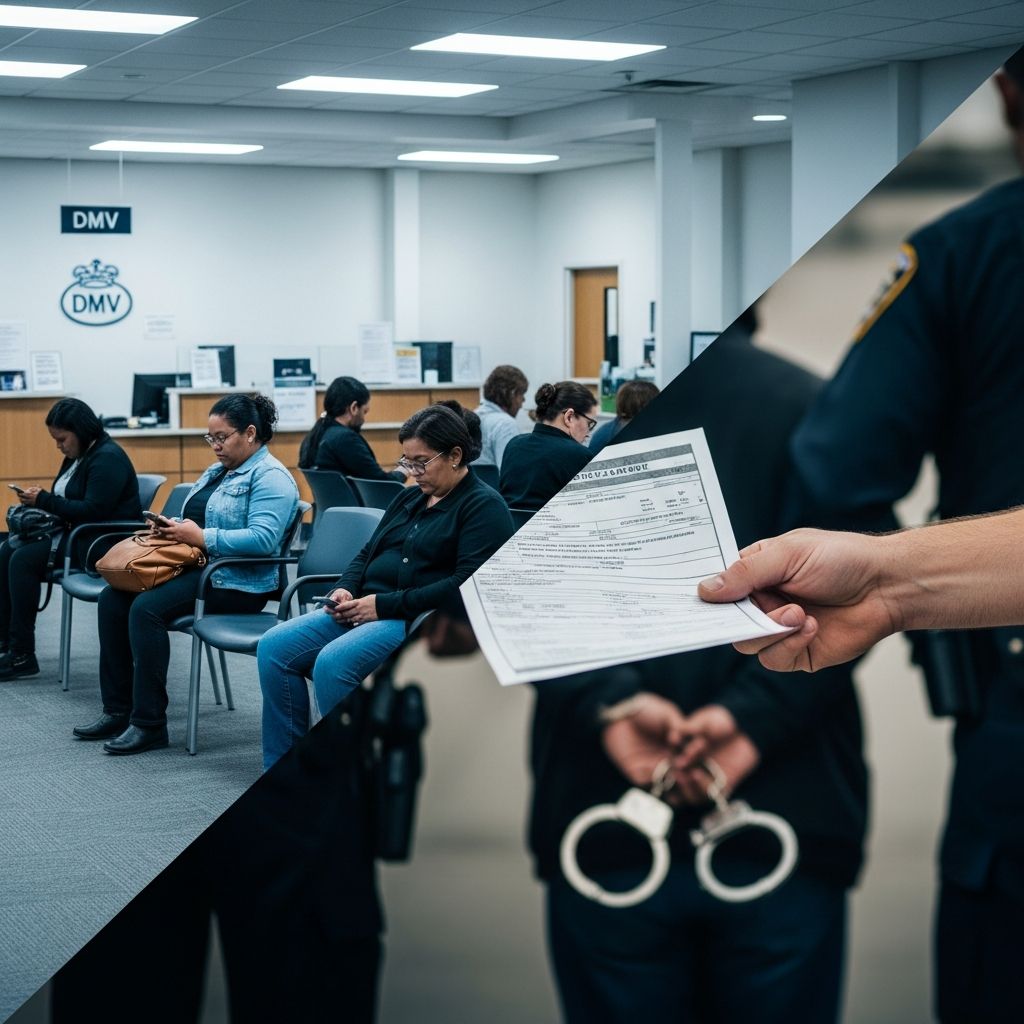
Many people discover they may have an outstanding warrant only when they need to renew a driver’s license, obtain a state ID, or update vehicle records. The fear of being arrested at the Department of Motor Vehicles (DMV) is common, but the reality is more nuanced and often depends on your state, the type of warrant, and how your court case affects your driving record.
This guide explains how DMVs access information, when warrants may affect your ability to get an ID or license, and what you can do to reduce your legal risk before you stand in line at a DMV office.
Key Concepts: Warrants, Driving Privileges, and DMV Records
Before looking at how DMVs operate, it helps to understand the different legal actions that may appear in your records and how they relate to driving.
- Arrest warrant – A court order authorizing law enforcement to take a person into custody, usually issued after a criminal charge is filed and the person fails to appear or cannot be located.
- Bench warrant – A warrant issued by a judge (from the “bench”) when someone disobeys a court order, commonly for failure to appear in court, probation violations, or unpaid fines.
- Driving privilege sanctions – Suspensions, revocations, or holds imposed on a driver’s license because of traffic offenses, DUI, failure to pay fines, or failure to appear in traffic court.
- Administrative vs. criminal systems – DMVs primarily manage administrative records about driving privileges and vehicle registration, while courts and law enforcement manage criminal case files and warrants.
Although these systems are separate, they often interact. For example, if you miss a traffic court date, the court might both issue a bench warrant and direct the DMV to suspend or hold your license until you resolve the case.
What Information the DMV Typically Sees
When you apply for a driver’s license or ID, DMV staff use your personal data to search internal and external databases. What they can see depends on the law in your state, but several common elements appear across jurisdictions.
Identity and eligibility checks
Most DMVs verify basic identity information before issuing or renewing a license or ID:
- Full name, date of birth, and address
- Social Security number verification with the Social Security Administration, where required by law
- Legal presence or citizenship status, when applicable
For example, the California DMV verifies your name, date of birth, and Social Security number with the Social Security Administration before issuing a driver’s license or ID card, and will deny the application if the information cannot be verified.
Driving record and out-of-state checks
In addition to identity, DMVs typically review your driving history, including:
- Suspensions, revocations, or holds on your license
- Convictions for traffic offenses and serious violations such as DUI
- Accident records reported to the DMV
- Out-of-state withdrawals of driving privileges through databases like the National Driver Register (NDR)
According to the California DMV, the agency checks the National Driver Register and the Problem Driver Pointer System before issuing a license, and will not issue a license if another jurisdiction has withdrawn your driving privilege.
What DMV staff usually do not see directly
In many states, DMV clerks do not have full access to criminal court records or detailed warrant information. Instead, they may see:
- Notations such as “failure to appear” or “license hold” linked to a case number and courthouse, rather than the warrant itself
- Administrative restrictions that result from court actions, like a suspension triggered by unpaid traffic fines
An Orange County, California defense firm explains that DMV staff see the impact of a court action on the driving record (such as a hold for failure to appear), but not the underlying warrant itself, which is maintained in court and law enforcement systems.
Do DMVs Actively Check for Warrants When You Apply for ID?
There is no single nationwide rule about warrant checks at DMVs. Practices vary by state and even by local office. Important distinctions include:
| Type of Check | Who Runs It | Typical Purpose |
|---|---|---|
| Driving record check | DMV staff via DMV and NDR databases | Verify license status, suspensions, out-of-state withdrawals |
| Identity verification | DMV + Social Security Administration | Confirm name, date of birth, SSN for eligibility and fraud prevention |
| Criminal warrant search | Law enforcement (police, sheriff, investigators) | Locate and arrest individuals subject to active warrants |
DMV-driven checks vs. law-enforcement-driven checks
Some states station law enforcement officers at large DMV offices. In those locations, officers may independently run warrant checks on people they interact with or observe, just as they would during a traffic stop.
- In certain jurisdictions, defense attorneys report that DMV databases can display active warrants or triggers that prompt officers on site to investigate, leading to arrests in the lobby or parking lot.
- In other states, attorneys emphasize that DMV clerks do not see warrant details and do not automatically alert police, though police can arrest someone at the DMV if they already have information about an outstanding warrant.
Because systems and policies differ, it is risky to assume that a DMV visit will never result in a warrant-related arrest.
Can You Be Arrested at the DMV if You Have a Warrant?
From a legal standpoint, if there is an active arrest or bench warrant against you, law enforcement can arrest you almost anywhere they lawfully encounter you, including at a DMV office.
Defense practitioners note that people with warrants are most commonly arrested during traffic stops when an officer runs their information and sees the warrant in law enforcement databases. However, arrests at the DMV can and do happen, especially when:
- There is a law enforcement presence inside or near the DMV office
- DMV staff follow policies that require contacting security or police when certain alerts appear in the system
- You are already the subject of an ongoing investigation related to vehicle or identity fraud
California’s DMV Investigations Division, for example, employs sworn investigators who can conduct surveillance, serve search and arrest warrants, and work with prosecutors on cases involving fraud and vehicle-related crime.
How Warrants Affect Driver’s Licenses and State IDs
Even if DMV employees do not see the text of your warrant, court actions tied to your case can make it harder or impossible to get an ID or license until you resolve the underlying problem.
Common ways a warrant or case can block your license
- Failure to appear in traffic court – Courts often issue a bench warrant and notify the DMV to place a hold or suspension on your driving privilege until you appear or pay fines.
- Unpaid traffic or DUI-related fines – Outstanding obligations can lead to license suspensions or refusals to renew.
- Out-of-state actions – If another state withdraws your driving privilege, the NDR record can stop your home-state DMV from issuing a new license.
In these situations, DMV staff may tell you that there is a hold tied to a case number and courthouse and that you must clear the issue with the court before the DMV can process your application.
What about applying for a non-driver state ID?
People sometimes hope that a non-driver ID is easier to obtain when they have legal trouble. However:
- Identity verification rules often mirror driver’s license requirements, including Social Security and legal presence checks.
- Some jurisdictions use the same core system for both licenses and IDs, so holds or alerts associated with your record may still appear.
- If law enforcement is present or involved at the DMV, a warrant could still lead to arrest regardless of whether you are applying for a license or a non-driver ID.
How DMV and Law Enforcement Share Data
Modern DMV systems are deeply connected to other government databases. Information can flow in several directions:
- From courts to DMV – Courts send notices of convictions, failures to appear, and orders impacting driving privileges (e.g., DUI suspensions). The DMV then updates your license status accordingly.
- From DMV to law enforcement – Police officers and investigators can access DMV records (such as vehicle registration and address information) during investigations under state law and public-records rules.
- Between states – States share information about problem drivers through the National Driver Register and related systems, allowing one state to see if your driving privilege has been withdrawn elsewhere.
In Texas, for example, motor vehicle-related records can be requested from the Department of Motor Vehicles using a specific form, subject to state and federal privacy restrictions, illustrating how tightly regulated DMV information access is.
Practical Steps if You Think You Have a Warrant
Waiting in a DMV line while worrying about a possible arrest is stressful and may lead to rushed decisions. It is usually safer to investigate your status and address any problems before appearing in person.
1. Check your case and license status
- Look up traffic or criminal cases using your local court’s online portal, if available.
- In some states, public tools allow drivers to see whether a failure to appear or license hold is recorded against their license number.
- Contact the clerk of court for the county where you suspect a case is pending.
2. Consult a qualified criminal defense or traffic attorney
Attorneys regularly help people resolve warrants and related license issues. They may be able to:
- File a motion to recall or quash a bench warrant
- Negotiate a new court date or payment plan for fines
- Coordinate with the court so you can appear voluntarily rather than risk an unexpected arrest
- Advise whether it is reasonably safe to visit the DMV in your area given current policies
3. Resolve the underlying court problem
In many states, the DMV cannot remove a hold or reinstate a license until it receives notice from the court that:
- You appeared as ordered
- Fines or fees were paid, or a plan is in place
- Any mandatory classes, community service, or treatment requirements have been satisfied
Once the court updates its records, it typically sends an electronic or written notification to the DMV, which then processes the change to your driving status.
Risk-Reduction Tips Before a DMV Visit
While you cannot fully eliminate risk if there is an active warrant, you can make more informed choices:
- Do not ignore official mail – Letters from courts, DMVs, or law enforcement may contain critical information about upcoming hearings or license actions.
- Avoid driving if your license might be suspended – A traffic stop is one of the most common ways a warrant surfaces and leads to arrest.
- Bring complete documentation – Court receipts, reinstatement letters, or proof of compliance can help DMV staff quickly confirm that holds should be lifted.
- Consider timing – When possible, resolve confirmed warrants with the court first, then visit the DMV after you have written confirmation of the outcome.
Myths and Misunderstandings About DMVs and Warrants
Because policies vary and people share anecdotal stories, several misconceptions circulate about DMV visits and arrest warrants.
- Myth: “The DMV is guaranteed to arrest me if I have a warrant.”
Reality: DMVs are not police agencies, and clerks often lack direct warrant access. However, if law enforcement is present or notified, an arrest is legally possible wherever you are found. - Myth: “A state ID is always safe even if my license is suspended.”
Reality: The same data and holds that block a license can appear when you apply for an ID, and the presence of law enforcement still creates arrest risk. - Myth: “If I move to another state, their DMV won’t see my old problems.”
Reality: Systems like the National Driver Register allow DMVs to see when another state has withdrawn your driving privilege, and they may refuse to issue you a license until the issue is cleared.
Frequently Asked Questions (FAQs)
Q: Can I renew my license if I have an outstanding warrant?
A: It depends on the nature of the warrant and how it affects your driving record. If the warrant is tied to a traffic matter that caused a suspension or hold, the DMV will usually require proof that the court problem has been resolved before processing your renewal.
Q: Will DMV employees automatically run a criminal warrant check when I apply for a state ID?
A: In many states, DMV staff primarily check identity and driving records rather than running full criminal warrant searches themselves. However, law enforcement officers on site may use their own systems to check for warrants, and practices differ between jurisdictions.
Q: If there is a hold on my license, does that always mean I have a warrant?
A: Not always. Holds and suspensions can result from administrative issues such as unpaid fees, insurance problems, or out-of-state actions, as well as from failures to appear in court. Only the court or law enforcement can confirm whether there is an active warrant in your case.
Q: Can a DMV investigation lead to criminal charges?
A: Yes. Many DMVs maintain investigative units that look into fraud, title and registration crimes, misuse of disabled placards, and similar offenses. These investigators may conduct surveillance, work with police, and present cases to prosecutors, which can lead to both administrative penalties and criminal charges.
Q: What is the safest way to handle a suspected warrant before going to the DMV?
A: The safest approach is to confirm your status through the court system or a licensed attorney, then work to resolve the warrant or underlying case first. Once the court has cleared its records and any holds on your license have been lifted, you can visit the DMV with a significantly lower risk of arrest.
References
- How Information is Protected or Disclosed (FFDMV 17) — California Department of Motor Vehicles. 2023-05-01. https://www.dmv.ca.gov/portal/driver-education-and-safety/educational-materials/fast-facts/how-your-information-is-shared-ffdmv-17/
- Can I Be Arrested at the DMV if I Have a Warrant for My Arrest? — Law Offices of Bryan R. Kazarian. 2025-03-20. https://kazarianatlaw.com/can-i-be-arrested-at-the-dmv-if-i-have-a-warrant-for-my-arrest/
- Arrested for Warrants at the DMV? — The Martinez Law Firm. 2023-09-15. https://www.martinezlawhouston.com/arrested-warrants-at-the-dmv/
- Open Records — Texas Department of Motor Vehicles. 2024-01-10. http://www.txdmv.gov/open-records
- Failure to Appear / Failure to Pay Program — Texas Department of Public Safety. 2024-02-01. https://www.texasfailuretoappear.com/search.php
Similar Articles








Read full bio of medha deb




