
Diversity Visa Lottery Success: From Selection to Green Card
Navigate the complete journey from lottery winner to permanent U.S. resident.
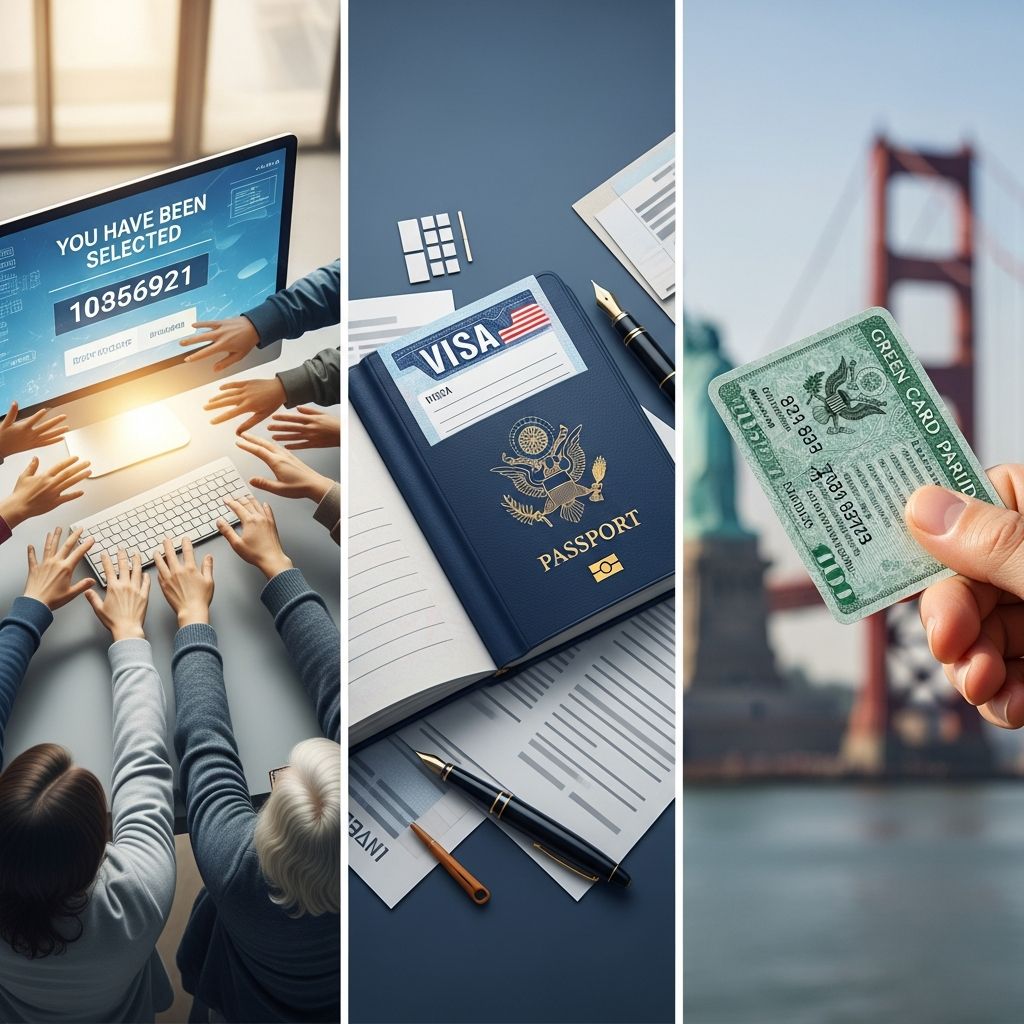
Understanding Your Diversity Visa Lottery Win
Winning the diversity visa lottery represents a significant milestone in your immigration journey, but it is important to understand that selection does not automatically grant you entry to the United States. Instead, it provides you with the opportunity to formally apply for an immigrant visa and pursue permanent residency. The diversity visa program makes up to 55,000 immigrant visas available annually to nationals from countries with historically low immigration rates to the United States. With millions of applicants competing for these limited visas each year, winning the lottery itself places you among an exceptionally fortunate group of individuals.
Once notified of your selection, you enter a critical phase where timing, accuracy, and prompt action become essential. Understanding the requirements and procedures that follow will help ensure you successfully complete the immigration process and achieve your goal of becoming a U.S. permanent resident.
Immediate Actions Following Notification
Upon learning that you have won the diversity visa lottery, your first priority should be to gather and organize all required documentation. The notification you receive will include specific instructions regarding the next steps and a deadline by which you must take action. Do not delay in beginning your preparation, as the window to complete the entire visa processing is narrow.
You will need to compile several categories of supporting documents:
- A valid passport that will not expire before the visa is issued
- Birth certificate and official civil registration documents
- Marriage certificate or divorce decrees, if applicable
- Official school records and educational certificates to verify your credentials
- Employment history documentation and references from previous employers
- Police certificates from every country where you have lived for more than six months
- Medical examination results from an approved panel physician
- Photographs meeting specific government standards
Gathering these documents may require contacting foreign government agencies, educational institutions, and previous employers. Begin this process immediately upon notification, as obtaining certified copies from foreign sources can take considerable time.
Processing Location: Domestic Versus Consular Application
Your current immigration status determines where you will process your diversity visa application. The U.S. Department of State recognizes two distinct pathways for visa processing, each with different procedures and timelines.
Processing From Abroad
If you are outside the United States when selected, you will apply through the consular processing system at a U.S. embassy or consulate in your country of residence or nationality. This pathway requires you to submit your application through the National Visa Center (NVC), which serves as the intermediary between applicants and the embassy or consulate where your visa interview will occur. The consular processing route typically involves submitting required forms, undergoing medical and security clearances, and attending an in-person interview at the embassy or consulate to demonstrate your admissibility to the United States.
Processing From Within the United States
If you are physically present in the United States in a temporary immigration status—such as on a student visa, work visa, or as a visitor—you have the option to adjust your status without returning to your home country. This process, known as adjustment of status, requires filing Form I-485 with U.S. Citizenship and Immigration Services (USCIS). The adjustment pathway can be significantly faster than consular processing and allows you to remain in the United States while your application is processed. However, you must ensure that you are in a lawful temporary status and have not violated the terms of your current visa.
Critical Timeline Requirements
The diversity visa program operates within the constraints of the U.S. fiscal year, which runs from October 1 through September 30. Once you are selected in the lottery, you must complete the entire visa processing and be issued your visa by the end of the fiscal year for which you were selected. Missing this deadline means forfeiting your opportunity to immigrate through that year’s diversity visa program.
Understanding the visa bulletin is crucial for managing your timeline effectively. The State Department publishes a monthly visa bulletin that indicates when visa applicants in each category and region may proceed with their applications. For diversity visa applicants, this bulletin assigns each lottery winner a case number with an associated rank. As visa numbers become available, the bulletin advances, allowing applicants with earlier ranks to submit their applications.
| Timeline Stage | Typical Duration | Key Activities |
|---|---|---|
| After Notification | Immediate | Document gathering, application preparation |
| Visa Number Becomes Available | Variable (up to 90 days before) | Submit visa application to appropriate agency |
| Medical Examination | 1-2 weeks | Complete required health screening with approved panel physician |
| Background Investigation | 2-4 weeks | Criminal, security, and administrative background checks |
| Visa Interview | 1-4 weeks after background clearance | In-person interview at embassy, consulate, or USCIS office |
| Final Visa Issuance | Within fiscal year | Receive approved visa and passport |
Eligibility Verification and Documentation
Before your visa application can proceed, you must confirm that you still meet all eligibility requirements. The diversity visa program imposes specific criteria that applicants must satisfy throughout the entire process.
Educational or employment requirements form the foundation of diversity visa eligibility. You must demonstrate that you either possess a high school diploma or its equivalent, or have at least two years of work experience in an occupation classified as skilled labor. Official certificates and credentials from educational institutions must be submitted as proof. For employment history, you will need documentation from employers verifying the duration and nature of your work experience.
Criminal history constitutes an absolute bar to visa issuance in many circumstances. Convictions for crimes of moral turpitude, drug trafficking, human trafficking, or other serious offenses will result in visa denial. You must disclose all arrests, convictions, and criminal charges when completing your visa application, even if you believe a conviction was expunged or sealed under U.S. law.
Similarly, certain medical conditions may prevent visa issuance or require additional evaluation. Communicable diseases of public health significance, mental disorders associated with a propensity toward violent behavior, and drug addiction or dependency are grounds for inadmissibility. All applicants must undergo a medical examination performed by a physician designated by the U.S. Department of State.
Security and Background Investigation Process
All diversity visa applicants undergo extensive security screening and background investigations. These procedures are designed to protect U.S. national security and public safety and are applied uniformly to all applicants regardless of nationality or background.
The investigation process includes multiple biometric identifications, with fingerprints and photographs collected and checked against various databases. Your name and information are cross-referenced against terrorist watch lists, criminal databases, and immigration enforcement records. The Federal Bureau of Investigation, Department of Homeland Security, and other federal agencies participate in this vetting process.
International security checks expand the investigation to include information from foreign governments and international law enforcement agencies. Police certificates from every country where you have lived for more than six months are required to verify that you have no criminal history in those jurisdictions.
These investigations typically require two to four weeks, though complex cases may take longer. Any issues identified during the investigation can significantly delay the process or result in application denial. Complete honesty and transparency in all application materials is essential, as providing false information will be grounds for immediate denial and potential criminal prosecution.
Medical Examination Requirements
You are required to undergo a medical examination by a physician selected from the U.S. Department of State’s approved panel list. This examination is more comprehensive than a typical medical checkup and focuses on identifying conditions relevant to immigration law.
The examination includes a physical assessment, laboratory testing, and a mental health evaluation. The panel physician will review your complete medical history and may request additional testing if concerns arise. All vaccination records should be provided, as certain vaccinations are required before admission to the United States.
The cost of the medical examination is your responsibility, though fees are generally reasonable. Once completed, results are sent directly to the appropriate immigration authority—either the embassy or consulate processing your visa, or USCIS if you are adjusting status domestically.
The Visa Interview
Whether you are processing your visa at a U.S. embassy or consulate abroad or through USCIS in the United States, you will be required to attend an in-person interview. The interview serves multiple purposes: to verify the accuracy of information you provided in your application, to assess your admissibility to the United States, and to confirm that you meet all eligibility requirements.
During the interview, a consular or immigration officer will ask detailed questions about your background, education, employment history, family relationships, and reasons for immigrating to the United States. You should expect questions about the documents you submitted and may be asked to provide explanations for any inconsistencies or concerns.
Preparing thoroughly for your interview is essential. Review all documents you submitted, practice explaining your background clearly and concisely, and ensure you understand the questions being asked. If you do not speak fluent English, you may request an interpreter, though conducting the interview in English may speed the process.
Derivative Family Members
If you are married or have minor children under age 21, they may be eligible to immigrate with you as derivative beneficiaries. Your spouse and unmarried children can apply for diversity visas under your petition, though they must meet all the same eligibility requirements and undergo the same security and medical screening as you.
Derivative family members receive lower case numbers than the principal applicant. This means they may become current in the visa bulletin after you do. All derivative applicants must submit complete application packages and attend required interviews. The entire family should time their applications carefully to ensure all members complete processing before the fiscal year deadline.
Frequently Asked Questions
Q: What happens if I win the lottery but cannot complete the visa process by the September 30 deadline?
A: If your visa is not issued by the end of the fiscal year, your opportunity to immigrate through that year’s diversity visa program is forfeited. You would need to enter the lottery again in future years, though the odds of selection remain extremely low. Planning and prompt action throughout the application process are essential to meet this hard deadline.
Q: Can I change my processing location after notification?
A: If you are initially outside the United States and later arrive in the country in valid temporary status, you may have the option to switch from consular processing to adjustment of status. However, this change must be carefully coordinated with the appropriate immigration authorities. Consult with an immigration attorney before making any location changes.
Q: What should I do if I cannot locate required documents?
A: Contact the government agencies, educational institutions, or employers who maintain these records to request certified copies. If documents have been lost or destroyed, request an official statement to this effect. The immigration authority reviewing your case will determine whether alternative documentation is acceptable.
Q: Does winning the lottery guarantee my family members will be approved as derivatives?
A: No. While your spouse and minor children can apply as derivatives, they must still meet all eligibility requirements and pass all security and medical screening. Any criminal history, immigration violations, or medical conditions affecting them could prevent their approval even if you are approved.
Q: What fees are involved in the diversity visa application process?
A: Initial registration is free, but once selected, you must pay visa processing fees, medical examination costs, and police certificate fees. For consular processing, an immigrant visa fee is required. For adjustment of status in the U.S., filing fees apply to the USCIS application. Budget several hundred dollars to cover these various expenses.
Final Steps and Arrival in the United States
Upon visa issuance, you will receive your passport with the visa stamp affixed. If you are processing abroad, you will then be able to travel to the United States and present your visa at a port of entry. If you are adjusting status domestically, you will receive confirmation that your green card has been approved and will be issued.
Upon arrival or after approval of adjustment of status, you become a lawful permanent resident of the United States. Your permanent resident status grants you the right to live, work, and study anywhere in the country and provides a pathway to eventually apply for U.S. citizenship.
References
- Diversity Immigrant Visa Program: An Overview — American Immigration Council. 2023. https://www.americanimmigrationcouncil.org/fact-sheet/diversity-visa-system-fact-sheet/
- Diversity Visa Program – Submit an Entry — U.S. Department of State Travel.gov. 2025. https://travel.state.gov/content/travel/en/us-visas/immigrate/diversity-visa-program-entry.html
- Diversity Immigrant Visa Program (Green Card Lottery) — USAGov. 2025. https://www.usa.gov/green-card-lottery
- What is the Diversity Visa Lottery to Get a Green Card? — Boundless Immigration Resources. 2025. https://www.boundless.com/immigration-resources/diversity-visa-lottery
- What is the Diversity Visa Program? 5 Things to Know — FWD.us. 2024. https://www.fwd.us/news/diversity-visa-program/
- Immigration Act of 1990: Diversity Visa Program Establishment — U.S. Department of State. 2023. https://sample2.usembassy.gov/visas-non-gss/diversity-visa-program/
Similar Articles








Read full bio of medha deb


