
Dismantling Systemic Racism: The Power of Collective Action in the American South
Uniting communities to dismantle historical injustices in the South.
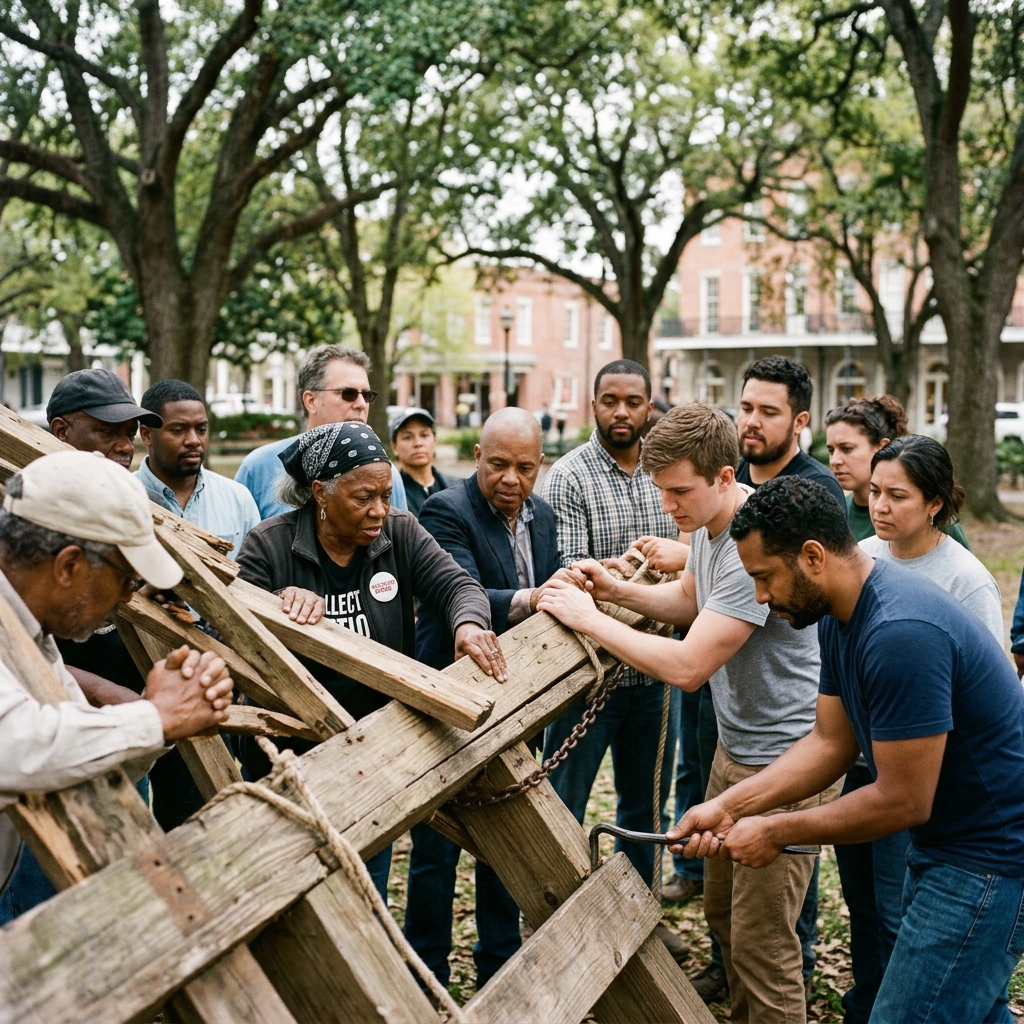
The Southern United States is a region characterized by profound cultural richness, unyielding resilience, and immense historical complexity. Yet, beneath its vibrant surface lies a deeply entrenched legacy of systemic racism that continues to aggressively shape the socioeconomic and political realities of its residents. Systemic racism, distinct from individual prejudice, is intricately woven into the very fabric of institutional operations, quietly dictating who receives adequate municipal funding, whose democratic vote is easily cast, and whose neighborhoods are rigorously protected by the law. To dismantle these deeply rooted structures, relying on fragmented, individual activism is no longer sufficient. Instead, breaking down institutionalized racial barriers requires sustained, multifaceted collective action. By uniting grassroots organizers, legal advocates, progressive policymakers, and everyday community members under a shared vision, the American South is currently witnessing a modern resurgence of civil rights advocacy. This highly interconnected approach focuses on identifying the foundational root causes of racial disparities and actively replacing them with equitable frameworks. Through coordinated campaigns, localized mutual aid networks, and unyielding policy challenges, unified movements are forging a new path toward justice, demonstrating that the most effective antidote to systemic oppression is an organized, collective front.
The Deep Roots of Inequality: Understanding the Southern Context
To comprehend the sheer magnitude of the work required to dismantle systemic racism, one must first confront the historical foundation upon which many Southern institutions were built. For decades following the Reconstruction era, the strict enforcement of Jim Crow laws and codified segregation created a toxic environment where racial inequality was not only normalized but legally mandated by the state. These historical frameworks heavily influenced early urban planning, public education funding models, and economic development strategies, creating vast disparities that outlived the discriminatory legislation itself.
Discriminatory redlining practices, for example, intentionally sequestered Black and Brown communities into severely underfunded neighborhoods, perpetually starving them of infrastructural investment and generational wealth. Even after the landmark civil rights victories of the 1960s, the shadows of these aggressive policies morphed into implicit, structural biases. Today, this legacy manifests in stark discrepancies in healthcare outcomes, educational attainment, and economic mobility. Modern researchers have extensively documented how the historical racial regime fundamentally shaped the modern educational and economic systems in the South, directly correlating past discriminatory practices with present-day poverty rates and reduced lifespan expectancies in marginalized communities. Addressing these inequities demands a comprehensive understanding of how past policies inform present realities.
The systemic nature of these barriers means they are self-perpetuating; without intentional, targeted disruption, they continue to function exactly as originally designed. Consequently, modern justice advocates recognize that true reform cannot merely skim the surface of contemporary prejudice. It must actively deconstruct the historical architecture of exclusion, tearing down the invisible walls that have divided Southern communities for generations and replacing them with inclusive, community-driven support systems.
The Evolution of Grassroots Mobilization
The relentless fight for racial justice in the American South has always been firmly anchored in grassroots mobilization. However, the tactics, scope, and interconnectivity of these movements have evolved dramatically in the twenty-first century. Historically, the monumental civil rights struggles of the mid-twentieth century relied on highly centralized leadership and deeply localized community organizing to achieve legislative victories. Today’s collective action models build upon that rich heritage while simultaneously leveraging modern technological tools to create decentralized, hyper-connected networks of advocates.
Contemporary grassroots mobilization is characterized by its profound intersectionality. Organizers recognize that systemic racism does not operate in a vacuum; it deeply intertwines with classism, environmental degradation, and gender inequality. As a result, today’s movements absolutely refuse to operate in silos. They bring together student activists, faith leaders, legal scholars, and frontline workers to build incredibly robust coalitions. Digital communication platforms have rapidly accelerated this evolution, allowing local organizers in rural Mississippi to share strategies instantaneously with advocates in urban centers like Atlanta or New Orleans.
This modern iteration of collective action is both highly agile and enduring. By democratizing leadership, communities ensure that if one organizer is silenced or one organization faces mounting legal hurdles, the broader movement remains resilient and continues its march forward. This critical shift from top-down leadership to community-led organizing ensures that those who are most intimately affected by systemic inequities are the ones leading the charge for reform. Their lived experiences form the undeniable bedrock of modern policy demands, ensuring that proposed solutions are practically effective.
Key Pillars of Structural Reform
To effectively dismantle the complex machinery of systemic racism, collective action in the American South must aggressively target the specific pillars that uphold inequality. By focusing on fundamental structural reforms, advocates aim to secure sustainable, long-term progress rather than temporary concessions.
Protecting the Ballot Box and Democratic Participation
Voting rights represent the absolute bedrock of democratic participation and the primary mechanism through which communities can influence systemic change. The passage of the Voting Rights Act of 1965 was a watershed moment in American history, dismantling overt barriers like literacy tests and poll taxes that had effectively disenfranchised Black Southerners for generations. However, the modern era has seen a highly sophisticated resurgence of voter suppression tactics. Strict voter identification laws, the aggressive purging of voter rolls, the deliberate closure of polling locations in minority neighborhoods, and extreme partisan gerrymandering have all been purposefully deployed to dilute the political power of marginalized groups. Collective action tackles these exact challenges on multiple fronts: organizing massive grassroots voter registration drives, initiating complex litigation against discriminatory election laws, and deploying nonpartisan election observers to protect voters at the polls from intimidation.
Overhauling the Criminal Legal System
The American criminal legal system disproportionately surveils, arrests, and incarcerates Black and Brown individuals, a grim reality that is acutely visible across many Southern states. Policies born out of the catastrophic ‘War on Drugs’ and aggressive ‘tough on crime’ legislation have devastated minority communities, leading to mass incarceration and the tragic fracturing of families. Systemic racism within the judicial process—spanning from militarized policing tactics and biased bail algorithms to severe sentencing guidelines—requires massive, unified pushback. Grassroots coalitions are actively advocating for the complete abolition of the cash bail system, which primarily criminalizes poverty, while also fighting relentlessly for police accountability and the deliberate reallocation of municipal budgets toward community-based mental health and vital social services.
Fostering Economic Parity and Resource Equity
Economic disenfranchisement is inextricably linked to ongoing racial injustice. The vast racial wealth gap is a direct, calculated consequence of decades of exclusion from homeownership, fair lending practices, and equitable employment opportunities. Collective action aimed at fostering economic parity heavily focuses on demanding equitable resource distribution at both the state and local levels. This includes fiercely advocating for fair wage legislation, continuously supporting Black-owned businesses and cooperative economic models, and fighting back against predatory lending practices. Furthermore, communities are joining forces to demand environmental justice, ensuring that toxic industrial sites and heavily polluting facilities are no longer disproportionately zoned in low-income, predominantly minority neighborhoods.
Comparative Analysis: Evolving Advocacy Models
Understanding the fundamental shift in how civil rights are championed requires comparing historical, siloed advocacy with modern intersectional collective action. The table below outlines the primary distinctions between these two powerful approaches.
| Strategic Feature | Traditional Siloed Advocacy | Intersectional Collective Action |
|---|---|---|
| Primary Focus | Single-issue campaigns (e.g., exclusively voting rights or exclusively housing). | Multi-issue campaigns recognizing the deep connections between race, class, and environment. |
| Leadership Structure | Highly hierarchical, top-down leadership relying on prominent national figures. | Decentralized, horizontal leadership empowering local community members and grassroots voices. |
| Tactical Approach | Primarily reactive litigation and elite-level lobbying efforts. | Proactive community organizing, mutual aid, digital mobilization, and sustained direct action. |
| Policy Goals | Achieving specific legislative tweaks and minor legal concessions. | Dismantling foundational oppressive systems and reimagining equitable societal frameworks entirely. |
Building Coalitions: Strength in Intersectional Unity
The sheer, daunting scale of systemic racism means that absolutely no single organization can dismantle it alone. The most significant victories in the modern Southern civil rights landscape have been achieved through the deliberate building of broad, deeply intersectional coalitions. International human rights experts have explicitly noted that combating deep-seated systemic racism requires building partnerships across different sectors and borders, prioritizing the basic human rights of marginalized communities through concerted, unified efforts.
In practical application, this means environmental conservation organizations are partnering with racial justice groups to fight industrial pollution in minority communities—a deadly crisis commonly referred to as environmental racism. Labor unions are actively joining forces with voting rights advocates to ensure that hourly workers have the paid time off necessary to safely cast their ballots without fear of losing their jobs. By pooling financial resources, sharing vital legal expertise, and amplifying each other’s core messaging, these coalitions create a formidable opposition to entrenched political power. This profound unity deeply dilutes the ability of oppositional forces to divide and conquer marginalized groups. When community organizations stand shoulder to shoulder, they form a robust safety net that not only challenges systemic injustices but also provides direct mutual aid, vital healing, and direct support to individuals heavily impacted by systemic violence.
Navigating the Pushback: The Road Ahead
It is crucially important to acknowledge that progress in the realm of racial justice inevitably sparks fierce reactionary pushback. In recent years, several Southern states have rapidly introduced or passed legislation aimed at directly curtailing the very tools of collective action. This includes draconian laws that severely penalize peaceful public protests, heavily restrict the teaching of fundamental historical truths regarding race in public schools, and impose highly restrictive requirements on independent voter registration organizations.
Navigating this hostile legislative landscape requires immense psychological resilience and brilliant strategic foresight. Advocates are creatively adapting by utilizing state constitutional frameworks to challenge new oppressive laws in court, engaging in intensive underground community education programs, and building robust economic self-sufficiency within their neighborhoods to effectively reduce reliance on hostile state apparatuses. Furthermore, there is a growing, much-needed recognition of the immense psychological toll that sustained, high-stakes activism takes on individuals. Modern collective action heavily emphasizes the importance of community care, trauma-informed mental health support, and collective healing as essential, non-negotiable components of the struggle. By prioritizing the holistic well-being of organizers and community members, the movement ensures that it remains sustainable for the incredibly long, arduous road ahead.
Frequently Asked Questions
- What exactly constitutes systemic racism in the context of the American South?
Systemic racism refers to the complex, deeply entrenched array of institutional policies, daily practices, and cultural norms that continuously produce highly inequitable outcomes for racial minority groups. In the American South, this is deeply rooted in the traumatic historical legacies of slavery and Jim Crow, manifesting today in severe housing segregation, highly unequal school funding, discriminatory policing tactics, and a rapidly widening racial wealth gap.
- How does modern collective action differ from historical civil rights movements?
While deeply inspired by the brave civil rights movements of the 1950s and 60s, modern collective action tends to be much more decentralized, utilizing advanced digital tools to coordinate massive efforts across wide geographic areas rapidly. It is also highly intersectional, meaning it explicitly links the fight for racial justice to other critical struggles such as economic inequality, environmental justice, and gender equity.
- Why is protecting voting access absolutely critical to dismantling systemic inequities?
Voting is the primary, most direct mechanism citizens possess to influence the laws and policies that strictly govern their lives. When voting access is restricted, marginalized communities lose their essential voice in electing fair prosecutors, impartial judges, progressive school board members, and state legislators, allowing fundamentally discriminatory policies to persist unchallenged for decades.
Conclusion
Dismantling systemic racism in the American South is certainly not a task that can be magically accomplished overnight, nor can it ever be achieved through isolated acts of goodwill. It absolutely demands an unwavering, lifelong commitment to structural transformation, driven by the relentless, unyielding power of collective action. By intelligently building intersectional coalitions, fiercely protecting democratic participation, and directly challenging the core legal and economic pillars of inequality, modern organizers are breathing vibrant new life into the historic fight for civil rights. The road ahead remains heavily fraught with systemic resistance, but the unified resolve of Southern communities continues to clearly prove that entrenched injustice is never insurmountable. Through sustained solidarity, deep community education, and brilliant strategic advocacy, the beautiful vision of a truly equitable and just society moves incrementally closer to reality with each passing day.
References
- The historical racial regime and racial inequality in poverty in the American South — Baker R., American Journal of Sociology. 2022-05-01. https://doi.org/10.1086/719653
- Remarks for Special Representative Cormier Smith’s Participation in Symposium on Global Anti-Blackness — U.S. Department of State. 2024-03-22. https://www.state.gov/remarks-for-special-representative-cormier-smiths-participation-in-symposium-on-global-anti-blackness-and-the-legacy-of-the-transatlantic-slave-trade/
- The Voting Rights Act at 55 — ShareAmerica / U.S. Department of State. 2020-08-05. https://share.america.gov/the-voting-rights-act-at-55/
- Willingness to Engage in Collective Action After the Killing of an Unarmed Black Man — Old Dominion University Digital Commons. 2022-01-07. https://digitalcommons.odu.edu/cgi/viewcontent.cgi?article=1109&context=psychology_fac_pubs
Similar Articles








Read full bio of Sneha Tete


