
The Discriminatory Impact of Death Qualification
How a legal process excludes Black Americans from capital juries.
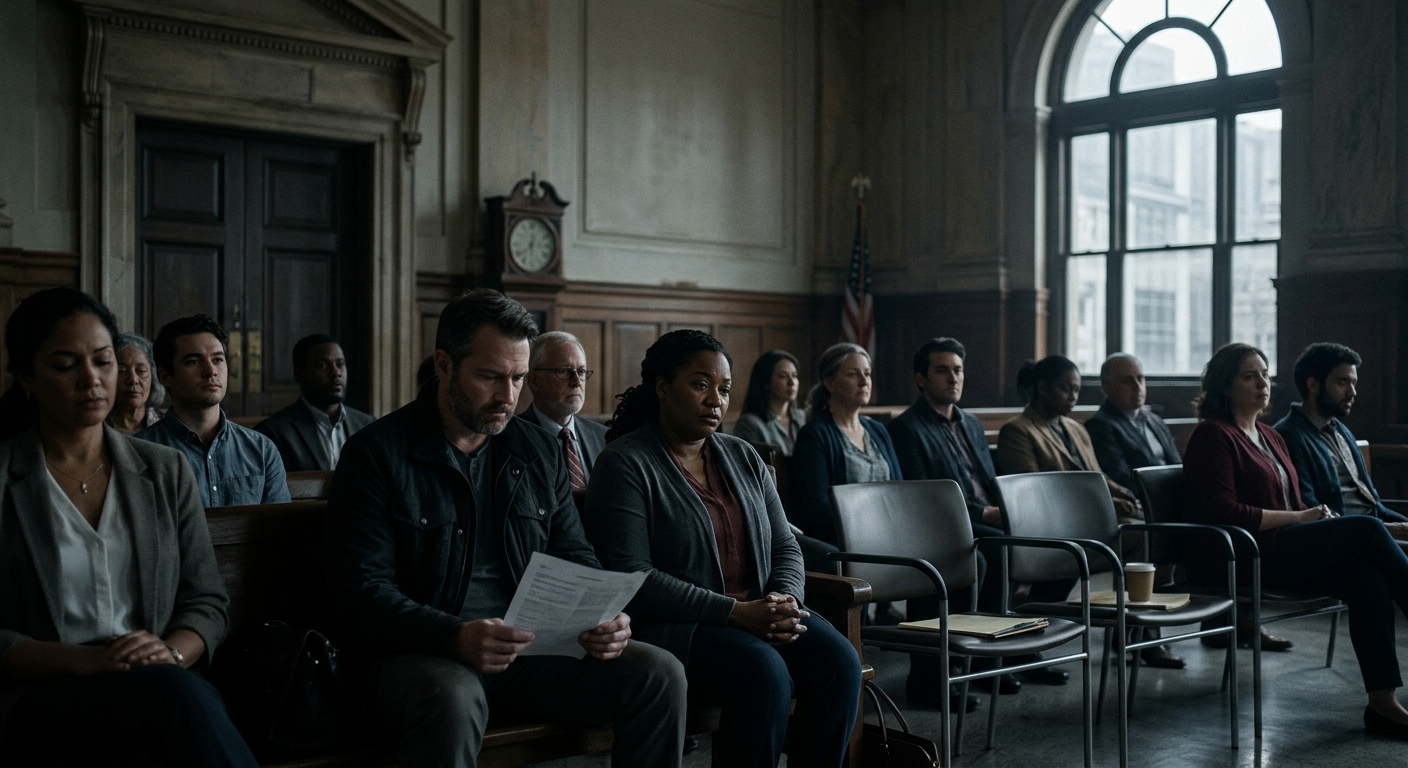
The Hidden Mechanisms of Capital Jury Empanelment
The Sixth Amendment to the United States Constitution guarantees every criminal defendant the right to a public trial by an impartial jury. This foundational pillar of American jurisprudence was designed to ensure that the fate of an accused individual rests in the hands of a representative cross-section of their local community. However, in the highest-stakes legal proceedings—capital punishment trials—this constitutional promise is heavily compromised before opening arguments are even delivered. A unique procedural hurdle known as “death qualification” drastically alters the demographic makeup of capital juries.
By requiring prospective jurors to affirm their willingness to impose a death sentence, this mechanism systematically filters out specific groups of people, most notably Black Americans and devout individuals of various religious faiths. As legal scholars and civil rights advocates increasingly scrutinize this practice, it has become evident that death qualification does not merely ensure a jury’s adherence to the law. Instead, it engineers juries that are whiter, more male, and inherently more prone to convict. Unpacking the mechanics and consequences of this exclusionary practice is essential for understanding the deep-rooted inequities embedded within the modern capital punishment system.
Legal Framework: A Standard Distinct from Normal Trials
To comprehend the discriminatory impact of jury selection in capital trials, one must first examine the legal framework that enables it. Death qualification is an integral part of the voir dire process unique to capital cases. Unlike standard criminal trials, where jurors are simply asked to evaluate the evidence and determine guilt or innocence, capital jurors bear the additional burden of determining the defendant’s sentence—specifically, whether the defendant should live or die.
The legal precedent for this process stems from a series of United States Supreme Court decisions. In the 1968 landmark case Witherspoon v. Illinois, the Court established that while states could not exclude jurors who merely voiced general objections to the death penalty, they could strike individuals who made it “unmistakably clear” that they would automatically vote against capital punishment. Nearly two decades later, in the 1985 case Wainwright v. Witt, the Supreme Court loosened this standard. The Court ruled that a prospective juror could be removed for cause if their views on capital punishment would “prevent or substantially impair the performance of his duties as a juror in accordance with his instructions and his oath.”
In practice, this standard dictates that any citizen who holds deep moral, ethical, or religious convictions against the state-sponsored taking of human life is legally barred from serving on a capital jury. Prosecutors aggressively utilize this standard during jury selection to strike individuals who express hesitancy about the death penalty. The result is a legally sanctioned ideological purity test. By stripping away those who prioritize life or harbor skepticism toward the ultimate punishment, the court effectively molds a jury pool fundamentally different from the community at large.
A Legacy of Systemic Erasure: Disproportionate Impact on Black Americans
While the death qualification standard is ostensibly race-neutral, its real-world application reveals a profound and systemic racial bias. Statistical analyses and historical trends consistently demonstrate that Black Americans are significantly more likely to oppose the death penalty than their white counterparts. Consequently, they are disproportionately struck from capital juries at alarming rates.
This disparity is deeply rooted in the historical relationship between Black communities and the American criminal justice system. For centuries, capital punishment has been disproportionately wielded against marginalized populations. From the era of enslavement, through the extrajudicial racial terror of lynchings, and into the modern era of mass incarceration, extreme punishments have frequently been utilized as instruments of racial control. Due to this well-documented history of systemic bias, wrongful convictions, and unequal application of the law, many Black citizens harbor a natural and profound distrust of the state’s authority to administer the ultimate punishment.
The empirical data supporting this phenomenon is staggering. A comprehensive study examining jury selection in Wake County, North Carolina, found that the death qualification process led to the dismissal of a quarter of all potential Black jurors, compared to just 11 percent of white jurors. The disparity is even more pronounced for Black women, who were struck at a rate of 36 percent. Similarly, an analysis of capital trials in Duval County, Florida, revealed that 39 percent of otherwise-eligible Black potential jurors—and 43 percent of Black women—were removed through death qualification, sharply contrasting with a 17 percent removal rate for white prospective jurors.
When these “for cause” dismissals are combined with prosecutors’ use of peremptory strikes (discretionary challenges often used to remove remaining minority jurors despite constitutional prohibitions), the result is a catastrophic whitewashing of the jury box. Black defendants, who already face steeper odds in the justice system, are routinely judged by all-white or predominantly white juries. This systematic erasure of Black voices violates the rights of the accused to a representative jury and infringes upon the civic rights of Black citizens to participate equally in the democratic process.
The Intersection of Religious Faith and Civic Participation
The discriminatory filter of death qualification extends beyond racial demographics, heavily impacting citizens of specific religious faiths. Numerous religious traditions—including Catholicism, Quakerism, and various branches of Buddhism and Protestantism—hold strict theological positions opposing capital punishment. For adherents of these faiths, the sanctity of human life is a non-negotiable doctrine, making them unable to swear an oath affirming their willingness to impose a death sentence.
During the voir dire process, prosecutors frequently interrogate prospective jurors about their religious affiliations and moral frameworks. Individuals who disclose that their faith prohibits them from voting for death are swiftly dismissed. Studies indicate that religious individuals are excluded at markedly higher rates than non-religious individuals during capital jury selection, creating a profound constitutional tension.
The First Amendment guarantees the free exercise of religion, yet the death qualification process essentially forces citizens to choose between adhering to their deeply held religious tenets and exercising their fundamental civic duty as jurors. By systematically excusing those whose faith compels them toward mercy rather than retribution, the justice system silences crucial moral perspectives. A community’s conscience is undeniably fractured when its most compassionate and faith-driven members are categorically barred from participating in its most consequential legal judgments.
Engineered for Guilt: The Rise of Conviction-Prone Tribunals
The demographic skewing caused by death qualification has immediate and severe consequences for the fairness of the trial itself. Decades of sociological and psychological research have concluded that by filtering out individuals opposed to the death penalty, the courts are left with a panel of jurors who are not only “death-prone” but also heavily “conviction-prone.”
Jurors who survive the death qualification process tend to share a specific psychological and demographic profile. They are statistically more likely to be white, male, politically conservative, and deferential to authority figures, such as police officers and prosecutors. Furthermore, these jurors are generally less receptive to mitigating evidence—such as a defendant’s history of childhood trauma, mental illness, or systemic deprivation—which is a critical component of the penalty phase in a capital trial.
The psychological impact of the questioning process itself also biases the jury. Before any evidence is presented, prospective jurors are forced to engage in lengthy hypotheticals about imposing the death penalty. Researchers argue that this extensive focus on the punishment phase prematurely presumes the defendant’s guilt in the minds of the jurors. If the court is already asking them how they will punish the defendant, the underlying assumption is that a guilty verdict is a foregone conclusion.
Despite overwhelming empirical evidence demonstrating this inherent bias, the Supreme Court has historically upheld the practice. In the 1986 case Lockhart v. McCree, the Court acknowledged studies showing that death-qualified juries were more conviction-prone but ruled that this did not violate the Constitution, arguing that individuals opposed to the death penalty did not constitute a “distinctive group” requiring protection under the fair cross-section requirement.
Modern Legal Battles: Pushing Back Against Exclusionary Tactics
In recent years, the fight against the discriminatory nature of death qualification has moved from academic journals back to the courtroom. Civil rights organizations, defense attorneys, and social justice advocates are mounting aggressive legal challenges to expose and dismantle this exclusionary practice, arguing that it fundamentally violates both state and federal constitutional protections.
A prominent example of this ongoing legal battle recently unfolded in Kansas. In a series of high-profile challenges—including cases such as Kansas v. Kyle Young and the pre-trial litigation for defendants Hugo Villaneuva-Morales and Antoine Fielder—advocates argued that the state’s death penalty statute, and the death qualification process specifically, violated fundamental constitutional rights. Expert witnesses, including historians, economists, and criminologists, provided extensive testimony illustrating how capital punishment in Kansas is arbitrarily applied, exorbitant in cost, and steeped in racial bias.
The culmination of these efforts led to a groundbreaking 2025 ruling in Wyandotte County. Following extensive evidentiary hearings, District Court Judge Bill Klapper issued an opinion detailing the “irremediable defects” of the death penalty. The court acknowledged persuasive evidence that capital juries are uniquely discriminatory, inherently biased against defendants of color, and fail to serve any reliable deterrent purpose. Although the specific cases were resolved through pleas without the imposition of the death penalty—rendering a final constitutional strike-down moot for those particular defendants—the judicial recognition of these systemic flaws represents a monumental shift in the legal landscape.
These legal challenges underscore a growing consensus: a justice system cannot claim to be blind while simultaneously keeping one eye on the racial and ideological makeup of its juries. As more states reconsider the viability and morality of capital punishment, the flawed mechanics of jury empanelment stand out as a glaring indictment of the system’s overall integrity.
Conclusion
The practice of death qualification remains one of the most critical yet misunderstood mechanisms of the American capital punishment system. Under the guise of ensuring legal compliance, it operates as a sophisticated filter that systemically excludes Black Americans, women, and people of faith from the jury box. The resulting tribunals are fundamentally unrepresentative, skewed toward conviction, and stripped of the diverse moral perspectives necessary for true justice. As the legacy of racial disparity continues to haunt the administration of the death penalty, challenging the discriminatory nature of death qualification is not merely a procedural dispute; it is a fundamental fight for the soul of the justice system. Until the promise of a jury of one’s peers is fully realized, the verdicts rendered by these engineered juries will remain perpetually shadowed by injustice.
Frequently Asked Questions
What exactly is “death qualification”?
Death qualification is a legal process during jury selection in capital punishment cases where prospective jurors are questioned about their views on the death penalty. Individuals who state they are fundamentally unwilling to impose a death sentence are dismissed for cause and legally barred from serving on the jury.
Why does this process disproportionately impact Black jurors?
Black Americans historically show higher rates of opposition to the death penalty. This opposition is largely driven by the criminal justice system’s legacy of racial bias, wrongful convictions, and the disproportionate application of extreme punishments against minority communities. Consequently, Black citizens are struck from capital juries at significantly higher rates than white citizens.
How does death qualification affect the outcome of a trial?
Extensive research demonstrates that removing individuals opposed to the death penalty results in juries that are not only more likely to impose a death sentence but also more “conviction-prone” during the initial guilt-or-innocence phase of the trial.
Are religious people excluded from capital juries?
Yes. Individuals whose religious faiths strictly oppose the death penalty—such as Catholics, Quakers, and certain branches of Protestantism and Buddhism—are frequently excluded during the death qualification process because they cannot swear an oath to consider a death sentence, thereby forcing a conflict between civic duty and religious liberty.
References
- Wainwright v. Witt, 469 U.S. 412 — Supreme Court of the United States. 1985-01-21. https://supreme.justia.com/cases/federal/us/469/412/
- Witherspoon v. Illinois, 391 U.S. 510 — Supreme Court of the United States. 1968-06-03. https://supreme.justia.com/cases/federal/us/391/510/
- Lockhart v. McCree, 476 U.S. 162 — Supreme Court of the United States. 1986-05-05. https://supreme.justia.com/cases/federal/us/476/162/
- Fatal Flaws: Revealing the Racial and Religious Gerrymandering of the Capital Jury — American Civil Liberties Union. 2025-06-24. https://www.aclu.org/publications/fatal-flaws-revealing-the-racial-and-religious-gerrymandering-of-the-capital-jury
- The Eighth Amendment’s Lost Jurors: Death Qualification and Evolving Standards of Decency — Cover, Aliza Plener. Indiana Law Journal. 2016. https://www.repository.law.indiana.edu/ilj/vol92/iss1/4/
Similar Articles








Read full bio of Sneha Tete


