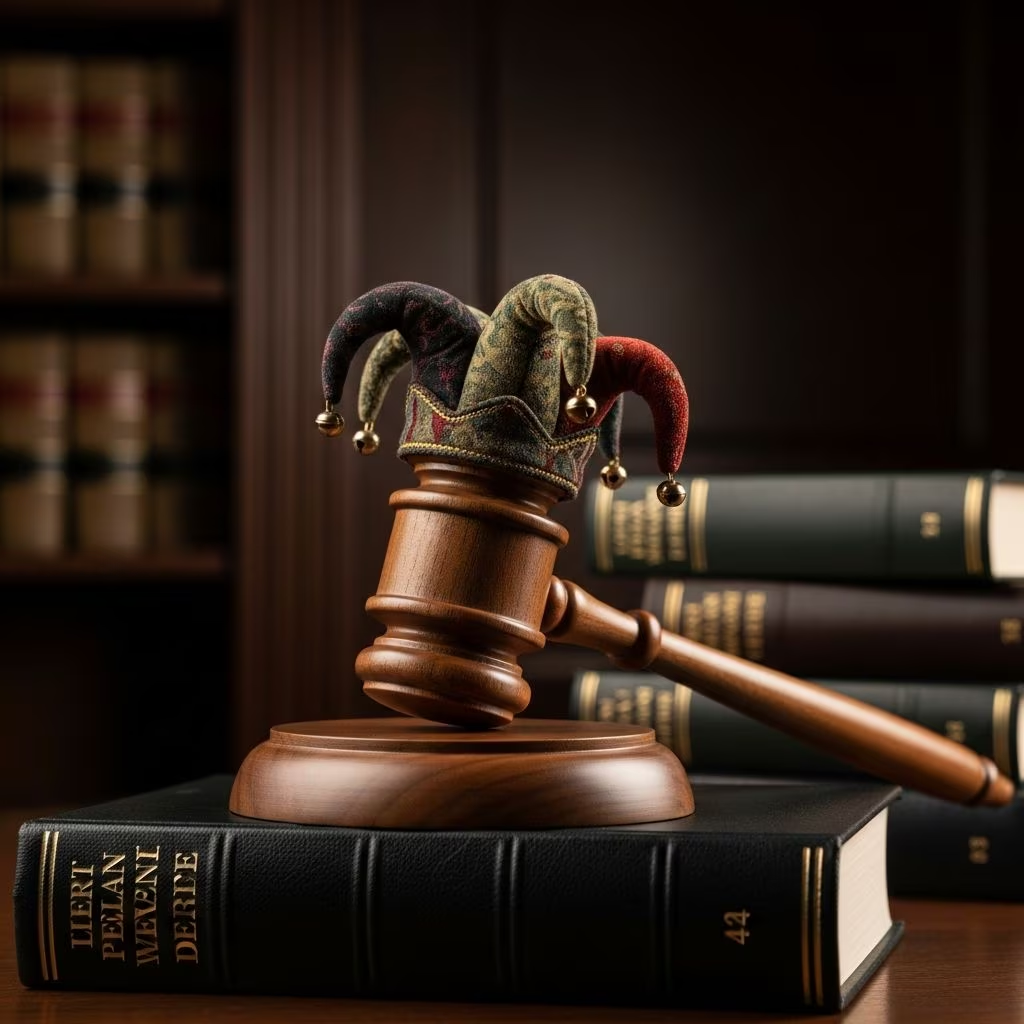
In the high-stakes arena of law, where arguments clash and precision reigns supreme, humor emerges as an unexpected yet powerful weapon. Far from mere entertainment, strategic use of wit can humanize advocates, clarify complex points, and subtly undermine opponents. This article delves into the mechanics of deploying laughter effectively in legal settings, drawing from psychological insights and practical examples to equip lawyers with tools for persuasion.
Why Laughter Levels the Playing Field
Humor disrupts the rigid formality of legal proceedings, fostering rapport and retention. Psychological theories underpin its efficacy: superiority theory posits that ridicule of flawed positions creates amusement by elevating the audience above the error, while incongruity theory highlights the delight in unexpected twists within expected narratives. In court, a well-timed quip can pivot attention from dry facts to memorable insights, making judges and juries more receptive.
Consider the courtroom dynamic: tension often builds from adversarial posturing. A dash of levity dissipates this, signaling confidence and approachability. Lawyers who employ wit wisely report stronger connections with decision-makers, as laughter activates emotional engagement over purely logical processing.
- Boosts Memorability: Humorous anecdotes stick longer than rote recitations.
- Builds Empathy: Shared chuckles humanize the advocate.
- Exposes Absurdities: Gently mocking illogical claims without personal attack.
Mastering Humor in Written Advocacy
Legal briefs and opinions often suffer from turgid prose, but injecting wit revives them. Judicial authors, for instance, have long experimented with literary flair to illuminate rulings. Poems, puns, and pop culture nods transform mundane analyses into engaging reads.
Key to success lies in subtlety. Avoid overreach; a pun that precisely captures a legal nuance, like referencing a fable for contractual folly, lands better than forced jokes. Review drafts multiple times, testing with colleagues to gauge impact.
| Technique | Example Application | Benefit |
|---|---|---|
| Wordplay | Alluding to ‘Humpty Dumpty’ in fragmentation disputes | Highlights logical breaks vividly |
| Pop Culture | Quoting song lyrics for evidentiary gaps | Makes abstract concepts relatable |
| Self-Deprecation | Admitting brief’s complexity with a light analogy | Builds trust through humility |
In one notable opinion, a judge employed verse to dissect a convoluted claim, capturing public attention and underscoring the ruling’s essence in accessible terms. Such devices demand brevity—humor must serve the argument, not eclipse it.
Humor’s Role in Oral Arguments
Spoken advocacy mirrors stand-up comedy more than briefs do. Structure submissions like jokes: setup with facts, build tension through analysis, deliver punchline as the requested relief. Brevity reigns; excess words dilute impact, akin to choosing ‘banana’ over ‘orange’ in comedy timing.
During a tense hearing, one lawyer diffused hostility by sharing a bar exam mishap, eliciting laughter from all parties and refocusing on merits. This unscripted spontaneity points to inherent case absurdities, guiding audiences without pandering.
- Target only arguments, never individuals.
- Observe reactions; adapt on the fly.
- Theme consistently—let wit reinforce your narrative arc.
Navigating Risks: When Wit Backfires
Humor’s double edge demands caution. Overestimation of a gag’s funniness plagues amateurs; distractions from core points erode persuasiveness. Sarcasm risks disrespect, particularly on grave topics like capital cases, alienating readers.
In rushed filings, skip attempts altogether—time pressure hampers polish. Courtroom commandments emphasize: mock yourself if anyone, avoid scripting, and ensure truthfulness to dodge meanspiritedness.
Judges wield humor judiciously, respecting litigants to preserve dignity. Advocates must mirror this: wit enlightens, never belittles.
Psychological Foundations of Legal Wit
Delving deeper, humor thrives on superiority—readers revel in others’ missteps—and incongruity, where legal norms clash with playful language. These mechanisms make opinions fertile for comedy, especially when facts border on farce.
Lawyers combat profession’s dour stereotype by rebelling with clever briefs that intrigue like novels, sustaining reader focus through chuckles. Yet, Orwell’s warning against clichéd figures applies: originality trumps tired tropes.
Practical Strategies for Everyday Practice
To integrate wit seamlessly:
- Observe Absurdities: Mine records for inherent ironies.
- Test Extensively: Solicit feedback from peers.
- Prioritize Precision: Ensure jokes align perfectly with law.
- Embrace Improv: In orals, flow naturally from dialogue.
- Know Your Audience: Tailor to bench or jury sensibilities.
For briefs, subtitles offer low-risk entry: a clever phrase previews without dominating. In poetry-infused opinions, simplicity aids non-experts, broadening appeal.
Case Studies: Triumphs of Legal Levity
Examine a dissent invoking Lewis Carroll to critique interpretive overreach, noting Supreme Court precedents for validation. Another parodied literature to eviscerate weak evidence, blending erudition with entertainment.
These exemplify humor’s power to add personality, pique interest, and aid comprehension—provided brevity and respect prevail.
Frequently Asked Questions (FAQs)
What makes humor effective in legal writing?
It captivates readers, clarifies points through incongruity, and fosters emotional bonds, but must remain brief and relevant.
Is sarcasm safe in court?
Rarely; it often appears disrespectful. Opt for gentle irony targeting arguments instead.
How do I test a joke for briefs?
Revise multiple times, share with colleagues, and cut if it distracts or misaligns.
Can humor work with juries?
Yes, to exit ‘lizard brain’ mode, but only unscripted, self-directed, and truthful.
Does humor suit serious cases?
Approach cautiously; on topics like death penalty, it may jar—prioritize sobriety.
Elevating Your Practice Through Playful Persuasion
Ultimately, humor distinguishes exceptional advocates. By wielding wit to expose flaws, engage minds, and delight audiences, lawyers not only win cases but redefine the profession’s image. Practice diligently, respect boundaries, and watch adversaries falter amid laughter.
References
- Bons Mots, Buffoonery, and the Bench: The Role of Humor in Judicial Opinions — UCLA Law Review. 2011. https://www.uclalawreview.org/bons-mots-buffoonery-and-the-bench-the-role-of-humor-in-judicial-opinions/
- Humor in Legal Writing — The Volokh Conspiracy. 2011-07-21. https://volokh.com/2011/07/21/humor-in-legal-writing/
- The Surprising Link Between Litigation and Stand-Up Comedy — Law and Style. N/A. https://lawandstyle.ca/culture/the-surprising-link-between-litigation-and-stand-up-comedy/
- Lawyers: You Should Use More Humor — On Point Expertise. N/A. https://www.onpointexpertise.com/interestpoints/humour-writing
- Ten Commandments of Courtroom Humor — Bennett and Bennett. N/A. https://bennettandbennett.com/blog/ten-commandments-of-courtroom-humor