
Determining Fault In Car Accidents: A Comprehensive Guide
Uncover the key methods, evidence, and legal rules for establishing responsibility after a vehicle collision.
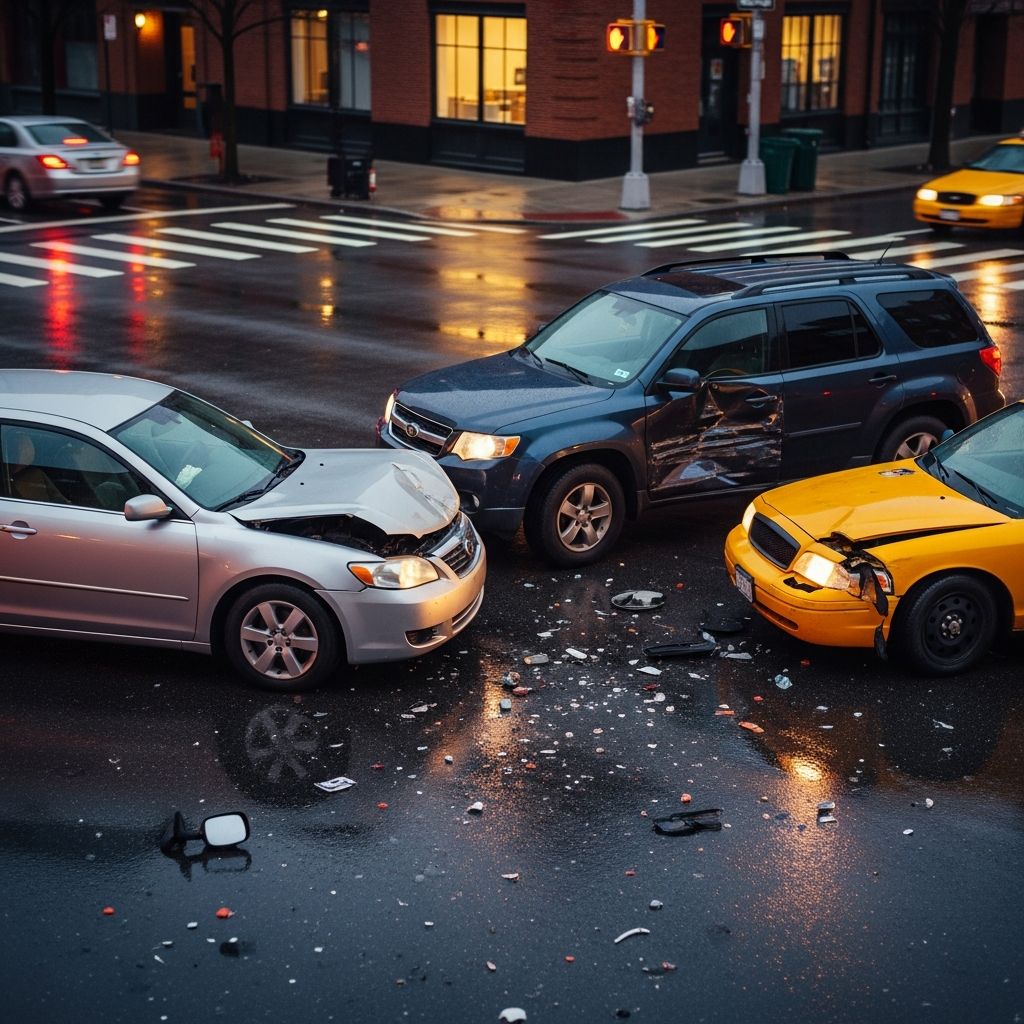
Establishing responsibility in vehicle collisions relies on a systematic evaluation of evidence, adherence to state-specific regulations, and professional investigations by insurers or law enforcement. This process ensures that liable parties compensate victims appropriately while accounting for shared culpability where applicable.
Core Principles of Negligence in Vehicle Crashes
Negligence forms the foundation of fault determination, defined as failing to exercise the care a reasonable driver would under similar conditions. This includes actions like speeding, distracted driving, or ignoring traffic signals, which directly contribute to incidents. Courts and insurers assess whether a driver’s breach of duty caused the harm, using precedents and factual reconstructions to guide decisions.
In practice, pure comparative fault systems, common in states like Missouri and Pennsylvania, allow recovery even if the injured party bears majority blame, with awards reduced proportionally. For instance, 30% fault might slash compensation by that amount, promoting equitable resolutions.
Initial Response: Securing the Scene and Documentation
Immediately after a crash, prioritize safety by moving vehicles if possible and checking for injuries. Promptly notify authorities to generate an official report, which captures diagrams, damage locations, and officer observations—critical for later disputes.
- Photograph all angles of vehicles, skid marks, road signs, and surroundings to preserve visual proof.
- Exchange contact and insurance details with others involved, noting license plates and driver descriptions.
- Collect witness contacts, as their unbiased statements often sway adjuster opinions.
These steps create a factual baseline, countering self-serving narratives from opposing parties.
Role of Law Enforcement in Fault Assessment
Police arrive to secure scenes, interview participants, and document violations like DUI or reckless operation. Their reports, while not legally binding, heavily influence insurers by detailing conditions such as weather or construction that may mitigate or exacerbate liability.
Officers might issue citations, signaling preliminary fault, but courts scrutinize these independently. In contested cases, reports serve as neutral evidence, with diagrams illustrating impact points and trajectories.
Insurance Adjusters’ Investigative Process
Claims adjusters lead most fault determinations, compiling data from reports, photos, and interviews. They reconstruct events, factoring in traffic laws and physical indicators to apportion blame percentages.
| Evidence Type | Purpose in Investigation | Example Impact |
|---|---|---|
| Police Report | Provides officer observations and citations | Supports negligence claims like running a red light |
| Vehicle Photos | Reveals damage patterns | Side damage indicates failure to yield |
| Witness Statements | Offers third-party perspectives | Confirms speeding or distraction |
| Skid Marks | Estimates pre-impact speeds | Long marks suggest excessive velocity |
Adjusters consult experts for complex reconstructions, ensuring thoroughness before settlements.
Analyzing Physical Evidence from the Collision
Damage location offers clues: front-end impacts often point to rear-end failures, while passenger-side harm suggests improper turns or pull-outs. Airbag deployment thresholds and crush depths further quantify forces, aiding speed estimations by reconstructionists.
Environmental factors like rain or poor visibility are weighed, potentially shifting blame from sole driver error to shared conditions. Comprehensive scene visits by adjusters capture these nuances, beyond static reports.
State Variations in Liability Rules
Rules differ: no-fault states prioritize personal coverage regardless of blame, while at-fault systems demand proof for inter-policy claims. Comparative models vary—modified versions bar recovery above 50% fault, unlike pure systems.
- Pure Comparative: Proportional reductions, no recovery threshold.
- Modified Comparative: Bars claims if plaintiff exceeds 50-51% fault.
- No-Fault: Limited tort access post-threshold injuries.
Understanding local statutes is vital, as they dictate insurer obligations and litigation viability.
Challenging Insurance Fault Findings
If dissatisfied, notify your carrier in writing, supplying counter-evidence like additional photos or expert analyses. Demand reassessment, citing overlooked factors. Escalation to mediation or arbitration resolves many impasses without courts.
For persistent disputes, consult attorneys experienced in accident litigation. They scrutinize adjuster biases, leveraging discovery to uncover dashcam footage or telematics data.
When Cases Proceed to Court
Lawsuits arise from denied claims or inadequate offers, where judges or juries deliberate all evidence. Precedents influence outcomes, overriding insurer findings. Police reports gain admissibility scrutiny, but physical proofs and experts dominate.
Trials emphasize causation chains, awarding damages minus plaintiff fault percentages. Successful plaintiffs secure full recompense, including pain and lost wages.
Common Misconceptions About Fault
Many assume rear-end collisions imply 100% trailing driver fault, ignoring sudden stops or distractions ahead. Similarly, right-of-way violations aren’t absolute if the yielding driver speeds.
- Damage extent doesn’t always correlate with speed due to vehicle designs.
- Witness biases require corroboration.
- Initial citations don’t preclude defenses like necessity.
Practical Tips for Protecting Your Interests
Maintain comprehensive coverage, including uninsured motorist protection. Avoid admitting fault on-scene, stating facts only. Retain all correspondence for potential disputes.
Seek medical evaluations promptly, linking injuries to impacts for stronger claims. Professional legal review early maximizes leverage against insurers.
Frequently Asked Questions
Who decides fault if insurers disagree?
Disagreements may lead to arbitration, mediation, or court, where judges/juries review evidence independently.
Does vehicle damage alone prove fault?
No, it’s one factor; combined with reports, witnesses, and laws for full picture.
Can I claim compensation if partially at fault?
Yes, in comparative fault states, reduced by your percentage.
How long after an accident can fault be disputed?
Varies by state statute of limitations, often 1-3 years; act promptly.
Are police reports conclusive?
Not binding, but highly persuasive for insurers and courts.
Preventing Disputes Through Proactive Measures
Install dashcams for indisputable footage, enhancing credibility. Regular vehicle maintenance documents defensive driving. Enroll in defensive courses to bolster claims of prudence.
Post-incident, compile a personal dossier mirroring adjuster files, empowering negotiations. These strategies minimize litigation risks, streamlining resolutions.
References
- How is Fault Determined After an Auto Accident? — Simon Law PC. 2023. https://simonlawpc.com/blog/personal-injury/auto-accidents/how-fault-is-determined-in-vehicle-accidents/
- Car Accidents: Determining Fault by Location of Damage — Nolo. 2024. https://www.nolo.com/legal-encyclopedia/car-accidents-determining-fault-by-location-of-damage.html
- How Is Fault Determined in a Car Accident? — KBG Injury Law. 2023. https://resultsyoudeserve.com/practice-areas/auto-accidents/how-is-fault-determined-in-a-car-accident/
- How Is Fault Determined in a Louisiana Car Accident? — Cox Law Firm. 2024. https://www.coxcoxfilo.com/blog/how-is-fault-determined-in-a-louisiana-car-accident/
- How to Dispute a Car Accident Fault: A Step-by-Step Guide — Jay Murray Law. 2023. https://jaymurraylaw.com/blog/how-to-dispute-a-car-accident-fault/
- How is Fault Determined in a Car Accident? — Bankrate. 2025-01-10. https://www.bankrate.com/insurance/car/how-is-fault-determined-in-a-car-accident/
- At-Fault vs. No-Fault Accidents — Progressive. 2024. https://www.progressive.com/answers/at-fault-vs-no-fault-accidents/
Similar Articles








Read full bio of Sneha Tete


