The Invisible Walls of a Pandemic: An Introduction
When a global public health emergency strikes, the overarching directive for the general public is almost always universal: distance yourself from others, maintain rigorous hygiene, and isolate immediately if symptomatic. However, this fundamental epidemiological strategy is physically impossible for individuals held in congregate settings. Among the most vulnerable and legally complex of these environments is the United States immigration detention system. Immigration holding centers represent a unique intersection of severe infrastructural constraints and densely concentrated populations. Yet, unlike criminal incarceration, immigration detention is inherently civil in nature, meant only to secure an individual’s presence for upcoming administrative proceedings.
During a severe viral outbreak, the structural realities of these facilities transform a routine civil hold into an acute, sometimes fatal, health risk. The inability to escape a confined environment when a pathogen is circulating creates a pressure cooker for infection. Understanding the dynamics of immigration detention during a pandemic sheds light on broader systemic failures within government agencies and underscores the urgent need for comprehensive reforms in how nations manage confined populations during escalating health crises.
Congregate Settings: A Structural Vulnerability to Infectious Diseases
The architecture and daily operations of immigration detention centers are fundamentally incompatible with modern principles of infectious disease control. To grasp why these environments are so perilous, one must look at both their physical layout and logistical flow.
The Anatomy of Immigration Detention
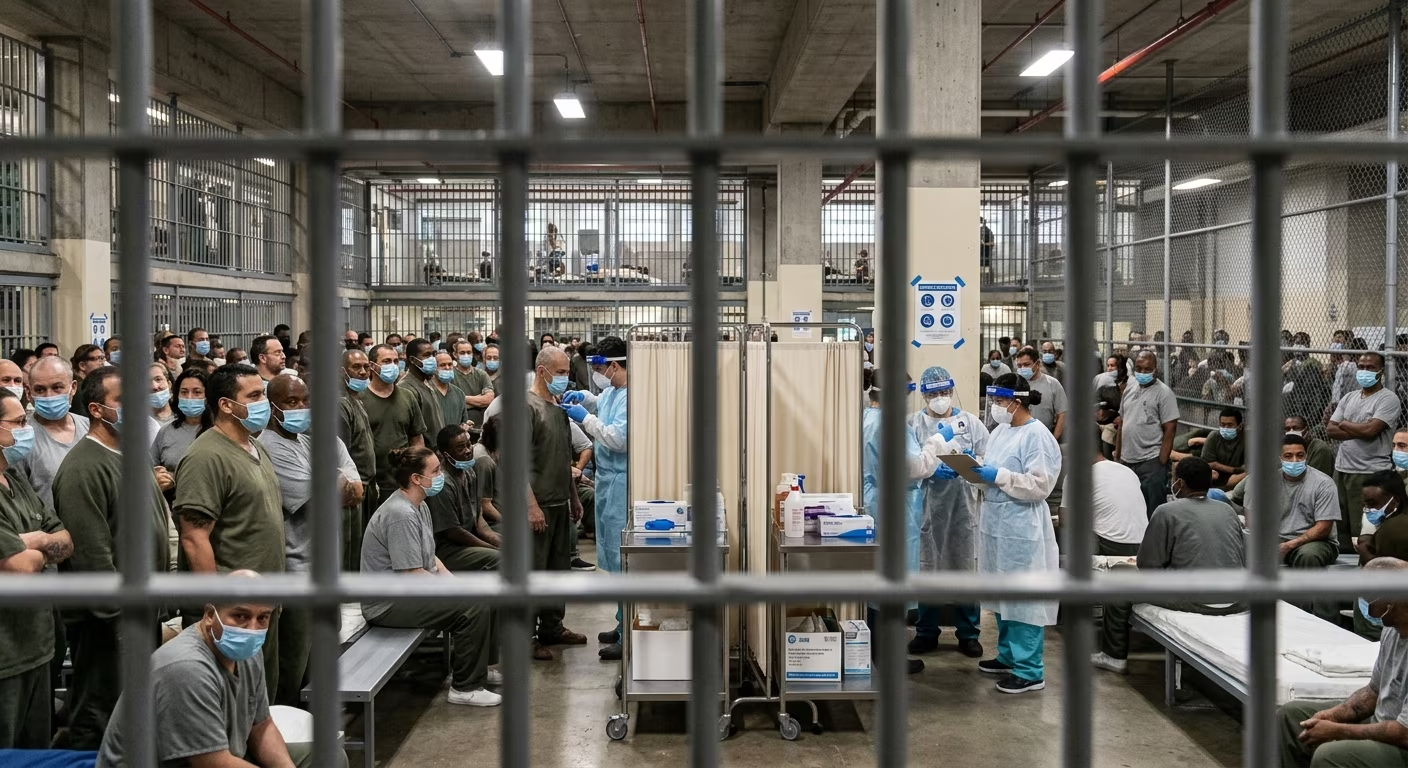
The typical immigration detention facility utilizes shared communal spaces designed to maximize capacity rather than individual safety. This design results in large, open-bay dormitories where dozens of individuals sleep on bunks positioned mere feet apart. Beyond sleeping quarters, detainees share communal dining halls, group bathrooms, and confined recreation areas. Ventilation systems in many of these aging facilities are frequently inadequate for filtering out airborne pathogens. In these environments, the concept of “social distancing” is a logistical impossibility. Detainees cannot choose to remain six feet apart when their physical space is dictated by facility guards, nor can they isolate themselves in crowded sanitary facilities.
Why Pathogens Thrive in Confinement
Respiratory viruses and transmissible pathogens thrive in enclosed spaces characterized by high population density. The World Health Organization (WHO) has extensively documented how places of detention amplify the transmission of infectious diseases, noting that the health of confined populations is intricately linked to broader public health outcomes. Once a virus breaches the walls of a detention facility—often introduced through staff or new transfers—it spreads with devastating speed.
A 2021 study published in the Journal of the American Medical Association (JAMA) highlighted the rapid acceleration of COVID-19 cases within United States immigration detention centers. The research demonstrated that test positivity rates and outbreak frequencies within these facilities vastly outpaced those of the general population. The continuous influx and transfer of detainees between different regional facilities further compound the epidemiological risk, effectively creating a circulatory network for the virus.
Public Health Directives vs. Operational Realities
To mitigate the spread of infectious diseases in confinement, public health authorities issue specific, evidence-based operational guidelines. However, translating these directives into daily practice within a decentralized detention network exposes a dangerous gulf between official policy and ground-level reality.
Gaps in Infection Control and Quarantine
During the COVID-19 pandemic, the Centers for Disease Control and Prevention (CDC) released interim guidance tailored for correctional and detention facilities. This guidance emphasized rigorous symptom screening at intake, 14-day quarantine protocols, strict medical isolation for confirmed cases, and enhanced sanitation. Despite these clear protocols, implementation was highly inconsistent.
An investigative review by the Government Accountability Office (GAO) found that while federal immigration authorities developed pandemic response requirements based on CDC guidelines, numerous facilities struggled to execute them. The GAO reported that infrastructural limitations frequently made true quarantine physically impossible. Facilities lacking individual cells were forced to “cohort” individuals—grouping suspected exposures together in open dorms. While marginally better than general population mixing, this practice still facilitated rapid viral transmission among the cohorted group. Ensuring consistent compliance with mask-wearing protocols also remained an ongoing operational challenge.
Healthcare Access and Systemic Medical Neglect
Beyond failures in physical spacing, the underlying quality of medical care within these facilities often falls short of community standards. Detention center medical units are routinely understaffed and ill-equipped to handle complex medical emergencies. During a pandemic, the strain on these units is exponentially exacerbated.
Detainees frequently report significant delays in receiving medical evaluations after presenting with severe symptoms—a critical failure when dealing with rapidly progressing illnesses. Furthermore, individuals with pre-existing medical conditions like diabetes, severe asthma, or compromised immune systems are placed in extreme peril. In a functioning public health response, these high-risk individuals would be prioritized for protective isolation or early vaccination. In immigration detention, their underlying vulnerabilities are often inadequately managed, leading to severe health complications and preventable hospitalizations.
The Legal and Human Rights Implications
The conditions within immigration detention during a major pandemic represent a profound civil liberties crisis. The legal framework governing the detention of immigrants mandates a standard of care that is routinely challenged during health emergencies.
Constitutional Protections for Civil Detainees
It is a foundational principle of the U.S. legal system that immigration detention is administrative, not punitive. Individuals are held pending the resolution of their cases, not as punishment for a crime. Consequently, under the Due Process Clause of the Fifth Amendment, civil detainees are protected against conditions of confinement that amount to punishment.
When the government forcibly deprives individuals of their liberty, it assumes an affirmative obligation to provide for their basic human needs, including adequate medical care and a safe environment. Exposing civil detainees to a known, life-threatening infectious disease due to deliberate overcrowding clearly breaches this constitutional threshold. Civil rights advocates argue that when the state cannot guarantee the physical safety of civil detainees from a rampant pathogen, it loses the legal justification to continue holding them.
Advocacy, Litigation, and the Push for Accountability
Recognizing the imminent danger posed by congregate confinement, civil liberties organizations and pro bono legal clinics have historically turned to federal courts to enforce these protections. During the pandemic, an unprecedented wave of litigation swept the country, characterized primarily by emergency habeas corpus petitions.
These urgent legal actions demanded the immediate release of medically vulnerable detainees, arguing that their continued detention in demonstrably unsafe conditions violated fundamental due process rights. Federal judges across various jurisdictions responded by ordering the release of thousands of high-risk individuals, acknowledging the facilities could not mitigate the risk of severe illness. These lawsuits forced much-needed systemic transparency, compelling government agencies to publicly disclose internal infection rates and operational protocols.
Looking Ahead: Reforming Detention Protocols for Future Crises
The systemic vulnerabilities brutally exposed by severe infectious disease outbreaks in immigration detention necessitate a fundamental rethinking of how governments approach civil confinement. Returning to the pre-pandemic status quo is both a public health hazard and a moral failure.
Expanding Alternatives to Detention (ATD)
Public health experts agree that the most effective infection control measure in a densely packed congregate setting is decarceration—reducing population density so physical distancing is achievable. For immigration enforcement, this means a paradigm shift toward expanding Alternatives to Detention (ATD).
ATD programs utilize community-based case management, sometimes combined with electronic monitoring, to ensure individuals attend their immigration hearings without physical confinement. These programs are vastly less expensive than maintaining large-scale detention infrastructure and entirely eliminate localized public health risks. During any future health emergency, the presumption should immediately default to release for all individuals who do not pose an imminent security threat, particularly those with health vulnerabilities.
Enhanced Oversight and Independent Audits
Where physical detention is utilized, standards of medical care and emergency preparedness must be enforced through robust, independent oversight. The current system relies heavily on self-reporting and internal inspections, which have proven historically inadequate in rectifying life-threatening deficiencies during a crisis.
Future policy overhauls must institute mandatory, unannounced inspections conducted by independent medical experts. These oversight bodies must be granted the authority to enforce strict compliance with CDC and WHO directives, mandate immediate infrastructural changes, and compel the release of detainees if a facility repeatedly fails to meet minimum safety standards. Radical data transparency regarding infectious disease testing and hospitalizations must be institutionalized, ensuring public visibility into epidemiological realities.
Frequently Asked Questions (FAQ)
What is the difference between immigration detention and criminal incarceration?
Immigration detention is a civil and administrative hold intended to ensure an individual appears for immigration proceedings. It is not designed to be punitive. Because immigration detention is civil, detainees possess specific Fifth Amendment constitutional protections against punitive conditions.
Why are viral outbreaks so severe in detention centers?
Detention centers are congregate settings characterized by overcrowding, shared sleeping quarters, and poor ventilation. These physical realities make social distancing impossible. Combined with delayed medical care and the constant movement of staff, viruses spread at an exponentially higher rate than in the community.
What role do federal public health guidelines play in these facilities?
Agencies like the CDC issue specific guidelines for detention facilities outlining testing, quarantine, and sanitation protocols. However, watchdog reports, such as those from the GAO, frequently reveal that logistical constraints and infrastructural limits prevent facilities from fully complying with these vital guidelines.
Can detainees be released solely due to a public health crisis?
Yes, through legal avenues such as habeas corpus petitions. During the COVID-19 pandemic, federal courts ordered the release of numerous medically vulnerable individuals, ruling that holding them in facilities incapable of protecting them from a deadly virus violated their rights to due process.
References
- Interim guidance on management of coronavirus disease 2019 (COVID-19) in correctional and detention facilities — Centers for Disease Control and Prevention (CDC). 2022-02-10. https://stacks.cdc.gov/view/cdc/114112
- Immigration Detention: ICE Efforts to Address COVID-19 in Detention Facilities — U.S. Government Accountability Office (GAO). 2021-06-30. https://www.gao.gov/products/gao-21-414
- COVID-19 Testing and Cases in Immigration Detention Centers, April-August 2020 — Journal of the American Medical Association (JAMA). 2021-01-12. https://pubmed.ncbi.nlm.nih.gov/33119038/
- WHO COVID-19 prison surveillance protocol: monitoring and reporting COVID-19 in prisons and other places of detention — World Health Organization (WHO). 2021-05-26. https://www.who.int/europe/publications/i/item/WHO-EURO-2021-2576-42332-58598