
Detecting Manipulated Photos: Essential Guide for Legal Experts
Master forensic techniques to spot Photoshop edits in evidence photos, safeguarding your cases from digital deception.
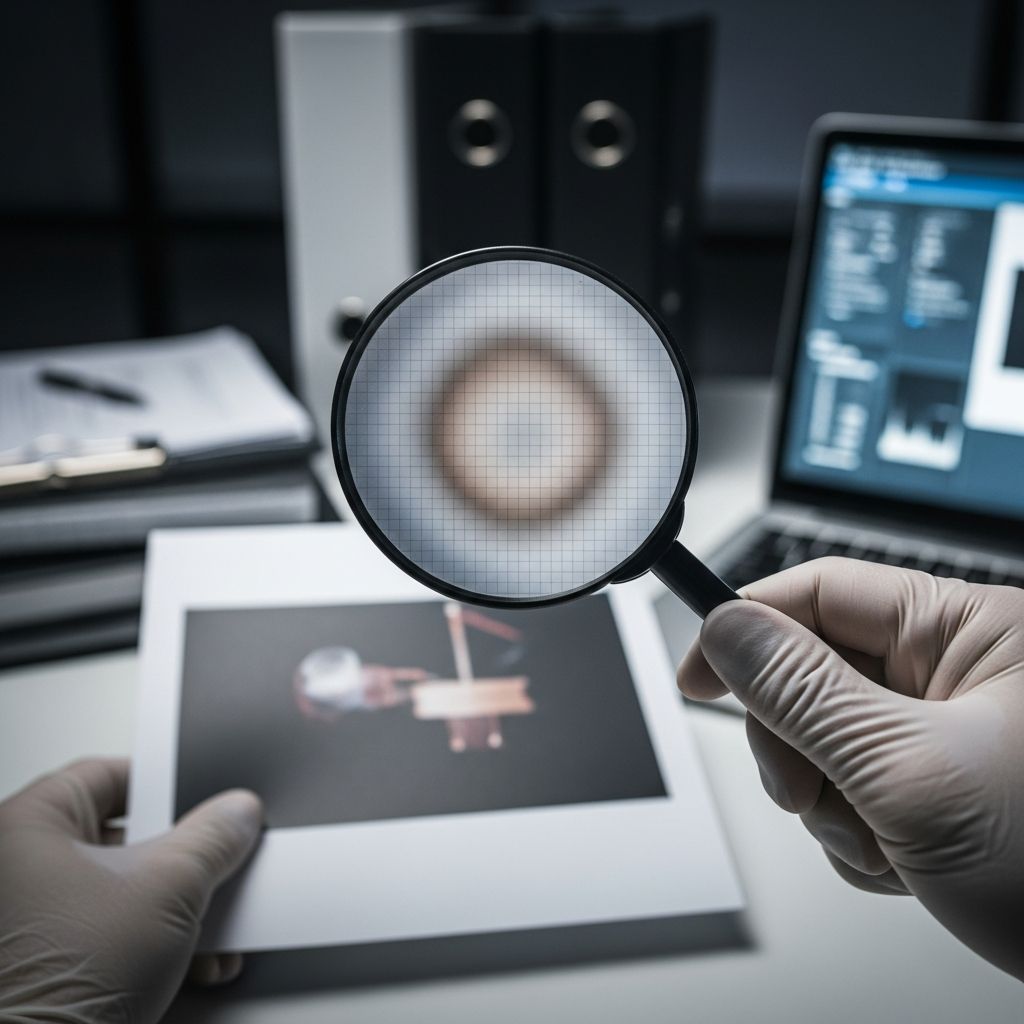
Digital images serve as critical evidence in modern legal proceedings, from personal injury claims to criminal investigations. However, advances in photo editing software like Photoshop make it easy to alter images, potentially misleading courts and juries. Legal experts must develop skills to identify tampering, ensuring only authentic evidence influences outcomes. This guide outlines practical forensic methods, tools, and best practices tailored for attorneys.
Understanding Digital Image Tampering in Legal Contexts
Image manipulation involves altering pixels to misrepresent reality, such as removing objects, enhancing features, or compositing elements from multiple sources. In legal settings, tampered photos can fabricate scenes, exaggerate injuries, or hide defects. Common techniques include cloning, splicing, and retouching, often undetectable to the untrained eye. Early detection preserves case integrity and prevents miscarriages of justice.
Attorneys should approach suspicious images systematically: examine metadata, visual inconsistencies, and compression artifacts. While expert witnesses handle complex analysis, basic proficiency empowers lawyers during discovery and depositions.
Visual Inspection: Spotting Obvious and Subtle Clues
Begin with the naked eye or magnification. Look for inconsistencies in lighting, shadows, and reflections. For instance, mismatched shadow directions suggest compositing from different sources. Edges around objects may appear unnaturally sharp or blurred compared to surroundings.
- Lighting Anomalies: Check if light sources align across the image; uneven highlights indicate edits.
- Shadow Mismatches: Shadows should follow consistent angles and intensities.
- Perspective Errors: Objects from different distances may not align properly.
- Color Inconsistencies: Sudden shifts in hue or saturation signal cloning or pasting.
Zoom into high-resolution versions to reveal pixel-level irregularities, such as repeating patterns from clone stamps.
Metadata Analysis: Uncovering Hidden Editing Histories
Every digital photo carries EXIF data, recording camera settings, timestamps, and software edits. Tools like ExifTool extract this information. Genuine photos show original camera profiles; edited ones often list Photoshop or GIMP as modifiers.
Key fields to scrutinize:
| Metadata Field | What to Check | Red Flags |
|---|---|---|
| Software | Editing programs used | Adobe Photoshop, Lightroom listed |
| Date/Time | Creation and modification stamps | Gaps or future dates |
| Camera Model | Device specifics | Inconsistent with claimed source |
| Dimensions | Pixel resolution | Unusual resizing patterns |
Altered timestamps or stripped metadata raise suspicions, though savvy editors can falsify this data.
Error Level Analysis: Revealing Compression Differences
Error Level Analysis (ELA) highlights areas with differing JPEG compression levels, a hallmark of edits. Original regions compress uniformly; pasted sections show higher error levels due to re-saving.
Using tools like FotoForensics, apply ELA: tampered areas glow brighter. This technique excels at detecting splicing and copy-move forgeries, where parts from other images are inserted.
ELA works by resaving the image at 90% quality and subtracting from the original, amplifying discrepancies. Legal experts can generate ELA outputs for court exhibits, providing visual proof of manipulation.
Clone Detection: Identifying Duplicated Regions
Clone tools copy pixels within an image to cover flaws. Forensic software scans for matching regions, linking them with lines. Overlapping clones appear white, signaling heavy editing.
Tools like Forensically highlight these duplicates automatically. In legal photos, such as accident scenes, cloned debris removal undermines authenticity.
Advanced AI from Imagetwin detects clones in scientific images but applies broadly, flagging duplicated elements in evidentiary photos.
Noise and Gradient Analysis for Advanced Forensics
Noise patterns vary by camera sensor; edits disrupt them. Reverse denoising isolates noise, exposing airbrushing or warping. Luminance gradients reveal unnatural edge sharpening or lighting shifts.
- Apply noise filters to high-quality images for best results.
- Gradient tools color-code brightness changes; anomalies indicate copy-paste.
These methods complement ELA, building a multi-layered case against tampering.
AI-Powered Detection Tools for Modern Investigations
Deep learning revolutionizes forensics. CNN models trained on manipulated datasets classify images as authentic or forged. Imagetwin’s AI scans for splicing, rotation, and copy-moves, assigning confidence scores.
ELA-CNN hybrids preprocess images to amplify artifacts, achieving superior accuracy on benchmarks like CASIA 2.0. Lawyers can upload evidence to these platforms for reports admissible in court.
ImageMagick offers programmatic checks via signatures; differing hashes between original and suspect versions confirm changes.
Practical Workflow for Legal Photo Authentication
Follow this step-by-step process:
- Secure Chain of Custody: Document image acquisition to prevent post-collection edits.
- Initial Visual Review: Magnify and inspect for inconsistencies.
- Extract Metadata: Use free tools for EXIF data.
- Run Forensic Tests: ELA, clone detection, noise analysis.
- AI Screening: Employ tools like FotoForensics or Imagetwin.
- Expert Consultation: For inconclusive results, hire digital forensics specialists.
- Document Findings: Prepare visuals and reports for motions or trial.
Table of recommended free tools:
| Tool | Key Features | Best For |
|---|---|---|
| FotoForensics | ELA, clone detection | Quick online checks |
| Forensically | Noise, gradients, metadata | Detailed analysis |
| Imagetwin | AI manipulation scan | Scientific/legal images |
| ExifTool | Metadata extraction | Command-line pros |
Challenges and Limitations in Photo Forensics
No method is foolproof. Sophisticated edits using AI generators evade traditional tools. Compression reduces artifact visibility, and low-resolution images limit analysis. Always corroborate with originals or witness testimony.
Journals combat fraud by demanding raw files; courts could adopt similar protocols. Stay updated, as detection lags behind manipulation tech.
Case Studies: Real-World Legal Impacts
In a 2023 product liability suit, ELA revealed cloned defects in manufacturer photos, leading to settlement. Criminal cases have dismissed charges after clone detection exposed staged scenes. These examples underscore forensics’ value.
Frequently Asked Questions (FAQs)
What is the quickest way to check if a photo is manipulated?
Use online ELA tools like FotoForensics for instant artifact visualization.
Can metadata be faked?
Yes, but inconsistencies often remain; cross-check with file properties.
Are AI detection tools reliable for court?
They provide strong indicators; pair with expert testimony for admissibility.
How do I preserve evidence for forensics?
Avoid editing; work on copies and maintain hash verification.
What if ELA shows no anomalies?
Combine with clone detection and noise analysis for comprehensive vetting.
Empowering Legal Strategies with Forensic Acumen
Mastering photo forensics transforms attorneys from skeptics to detectors, fortifying arguments with irrefutable analysis. Integrate these techniques into practice to challenge dubious evidence and uphold justice.
References
- Scientific Image Manipulation Detection – Imagetwin — Imagetwin.ai. 2024. https://imagetwin.ai/image-manipulation-detection
- Detecting image manipulation with ELA-CNN integration — National Library of Medicine (PMC). 2024-08-15. https://pmc.ncbi.nlm.nih.gov/articles/PMC11323046/
- Forensically, free online photo forensics tools — 29a.ch. Accessed 2026. https://29a.ch/photo-forensics/
- Detect image manipulation by ImageMagick — ImageMagick GitHub. 2023-12-20. https://github.com/ImageMagick/ImageMagick/discussions/6960
- Techniques to Detect and Eliminate Fraud — Stanford Business. Accessed 2026. https://bps.stanford.edu/home/statistical-forensics/statistical-forensics-techniques-detect-and-eliminate-fraud/techniques-2
Similar Articles








Read full bio of Sneha Tete


