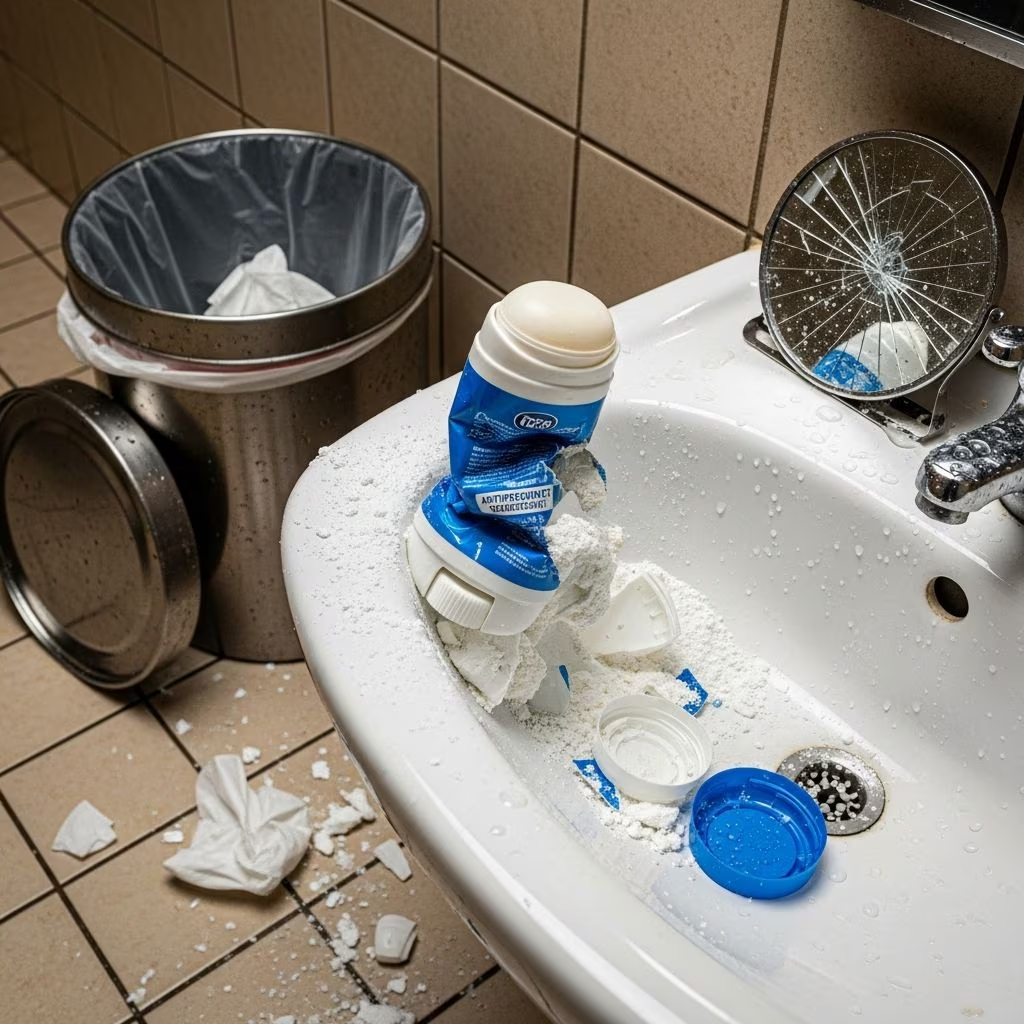
Short videos showing people heating or puncturing spray deodorant cans for dramatic bursts of flame or explosion have circulated on social media in recent years. While these clips may look like harmless “life hacks” or attention-grabbing pranks, they combine two high-risk elements: pressurized aerosol containers and highly flammable propellants. When used irresponsibly, these so-called “deodorant bombs” can ignite dangerous fires, cause severe burns, damage property, and trigger serious criminal charges, including arson and reckless endangerment.
This article explains how these stunts work, why they are so dangerous, and what kinds of legal consequences participants, parents, and even bystanders can face. It also offers practical guidance for parents, educators, and property owners who want to reduce risks and respond appropriately after an incident.
How Deodorant Explosion Stunts Work (and Why They Are So Hazardous)
Most deodorant and body spray products come in metal aerosol cans. These cans typically contain:
- A liquid mixture of fragrance, solvents, and other ingredients
- A compressed propellant gas that forces the liquid out as a fine spray
- A sealed, rigid metal container designed to hold pressure safely under normal use
In many products, the propellant and part of the liquid content are flammable. Regulatory agencies classify such pressurized, flammable aerosols as hazardous materials, especially when exposed to heat or open flame.
Common stunt methods
Though the specific viral trend you may have seen can vary, many explosion or “bomb” demonstrations rely on one or more of the following dangerous behaviors:
- Heating the can with a lighter, torch, stovetop, or in a campfire to build pressure inside.
- Throwing the can into a fire and waiting for it to burst, sometimes while filming from too close a distance.
- Piercing or crushing the can so that pressurized, flammable contents escape rapidly and can ignite.
- Combining spray with a spark or flame to create a makeshift flamethrower effect.
All of these approaches ignore the warning labels commonly printed on aerosol cans, such as “Do not incinerate,” “Keep away from heat or flame,” and “Do not puncture.” These warnings are based on the physics of pressurized containers and years of burn and blast injury data, not on theoretical risk.
What can go wrong?
Because aerosol cans are designed to maintain internal pressure, interfering with that design can cause sudden, violent failure. Typical outcomes include:
- Shrapnel and blast injuries from a can that ruptures, sending fragments of metal flying at high speed.
- Flash fires when a cloud of flammable vapor ignites, burning exposed skin and clothing.
- Secondary fires as flames spread to furniture, vehicles, bushes, dry grass, or building materials.
- Smoke inhalation or toxic fume exposure if the fire spreads indoors or in enclosed spaces.
Studies of homemade explosive devices and improvised incendiaries repeatedly emphasize how common consumer products, including aerosols, can be misused to generate blast and fire hazards when combined with ignition sources. Even without additional chemicals, the energy stored in a pressurized, flammable aerosol is enough to cause serious injury.
From Prank to Prosecution: Criminal Liability
Many participants in deodorant explosion stunts, especially teens, do not appreciate that they may be crossing the line from foolish behavior into criminal conduct. When a fire, injury, or property damage results, prosecutors can and do bring serious charges.
Arson and related offenses
In most U.S. states, arson is defined broadly to include intentionally setting fire to property or causing an explosion that damages property, whether or not a building is completely destroyed. Even a small blaze that scorches a wall, melts siding, or burns a vehicle panel may qualify.
Depending on the state and the circumstances, possible charges include:
- First-degree or aggravated arson when a building is occupied, people are inside, or someone is injured.
- Second- or third-degree arson for unoccupied structures, vehicles, and other property.
- Reckless burning or criminal mischief by fire for smaller-scale or negligent fires.
Because arson statutes generally reference both fire and explosion, deliberately causing an aerosol can to explode in a way that damages property can fit squarely within the law’s definition of arson.
Reckless endangerment and assault
Even if no major fire develops, prosecutors may still pursue other offenses, particularly where people were placed in obvious danger. Common charges include:
- Reckless endangerment for creating a substantial risk of serious physical injury to others.
- Assault or battery if another person is burned or struck by debris.
- Possession or use of an explosive device or dangerous weapon in jurisdictions that define improvised explosive devices broadly.
Juvenile courts often see these cases when teens experiment with fire or improvised explosives without understanding how quickly things can escalate. While juvenile proceedings are typically more rehabilitative than adult criminal court, they still carry the possibility of detention, probation, restitution orders, and a record that can affect future opportunities.
Comparison of key criminal risks
| Type of behavior | Typical legal risk | Possible consequences |
|---|---|---|
| Exploding a can on public or school property | Arson, reckless burning, property damage | Fines, probation, restitution, juvenile detention or jail |
| Explosion causing burns to a friend or bystander | Assault, reckless endangerment | Criminal record, civil injury lawsuit, restitution |
| Posting how-to videos encouraging replication | Potential aiding and abetting, school or platform discipline | Suspension, expulsion, account bans, reputational harm |
Civil Liability: Who Pays for Damage and Injuries?
Criminal cases are only part of the story. When an explosion prank causes harm, victims can file civil lawsuits seeking money damages. Civil liability can extend beyond the person holding the lighter.
Potentially responsible parties
- The person who initiated the stunt: The primary actor may be sued for negligence or intentional wrongdoing.
- Other participants or camera operators: Those encouraging the behavior or helping set up the scene might be considered joint tortfeasors.
- Parents or guardians: Under many state laws, parents can be held financially responsible for certain types of property damage and injuries caused by their minor children.
- Property owners: Schools, landlords, or businesses may face premises liability claims if inadequate supervision or security allowed the behavior to continue.
Damages in a civil case can include medical bills, lost wages, pain and suffering, and the cost of repairing or replacing damaged property. In severe fire or burn cases, these sums can reach well into six or seven figures.
Insurance complications
Homeowners, renters, and commercial insurance policies may cover some fire-related losses, but intentional or criminal acts are often excluded. That leaves individuals and families personally exposed to potentially large judgments if a court finds that the explosion prank was deliberate or reckless.
The Role of Social Media and Copycat Behavior
Teen safety experts and government reviewers repeatedly note how online platforms can accelerate the spread of risky trends, including dangerous stunts involving weapons, explosives, or fire. Videos that seem funny or impressive in a quick scroll can normalize extreme behavior and minimize perceived risk.
Why these clips are so influential
- Short, dramatic visuals focus on the explosion moment, not the aftermath.
- Peer validation in the form of likes, shares, and comments can reward more extreme versions of the same stunt.
- Lack of context means viewers rarely see emergency responses, medical treatment, or legal proceedings that follow.
- Algorithmic amplification can keep feeding similar clips to users who watch or interact with one stunt video.
Public safety bodies and independent reviews have urged stronger partnerships between law enforcement and platforms to remove content that encourages dangerous acts involving weapons or explosives and to identify individuals offering or misusing hazardous items.
How Parents and Schools Can Intervene
Because many of these incidents involve minors, proactive steps by adults can significantly reduce the risk of tragic outcomes. Web-based and school-based prevention programs for youth consistently stress early, open conversations about online challenges, peer pressure, and risk perception.
Practical steps for parents
- Discuss aerosol safety: Explain why cans are labeled as flammable and the dangers of puncturing or burning them.
- Talk about online trends: Ask what types of pranks or stunts your child has seen, and discuss which ones cross the line into dangerous territory.
- Set clear rules: Make it explicit that fire-related challenges, homemade explosives, and weapon-like experiments are off-limits.
- Monitor high-risk environments: Pay attention to unsupervised gatherings, garages, and outdoor hangout spots where experimentation might occur.
- Model responsible behavior: Avoid joking demonstrations of unsafe aerosol or fire use around younger children.
What schools and youth programs can do
- Incorporate fire and chemical safety into science curricula and safety briefings, highlighting aerosol hazards and legal implications.
- Train staff to recognize and swiftly intervene in early signs of experimentation with fire, explosives, or weapons.
- Partner with local fire departments to provide age-appropriate presentations on burn injuries and arson laws.
- Update codes of conduct to address dangerous social-media challenges and on-campus recording of risky acts.
What To Do If an Explosion Prank Causes Harm
If a deodorant explosion stunt has already taken place and resulted in injury or damage, the immediate focus must be on safety and emergency response, followed by legal and insurance considerations.
Emergency steps
- Call emergency services for any fire that is not instantly controllable or for any burn, blast, or inhalation injury.
- Move victims to safety away from additional fuel sources, remaining aerosol cans, or ongoing flames.
- Preserve evidence where safe, such as taking photos after the fire is out, which can help investigators and insurers understand what happened.
Legal and insurance follow-up
- Cooperate with fire and police investigators to provide an accurate account of events.
- Notify your insurer promptly if property you own or rent has been damaged.
- Seek legal advice if you or your child may face charges or if you have been injured by someone else’s stunt.
Frequently Asked Questions (FAQs)
Q: Is it illegal just to light spray deodorant on fire without exploding the can?
Laws vary, but using deodorant spray as a flame source can still violate local fire codes, school rules, or park regulations, especially if it creates a risk of property damage or personal injury. If a fire results, even from a small “flamethrower” trick, you may face charges similar to reckless burning or arson.
Q: Can a minor really be charged with arson for a prank?
Yes. Juvenile courts regularly handle arson and reckless burning cases involving teens who started fires as pranks or experiments. The case may be handled in the juvenile justice system rather than adult criminal court, but the charges and potential consequences are still serious.
Q: Are parents automatically responsible if their child causes an explosion?
Parents are not always criminally liable for a child’s actions, but many states have laws making parents financially responsible for certain property damage or injuries caused by their minor children. Civil lawsuits can also name parents as defendants if they allegedly failed to supervise or knew about a pattern of dangerous behavior.
Q: Could the deodorant manufacturer be sued?
Product manufacturers can sometimes be held liable for design or warning defects. However, when a product is used in a way that clearly violates warnings (such as puncturing or incinerating an aerosol can), courts are far less likely to assign fault to the manufacturer. Liability is more likely to focus on the individuals who misused the product.
Q: How can I talk to my teen without just saying “don’t do it”?
Explain how quickly situations involving fire and pressure can escalate, and that many people who were injured thought they were being careful. Emphasize real-world consequences—like criminal records, hospital stays, and paying for damages—rather than only using abstract lectures. Ask what they have seen online and listen before responding.
References
- Independent End-to-End Review of Online Knife Sales — UK Home Office. 2023-12-13. https://www.gov.uk/government/publications/independent-end-to-end-review-of-online-knife-sales/independent-end-to-end-review-of-online-knife-sales-accessible
- Axe Throwing, A Fun Night Out, Until Someone Gets Hurt — Morgan & Morgan. 2023-08-10. https://www.forthepeople.com/blog/axe-throwing-fun-night-out-until-someone-gets-hurt/
- Teen fad has dangerous side effects — The Tuscaloosa News. 2005-11-07. https://www.tuscaloosanews.com/story/news/2005/11/07/teen-fad-has-dangerous-side-effects/27649804007/
- 2 Precursor Chemicals Used to Make Homemade Explosives — National Academies of Sciences, Engineering, and Medicine. 2018-01-01. https://www.nationalacademies.org/read/24862/chapter/4