Understanding the Dissolution Process for Delaware Limited Liability Companies
When business owners decide to close their Delaware limited liability company, they must understand that this process involves multiple distinct phases. Unlike simply shutting down operations, legally dissolving an LLC requires following specific procedural steps established by Delaware state law. The entire process can be divided into three primary phases: obtaining member approval to dissolve, completing all business wind-down activities, and finally submitting the official cancellation documentation to the state.
Many business owners mistakenly believe that dissolution and cancellation are the same thing. However, these are separate legal concepts with important distinctions. Dissolution is the decision and process of closing the business, while cancellation is the final administrative action that officially terminates the LLC’s existence with the state. Understanding this distinction is crucial for properly managing the closure of your Delaware business entity.
Initial Steps Before Formally Dissolving Your Business
Before taking any formal action to close your LLC, you should thoroughly review your company’s founding documents. Your operating agreement typically contains specific provisions outlining how the dissolution process should proceed. These provisions may include requirements for member notification, voting procedures, timelines for closure, and methods for handling remaining assets and liabilities.
If your operating agreement does not address dissolution procedures, or if your company was formed without a formal operating agreement, Delaware statutory law automatically applies. Under Delaware law, members who collectively own more than two-thirds of the LLC’s membership interests may authorize dissolution. This two-thirds threshold is a critical requirement that must be met before proceeding with closing the business.
Securing Member Approval to Dissolve
The first actionable step in closing your Delaware LLC involves obtaining formal approval from the required percentage of members. According to your operating agreement or Delaware state law, you must convene a meeting of the LLC members or obtain written consent authorizing dissolution. This approval must be documented in writing, either through formal meeting minutes or a signed consent form that all members acknowledge.
When organizing a member vote on dissolution, follow any procedural requirements outlined in your operating agreement. This typically includes providing advance notice to members about the meeting date and time, allowing adequate opportunity for discussion, and clearly presenting the resolution to dissolve. If members approve the dissolution, document this decision carefully, as you will need to provide evidence of member authorization when filing cancellation documents with the state.
It is advisable to keep detailed records of the voting results, including the percentage of ownership voting in favor of dissolution and the names of voting members. These records demonstrate that your company followed proper procedures when dissolving and may be requested by the state or needed for tax purposes.
Appointing a Liquidation Manager and Planning Asset Distribution
Once members have approved dissolution, many LLCs appoint a liquidation manager or designated member to oversee the wind-down process. This individual bears responsibility for settling outstanding debts, managing remaining liabilities, and ultimately distributing leftover assets to members. The liquidation manager ensures that all business affairs are properly concluded before the LLC’s official cancellation.
Your operating agreement may specify how to select the liquidation manager or may grant discretion to the members. If your agreement is silent on this matter, the members may designate someone by majority vote. The liquidation manager should understand the scope of their responsibilities and the timeline for completing these tasks.
The Critical Wind-Down Phase
The wind-down phase, also called winding up, encompasses all activities necessary to close the LLC’s operations and settle its affairs. This phase is particularly important because Delaware law requires that an LLC pay all existing debts, settle lawsuits and claims, and make reasonable provisions for foreseeable future liabilities before the state will approve the cancellation. Failure to properly wind down affairs can delay or prevent approval of your cancellation filing.
Managing Outstanding Financial Obligations
A critical component of winding down involves identifying and paying all outstanding debts and creditor claims. This includes business loans, vendor invoices, lease obligations, and any other financial commitments the LLC has made. Your liquidation manager should conduct a thorough review of all company records to identify outstanding liabilities.
The liquidation manager must make reasonable provisions to cover potential future claims that may arise within a 10-year period following dissolution. This means setting aside funds to cover foreseeable liabilities, such as warranty claims on products sold or potential environmental remediation costs. The amount reserved depends on the nature of your business and any known pending issues.
Handling Tax Obligations and Regulatory Compliance
Before dissolving, your LLC must pay all outstanding taxes, including state income taxes and the Delaware franchise tax. Notably, Delaware does not require obtaining a tax clearance certificate before filing for cancellation, but the state does require that all franchise taxes be paid. If you close your LLC on any date during a calendar year, you must pay the full franchise tax for that entire year.
Your business should file final federal and state tax returns for the tax year in which dissolution occurs. If your LLC had employees, final payroll tax returns and final paychecks must be processed before closure. These tax obligations should be handled by your accountant or tax professional to ensure compliance with all federal and state requirements.
Closing Operational Systems and Notifying Stakeholders
Winding down also involves notifying customers, clients, vendors, and creditors that the business is closing. While Delaware does not legally require creditor notification, it is a business best practice to inform creditors of the closure. Additionally, you should cancel any business licenses or permits held by the LLC, close all business bank accounts, and settle any outstanding business credit card balances.
If your LLC operated under any assumed names, DBA registrations, or fictitious name filings, these should be formally cancelled with the appropriate state or local authorities. Contractual obligations should be reviewed to determine if they can be terminated, assigned to another party, or need to be settled with specific performance obligations.
Liquidating Assets and Distributing to Members
Once all debts have been paid and obligations settled, the remaining business assets can be liquidated and distributed to the LLC members. Distribution should follow the allocation percentages specified in your operating agreement. This may involve selling business equipment, inventory, or real property, or transferring assets directly to members.
Your liquidation manager should maintain detailed records of all assets liquidated, their fair market value, and how proceeds were distributed. These records support the tax reporting for each member and demonstrate that the dissolution was conducted in accordance with the operating agreement and Delaware law.
Filing the Certificate of Cancellation
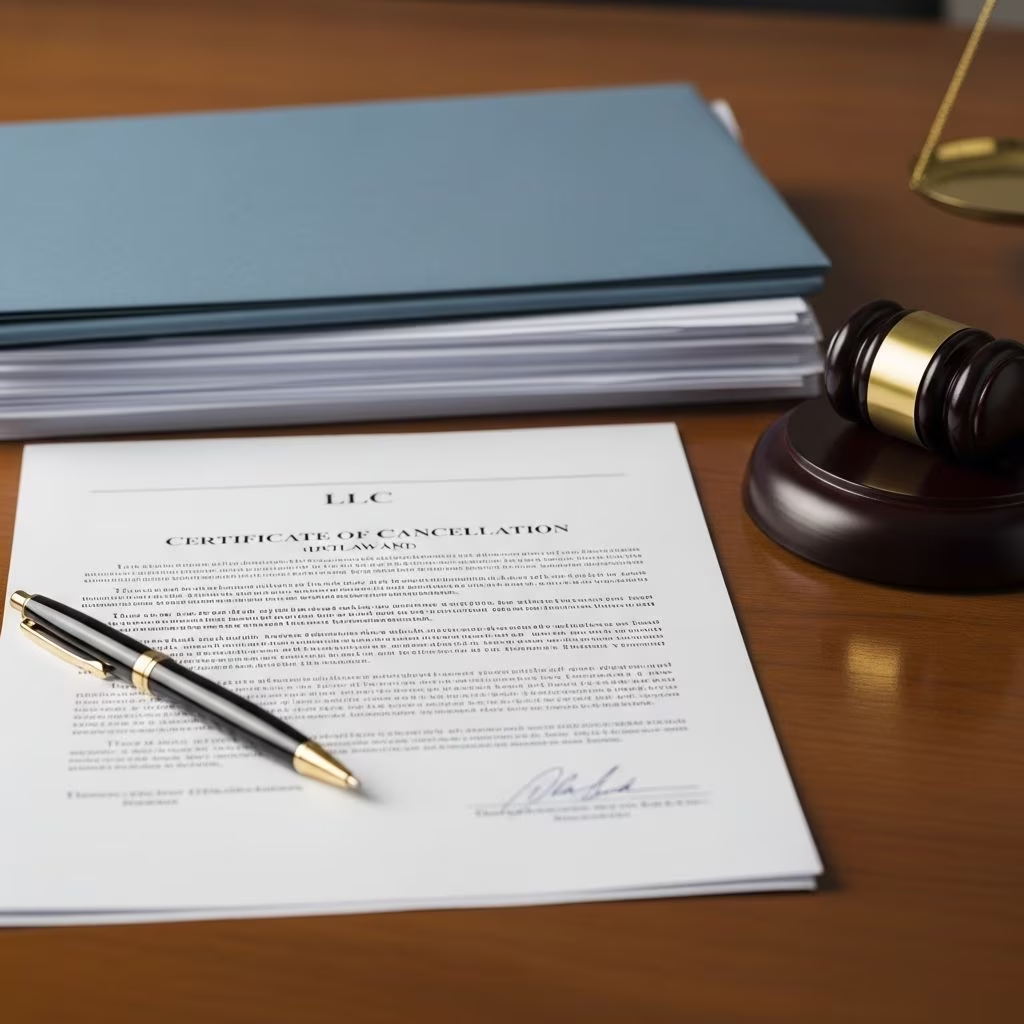
After completing all wind-down activities, you may proceed to the final step: filing the Certificate of Cancellation with the Delaware Division of Corporations. This document formally terminates the LLC’s existence as a legal entity. The certificate must be prepared according to Delaware statutory requirements and submitted with the appropriate filing fee.
Required Information on the Certificate
The Certificate of Cancellation must include the following information:
- The LLC’s registered business name exactly as it appears on the original Certificate of Formation
- The date on which the LLC’s Certificate of Formation was originally filed with the state
- The signature of an authorized member or manager of the LLC
- Confirmation that the LLC’s affairs have been wound up
Filing Methods and Associated Costs
Delaware offers two methods for submitting the Certificate of Cancellation. You may file online through the Delaware Division of Corporations website, or you may mail your filing to the state. The online filing method is more efficient and does not require a cover letter. When filing online, you will manually input the required information directly into the state’s electronic filing system.
If you choose to file by mail, you must include both the Certificate of Cancellation and a cover letter with your submission. However, the state discontinued fax filing as an option in 2020, so mail and online submissions are the only available methods.
The current filing fee for a Certificate of Cancellation is $220. This fee must accompany your filing, whether submitted online or by mail. Payment methods vary depending on the filing approach, with online filings typically accepting credit card payment and mail filings requiring a check.
Special Considerations for Complex Dissolution Situations
Some LLC dissolutions involve additional complexity that may require professional guidance. If your LLC has ongoing litigation, significant contractual obligations that cannot be easily resolved, or disagreements among members about the dissolution process, consulting with a business attorney is highly advisable. An attorney can ensure that all legal requirements are met and that member interests are properly protected.
If your LLC holds real property, you may need to handle property transfers or sales as part of the wind-down process. Real estate transactions often require title searches, deed preparation, and potentially escrow arrangements. These should be managed by a real estate attorney or experienced professional to ensure proper transfer of ownership.
Additionally, if your LLC is subject to regulatory oversight or holds specialized licenses (such as professional licenses or environmental permits), the dissolution process may involve additional notifications or filings with regulatory agencies. Research whether any regulatory agencies need to be notified of your business closure.
Timeline Expectations for Dissolution
The entire dissolution process typically takes several months, depending on the complexity of your business affairs and how quickly you can settle all obligations. Simple dissolutions with few creditors and minimal assets may be completed in 2-3 months. More complex situations involving substantial assets, ongoing litigation, or multiple creditors may take 6-12 months or longer.
Once you submit your Certificate of Cancellation to the Delaware Division of Corporations, the state typically processes the filing within 5-10 business days. Upon approval, your LLC is officially cancelled and no longer exists as a legal entity. After this point, you generally have no further state reporting requirements, though you should maintain records of the dissolution for at least seven years for tax and business purposes.
Documentation and Record-Keeping
Throughout the dissolution process, maintain thorough documentation of all actions taken. Keep copies of member voting records, liquidation manager appointments, creditor notifications, paid invoices, bank statements showing account closures, and any written agreements with members regarding asset distribution. These records protect you in the event of disputes among members or inquiries from tax authorities.
After the LLC is officially cancelled, store all dissolution records securely. These documents may be needed years later for tax audits, litigation concerning the former LLC, or clarification of member financial transactions. Many business advisors recommend keeping dissolution records for at least seven years, consistent with standard tax record retention requirements.
Frequently Asked Questions About Delaware LLC Dissolution
Q: Can an LLC be dissolved if members disagree about closure?
A: Under Delaware law, members who collectively own more than two-thirds of the LLC can authorize dissolution even if other members object. However, the objecting members retain rights to their distributions during wind-down. If significant disagreement exists, consulting an attorney is advisable to ensure proper handling of member interests.
Q: What happens if the LLC has outstanding debts when dissolution is filed?
A: Delaware law requires that all debts be paid before cancellation approval. If an LLC files for cancellation with outstanding debts, the state may reject the filing. All creditors must be satisfied, and provisions must be made for foreseeable future claims before the cancellation can proceed.
Q: Does Delaware require any clearance certificates before dissolving an LLC?
A: Delaware does not require a tax clearance certificate for LLC dissolution. However, the LLC must pay all outstanding franchise taxes. The state will not approve cancellation if franchise taxes remain unpaid, regardless of what year they are owed.
Q: Can a deceased member’s interest be distributed during dissolution?
A: Yes, if a member has passed away before dissolution is complete, that member’s interest should be distributed according to the operating agreement or to their estate representative. The liquidation manager should work with the estate to ensure proper distribution of the deceased member’s share.
Q: How long does the Division of Corporations take to approve a cancellation filing?
A: The Division of Corporations typically processes Certificate of Cancellation filings within 5-10 business days. You will receive written confirmation from the state once the filing is approved and the LLC is officially cancelled.
Q: Are there circumstances where an LLC cannot be dissolved?
A: An LLC cannot be cancelled until its affairs are properly wound up and debts are paid. If the LLC is involved in active litigation or has significant ongoing obligations, the state may delay approval. Additionally, if members do not meet the two-thirds voting requirement, dissolution cannot proceed without an operating agreement provision allowing otherwise.
References
- How to Cancel a Delaware LLC Officially and Legally — IncNow. 2024. https://www.incnow.com/delaware-llc/how-to-cancel-delaware-llc/
- How to Dissolve a Delaware LLC [Step-by-step] — LLC University. 2024. https://www.llcuniversity.com/delaware-llc/dissolution/
- How Do You Dissolve an LLC in Delaware? — Nolo. 2023. https://www.nolo.com/legal-encyclopedia/how-dissolve-llc-delaware.html
- Dissolutions and Cancellations — Delaware Division of Corporations. https://corp.delaware.gov/disso09/
- Certificate of Cancellation of a Limited Liability Company — Delaware Division of Corporations. https://corpfiles.delaware.gov/LLC_Forms/Cancellation%20-%20LLC%20-%20domestic.pdf
- Full Guide about Dissolving an LLC in Delaware — Tailor Brands. 2024. https://www.tailorbrands.com/llc-formation/delaware-llc/dissolve-llc