
Defining a Church: Federal Legal Standards
Unravel the IRS criteria and legal nuances that determine church status under U.S. federal law for tax exemptions and protections.
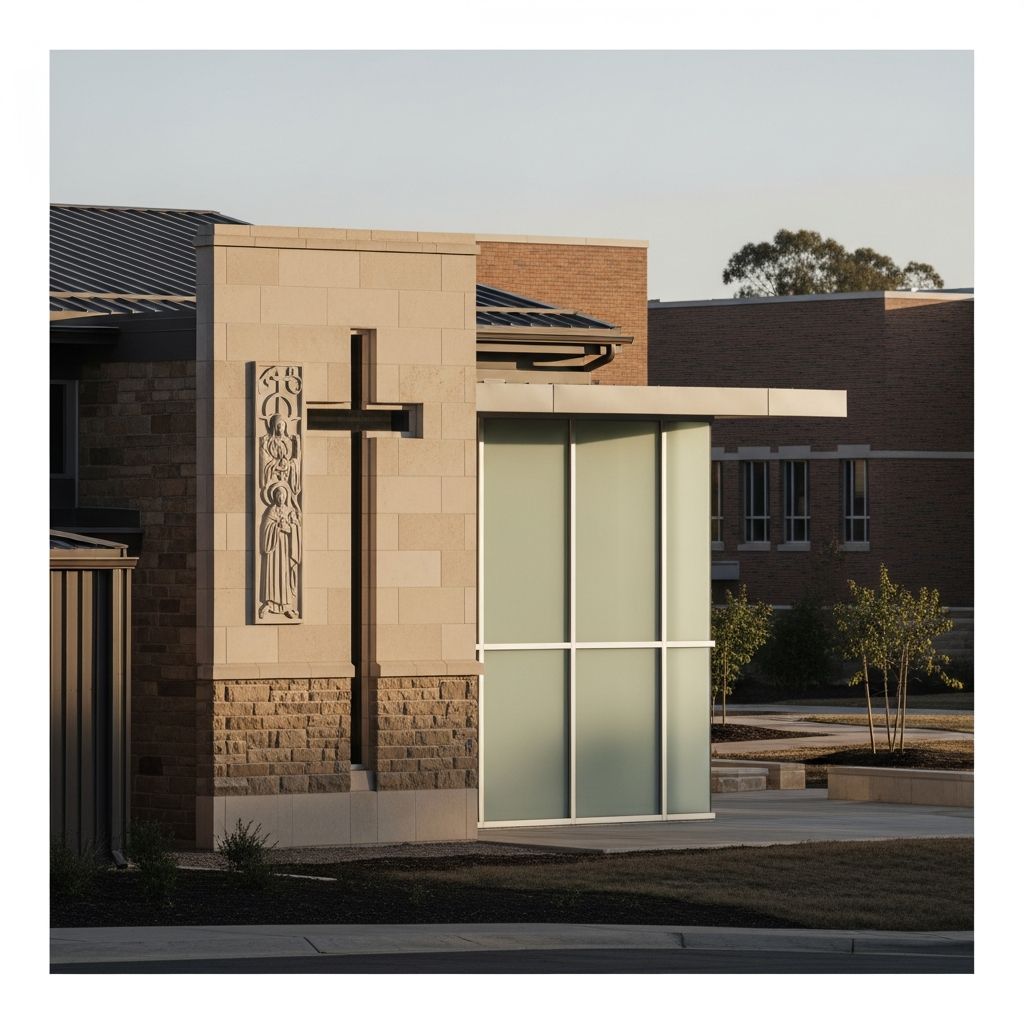
Federal law, particularly through the Internal Revenue Service (IRS), employs a set of characteristics to identify what qualifies as a church for tax-exempt purposes under Section 501(c)(3) of the Internal Revenue Code. These criteria ensure organizations meet specific organizational, doctrinal, and communal benchmarks beyond mere religious activity.
Historical and Constitutional Foundations
The concept of a church in American law draws from the First Amendment’s Establishment and Free Exercise Clauses, which prevent government establishment of religion while protecting its free practice. Courts have long grappled with defining religion and churches to balance autonomy with regulatory needs. Early Supreme Court cases, like Davis v. Beason (1890), described religion as duties to a Supreme Being, distinguishing it from specific worship forms.
This framework influences modern IRS approaches, where churches enjoy special protections, including exemption from certain filing requirements, rooted in constitutional respect for religious liberty.
Core IRS Characteristics of a Church
The IRS does not provide a rigid statutory definition but uses a list of attributes derived from court decisions and administrative guidance. Organizations are evaluated holistically; no single factor is decisive. Key characteristics include:
- Distinct legal existence: Formal incorporation or recognized legal entity separate from individuals.
- Recognized creed and form of worship: Defined beliefs and structured rituals.
- Definite ecclesiastical government: Structured leadership hierarchy.
- Formal code of doctrine and discipline: Written rules governing faith and conduct.
- Distinct religious history: Documented origins and evolution unique to the group.
- Membership not associated with other churches: Exclusive affiliation.
- Organization of ordained ministers: Trained clergy leading services.
- Ordained ministers via prescribed studies: Formal training processes.
- Own literature: Publications expounding beliefs.
- Established places of worship: Dedicated physical spaces.
- Regular congregations and services: Consistent gatherings for worship.
- Sunday schools or religious instruction: Programs for youth education.
- Preparation schools for members: Training for leadership roles.
Mainstream denominations like Catholic, Jewish, and Protestant groups readily satisfy these, but newer or unconventional groups may struggle.
Differences Between Churches and Religious Organizations
Not all faith-based entities qualify as churches. The IRS distinguishes churches from religious organizations, such as nondenominational ministries, study groups, or advancement-focused entities. Churches emphasize communal worship as their principal activity, gathering believers regularly.
| Aspect | Church | Religious Organization |
|---|---|---|
| Primary Purpose | Regular worship congregation | Teaching, mission, or study |
| Structure | Ecclesiastical government, ordained ministers | May lack formal hierarchy |
| Tax Benefits | Special audit rules, no Form 1023 required | Standard 501(c)(3) application |
| Examples | Local parishes, synagogues | Faith-based charities, seminaries |
This table highlights structural divergences; religious organizations must apply formally for exemptions, unlike presumed church status.
Court Cases Shaping Church Definitions
Judicial precedents refine IRS criteria. In Chapman v. Commissioner (1967), the Tax Court ruled an organization lacked church status without a worshiping congregation. Spiritual Outreach Society v. Commissioner (1991) denied status to a mail-order ministry absent physical gatherings.
Conversely, Church of Eternal Life and Liberty, Inc. v. Commissioner (1986) emphasized a ‘coherent group of individuals and families’ uniting for collective spiritual goals. These cases underscore congregation and worship as central.
Practical Steps for Seeking Church Status
Groups pursuing church recognition should:
- Establish legal incorporation.
- Develop bylaws outlining creed, governance, and membership.
- Hold weekly services in dedicated spaces.
- Ordain ministers through documented processes.
- Maintain records of history, literature, and activities.
While churches often bypass Form 1023, voluntary filing clarifies status. Consult IRS Publication 1828 for guidance.
Implications of Church Designation
Church status confers robust benefits: automatic 501(c)(3) exemption, no annual Form 990, limited IRS audits requiring notice, and First Amendment shields against entanglement. However, it demands adherence to public policy limits, like nondiscrimination in hiring (except ministers).
State laws may add requirements, but federal criteria dominate tax matters. Misclassification risks penalties or loss of exemptions.
Challenges for Non-Traditional Groups
Online ministries, house churches, or cults face hurdles. Virtual services may not suffice without physical presence. The IRS prioritizes tangible community over abstract beliefs, ensuring ‘church’ denotes voluntary worship assemblies united by shared faith.
Frequently Asked Questions
Does the IRS require a specific building for church status?
No, but established places of worship are a key characteristic. Consistent locations for services strengthen claims.
Can a small home group qualify as a church?
Possibly, if it meets most criteria like regular services, creed, and ministers, though scale matters less than structure.
What if my group doesn’t have ordained ministers?
Absence weakens status; formal clergy organization is typical.
Do churches file annual tax returns?
No, exempt from Form 990, unlike other nonprofits.
How does church status affect employment laws?
Churches have ‘ministerial exception’ shielding clergy hiring from some regulations.
References
- Definition of church — Internal Revenue Service. 2023. https://www.irs.gov/charities-non-profits/churches-religious-organizations/definition-of-church
- Defining “Church” in American Law — St. Mary’s Law Journal, St. Mary’s University. 2015-10-01. https://commons.stmarytx.edu/cgi/viewcontent.cgi?article=1285&context=facarticles
- Tax Guide for Churches & Religious Organizations (Publication 1828) — Internal Revenue Service. 2023-08-17. https://www.irs.gov/pub/irs-pdf/p1828.pdf
- Defining “Church” – The Concept of a Congregation — Internal Revenue Service. 1994. https://www.irs.gov/pub/irs-tege/eotopica94.pdf
- Church and State — Legal Information Institute, Cornell Law School. Accessed 2026. https://www.law.cornell.edu/wex/church_and_state
- First Amendment and Religion — United States Courts. 2023. https://www.uscourts.gov/about-federal-courts/educational-resources/about-educational-outreach/activity-resources/first-amendment-and-religion
Similar Articles








Read full bio of medha deb


