
The Rising Tide of Censorship: Defending Our Right to Read
Explore the troubling rise of book bans in America and how citizens can safeguard literary freedom.
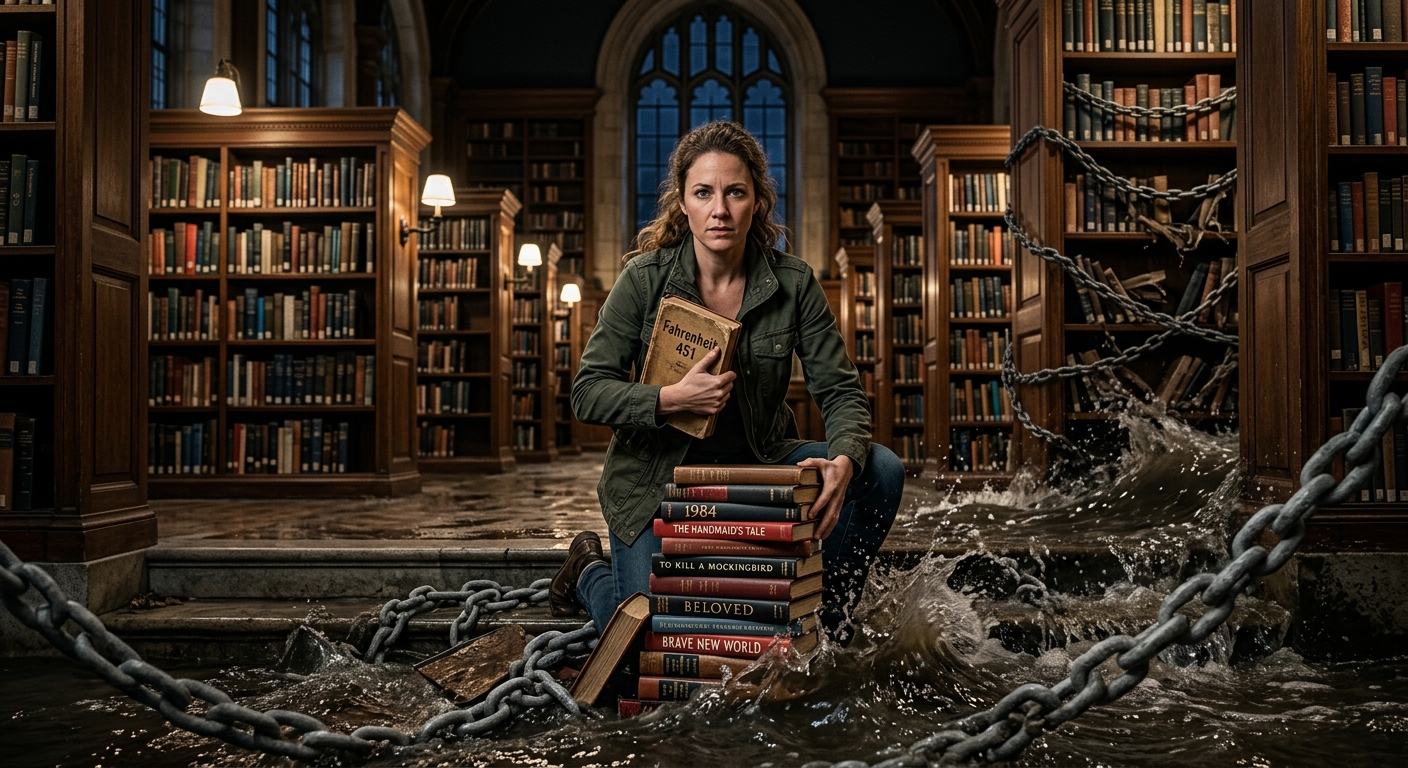
Introduction: The Battleground of the Public Library
The concept of a public library or a school classroom is inherently democratic. These are spaces designed for the unrestricted exchange of ideas, where individuals of all ages can explore diverse perspectives, histories, and realities. However, in recent years, these foundational institutions have transformed into fierce political battlegrounds. A coordinated, rising tide of censorship is sweeping across the nation, driven by legislative actions and organized political campaigns aimed at restricting what citizens—particularly students—are allowed to read.
This resurgence of book banning is not a new phenomenon, but its modern iteration is exceptionally systematic. Rather than isolated complaints from concerned individuals, today’s censorship efforts often involve sweeping legislation and state-level mandates. Politicians and advocacy groups are leveraging educational policy to remove hundreds of titles from library shelves, citing the need to protect children from ‘inappropriate’ content. Yet, a closer examination of the censored materials reveals a clear pattern: the stories being silenced disproportionately belong to marginalized communities. Defending the right to read has never been more critical, as it is inextricably linked to our broader civil liberties and the preservation of a free society.
The Mechanics of Modern Censorship
To understand the current crisis, one must examine the mechanics of how modern censorship operates. Historically, a book challenge occurred when a parent or community member filed a formal complaint about a specific text assigned in a classroom. The school would then convene a committee of educators, librarians, and parents to review the book’s educational merit against the complaint. This localized, due-process-oriented approach has largely been overridden by a more aggressive strategy.
Today, censorship is often preemptive and legislative. State lawmakers are drafting ‘educational gag orders’ that prohibit the teaching of specific concepts, loosely defined as ‘divisive.’ This vague terminology creates a chilling effect among educators and librarians, who, fearing professional retaliation, criminal charges, or loss of funding, begin to self-censor. They quietly remove books from shelves before a formal challenge is even filed. Furthermore, well-funded advocacy organizations distribute expansive lists of ‘objectionable’ books to local chapters, leading to coordinated mass challenges at school board meetings. By overwhelming the administrative review processes, these groups successfully force the temporary or permanent removal of dozens of titles at once.
The result is a heavily sanitized educational environment dictated not by literary merit or pedagogical standards, but by the loudest political voices. This circumvention of professional expertise undermines the very purpose of an educational institution, which is to teach critical thinking and expose students to a multitude of viewpoints.
What Are They Trying to Hide? Key Themes in Targeted Literature
When analyzing the literature that frequently draws the ire of politicians, distinct thematic categories emerge. The effort to restrict reading material is rarely about protecting innocence; more often, it is an attempt to control the historical narrative and suppress discussions of complex social issues. The most heavily targeted themes include:
- Narratives of Racial Injustice and American History: Books that critically examine systemic racism, the legacy of slavery, and the civil rights movement are frequently challenged. Politicians pushing these bans argue that such literature is ‘un-American’ or designed to make certain students feel guilty about their heritage. In reality, silencing these stories sanitizes history and prevents students from understanding the historical context of contemporary racial disparities.
- Voices from the LGBTQ+ Community: A staggering percentage of challenged books feature queer characters, explore gender identity, or discuss sexual orientation. These titles are often targeted under the guise of protecting minors from obscenity. However, conflating LGBTQ+ identities with inherent inappropriateness denies queer youth the vital opportunity to see themselves reflected in literature and fosters an environment of stigma and exclusion.
- Coming-of-Age and Mental Health Realities: Literature that deals with the gritty realities of adolescence—including depression, trauma, substance abuse, and physical violence—is frequently deemed ‘too dark’ for young readers. Yet, these are realities that many students face daily. Removing these books deprives vulnerable youths of a safe, fictional space to process their own struggles and deprives their peers of the opportunity to develop empathy.
The First Amendment and the Freedom to Read
The legality of book bans, particularly in public educational settings, is deeply intertwined with the First Amendment. The United States Constitution guarantees the freedom of speech, which courts have long interpreted to include the right to receive information and ideas. Public libraries and school libraries serve as vital conduits for this constitutional right.
The legal precedent regarding book bans in schools was largely shaped by the 1982 Supreme Court case, Board of Education v. Pico. In a deeply divided decision, the Court ruled that local school boards may not remove books from school library shelves simply because they dislike the ideas contained within those books. The Court recognized that while school boards have significant discretion in managing school affairs, that discretion must be exercised in a manner that comports with the transcendent imperatives of the First Amendment. Specifically, the Court noted that libraries are spaces of voluntary inquiry, distinct from the mandatory curriculum of the classroom.
However, the modern censorship movement seeks to exploit the nuances and ambiguities of this legal precedent. By framing their challenges around claims of ‘obscenity’—a category of speech not protected by the First Amendment—proponents of censorship attempt to bypass the protections outlined in Pico. This legal maneuvering transforms local school board meetings into constitutional battlegrounds, requiring vigilant defense by civil liberties advocates and concerned citizens alike.
The Psychological and Societal Cost of Erasure
Beyond the legal and political implications, the psychological toll of book banning is profound. In the field of educational psychology and children’s literature, there is a well-known concept coined by Dr. Rudine Sims Bishop: books serve as ‘mirrors, windows, and sliding glass doors.’ Books are mirrors when readers see their own lives and identities reflected back at them, validating their existence. They are windows when they allow readers to look into the lives and experiences of others, fostering empathy. They are sliding glass doors when they allow readers to step into a new world of imagination and understanding.
When politicians ban books featuring marginalized identities, they are shattering the mirrors for marginalized youth, sending a devastating message that their stories are invalid, shameful, or dangerous. Simultaneously, they are boarding up the windows for majority-culture students, restricting their worldview to a narrow, homogenous perspective. The societal cost of this erasure is a generation of students less equipped to navigate a diverse, complex, and interconnected world. Empathy is cultivated through exposure to differing perspectives; censorship starves empathy at its root.
Ten Notable Themes Caught in the Crossfire
While specific titles often grab headlines, it is more illustrative to look at the broad categories and themes of literature that are currently facing systemic suppression. The table below outlines ten recurrent targets of political censorship and the real-world implications of their removal.
| Targeted Theme / Subject Matter | Underlying Political Justification | Real-World Implication of the Ban |
|---|---|---|
| Memoirs of Enslavement and Segregation | Claimed to induce ‘guilt’ or ‘discomfort’ in readers. | Erases fundamental historical truths and stifles discussions on civil rights. |
| Queer Coming-of-Age Narratives | Mislabeled as inherently ‘obscene’ or inappropriate. | Isolates LGBTQ+ youth and stigmatizes non-heteronormative identities. |
| Anti-Fascist and Dystopian Allegories | Viewed as overly political or critical of authority. | Reduces students’ ability to recognize and critique authoritarianism. |
| Holocaust and Genocide Histories | Deemed ‘too violent’ or politically sensitive. | Risks historical amnesia regarding the world’s greatest atrocities. |
| Indigenous Histories and Perspectives | Challenges the traditional ‘manifest destiny’ narrative. | Silences native voices and perpetuates colonial myths. |
| Intersectional Feminist Fiction | Accused of promoting ‘radical’ gender ideologies. | Suppresses the history of women’s rights and gender equality movements. |
| Modern Civil Rights Biographies | Labeled as ‘divisive’ or promoting social unrest. | Prevents students from learning how systemic change is achieved. |
| Mental Health and Trauma Fiction | Considered ‘too dark’ or depressing for youth. | Denies students a safe medium to process real-world psychological struggles. |
| Graphic Novels on Global Conflicts | Visuals are stripped of context and called inappropriate. | Discredits a highly accessible medium that engages reluctant readers. |
| Immigrant and Refugee Experiences | Politicized as partisan commentary on border security. | Dehumanizes immigrant populations by erasing their personal stories. |
Actionable Steps: How Citizens Can Combat Book Bans
The fight against censorship is not limited to courtrooms and state legislatures; it is inherently a grassroots battle. Citizens who value literary freedom have a crucial role to play in pushing back against the tide of book bans. Here are actionable steps individuals can take:
- Engage with Local School Boards: School board meetings are the primary arenas where censorship battles unfold. Attend these meetings, pay attention to the agenda, and speak during public comment periods in defense of comprehensive, inclusive library collections.
- Support Anti-Censorship Organizations: Numerous civil rights and literary organizations are actively fighting book bans on a national level. Donating to or volunteering with groups that track censorship and provide legal support is a powerful way to contribute.
- Read and Distribute Banned Books: One of the most direct acts of defiance against censorship is to read the very books politicians want to hide. Form banned book clubs, purchase challenged titles from independent bookstores, and share them within your community.
- Elect Pro-First Amendment Candidates: Pay close attention to local elections, particularly for school boards and library boards. Vote for candidates who explicitly support the First Amendment and trust the professional expertise of educators and librarians.
- Report Censorship: If you become aware of a book challenge or removal in your local school or public library, report it to national tracking databases. Visibility is critical in organizing a coordinated defense.
Frequently Asked Questions (FAQs)
Are book bans legal in public schools?
The legality of book bans in public schools is highly contested and heavily dependent on context. According to the Supreme Court’s ruling in Board of Education v. Pico, school officials cannot remove books from a library simply because they disagree with the ideas or political viewpoints within them. However, books can legally be removed if they are deemed ‘pervasively vulgar’ or lacking educational suitability. Modern censorship efforts often attempt to stretch the definition of vulgarity to include any discussion of race or sexuality, leading to ongoing legal challenges by civil liberties groups.
Who is primarily responsible for challenging books?
While historically, individual parents filed the majority of book challenges concerning their own children’s reading material, the landscape has shifted. Today, the surge in book bans is largely driven by highly organized, well-funded political advocacy groups. These groups distribute expansive lists of targeted books to local chapters, leading to mass challenges across multiple school districts simultaneously. Additionally, state legislators have increasingly taken on the role of censors by passing laws that restrict educational content.
How can I find out if a book is banned in my district?
Transparency regarding book removals varies significantly by district. The best way to track local bans is to review the minutes and agendas of your local school board and library board meetings. You can also file public records requests for any formal complaints or book removal orders. On a national level, organizations that advocate for literary freedom maintain comprehensive databases and maps detailing where specific titles have been challenged or banned across the United States.
Do book bans actually stop people from reading?
Ironically, attempting to ban a book often generates significant publicity, leading to a phenomenon known as the ‘Streisand effect,’ where sales and interest in the targeted book temporarily skyrocket. However, while adults can easily purchase banned books online, bans heavily impact marginalized youth and low-income students who rely entirely on public and school libraries for access to literature. For these vulnerable populations, censorship effectively severs their access to crucial narratives.
Conclusion: A Commitment to Unrestricted Inquiry
The campaign to ban books is, at its core, a campaign to restrict thought. By dictating what literature is acceptable, politicians and advocacy groups are attempting to engineer a sanitized version of reality—one that ignores the complexities of history, silences marginalized voices, and limits the intellectual growth of the next generation. The freedom to read is not a peripheral privilege; it is the very heartbeat of a functioning democracy. Protecting this right requires continuous vigilance, community engagement, and an unwavering commitment to unrestricted inquiry. When we defend the right to read, we are defending the right to exist, to understand, and to freely engage with the world in all its diversity.
References
- Banned in the USA: State Laws Supercharge Book Suppression in Schools — PEN America. 2023-04-20. https://pen.org/report/banned-in-the-usa-state-laws-supercharge-book-suppression-in-schools/
- Book Ban Data — American Library Association (ALA). 2024-03-14. https://www.ala.org/advocacy/bbooks/book-ban-data
- Board of Education, Island Trees Union Free School District No. 26 v. Pico, 457 U.S. 853 (1982) — U.S. Supreme Court / Justia. 1982-06-25. https://supreme.justia.com/cases/federal/us/457/853/
- Mirrors, Windows, and Sliding Glass Doors — Dr. Rudine Sims Bishop / Reading Is Fundamental. 1990-03-01. https://scenicregional.org/wp-content/uploads/2017/08/Mirrors-Windows-and-Sliding-Glass-Doors.pdf
Similar Articles








Read full bio of Sneha Tete


