
Defending the Frontlines Against Mass Deportation
Exploring the legal battles and grassroots resistance against ICE enforcement.
Introduction: The Escalating Crisis of Mass Deportation
Mass deportation policies continue to shape the socio-political landscape of the United States, raising profound questions about constitutional rights and community safety. Over the past decades, immigration enforcement has expanded beyond borders and into the country’s interior, transforming local neighborhoods into arenas of federal scrutiny. Mechanisms that intertwine federal immigration enforcement with local policing effectively turn community officers into de facto immigration agents. The frontline resistance against mass deportations is fought by a coalition of civil rights advocates, community organizers, and affected families. Together, they challenge systemic overreach, fighting to preserve due process and human dignity.
Section 287(g): Blurring the Lines Between Local Police and Federal Agents
Section 287(g) of the Immigration and Nationality Act (INA), added in 1996, empowers state and local law enforcement agencies to perform specific immigration officer functions. Under the direction of U.S. Immigration and Customs Enforcement (ICE), deputized local officers can identify, process, and detain individuals suspected of civil immigration violations. ICE operates this through frameworks like the Jail Enforcement Model (processing foreign nationals booked into local jails) and the Warrant Service Officer Program (executing administrative civil immigration warrants).
While proponents argue the program acts as a force multiplier for federal authorities, critics emphasize it distorts the traditional role of local police. Deputizing local sheriffs to enforce civil immigration law creates a sprawling patchwork of enforcement. Federal agencies have heavily utilized these partnerships, prompting intense scrutiny over accountability, civil rights violations, and aggressive deportation quotas that ensnare individuals with no criminal history.
The Human, Social, and Economic Toll
When mass deportation becomes a localized reality, the social fabric of the entire community experiences severe strain. One immediate consequence is the rapid erosion of trust between immigrant communities and local civic institutions. When a routine traffic stop or a noise complaint can culminate in deportation, undocumented residents—and naturalized citizens in mixed-status families—retreat into the shadows. Research underscores this chilling effect: many Latinos and undocumented individuals report being hesitant to contact law enforcement to report violent crimes, fearing it could lead to the deportation of a family member.
This fear disproportionately impacts vulnerable populations, particularly victims of human trafficking and gender-based violence (GBV). Aggressive enforcement discourages survivors from seeking legal protection, creating a dynamic where abusers leverage a victim’s immigration status to coerce silence.
Economically, the costs of mass deportation campaigns are staggering. Undocumented workers form the backbone of critical sectors like agriculture, construction, and hospitality. Economic research indicates that abruptly removing this workforce leads to significant labor shortages, decreased regional productivity, and higher costs for consumers. In tight-knit immigrant neighborhoods, heightened ICE enforcement paralyzes local commerce. Following immigration raids, foot traffic drops, small businesses suffer revenue losses, and regional tax bases contract.
The Hidden Casualties: Psychological Trauma on Children and Families
When discussing the toll of mass deportation, the devastating psychological impact on children—millions of whom are U.S. citizens—must not be overlooked. Mass deportation campaigns systematically fracture families, leaving behind a trail of generational trauma. When a primary caregiver is abruptly detained, children face immediate economic instability, thrusting the remaining family members into deep poverty. The loss of income leads to housing insecurity and an inability to afford basic healthcare.
Beyond financial hardship, the emotional distress is catastrophic. Children who witness the apprehension of a parent, or who live under the chronic fear of sudden separation, exhibit significantly heightened rates of clinical anxiety, depression, and post-traumatic stress disorder (PTSD). Schools in heavily targeted jurisdictions frequently report severe drops in attendance following local immigration raids. Terrified parents often keep their children home rather than risk apprehension during the commute. This chronic stress negatively impacts cognitive development and academic performance, punishing innocent children for the immigration status of their parents.
Undermining Trust and Civil Liberties: The Core Controversies
Deploying federal civil immigration duties to local entities generates immense constitutional controversies. A central criticism of the 287(g) program is its profound susceptibility to racial profiling. Civil liberties organizations argue these partnerships incentivize local police to use pretextual traffic stops as a mechanism to investigate the legal status of individuals who appear to be of Hispanic descent. Such practices routinely blur the line between legitimate law enforcement and unconstitutional overreach, violating the Fourth Amendment rights of targeted individuals by initiating searches without probable cause.
Federal oversight of these cooperative programs remains alarmingly inadequate. A 2021 investigation by the U.S. Government Accountability Office (GAO) revealed that ICE failed to establish comprehensive performance goals or implement sufficient oversight mechanisms to monitor the compliance of its local law enforcement partners. The GAO concluded ICE was poorly positioned to evaluate whether local agencies were respecting fundamental civil rights.
In response, several states have pushed back. For example, in 2019, the New Jersey Attorney General issued a formal directive terminating all 287(g) agreements within the state, emphasizing that such partnerships compromise public safety by destroying trust between police and diverse populations.
On the Frontlines: Grassroots Organizing and Community Defense
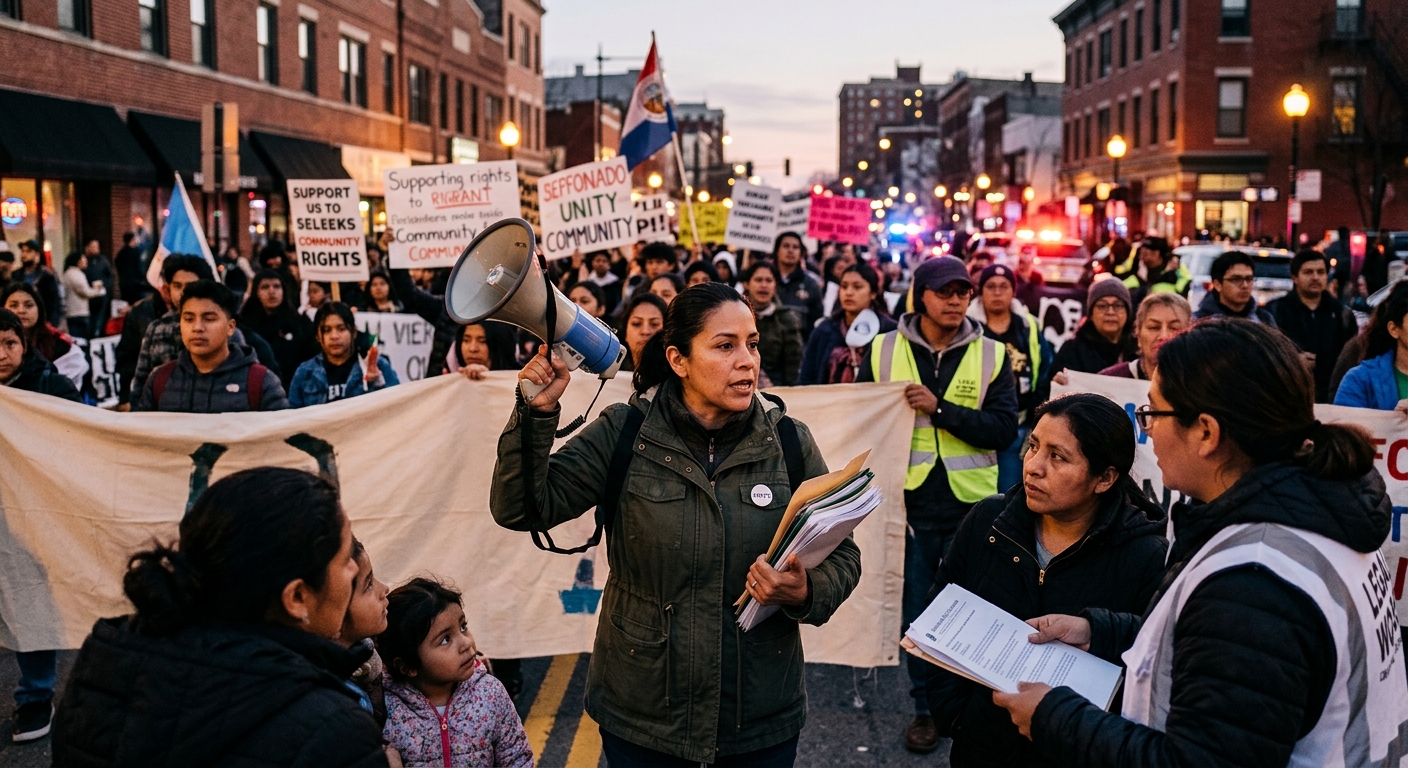
The fight against mass deportation is anchored in grassroots mobilization and community resilience. Across the country, civil rights coalitions and local advocates have built defense networks to protect their neighborhoods from aggressive ICE operations. Educational initiatives, such as “Know Your Rights” campaigns, instruct immigrants about their constitutional protections, including the right to remain silent, the right to legal counsel, and the right to refuse entry to federal agents lacking a court-ordered warrant.
Rapid response networks have been established in high-risk areas. Localized hotlines allow residents to report ICE presence or unannounced raids in real-time. Volunteer legal observers are dispatched to the scene to document encounters, ensuring agents do not violate constitutional rights or deploy excessive force. These strategies provide accountability in an enforcement system that often operates without public scrutiny.
Legislatively, organizers have successfully championed “Sanctuary” policies. These ordinances deliberately limit local governmental cooperation with federal immigration authorities. By prohibiting local police from inquiring about immigration status or holding individuals past their legal release dates on civil ICE detainers, sanctuary cities re-establish a clear separation between local public safety and federal immigration enforcement.
Strategic Litigation: Defending Due Process in the Courts
While grassroots activists organize the streets, civil rights attorneys wage a parallel battle in the courts. Strategic litigation is an indispensable tool in dismantling the legal scaffolding of the mass deportation machine. Advocacy groups file federal lawsuits to challenge the systemic denial of due process, inhumane detention conditions, and arbitrary removal of immigrants.
A primary target is the unconstitutional use of ICE detainers. A detainer is a written request issued by ICE to local jails, asking them to hold an individual beyond their scheduled release time so federal agents can take them into custody. Federal courts have repeatedly ruled that holding a person solely on a civil ICE detainer—an administrative request rather than a criminal warrant signed by a neutral magistrate—constitutes an unlawful seizure, violating the Fourth Amendment.
Legal advocates also fight to secure the right to legal counsel. Unlike criminal defendants, immigrants facing removal are not constitutionally guaranteed a government-appointed attorney. This leaves tens of thousands of vulnerable people, including asylum seekers, to navigate a hyper-complex court system alone. Impact litigation campaigns argue that deportation carries life-altering consequences equivalent to criminal incarceration and demands robust procedural protections.
Re-envisioning Immigration: A Pathway to Humane Policy
The battle against mass deportation is driven by a vision of an equitable and humane immigration system. Reversing the reliance on aggressive enforcement requires a profound paradigm shift at the federal level. Advocates continually pressure lawmakers to permanently defund programs like 287(g), arguing that taxpayer dollars should not subsidize localized racial profiling or the systematic dismantling of community trust.
A viable ethical alternative involves shifting resources toward community-based alternatives to detention (ATD). These programs provide comprehensive case management, legal navigation, and social support services to ensure individuals attend immigration hearings. ATD models have proven highly effective, drastically reducing the severe financial burdens and human suffering associated with mass incarceration.
More importantly, comprehensive legislative immigration reform remains essential. Establishing an accessible pathway to citizenship for the millions of undocumented residents already embedded in the fabric of American society is the only sustainable way to resolve this crisis. Until such federal reforms are enacted, the broad coalition of grassroots organizers, legal defenders, and community advocates will remain on the frontlines, fiercely defending the civil liberties and dignity of immigrant communities nationwide.
Frequently Asked Questions (FAQ)
What is the 287(g) program?
Section 287(g) of the Immigration and Nationality Act allows U.S. Immigration and Customs Enforcement (ICE) to delegate certain federal civil immigration enforcement powers to state and local law enforcement agencies, deputizing local police to process immigrants for deportation.
How do mass deportations affect local economies?
Mass deportations disrupt local economies by exacerbating labor shortages in critical sectors like agriculture and construction. Heightened federal enforcement drives immigrant consumers away from local commerce, leading to decreased retail sales, business closures, and lower tax revenues.
Why do some states and cities oppose cooperating with ICE?
Many jurisdictions limit cooperation with ICE because intertwining local police with immigration enforcement destroys community trust. When immigrants fear interacting with police could lead to deportation, they are less likely to report crimes, making the entire community less safe.
Can local police hold someone just because ICE asks them to?
Federal courts have increasingly ruled that local jails cannot legally hold individuals beyond their scheduled release dates based solely on an administrative ICE detainer, as holding someone without a judicial warrant violates Fourth Amendment protections against unlawful search and seizure.
References
- Delegation of Immigration Authority Section 287(g) — U.S. Immigration and Customs Enforcement (ICE). 2024-06-02. https://www.ice.gov/identify-and-arrest/287g
- Immigration Enforcement: ICE Can Further Enhance Its Planning and Oversight of State and Local Agreements — U.S. Government Accountability Office (GAO). 2021-01-27. https://www.gao.gov/products/gao-21-186
- Immigrant Trust Directive — State of New Jersey, Office of the Attorney General. 2019-09-27. https://www.njoag.gov/programs/immigrant-trust-directive/
- The Economic Effects of Deportation on the U.S. Labor Market — UNI ScholarWorks. 2025-10-07. https://scholarworks.uni.edu/jucie/vol7/iss1/2
Similar Articles








Read full bio of medha deb


