
Why Defending Family Visitation in Jails is a Human Rights Imperative
Striking the crucial balance between correctional facility security and preserving essential family bonds for incarcerated individuals.
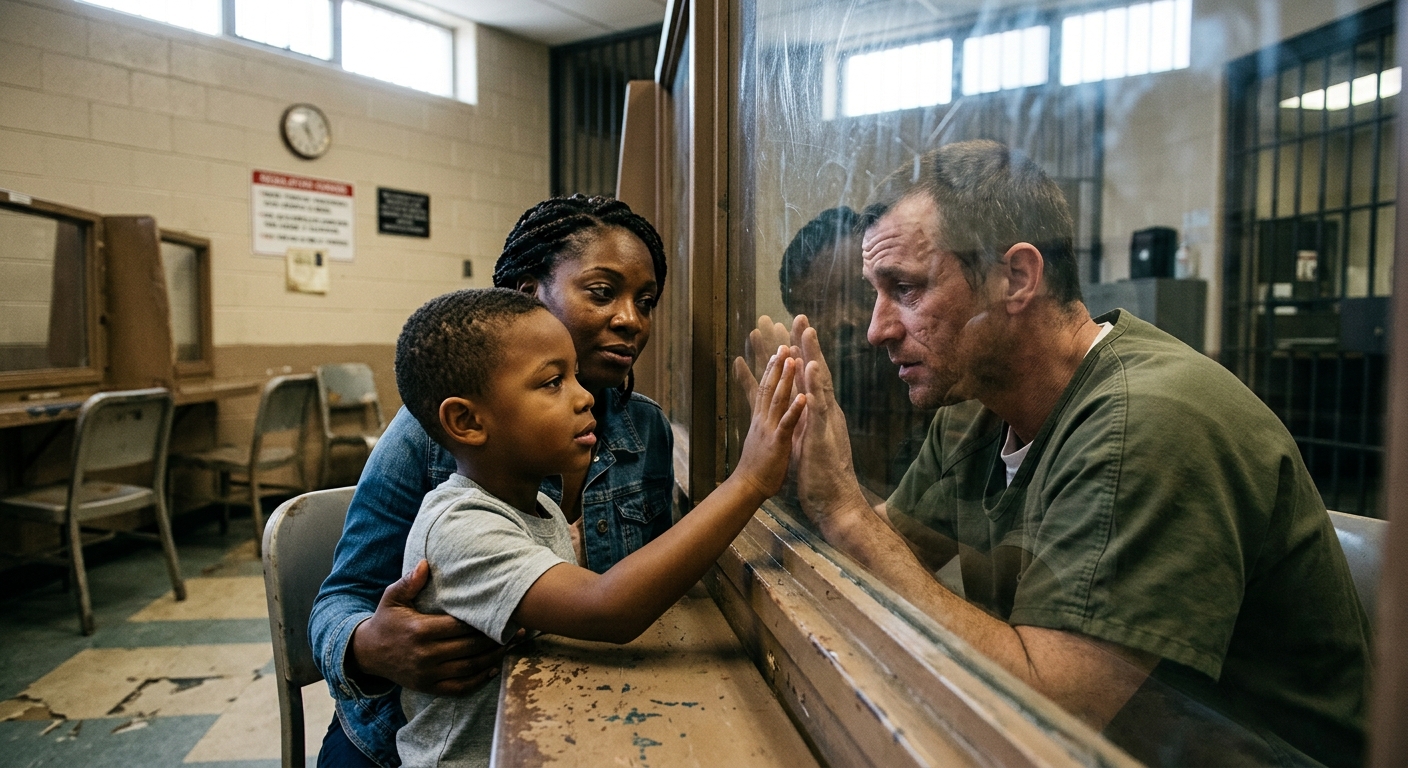
Incarceration routinely sparks fierce debates about the justice system’s primary goals: punishment, rehabilitation, or public safety. Amidst these complex discussions, one of the most fundamental aspects of humanity—family connection—often becomes a contentious battleground. Advocacy groups, civil rights organizations, and communities impacted by mass incarceration have long sounded the alarm over restrictive policies that threaten to sever the lifelines between incarcerated individuals and their loved ones. Proposals to heavily restrict in-person visitation in sprawling facilities like New York City’s Rikers Island highlight a recurring tension. Correctional administrators frequently cite security, pointing to the influx of contraband as a primary driver for lockdowns and visit restrictions. Conversely, human rights advocates argue that isolating individuals from their families is not merely a logistical policy shift, but a deeply punitive measure that inflicts severe collateral damage on communities and fundamentally undermines the rehabilitative purpose of correctional institutions.
This article delves into the critical, multi-faceted importance of preserving family visitation rights within jails and prisons. By examining the psychological toll of isolation, the profound impact on child development, empirical evidence linking visits to reduced recidivism, and international human rights frameworks, we can better understand why defending these visitations is an absolute necessity.
The Human Toll of Isolation Behind Bars
The psychological landscape of a jail or prison is inherently fraught. Individuals who are incarcerated are frequently subjected to intense stress, sensory deprivation, anxiety regarding their legal proceedings, and the constant threat of violence. Within this high-pressure environment, contact with the outside world serves as a crucial emotional anchor.
When facilities impose severe visitation limits, they push incarcerated individuals toward psychological despair. Mental health professionals have repeatedly noted that sustained isolation exacerbates pre-existing mental health conditions and can trigger new psychiatric crises. Without the grounding presence of a parent, sibling, child, or spouse, the sense of hopelessness can rapidly compound. This psychological degradation does not remain confined within the prison walls; it spills over into the broader facility environment, often resulting in increased agitation, behavioral infractions, and a more dangerous atmosphere for both the incarcerated population and the correctional staff tasked with their care.
Maintaining consistent in-person contact allows individuals to retain their identity as a member of a family and a community, rather than purely as a ward of the state. It provides a tangible reminder that there is a life waiting for them beyond their sentence, which is one of the most powerful motivators for maintaining peaceable behavior while serving time.
Ripples of Trauma: Children and Families Left Behind
When discussing the impact of visitation restrictions, the focus must immediately widen to include the innocent bystanders of the justice system: the families, and particularly the children, left on the outside. A parent’s sudden incarceration is a trauma akin to bereavement. For children, this forced separation can trigger profound psychological distress, manifesting in severe separation anxiety, depression, behavioral issues in school, and long-term developmental delays.
In-person visitation provides a unique and irreplaceable avenue for maintaining the parent-child bond. While video calls and phone time have become more common across correctional departments, they are a hollow substitute for a physical embrace, a shared smile in real time, or the comfort of a parent holding their child. Restrictive visitation policies often severely limit the length of visits, the physical contact allowed (such as restricting contact to holding hands or a brief hug at the beginning and end of a session), and the frequency with which a child can see their parent.
Advocacy groups focusing on children’s rights argue vehemently against these policies, emphasizing that penalizing children for the actions of their parents is a profound ethical failure. Denying a child the ability to visit their mother or father in a reasonably hospitable environment is not just an administrative decision; it is a mechanism that perpetuates intergenerational trauma and further destabilizes fragile family structures that are already under immense strain.
The Security vs. Human Rights Debate at High-Profile Facilities
The most common justification for imposing stringent restrictions on visitation is institutional security. Correctional departments across the country frequently argue that in-person visits are a primary conduit for contraband—ranging from illicit narcotics to weapons—entering their facilities. To combat this, administrators propose sweeping measures: eliminating physical contact, reducing available visiting days, implementing exorbitant background check requirements for visitors, or entirely replacing in-person visits with costly and often unreliable video conferencing systems.
However, investigations and advocacy reports frequently reveal a different reality, one where visitors are subjected to grueling, humiliating, and deeply inefficient processes that actively discourage families from maintaining contact. For instance, a December 2025 investigation into the visiting process at Rikers Island by the New York City Council highlighted severe systemic failures . The comprehensive report documented that a standard one-hour visit routinely morphed into an exhausting ordeal spanning five to six hours due to endless delays, arbitrary denials by staff, and abysmal communication protocols .
When security measures morph into insurmountable bureaucratic and logistical barriers, they function as a de facto ban on visitation. Advocates stress that while stopping contraband is a legitimate operational necessity, it must be achieved through means that do not infringe upon basic human rights. Improved non-invasive screening technologies, better staff training, and adequately funded facility management are proven alternatives that do not require severing critical family bonds to maintain safety.
Empirical Evidence: How Visitation Reduces Recidivism
Beyond the profound emotional and ethical arguments, there is a compelling, evidence-based case for encouraging, rather than restricting, family visitation: it is one of the most effective tools for reducing recidivism. When society’s ultimate goal is to ensure that individuals do not re-offend upon release, maintaining social ties is paramount.
Extensive criminological research has consistently demonstrated that incarcerated individuals who receive regular visits are significantly less likely to return to the justice system. For instance, a seminal and widely cited study conducted by the Minnesota Department of Corrections analyzed data over several years and found that individuals who were visited in prison had a 13 percent lower risk of felony reconviction . The data also revealed that the broader an individual’s social support system—measured by the number of different individual visitors they received—the greater the reduction in their risk of reoffending .
The mechanisms behind this success are straightforward but powerful. Family members assist in the critical reentry process by providing a built-in social safety net. They offer immediate housing, assist with job placements, and provide the financial and emotional support necessary to navigate the daunting transition back into civilian life. By severely restricting visits, correctional systems are effectively dismantling the very support networks that prevent formerly incarcerated individuals from falling back into the cycle of crime.
International Legal Frameworks and The Nelson Mandela Rules
The right to family contact is not merely an abstract ethical concept; it is deeply embedded in international human rights standards. The global community has recognized that the deprivation of liberty is the punishment itself, and that further indignities, such as forced isolation from one’s family, violate fundamental human rights principles.
The most authoritative framework on this issue is the United Nations Standard Minimum Rules for the Treatment of Prisoners, updated and famously rebranded in 2015 as the “Nelson Mandela Rules” . These robust rules establish clear benchmarks for the humane treatment of incarcerated individuals worldwide. The Nelson Mandela Rules explicitly state that prisoners must be allowed, under necessary supervision, to communicate with their family and reputable friends at regular intervals, both by correspondence and by receiving visits.
Furthermore, recent UN dialogues on the Nelson Mandela Rules have emphasized that overincarceration and the serious neglect of prison services—which often lead to the types of systemic visiting failures seen in large-scale jail complexes—threaten not only the lives of prisoners but the global community’s broader efforts to advance human rights and sustainable peace . When local jail administrations attempt to cut off visitation to streamline operations or apply punitive security measures, they place themselves in direct contradiction to universally acknowledged blueprints for twenty-first-century prison management.
Best Practices for Humane Correctional Visitation
Balancing institutional security with fundamental humanity is complex, but it is entirely feasible. Correctional systems that prioritize both safety and rehabilitation actively implement several best practices, moving away from restrictive paradigms:
- Non-Invasive Screening: Utilizing advanced body scanners and sophisticated drug-detection technology for visitors, rather than subjecting families to humiliating physical searches or enforcing outright bans on physical contact.
- Family-Friendly Environments: Creating visiting spaces that are welcoming, especially for young children. This includes providing designated play areas, colorful decor, and normalized seating arrangements rather than forcing families to speak through thick glass partitions or heavy wire mesh.
- Streamlined Logistics: Implementing efficient, transparent scheduling and processing systems so that families do not lose entire days to arbitrary administrative delays, as frequently witnessed in high-volume facilities.
- Video as a Supplement, Not a Replacement: While video visitation can be a fantastic and necessary tool for families living far away or those lacking reliable transportation, it must never be used as a fiscal or administrative justification to eliminate in-person visitation rights.
- Transparent Appeals Processes: When a visitor is denied entry, there must be a clear, swift, and fair appeals process to ensure denials are based on legitimate security threats, not administrative convenience or punitive bias.
Frequently Asked Questions (FAQs)
Why do jails and prisons try to restrict in-person visitation?
Correctional facilities typically cite security concerns, primarily the smuggling of contraband such as drugs and weapons, as the main reason for restricting visits. Administrative costs, severe staff shortages, and the logistical challenges of processing large numbers of visitors daily are also frequently cited. However, advocates and human rights organizations argue that these systemic challenges should be met with better management, adequate funding, and modern technology, rather than punishing families and incarcerated individuals by severing their contact.
Can video visitation effectively replace in-person visits?
No. While video visitation is a highly useful supplementary tool that helps connect incarcerated individuals with distant relatives or loved ones unable to travel, it lacks the profound psychological and emotional benefits of physical proximity. The inability to share a physical touch, compounded by frequent technical glitches and high fees historically charged by private telecommunications vendors, makes video a poor and inadequate substitute for real, in-person human connection.
What are the Nelson Mandela Rules?
The Nelson Mandela Rules are the United Nations Standard Minimum Rules for the Treatment of Prisoners. Updated in 2015 to honor the legacy of the late South African President Nelson Mandela, they provide universally acknowledged guidelines for prison management. The rules emphasize that prisoners must be treated with respect for their inherent dignity and value as human beings, which explicitly includes the right to maintain regular contact with their families and community.
How do family visits impact recidivism rates?
Empirical studies consistently show a strong inverse relationship between visitation and recidivism. Maintaining robust family ties during incarceration helps individuals secure immediate housing, employment opportunities, and crucial emotional support upon release. This established social safety net dramatically lowers the likelihood that they will re-offend and return to the carceral system, ultimately making communities safer.
Conclusion
The administrative drive to limit or restrict family visitation in correctional facilities represents a dangerously shortsighted approach to criminal justice—one that prioritizes operational convenience and punitive security over rehabilitation, human dignity, and the well-being of innocent children. Jails and prisons are inherently isolating environments; severing the fragile threads that connect incarcerated individuals to their loved ones only deepens the trauma and virtually guarantees a harder path to successful reentry into society. Advocacy against such restrictions is not merely about opposing a bureaucratic policy change; it is a fundamental defense of human rights. Society must unequivocally demand that correctional systems uphold their duty to protect the public without destroying the crucial family bonds that ultimately keep our communities safe, resilient, and whole.
References
- The effects of prison visitation on offender recidivism — Minnesota Department of Corrections. 2011-11-01. https://mn.gov/doc/assets/11-11%20visitation%20recidivism_tcm1089-271221.pdf
- Behind bars, not beyond rights: UN Peacekeeping & the Nelson Mandela Rules — United Nations. 2025-07-18. https://peacekeeping.un.org/en/behind-bars-not-beyond-rights-un-peacekeeping-nelson-mandela-rules
- Still Waiting: An Investigation into the Visiting Process at Rikers Island — New York City Council. 2025-12-04. https://council.nyc.gov/press/2025/12/09/nyc-council-investigation-finds-rikers-visiting-process-marred-by-long-wait-times-arbitrary-denials-and-poor-communication/
Similar Articles








Read full bio of Sneha Tete


