
Defending Black History: The Fight for Educational Truth
Preserving historical truth is an essential pillar of a functioning democracy.
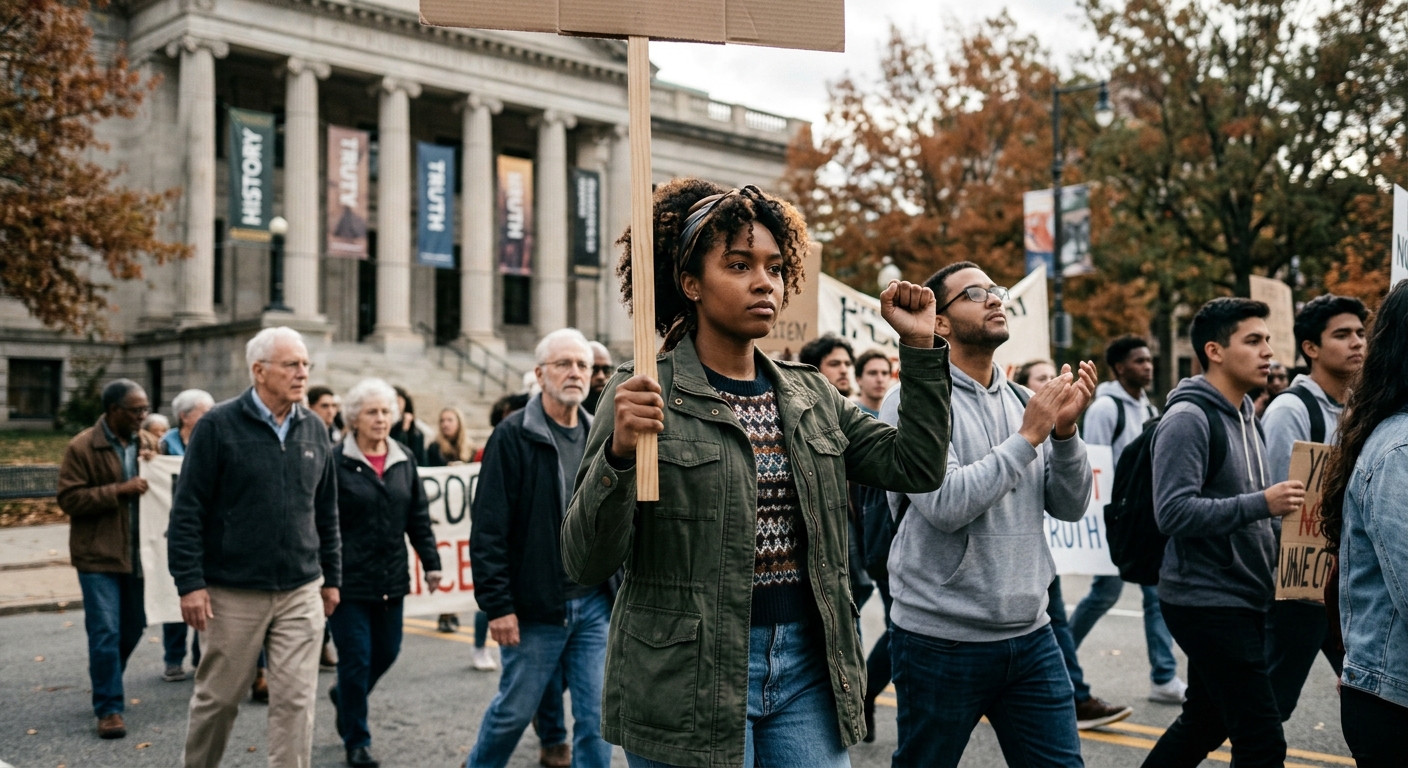
The Battle for Truth: Safeguarding Black History in Modern Education
Every February, the United States dedicates time to reflect on the monumental contributions, struggles, and triumphs of Black Americans. However, setting aside a specific month for this history is not merely a ceremonial act of celebration; it is a structural necessity for maintaining a truthful and comprehensive national narrative. In recent years, the foundation of this historical narrative has found itself under aggressive legislative and cultural attack. Efforts to sanitize the past and restrict classroom dialogue have transformed the fundamental act of teaching history into a highly contentious partisan battleground. To genuinely honor the legacy of Black Americans, society must move beyond passive remembrance and actively defend the educational integrity required to teach this history accurately and without redaction.
Education serves as the primary vehicle through which a society imparts its collective values, its past, and its civic expectations to the next generation. When educational curricula deliberately omit the grim realities of systemic oppression or systematically sideline the achievements of marginalized groups, the resulting historical amnesia leaves students deeply ill-equipped to navigate a complex, diverse modern world. Acknowledging the fullness of the American story—encompassing both its highest democratic triumphs and its darkest periods of racial subjugation—is the only viable path to building a resilient, empathetic, and fully informed populace.
The Historical Imperative of Inclusive Education
The drive to formally recognize and institutionalize the Black experience in America was born out of a desperate need to counter pervasive societal erasure. In 1926, Dr. Carter G. Woodson, a pioneering historian and the second African American to earn a doctorate from Harvard University, launched “Negro History Week.” Woodson intentionally chose the second week of February to coincide with the birthdays of Abraham Lincoln and Frederick Douglass . His profound objective was not just to carve out a few days for passive reflection, but to fundamentally legitimize the Black experience in the eyes of academia and the broader public.
During an era characterized by brutal segregation and state-sanctioned discrimination, Woodson understood that history acts as an incredibly potent tool of empowerment. He recognized that denying a people their history is a structural prerequisite to denying their humanity and stripping them of their civic rights. Over the decades, propelled by the relentless momentum of the Civil Rights Movement and continuous grassroots advocacy, this initial week evolved into a month-long, federally recognized observance. Yet, Woodson’s ultimate, overarching goal was never the perpetual segregation of Black history into a single, isolated month, but rather its total and seamless integration into the broader American educational canon. Teaching the realities of the Middle Passage, the horrors of chattel slavery, the broken promises of Reconstruction, the terror of Jim Crow laws, and the modern pursuit of civil equity is completely indispensable. It provides the crucial contextual framework necessary for understanding contemporary socio-economic disparities.
The Psychological and Academic Benefits of Truthful Pedagogy
The urgent push for inclusive curricula is grounded not merely in moral philosophy, but in robust educational psychology. Extensive research demonstrates that classrooms embracing diverse narratives and tackling systemic inequity head-on yield profound academic and psychological benefits for all students. According to the American Psychological Association, exposure to inclusive educational materials significantly enhances critical thinking, improves complex problem-solving skills, and fosters much greater civic engagement among young learners .
For students of color, seeing their ancestors, cultural heroes, and communities accurately represented in historical texts provides a crucial sense of psychological belonging. It actively dismantles the implicit curriculum of inferiority that inevitably arises when only white, Eurocentric narratives are positioned as the default human experience. Conversely, for white students, engaging with uncomfortable historical truths builds essential empathy, disrupts deep-seated internalized biases, and prepares them to participate constructively in a multicultural democracy. Shielding students from the discomfort of historical reality does not protect them; it emotionally stunts them and leaves them intellectually vulnerable in a globalized society.
The Mechanics of Modern Educational Censorship
Despite the overwhelmingly clear benefits of a comprehensive, inclusive education, a fierce political backlash has emerged, seeking to roll back decades of pedagogical progress. A highly coordinated wave of state legislation has swept across the United States, explicitly designed to chill speech and restrict exactly how educators can discuss race, gender, and American history. According to a 2026 comprehensive report by PEN America, state legislators have recently introduced dozens of bills in a single legislative cycle specifically targeting higher education, aggressively complementing the hundreds of policies already restricting K-12 public school classrooms .
Often, these widespread legislative efforts operate under the strategic guise of banning “Critical Race Theory” (CRT). Originally a specialized academic framework used primarily in legal scholarship to analyze how institutions and laws perpetuate systemic racism, CRT has been intentionally redefined by political activists as a catch-all boogeyman. By maliciously branding virtually any classroom discussion of diversity, equity, or historical racism as “CRT,” proponents of these restrictive bills have successfully stoked parental anxieties and passed sweeping “divisive concepts” laws.
These educational gag orders are intentionally vague, typically forbidding any instruction that might cause students to feel “discomfort,” “guilt,” or “anguish” regarding the historical actions of their race or sex. Because emotional “discomfort” is a highly subjective metric, educators are effectively forced into a continuous state of chronic self-censorship. Fearful of losing their teaching licenses, facing vicious public harassment, or causing their cash-strapped school districts to lose critical state funding, many well-intentioned teachers opt to skip crucial historical events entirely. The tragic result is a sanitized, heavily redacted version of history that completely fails to reflect the lived reality of millions of Americans.
The Book Ban Epidemic and First Amendment Implications
Accompanying this fierce legislative attack on public school curricula is a truly staggering surge in book bans within public school libraries. Highly organized advocacy groups and local politicians have mobilized to aggressively remove literature that centers on the experiences of Black Americans, Indigenous peoples, and the LGBTQ+ community. Books detailing the brutal legacy of slavery, the heroic struggles of the Civil Rights movement, or even fictionalized accounts exploring modern racial injustice are frequently targeted under the flimsy pretext of being “inappropriate,” “sexually explicit,” or fundamentally “un-American.”
This systemic, politically motivated removal of literature raises profound constitutional questions. Public school libraries have long been recognized as distinct educational environments devoted to free inquiry, where students possess a fundamental right to receive information and independently explore diverse ideas. In the landmark 1982 Supreme Court case Island Trees Union Free School District v. Pico, the Court explicitly established that local school boards cannot remove books from library shelves simply because they disagree with the political or social ideas contained within those texts .
Legal scholars and civil rights advocates continually note that while individual parents undoubtedly have the right to guide their own child’s reading habits, they do not possess the constitutional authority to violently dictate library access for an entire student body . When state actors or politically motivated school boards systematically remove books written by Black authors or books that critically discuss structural racism, they are not protecting children; they are actively engaging in unconstitutional viewpoint discrimination. This blatant, unapologetic infringement on First Amendment rights deeply threatens to erode the foundational principles of a free, open, and democratic educational system.
Decoding the Censorship: What is Actually Being Erased?
To truly grasp the severe magnitude of this educational backsliding, one must carefully examine exactly what specific topics are being relentlessly targeted by these curriculum gag orders and library book bans. The table below clearly illustrates the most common historical themes currently facing censorship, juxtaposed against their critical educational value.
| Censored Theme / Subject Matter | Common Pretext for Censorship | True Educational Value |
|---|---|---|
| The Institution of Chattel Slavery | Claims that it causes intense “guilt” among white students and is too graphic. | Explains the core economic foundation of early America and the deep roots of systemic racial wealth gaps. |
| Jim Crow Laws & Segregation | Labelled as “divisive” or accused of being overly focused on past racial animus. | Demonstrates precisely how legal frameworks were strategically used to strictly enforce white supremacy post-Reconstruction. |
| The Civil Rights Movement | Often heavily sanitized; the radical actions of figures like MLK are purposely downplayed. | Highlights the immense power of collective civic action, civil disobedience, and the ongoing struggle for constitutional equity. |
| Contemporary Systemic Racism | Falsely and maliciously branded as “Critical Race Theory” in K-12 settings. | Allows students to critically analyze and understand modern disparities in housing, healthcare, and the criminal justice system. |
When these vital historical themes are systematically stripped from daily lesson plans, the educational curriculum inherently shifts to artificially uphold a mythical narrative of unbroken national innocence. This destructive fiction actively prevents the next generation of voters and leaders from developing the necessary analytical tools required to identify, understand, and ultimately dismantle ongoing systemic inequalities.
Mobilizing Against Erasure: A Resilient Community Response
The aggressive assault on historical truth has not gone unanswered. Across the entire nation, a incredibly robust, highly diverse counter-movement has materialized, composed of passionate students, concerned parents, dedicated educators, and prominent civil rights organizations. High school students have bravely staged mass walkouts to protest restrictive curriculum changes, acutely recognizing that their fundamental right to a high-quality, truthful education is being dangerously compromised. Meanwhile, public and school librarians have courageously emerged as frontline defenders of the First Amendment, often enduring severe personal threats and targeted harassment simply to keep diverse, challenging literature available on the shelves.
Simultaneously, major legal advocacy groups are actively challenging these unconstitutional educational gag orders and blatantly discriminatory book bans in federal courts, fiercely arguing that these restrictive laws violate both the First and Fourteenth Amendments. On a grassroots level, community-led reading groups and independent “banned book” libraries are rapidly springing up to ensure that young people still have unfettered access to the vital literature their own schools are desperately attempting to hide. This inspiring grassroots mobilization definitively proves that the public demand for absolute historical truth is a powerful, deeply unifying force capable of overcoming partisan censorship.
Frequently Asked Questions (FAQs)
Why is teaching Black history considered essential to teaching American history?
Black history is inextricably and permanently woven into the very fabric of the American story. From the nation’s early economic foundations, which were built heavily upon exploited enslaved labor, to the massive cultural, scientific, and political innovations driven by Black Americans over centuries, it is simply impossible to accurately understand the United States without comprehensively studying Black history. Isolating it as a minor niche subject deeply diminishes its central, foundational role in the nation’s ongoing development.
What exactly are “educational gag orders”?
Educational gag orders are restrictive state laws or local school board policies specifically designed to limit how teachers can instruct or discuss topics like race, gender, and systemic inequality. They almost always rely on purposely vague language prohibiting “divisive concepts.” This intentional vagueness creates a severe chilling effect, leading terrified educators to heavily self-censor their lessons out of a valid fear of professional retaliation, termination, or public smearing.
How does the First Amendment protect access to diverse books in public schools?
The First Amendment strongly protects the freedom of expression and the inherent right of citizens to receive information. In the specific context of public schools, libraries are legally considered places of voluntary, open inquiry. Established Supreme Court precedent dictates that school officials and politicians cannot simply remove books from library shelves solely because they personally disagree with the political, social, or ideological viewpoints expressed within those specific texts.
What is the actual definition of Critical Race Theory (CRT)?
Critical Race Theory is a highly advanced, complex academic framework, primarily taught only in law schools and graduate-level university programs, that critically examines how racism is deeply embedded in legal systems, institutions, and public policies. In recent, highly polarized political discourse, the term has been intentionally co-opted and severely misused by activists to describe almost any standard K-12 lesson plan that simply acknowledges historical racism, celebrates diversity, or promotes social equity.
Conclusion
Properly honoring Black history requires far more than issuing passive, performative tributes during the short month of February. It urgently demands an unwavering, year-round commitment to fiercely defending the integrity of our public educational systems against relentless ideological censorship. The profound stories of resilience, systemic oppression, unmatched brilliance, and ongoing struggle that intricately define the Black experience are absolutely essential components of the overarching American truth. When society passively allows partisan political agendas to sanitize classrooms and empty library shelves of diverse voices, it deeply betrays the fundamental core principles of a functioning democratic society. As we collectively look toward the future, we must vividly recognize that protecting the freedom to learn is undeniably one of the most vital civil rights battles of our modern era. True honor and patriotism lie in the relentless pursuit, vigilant preservation, and fearless teaching of the truth.
References
- Carter G. Woodson Home — National Park Service. 2025-07-26. https://www.nps.gov/cago/index.htm
- The benefits of diversity education — American Psychological Association. 2022-09-08. https://www.apa.org/topics/diversity-equity-inclusion/education-benefits
- Expanding the Web of Control — PEN America. 2026-01-15. https://pen.org/report/expanding-the-web-of-control/
- Book Bans Violate the First Amendment: Protecting the Right to Access Diverse Ideas in Education — Vermont Law Review. 2026-02-11. https://lawreview.vermontlaw.edu/book-bans-violate-the-first-amendment/
Similar Articles








Read full bio of Sneha Tete


