
Defending the Ballot Box: The Battle Over Mass Voter Challenges
Legal advocates battle mass voter challenges to protect democratic rights.
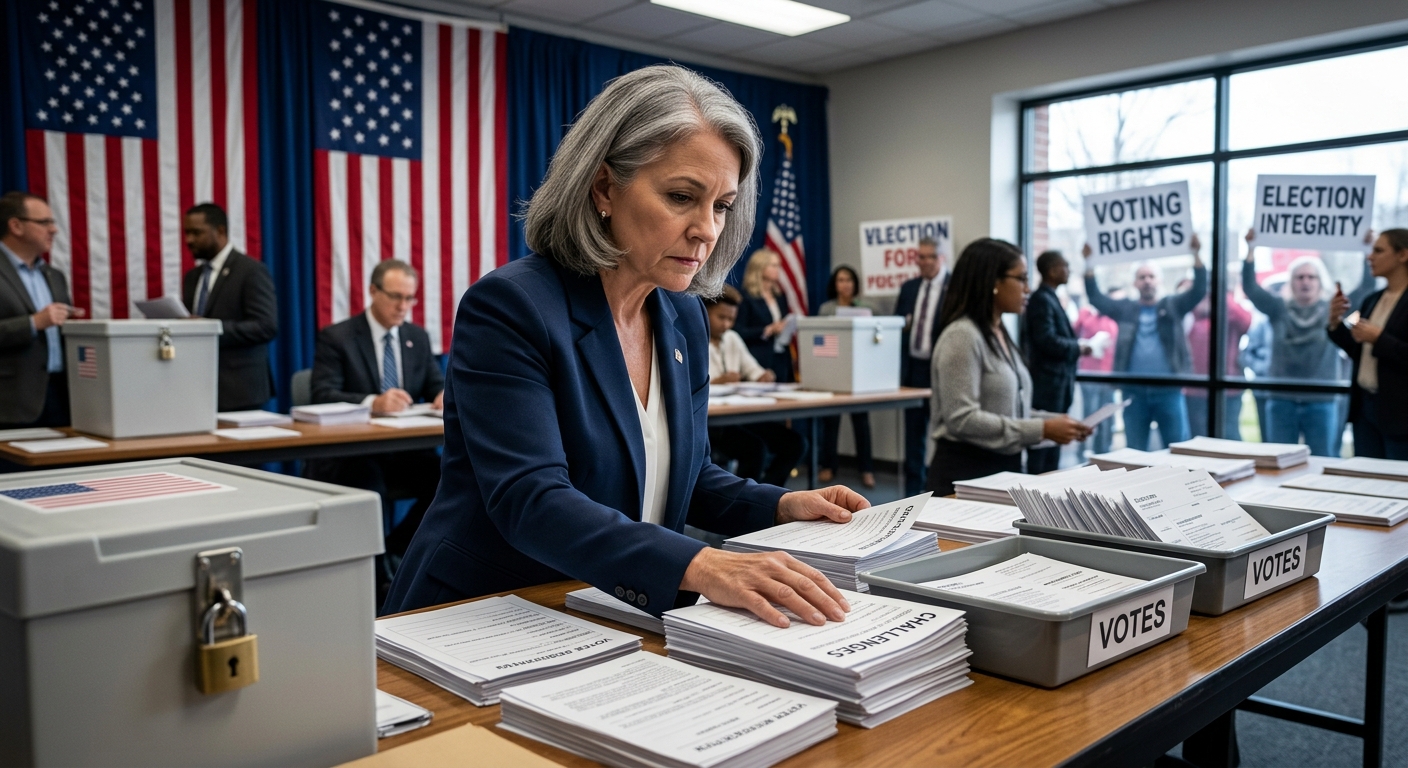
Safeguarding Democracy: The Escalating Conflict Over Ballot Access
The bedrock of any democratic society is the unhindered ability of its eligible citizens to cast a ballot and have that vote definitively counted. Over the last decade, however, the administrative mechanisms of elections have increasingly become highly contested battlegrounds for partisan and ideological conflicts. Among the most contentious of these legal and administrative battlefronts is the dramatic surge in mass voter challenges. This controversial tactic occurs when individuals or specialized organizations submit lists containing thousands of names to local county election boards, aggressively demanding that these specific individuals be investigated, flagged, or entirely removed from the active voter rolls.
Proponents of this practice vigorously argue that mass challenges are a necessary, citizen-led step for maintaining clean voter databases and ensuring broad election integrity. Conversely, civil rights advocates and legal scholars warn that the industrialization of these challenges frequently skirts legal boundaries. Critics point out that these massive data dumps disproportionately target vulnerable demographics, operate on deeply flawed data methodologies, and place an unbearable, chaotic strain on local election infrastructure right before critical voting deadlines. This comprehensive analysis explores the complex anatomy of modern mass voter challenges, the vital federal and state legal safeguards designed to protect voters from disenfranchisement, and the ongoing, rigorous efforts in the courts to ensure equitable access to the polls for all eligible citizens.
The Evolution of Voter Eligibility Disputes
Historically, the ability to challenge a fellow citizen’s right to vote was deeply rooted in localized, personal knowledge. For example, a neighbor might inform the local election board if they had direct, irrefutable knowledge that someone had permanently moved out of state or had passed away. These traditional, individualized challenges were sporadic, easily verifiable, and rarely disrupted the broader administrative flow of county election offices.
However, the modern landscape of voter list maintenance has radically and troublingly shifted. Empowered by the rapid proliferation of big data and specialized software applications, private political groups are now capable of cross-referencing vast, frequently flawed databases to generate algorithmic hit lists of thousands of ostensibly ineligible voters . These automated matches often rely on comparing state voter rolls with the United States Postal Service’s National Change of Address (NCOA) registry or parsing through varied county property tax records.
The fundamental flaw in this industrialized methodology is its sheer lack of nuance and context. A university student attending college out of state, a military service member on temporary active deployment, or an individual who relies on a post office box due to housing instability or domestic violence protections might easily be incorrectly flagged by an algorithm as having an invalid residential address. When these error-riddled lists are submitted en masse to county clerks, they force local election officials to expend limited, taxpayer-funded resources investigating each individual claim, frequently in the crucial, high-stress weeks leading immediately up to a major election.
The Epicenter of the Voting Rights Struggle
Few places illustrate the intensity and high stakes of this modern electoral conflict as vividly as the state of Georgia. In the turbulent wake of highly scrutinized national elections, the state has experienced an unprecedented volume of voter eligibility disputes. Well-funded advocacy groups and motivated individual citizens have utilized specific provisions in state election law to aggressively challenge the registrations of hundreds of thousands of their fellow residents.
This massive surge in challenges is not accidental or organic. It is the direct result of coordinated, highly organized campaigns by organizations intensely focused on what they term “election integrity.” In numerous instances, tens of thousands of names have been aggressively submitted for review within a single, geographically concentrated county. Civil rights organizations and voting advocates point out that the heavy burden of these mass challenges inevitably falls on minority communities, young voters, and those with lower socioeconomic status—demographic groups that traditionally experience significantly higher rates of transient housing and mobility.
A prominent public policy institute has extensively documented how these mass submissions frequently operate on incomplete, outdated, or fundamentally unreliable data. If left unchecked by vigilant civil rights litigators and the courts, these data-driven campaigns effectively result in constructive voter purges, stripping eligible citizens of their fundamental constitutional rights without due process .
Legal Safeguards: Shielding the Electorate from Purges
To fully understand the legal battle against unwarranted voter removal, one must closely examine the robust federal and state legal scaffolding that exists to protect the American electorate. The most significant and powerful federal shield against arbitrary voter roll manipulation is the National Voter Registration Act of 1993 (NVRA), commonly referred to in public discourse as the “Motor Voter Act” . The NVRA was carefully designed by Congress not only to make it significantly easier for Americans to register to vote but also to establish extremely strict, uniform guidelines regarding exactly how, when, and why states can remove individuals from their official voter rolls.
Crucially, the NVRA explicitly mandates that any systematic program intended to clean or maintain voter rolls must be entirely completed no later than 90 days before a federal election. This mandatory “quiet period” is intentionally designed to prevent chaotic, eleventh-hour roll purges that would invariably leave legally registered voters with insufficient time to correct administrative errors, respond to notices, or formally appeal their removal before Election Day.
In addition to this strong federal baseline, many states have enacted their own stringent statutory deadlines. For instance, specific state regulations often stipulate that county election officials must legally cease considering any eligibility challenges within a defined window—such as 45 days—prior to an election. When coordinated mass challenges are purposefully submitted during these heavily protected periods, they represent a direct, flagrant violation of the legal frameworks intended to guarantee a smooth, fair, and reliable electoral process. Furthermore, Section 2 of the landmark Voting Rights Act of 1965 strictly prohibits any voting practice, administrative procedure, or legal maneuver that results in the denial or abridgment of the right of any citizen to vote on account of race or color .
Mobilizing the Legal Defense in the Courts
Recognizing the severe threat posed by industrialized, software-driven voter challenges, diverse coalitions of civil liberties organizations, dedicated legal advocates, and concerned citizens have mounted robust, aggressive defenses within the judicial system. Their primary legal strategy frequently involves rapid, emergency judicial intervention to immediately halt the processing of mass challenges submitted too close to an active election date.
When a local county board of elections is suddenly inundated with a controversial list of thousands of challenged voters, advocacy groups frequently file emergency motions for temporary restraining orders (TROs) or seek to officially intervene in ongoing litigation on behalf of the targeted voters. These complex legal actions meticulously argue that processing unsubstantiated, mass challenges directly violates both explicit state election laws and the NVRA’s strict quiet period provisions.
Federal and state judges have increasingly ruled in favor of protecting the electorate. In several recent, high-profile judicial decisions, courts have issued stern mandates requiring that election officials immediately stop considering challenges submitted within the prohibited pre-election windows, completely regardless of when the initial lists were compiled or submitted by activists. These vital legal victories are pivotal for democratic health. They not only immediately restore the active registration status of thousands of eligible voters but also help establish critical, long-lasting jurisprudence that legally reinforces the strict boundaries of permissible voter list maintenance.
The Anatomy of Voter Challenges: A Comparative Overview
To fully grasp the severe paradigm shift in voter list maintenance, it is highly instructive to visually contrast traditional, localized challenge methods with modern, industrialized tactics utilized by contemporary data-activists.
| Operational Feature | Traditional Voter Challenge | Industrialized Mass Challenge |
|---|---|---|
| Primary Origin | Personal, localized knowledge (e.g., a neighbor or local official) | Algorithmic database cross-referencing and software tools |
| Scale of Operation | Individual or highly localized small groups (typically 1-10 voters) | Massive, county-wide scale (hundreds or tens of thousands of voters) |
| Evidentiary Base | Direct observation, specific, highly verifiable local documentation | Broad data matching, often utilizing outdated or misinterpreted address lists |
| Administrative Impact | Minimal, easily manageable administrative burden on local clerks | Severe resource strain, backlog generation, and financial cost to the county |
| Risk of Disenfranchisement | Relatively low risk of false positives | Extremely high risk, specifically impacting students, military, and transient populations |
The Severe Human and Administrative Toll
Beyond the sterile environments of courtrooms and complex legal briefs, the rapid proliferation of mass voter challenges inflicts a highly tangible, deeply damaging human cost. For the individual, law-abiding voter, receiving an unexpected official notice that their constitutional right to vote is in immediate jeopardy can be deeply intimidating and incredibly confusing. It creates a purposeful chilling effect on civic participation. For individuals who already face steep structural barriers to voting—such as hourly wage workers who cannot afford to take uncompensated time off to attend a mid-day county challenge hearing, or elderly citizens without reliable transportation—the daunting prospect of having to officially prove their eligibility can easily result in them abandoning the democratic process altogether.
Furthermore, the heavy administrative burden placed on local governments is equally severe and often entirely overlooked. Local election offices, which are frequently critically underfunded and significantly understaffed, are suddenly forced to completely divert their operational attention away from vital election preparation. Instead of training poll workers or testing voting machines, they must process towering mountains of paperwork generated by these mass challenges. Election administrators must meticulously investigate the varied claims, draft and send legal notifications to the challenged voters, and host lengthy public hearings. This massive diversion of finite resources can directly lead to much longer lines at polling places, severe delays in processing legitimate new voter registrations, and a generalized, chaotic degradation of the voting experience for every single resident in the community. When dedicated election workers are perpetually tied up adjudicating database-generated anomalies, the entire operational infrastructure of local democracy is fundamentally weakened.
Strategic Resilience and the Democratic Path Forward
Defending the fundamental right to vote in the modern, data-driven era requires perpetual vigilance and strategic innovation. While recent string of court victories have successfully parried some of the most aggressive and legally dubious mass challenge efforts, the underlying software tools and ideological motivations driving them remain entirely intact. Consequently, pro-democracy organizations are actively transitioning from purely reactive, defensive legal postures to highly proactive, community-based strategies.
This proactive approach includes offering extensive, easily digestible legal guidance to local election officials on exactly how to legally and efficiently dismiss frivolous challenges that fundamentally lack probable cause. It also heavily involves funding large-scale public education and grassroots campaigns to directly inform voters of their precise legal rights, the strict deadlines for voter registration, and the exact administrative steps to take if their eligibility is suddenly questioned. The ongoing resilience of the American electoral system thoroughly depends on this multi-faceted, unified approach: rigorous, uncompromising legal defense in the courts, robust administrative and financial support for local election workers, and an informed, deeply engaged electorate that refuses to be intimidated.
Frequently Asked Questions (FAQ)
What exactly constitutes a mass voter challenge?
A mass voter challenge occurs when a single individual, political operative, or organization submits a very large list—often containing hundreds or tens of thousands of names—to a local county election board, broadly claiming those specific individuals are legally ineligible to vote. In the modern era, these massive lists are almost entirely generated by specialized computer software that aggressively cross-references various public and private databases, rather than relying on personal knowledge of a voter’s actual residency.
Can my voter registration be legally canceled right before Election Day?
Generally, no. Under strict federal law, specifically the National Voter Registration Act (NVRA), states are expressly prohibited from conducting systematic, broad-based programs that remove voters from the rolls within 90 days of a federal election. Additionally, many states have enacted their own protective laws preventing the official consideration of voter challenges within a certain statutory timeframe, such as 45 days immediately preceding an election.
Why do software-driven voter challenges so frequently produce errors?
Algorithmic data-matching tools frequently struggle to comprehend the complex nuances of human lives and residential habits. They may erroneously flag someone as having permanently moved based merely on a temporary change of address (such as a university student living away at college, or a military service member on temporary deployment). They also frequently fail to account for individuals who must utilize P.O. boxes due to unstable housing situations or for personal safety reasons.
What specific steps should I take if I find out my voter registration has been challenged?
If your registration is legally challenged, you will typically receive an official notification in the mail from your local county election office. It is absolutely crucial to respond to this official notice as promptly as possible. You can usually successfully resolve the issue and protect your registration by providing simple documentation of your current residency, such as a recent utility bill, a valid state-issued ID, or a bank statement. You can usually submit these documents by mail, through an official online portal, or by attending an in-person hearing.
References
- A data tool being used to challenge voter registrations is raising many concerns — NPR. 2024-06-20. https://www.npr.org/2024/06/20/nx-s1-4991945/voter-registration-mass-challenges-georgia
- Mass Voter Challenges and Voter List Maintenance in Georgia — Brennan Center for Justice. 2024-06-17. https://www.brennancenter.org/our-work/research-reports/mass-voter-challenges-and-voter-list-maintenance-georgia
- The National Voter Registration Act Of 1993 (NVRA) — US Department of Justice. 2024-03-08. https://www.justice.gov/crt/national-voter-registration-act-1993-nvra
- Section 2 Of The Voting Rights Act — US Department of Justice. 2023-09-12. https://www.justice.gov/crt/section-2-voting-rights-act
Similar Articles








Read full bio of Sneha Tete


