
Deed Of Reconveyance: 5 Steps To Secure Clear Title
Unlock full property ownership: Master the deed of reconveyance process after mortgage payoff for clear title and peace of mind.
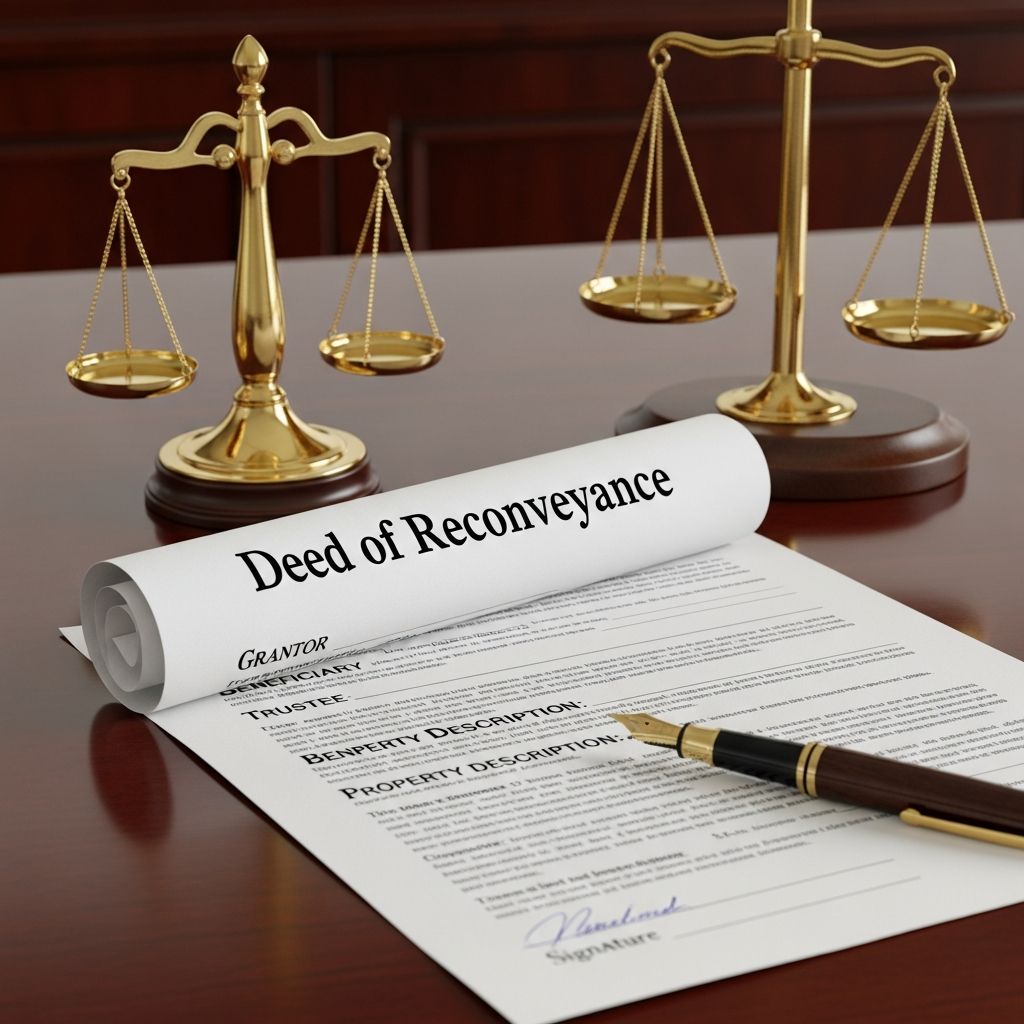
Completing a mortgage payment marks a major financial milestone, but it also triggers specific legal steps to confirm your full ownership. A
deed of reconveyance
serves as the critical document that formally transfers property title back to you from the lender or trustee, eliminating any lingering liens. This guide explores its purpose, mechanics, and practical applications in depth.Understanding Property Financing Structures
Real estate transactions often involve loans secured by the property itself. In many U.S. states, lenders use a
deed of trust
instead of a traditional mortgage. This legal arrangement places the property title in the hands of a neutral third-party trustee—typically a title company or bank—until the loan is repaid. The borrower, known as the trustor, retains equitable ownership but not legal title.During the loan term, this setup protects the lender (beneficiary) by allowing foreclosure through the trustee if payments default. Unlike standard mortgages requiring court involvement, deeds of trust enable non-judicial foreclosures, streamlining the process for lenders.
- Trustor: Borrower who purchases and occupies the property.
- Trustee: Neutral holder of legal title.
- Beneficiary: Lender with financial interest.
Upon full repayment, the trustee executes the reconveyance to restore complete control to the trustor.
Core Purpose and Legal Significance
The primary role of a deed of reconveyance is to release the lender’s security interest, proving the debt is satisfied. It publicly declares that no liens encumber the property, enabling unrestricted sale, refinance, or transfer.
Without this document recorded in public records, potential buyers or refinancers might question the title’s clarity, complicating transactions. It acts as irrefutable evidence of payoff, safeguarding against erroneous lender claims.
| Document Type | Used In | Key Effect |
|---|---|---|
| Deed of Reconveyance | Deed of Trust States | Transfers title from trustee to trustor |
| Satisfaction of Mortgage | Mortgage States | Releases lender’s lien |
| Full Reconveyance | Both | Confirms complete lien release |
This table highlights variations; always verify state-specific terminology.
Step-by-Step Issuance Process
Reconveyance isn’t automatic—proactive steps ensure timely execution. Here’s the typical workflow:
- Final Payment: Submit the last mortgage installment. Lenders often apply it immediately but may take 30-60 days to process payoff statements.
- Request Submission: The lender or servicer issues a ‘Request for Reconveyance’ to the trustee, including payoff confirmation.
- Document Preparation: Trustee drafts the deed, detailing parties, property, and repayment proof. Signatures from trustee and notary follow.
- Recording: File with the county recorder’s office. Fees vary ($20-$100); recording perfects the public record.
- Delivery: Receive certified copies for your records, title insurance updates, and future use.
Delays can occur if trustees overlook requests; follow up weekly post-payoff.
Essential Components of the Document
State laws dictate exact formatting, but standard elements include:
- Full names and addresses of trustor(s) and trustee.
- Precise property description, including parcel number from original deed.
- Statement affirming full loan repayment and lien release.
- Execution date and notary acknowledgment.
- Recording information references.
These details ensure unambiguous title transfer. Variations exist; for instance, California mandates specific statutory forms.
State-Specific Applications and Differences
Not all states employ deeds of trust; about 20 do, including California, Texas, and Virginia. Mortgage states issue ‘satisfaction of mortgage’ instead, achieving the same outcome.
In deed of trust jurisdictions:
- California: Trustees must reconvey within 21 days of payoff request.
- Texas: Often called ‘release of lien deed.’
- Non-Trust States: Lenders file a lien release affidavit.
Consult local statutes or a title expert for compliance. Interstate moves may require dual documentation.
Scenarios Triggering Reconveyance
Beyond standard payoffs, reconveyance applies in:
- Refinancing: Old loan payoff prompts reconveyance; new deed of trust follows.
- Early Payoff: No penalties in most states; lenders must reconvey promptly.
- Assumption Loans: When buyers assume existing mortgages, full payoff triggers it.
- Foreclosure Alternatives: Loan modifications or short sales may necessitate releases.
Homeowners selling post-payoff must provide this deed to buyers’ title searches.
Potential Challenges and Resolutions
Common hurdles include:
- Lender Inertia: Servicers delay; send certified payoff demands citing state laws (e.g., 30-day requirements).
- Lost Documents: Request duplicates from trustee; recording persists in public records.
- Errors: Incorrect parcel numbers invalidate; trustees correct via amended filings.
- Fees: Trustees charge $50-$150; negotiate or shop servicers.
Escalate to state attorneys general or housing departments if unresponsive. Title insurance often covers disputes.
Impact on Credit, Taxes, and Insurance
Payoff boosts credit scores by closing revolving debt. Tax-wise, record it before year-end for deduction finality. Update homeowner’s insurance to reflect unencumbered status, potentially lowering premiums.
For estates, record reconveyance simplifies probate by proving clear title.
Practical Tips for Homeowners
- Track payoff 60 days ahead; request statements monthly.
- Retain all correspondence for disputes.
- Verify recording online via county portals.
- Consult real estate attorneys for complex titles (e.g., multiple heirs).
- Integrate into selling checklists for smooth closings.
Frequently Asked Questions
What states require deeds of reconveyance?
Primarily deed of trust states like California, Arizona, Nevada, Texas, and Washington. Mortgage states use satisfaction notices.
How long after payoff is reconveyance issued?
Trustees must act within 21-60 days per state law; follow up to expedite.
Is it free?
No—expect recording and trustee fees ($50-$200 total).
What if the lender ignores my request?
File complaints with state regulators; courts can compel via quiet title actions.
Does refinancing generate one?
Yes, for the old loan payoff.
Can I draft it myself?
Not advised—use statutory forms and professional review to avoid invalidation.
References
- Deed of Reconveyance – Overview, How It Works, Example — Corporate Finance Institute. 2023. https://corporatefinanceinstitute.com/resources/commercial-real-estate/deed-of-reconveyance/
- What is a deed of reconveyance? — Rocket Mortgage. 2024-05-15. https://www.rocketmortgage.com/learn/deed-of-reconveyance
- What Is a Deed of Reconveyance? — Experian. 2023-11-01. https://www.experian.com/blogs/ask-experian/what-is-deed-of-reconveyance/
- What Is A Deed Of Reconveyance? — Bankrate. 2024-02-20. https://www.bankrate.com/mortgages/deed-of-reconveyance/
- Reconveyance — Legal Information Institute, Cornell Law School. 2020-12-31. https://www.law.cornell.edu/wex/reconveyance
- Reconveyance — Stewart Title. 2023. https://www.stewart.com/en/real-estate-dictionary/reconveyance
- Free Deed of Reconveyance Template & FAQs — Rocket Lawyer. 2024. https://www.rocketlawyer.com/real-estate/home-ownership/real-estate-financing/document/deed-of-reconveyance
Similar Articles








Read full bio of Sneha Tete


