
Decarceration During Public Health Crises: Rethinking Probation Violations
Why sending individuals to overcrowded prisons for minor technical violations threatens public health.
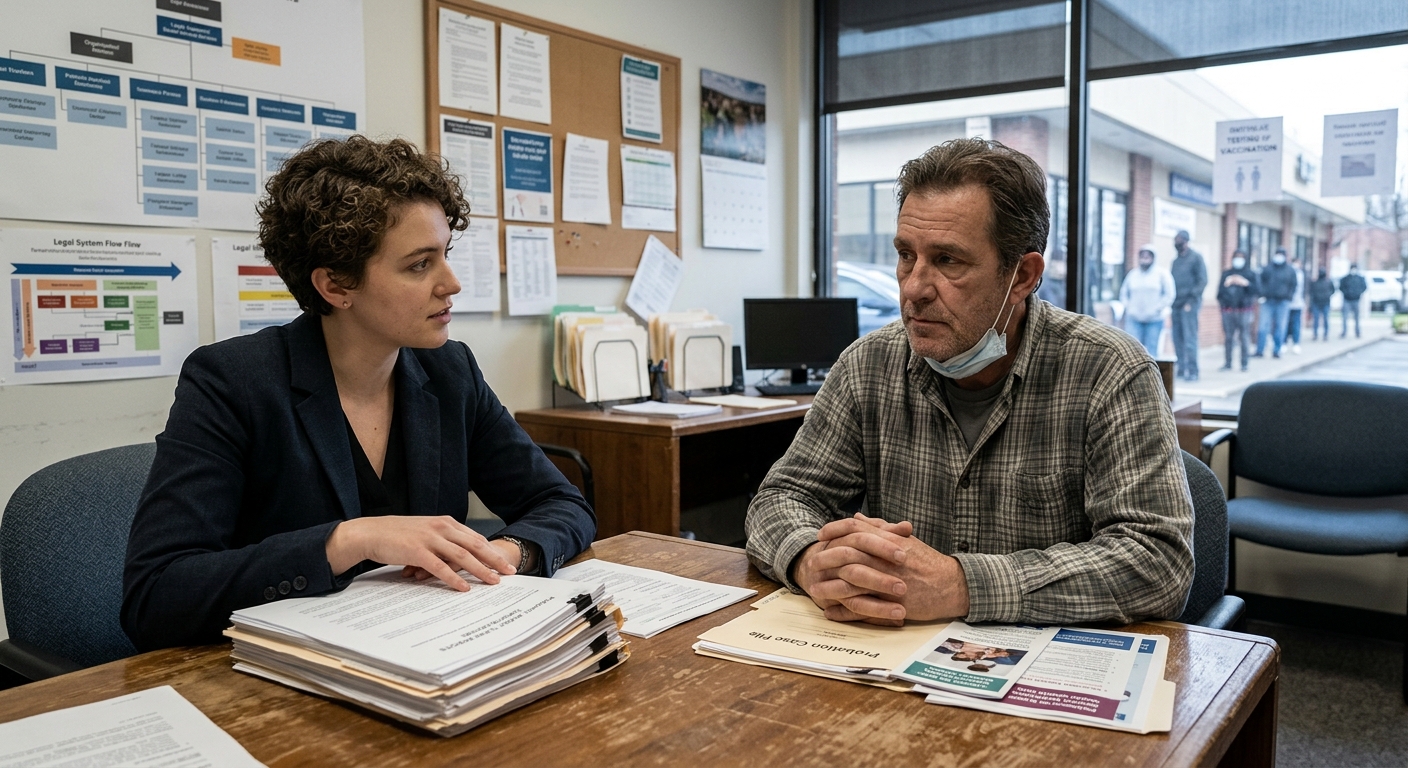
The concept of criminal justice is fundamentally meant to rehabilitate individuals, maintain order, and protect society. Yet, the systemic practices of modern incarceration frequently collide with broader public health imperatives, especially during large-scale infectious disease outbreaks. A prominent and devastating example of this collision occurs when individuals on probation or parole are sent back to prison for minor, non-violent technical violations. During a severe public health crisis, such as the COVID-19 pandemic, these bureaucratic decisions carry catastrophic, life-or-death consequences. Incarcerating individuals for minor administrative infractions not only overburdens an already taxed justice system but actively accelerates the spread of deadly infectious diseases. This deep dive examines the dangerous intersection of technical probation violations, overcrowded prison ecosystems, and infectious disease management, arguing for a paradigm shift that prioritizes both public health and true rehabilitative justice.
The Carceral Environment as a Disease Amplifier
Prisons, jails, and detention centers are inherently incompatible with the basic tenets of infectious disease control. They are enclosed, densely populated environments where physical distancing is a structural impossibility. Proper ventilation is often severely lacking, and standard sanitation resources—such as antibacterial soap, alcohol-based hand sanitizer, and continuous access to clean running water—are frequently rationed, heavily restricted, or entirely unavailable to the incarcerated population. Consequently, according to the Centers for Disease Control and Prevention (CDC), correctional facilities represent uniquely high-risk settings for the explosive transmission of highly contagious viruses . When a pathogen enters a detention facility, it spreads with aggressive efficiency among a population that often has higher baseline rates of underlying chronic illnesses.
Furthermore, the World Health Organization (WHO) has explicitly noted that ”prison health is public health,” underscoring that outbreaks within carceral settings inevitably spill over into surrounding communities . The concrete walls and razor wire that keep incarcerated people inside do not stop microscopic pathogens from traveling. Correctional officers, medical staff, maintenance personnel, and administrators cycle in and out of these facilities every single day. When a virus like SARS-CoV-2 sweeps through a prison block, the staff inevitably carry the pathogen back to their families, public transit systems, and local neighborhoods. Therefore, utilizing incarceration as a default, reflexive response to non-violent supervision offenses artificially inflates the public health threat for the entire broader community.
Understanding Technical Violations: Punishment Disproportionate to the Crime
To fully comprehend the injustice of sending individuals to prison, one must first clearly understand what constitutes a ”technical violation.” Unlike a substantive violation—which involves the commission of a brand-new criminal offense—a technical violation occurs when an individual simply fails to comply with the strict, often burdensome administrative conditions of their community supervision.
Common examples of technical violations include:
- Missing a scheduled check-in: Failing to report to a probation officer at a designated time due to unreliable public transportation, inflexible work schedules, or sudden childcare emergencies.
- Curfew breaches: Returning to a designated residence past a court-mandated hour, regardless of the reason.
- Substance use relapse: Failing a routine, random drug or alcohol test, which medical professionals overwhelmingly recognize as a standard symptom of the chronic disease of addiction rather than a malicious criminal act.
- Financial delinquency: Failing to pay exorbitant court fees, administrative fines, or victim restitution on a strict timeline due to deep poverty.
- Travel restrictions: Crossing a county or state boundary line without securing prior written authorization, even for highly legitimate reasons like attending a family funeral or assisting a sick relative.
When a state or federal public health emergency is declared, standard societal protocols are completely upended. Businesses close, schools go remote, and citizens are urged to shelter in place. Logically, the strict conditions of probation should be heavily adapted to match this new reality. However, the rigid nature of the probation system often means that individuals are still heavily penalized for these minor administrative missteps. The Bureau of Justice Statistics highlights that probation and parole violations account for a substantial and persistent percentage of all state prison admissions annually . Revoking probation and enacting a prison sentence for a failed drug test or a missed curfew during a global pandemic effectively transforms a minor behavioral infraction into a potential death sentence. The ethical and moral quandary is stark: does society gain any meaningful safety by locking up a person who missed a bureaucratic appointment, knowing that doing so exposes them to a deadly virus and endangers the lives of those around them?
The Economic and Social Toll of Revocation
Beyond the immediate, glaring public health threat, revoking probation for minor violations initiates a rapid cascade of economic and social devastation. When individuals are suddenly ripped from their communities and placed behind bars, they instantly lose their employment. This abrupt job loss not only plunges their immediate dependents into severe financial instability but also exacerbates the structural poverty that frequently contributes to initial criminal behavior. Housing instability almost always follows; without a steady income, rent goes unpaid, ultimately leading to evictions and chronic homelessness upon the individual’s eventual release.
From a macroeconomic perspective, incarcerating technical violators represents a massive, indefensible misallocation of taxpayer funds. Community supervision generally costs a small fraction of what it costs to house, feed, guard, and provide medical care for an inmate inside a state penitentiary. During a pandemic, the specialized medical costs associated with treating incarcerated individuals who contract a severe illness skyrocket, placing an enormous financial burden on municipal, state, and federal budgets.
Comparison: Incarceration vs. Community Supervision
| Factor | Incarceration (Prison/Jail) | Community Supervision (Probation) |
|---|---|---|
| Public Health Risk | Extremely High (overcrowded, poor ventilation, shared living spaces). | Low (allows for proper social distancing and quarantine at home). |
| Financial Cost to Taxpayers | Very High (costs for housing, security staff, and institutional medical care). | Low to Moderate (administrative costs, potential technology costs). |
| Impact on Employment | Immediate termination of job; massive gap in employment history. | Individual can maintain current employment and pay taxes/restitution. |
| Family Stability | Separation deeply disrupts family structure and traumatizes dependents. | Maintains family unity and prevents children from entering the foster system. |
| Rehabilitation Potential | Low (exposure to severe trauma and further criminal networks). | High (access to community-based mental health and addiction resources). |
A Rehabilitative Approach: Transforming the Role of Probation Officers
The traditional, historical ethos of probation and parole has long been deeply rooted in surveillance, strict compliance, and punitive enforcement. Officers are frequently trained to act primarily as monitors, scanning intensely for any minor deviation from the court’s strict mandates. However, a modern, evidence-based justice approach requires a fundamental transformation in this dynamic. Probation officers must transition from acting strictly as law enforcement agents to operating as dedicated case managers, social workers, and active advocates for long-term rehabilitation.
During a public health crisis, this cultural shift is not merely an idealistic goal; it is absolutely essential for community survival. Judges and probation officers are inherently granted considerable legal discretion in how they respond to technical violations. Rather than immediately filing a formal motion to revoke supervision, a progressive, health-conscious probation officer can evaluate the underlying root cause of the non-compliance. If a person misses a meeting because the city buses stopped running or they legitimately feared catching a highly contagious virus on public transit, a compassionate officer should accommodate them with a virtual check-in or a phone call. If an individual experiences a relapse in their sobriety, the appropriate, scientifically backed response is increased addiction treatment, not a jail cell where illicit narcotics are often still accessible but comprehensive medical care is entirely absent.
This paradigm shift demands ongoing, specialized training and a complete structural overhaul of how ”success” is measured within probation and parole departments. Departmental success should not be defined by the sheer number of violations caught or warrants issued, but rather by the number of individuals successfully stabilized and reintegrated into society without re-offending.
Alternatives to Confinement: Building a Resilient Justice System
To prevent correctional facilities from inevitably becoming epicenters of disease during outbreaks, the justice system must aggressively expand and normalize alternatives to physical confinement. Proactive decarceration strategies are the single most effective tool for mitigating biological risk in correctional facilities. By purposefully limiting new admissions and accelerating releases for non-violent offenders, facilities can finally achieve the lower population density strictly required for baseline social distancing and adequate medical isolation.
Key alternatives that should be prioritized include:
- Electronic Monitoring and Home Confinement: For individuals deemed by the courts to require strict, ongoing supervision, GPS ankle monitors and home confinement offer a practical way to restrict movement without needlessly exposing the individual to the biological hazards of a crowded jail cell.
- Telehealth and Virtual Supervision: The recent pandemic successfully normalized remote work for millions of citizens across the globe; the justice system should permanently embrace this reliable technology. Virtual check-ins via secure smartphone applications or video conferencing software can easily replace risky in-person meetings. Furthermore, telehealth platforms can provide uninterrupted, safe access to critical mental health counseling and medically assisted addiction treatment.
- Restorative Justice and Community Service: For specific financial or minor behavioral violations, courts can implement community service mandates that allow individuals to actively give back to their local communities while simultaneously maintaining their critical employment and housing stability.
- Mandatory Outpatient Treatment Programs: Treating severe addiction primarily as a medical condition rather than a criminal offense systematically removes a massive cohort of non-violent individuals from the dangerous carceral system. Outpatient treatment facilities and community clinics are far better equipped to handle the complexities of relapse than standard correctional institutions.
Conclusion: A Moral Imperative for Lasting Change
The violent collision of global public health emergencies and the traditional criminal justice system has stripped away the longstanding illusion that our current reliance on mass incarceration is either sustainable or remotely humane. Sending individuals to disease-filled, overcrowded prisons for minor technical probation violations is an outdated, overly punitive practice that ultimately serves neither justice nor public safety. Instead, it acts as a direct, compounding threat to community public health. By significantly reducing our systemic reliance on physical incarceration for administrative infractions, fostering a deeply rehabilitative approach to community supervision, and fully embracing technological alternatives, we can build a justice system that is truly resilient in the face of crisis and fundamentally more equitable for all members of society.
Frequently Asked Questions (FAQs)
What exactly constitutes a technical violation of probation?
A technical violation is a specific breach of the administrative or bureaucratic rules of probation or parole, rather than the commission of a brand-new crime. Common examples include missing a scheduled appointment with an officer, failing to pay required court fines on time, traveling outside a geographically restricted area without prior permission, or testing positive for drugs or alcohol during a random screening.
Why are prisons considered such high-risk environments during a public health emergency?
Correctional facilities are densely enclosed, heavily overcrowded environments where standard physical distancing is practically impossible. They consistently suffer from poor air ventilation, aging infrastructure, and often lack adequate baseline medical resources and sanitation supplies like soap and sanitizer. Furthermore, the daily, constant movement of staff members between the secure facility and the outside community makes them highly susceptible to explosive viral outbreaks.
How does reducing incarceration for technical violations benefit the general public?
Reducing unnecessary incarceration dramatically lowers the density of prison populations, making it significantly easier to manage and contain infectious disease outbreaks. This prevents facility staff from bringing dangerous viruses back into the general community. Additionally, it saves millions in taxpayer money, preserves fragile family units, and keeps individuals actively employed, all of which heavily contribute to broader societal stability and economic health.
Can alternative methods effectively monitor individuals without sending them back to jail?
Yes. Modern, technology-driven alternatives such as GPS electronic monitoring, structured home confinement, and virtual supervision check-ins via video conferencing provide highly robust oversight. These proven methods allow individuals to safely remain in their communities, maintain continuous employment, and access necessary social or medical services while still strictly fulfilling the legal conditions of their court-mandated supervision.
References
- COVID-19 in Correctional and Detention Facilities — United States, February–April 2020 — Centers for Disease Control and Prevention (CDC). 2020-05-15. https://www.cdc.gov/mmwr/volumes/69/wr/mm6919e1.htm
- Ensuring prevention and control of COVID-19 in prisons and other places of detention — World Health Organization (WHO). 2026-05-06. https://www.who.int/europe/news/item/06-05-2026-ensuring-prevention-and-control-of-covid-19-in-prisons-and-other-places-of-detention
- Prisoners in 2019 — Bureau of Justice Statistics. 2020-10-01. https://bjs.ojp.gov/content/pub/pdf/p19.pdf
Similar Articles








Read full bio of medha deb


