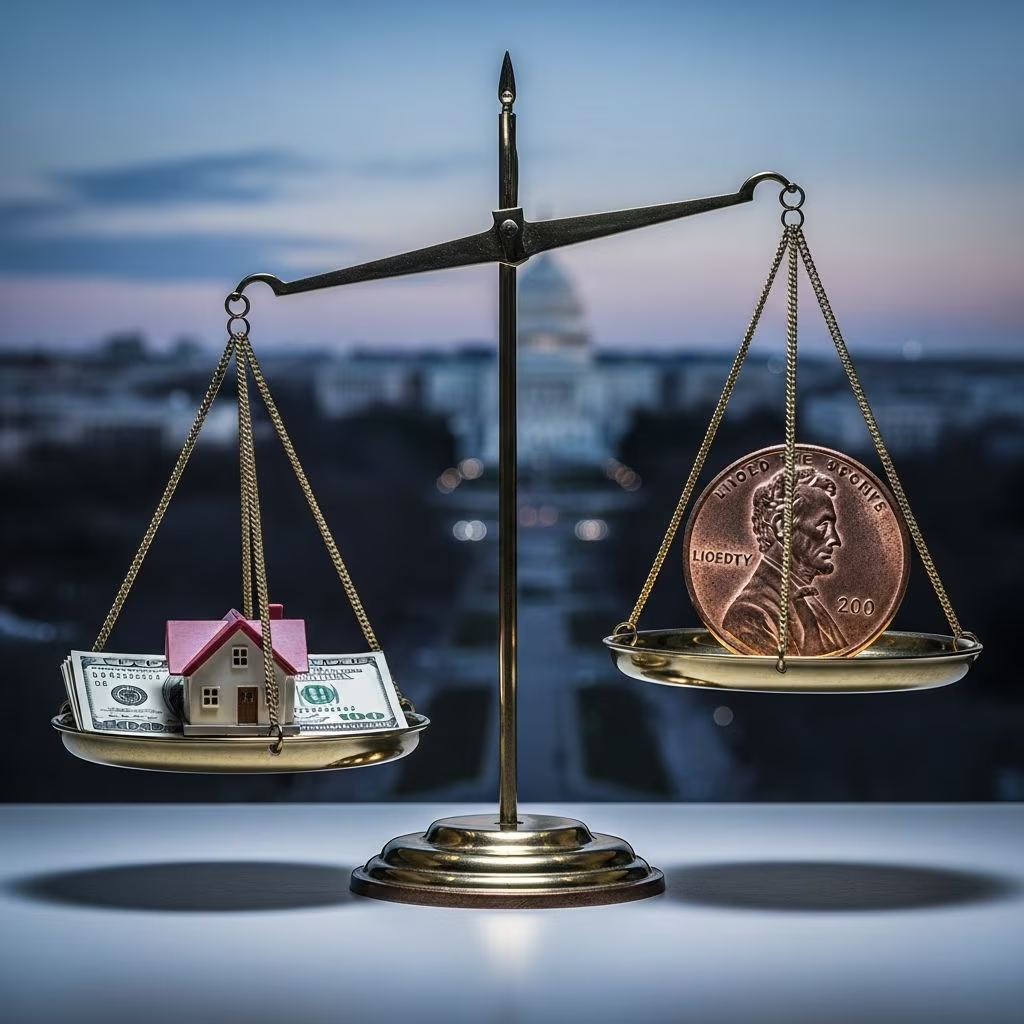
The District of Columbia’s Rental Housing Late Fee Fairness Amendment Act of 2016 (D.C. Law 21-172) changed how landlords can charge late fees when tenants pay rent after the due date. These rules are now codified in the D.C. Official Code and apply broadly to residential rental housing in the District.
This guide explains what late fees are allowed, what is prohibited, and how both tenants and housing providers can comply with the law.
1. What the Late Fee Fairness Rules Are Designed to Do
The Late Fee Fairness rules were added to the Rental Housing Act of 1985 to create clear, uniform limits on late rent fees in D.C.
- Limit the size of late fees that landlords may charge.
- Guarantee a minimum grace period before any late fee can be imposed.
- Stop abusive accounting practices, such as repeatedly charging late fees on the same missed payment.
- Prevent evictions based solely on late fees, rather than unpaid rent.
- Protect tenants receiving rental subsidies from late fees on the subsidy portion of the rent.
The core idea is that late fees can be used as a reasonable incentive to pay rent on time, but they cannot be used as a backdoor way to inflate rent or force tenants out.
2. When a Late Fee Can Be Charged
A landlord in D.C. cannot simply add a late fee any time rent is not paid on the exact due date. Specific conditions must be met.
2.1 Written lease requirement
A housing provider may charge a late fee only if:
- There is a written lease, and
- The lease clearly states the maximum late fee that can be charged under D.C. law.
If the lease is silent about late fees, the landlord may not later add late fees on their own.
2.2 Mandatory grace period
The law requires a minimum grace period before any late fee may be imposed.
- A landlord may charge a late fee only if the tenant has not paid the full rent within 5 days after the due date, unless the lease gives a longer grace period.
- If the lease gives a longer grace period, that longer period controls.
During the grace period, a landlord cannot charge a late fee for that month’s rent.
3. How Much Late Fee Can Be Charged
D.C. law puts a firm cap on the size of late fees and ties them to the amount of rent the tenant owes.
| Rule | Explanation |
|---|---|
| Maximum percentage | The late fee may not be more than 5% of the full rent due from the tenant for that month. |
| Based only on tenant’s share | If a subsidy pays part of the rent, the 5% cap is applied only to the tenant’s share, not the subsidy portion. |
| One-time charge per late payment | The landlord may charge only one late fee for each late payment; no compounding or repeat late fees on the same missed rent. |
This percentage cap is intended to make late fees proportionate to the rent and to prevent excessive penalty charges.
4. Prohibited Landlord Practices Under the Law
The Act does not just cap late fees; it also bans several specific practices related to late rent.
- No interest on late fees: Landlords may not charge interest on any late fee amount.
- No rolling late fees into future rent: Landlords may not deduct late fees from later rent payments in a way that makes those later payments appear short and “late” again.
- No multiple late fees on one missed payment: Only one late fee is allowed for each late rent payment.
- No late fee on subsidy portion: Tenants cannot be charged a late fee for any portion of the rent that a subsidy provider is responsible for paying, such as a housing voucher agency.
- No eviction based solely on late fee nonpayment: A tenant cannot be evicted just for failing to pay a late fee.
These protections are now written into the D.C. Code and enforced through the District’s housing and consumer protection systems.
5. Billing, Invoices, and Security Deposits
The law sets out how landlords may bill for late fees and what happens if they are not paid right away.
5.1 Issuing a late fee invoice
After the grace period ends, the landlord may issue an invoice for any lawfully imposed late fee.
- The invoice can be sent after the tenant fails to pay rent in full within the 5-day (or longer) grace period.
- The tenant must be given 30 days from the invoice date to pay the late fee.
5.2 Using the security deposit at move-out
If the tenant does not pay the late fee within the 30-day invoice period, the landlord may, at the end of the tenancy:
- Deduct unpaid, lawfully imposed late fees from the tenant’s security deposit, along with other legally owed amounts.
Landlords must still follow all existing rules about security deposit itemization and refund timing under D.C. law.
6. Late Fees and Evictions
The Rental Housing Late Fee Fairness provisions directly affect what can, and cannot, support an eviction case.
6.1 Late fees cannot be the basis for eviction
The law amends the Rental Housing Act to clarify that nonpayment of a late fee cannot be used as a legal basis for eviction in D.C.
- Eviction actions for nonpayment must be based on unpaid rent, not unpaid late fees.
- Courts and housing providers must separate the two when calculating how much is owed to avoid eviction.
6.2 Interaction with court practices
According to tenant advocacy materials and legal practice summaries, D.C. courts have adjusted their procedures to reflect that late fees are not part of the amount that must be paid to stop an eviction based on nonpayment of rent.
This means tenants facing eviction can usually resolve the case by paying the rent, court-approved costs, and other lawful charges, but not late fees alone.
7. Special Rules for Tenants with Rental Subsidies
The Late Fee Fairness provisions specifically recognize situations where public agencies or programs pay part of the rent.
- Landlords may not charge a late fee for the portion of rent that a subsidy provider (such as a housing authority) is supposed to pay.
- The 5% cap applies only to the tenant’s share of the rent, not the total contract rent including the subsidy.
- Tenants should review their lease and subsidy documents to see how their share is calculated.
This protection is especially important for tenants in voucher programs, where delays in subsidy payments could otherwise unfairly trigger late fees.
8. Penalties and Enforcement
D.C. law includes penalties for housing providers who knowingly or willfully violate the Late Fee Fairness provisions.
- Violations can lead to civil fines against the landlord.
- Practitioners report that fines may range from $100 to several thousand dollars, depending on severity and enforcement findings.
- Tenants may seek assistance from legal aid organizations, the Office of the Tenant Advocate, or private counsel if they believe their landlord is not following the law.
In addition to fines, landlords may be ordered to correct their practices, refund unlawful late fees, and adjust their leases to comply with D.C. requirements.
9. Practical Tips for Tenants
Tenants can take several steps to protect their rights and reduce disputes over late fees.
9.1 Before you sign a lease
- Read the late fee clause carefully: Confirm that it lists a maximum fee that does not exceed 5% of the rent you pay.
- Check the grace period: Make sure the lease provides at least five days after the due date before any late fee applies.
- Ask how subsidies are treated: If you receive a housing subsidy, confirm that late fees are calculated on your share only.
9.2 If you are running late on rent
- Act within the grace period: Try to pay within five days after the due date (or the longer period in your lease) to avoid late fees entirely.
- Document communications: If there is a problem (such as a delayed paycheck or subsidy payment), explain in writing and keep copies.
- Save invoices: Keep any late fee bills you receive and check whether they respect the 5% cap and the grace period.
9.3 If you believe a fee is unlawful
- Compare to the law: Check whether the amount is more than 5%, charged too early, or based on the subsidy portion of rent.
- Seek advice: Contact a legal services provider or the D.C. Office of the Tenant Advocate for guidance on next steps.
- Challenge improper accounting: If a landlord is rolling unpaid late fees into the rent and charging new late fees on top, this may violate D.C. rules.
10. Practical Tips for Housing Providers
Landlords and property managers can reduce legal risk by aligning their policies with the Late Fee Fairness rules.
- Update lease forms: Ensure all residential leases in D.C. include a clear late fee clause that follows the 5% cap and grace period requirements.
- Train staff on accounting rules: Staff should understand that they may not apply rent payments to late fees first or roll late fees forward into future rent in a way that triggers new late charges.
- Use transparent billing: Provide itemized invoices showing rent, lawful late fees, and any other charges separately.
- Avoid eviction based on fees: Structure notices and court filings to rely on unpaid rent, not unpaid late fees, in compliance with the statute.
- Coordinate with subsidy programs: Where vouchers or subsidies are involved, track tenant share and subsidy share separately for accurate and lawful late fee calculations.
11. Frequently Asked Questions
Q1: Can my landlord charge me a late fee if I don’t have a written lease?
No. Under D.C. law, a late fee may be charged only if there is a written lease that states the maximum late fee allowed and all other legal conditions are met.
Q2: How much late fee can be added to my monthly rent?
The late fee may not exceed 5% of the full rent amount you are responsible for paying for that month. If you receive a subsidy, the 5% is based on your share only, not the subsidy share.
Q3: When does my rent become late for purposes of a late fee?
Your rent becomes subject to a possible late fee only after you have failed to pay the full amount within five days after the due date, or after any longer grace period that your lease provides.
Q4: Can I be evicted if I pay my rent but refuse to pay the late fee?
No. The statute explicitly states that nonpayment of a late fee cannot be used as the basis for eviction. Evictions for nonpayment must focus on unpaid rent, not unpaid late fees.
Q5: My landlord keeps applying my rent to late fees first and then charging new late fees. Is that allowed?
No. The law prohibits landlords from deducting late fees from later rent payments in a way that triggers new late fees on the same original amount. Rent payments should generally be credited to rent first, with late fees billed separately.
Q6: How can I get help if I think my landlord is violating the late fee rules?
You can contact D.C. legal aid organizations or the Office of the Tenant Advocate for advice and possible representation. They can help you review your lease, calculate lawful late fees, and pursue remedies if necessary.
References
- D.C. Law 21-172, Rental Housing Late Fee Fairness Amendment Act of 2016 — Council of the District of Columbia. 2016-12-08. https://code.dccouncil.gov/us/dc/council/laws/21-172
- UNDERSTANDING LANDLORD TENANT LAWS IN THE DISTRICT OF COLUMBIA — NaWash Law. 2021-03-01. https://nawashlaw.com/news.php?id=13370
- D.C. Tenant-Landlord Law: Rental Housing Late Fee Fairness Amendment Act of 2016 — Hemlane. 2020-07-15. https://www.hemlane.com/resources/d-c-tenant-landlord-law/
- Late Fee FAQs — Office of the Tenant Advocate, Government of the District of Columbia. 2017-01-01. https://ota.dc.gov/sites/default/files/dc/sites/ota/publication/attachments/Late%20Fee%20FAQ.pdf
- Rental Housing Late Fee Fairness Amendment Act of 2016 (PDF) — Legal Aid Society of the District of Columbia. 2016-05-01. https://www.legalaiddc.org/sites/default/files/wp-content/uploads/2016/05/Rental-Housing-Late-Fee-Fairness-Amendment-Act.pdf