
D.C. DUI Laws: Penalties and Enforcement Guide
Comprehensive guide to Washington D.C. DUI regulations, penalties, defenses, and recent legal changes for drivers.
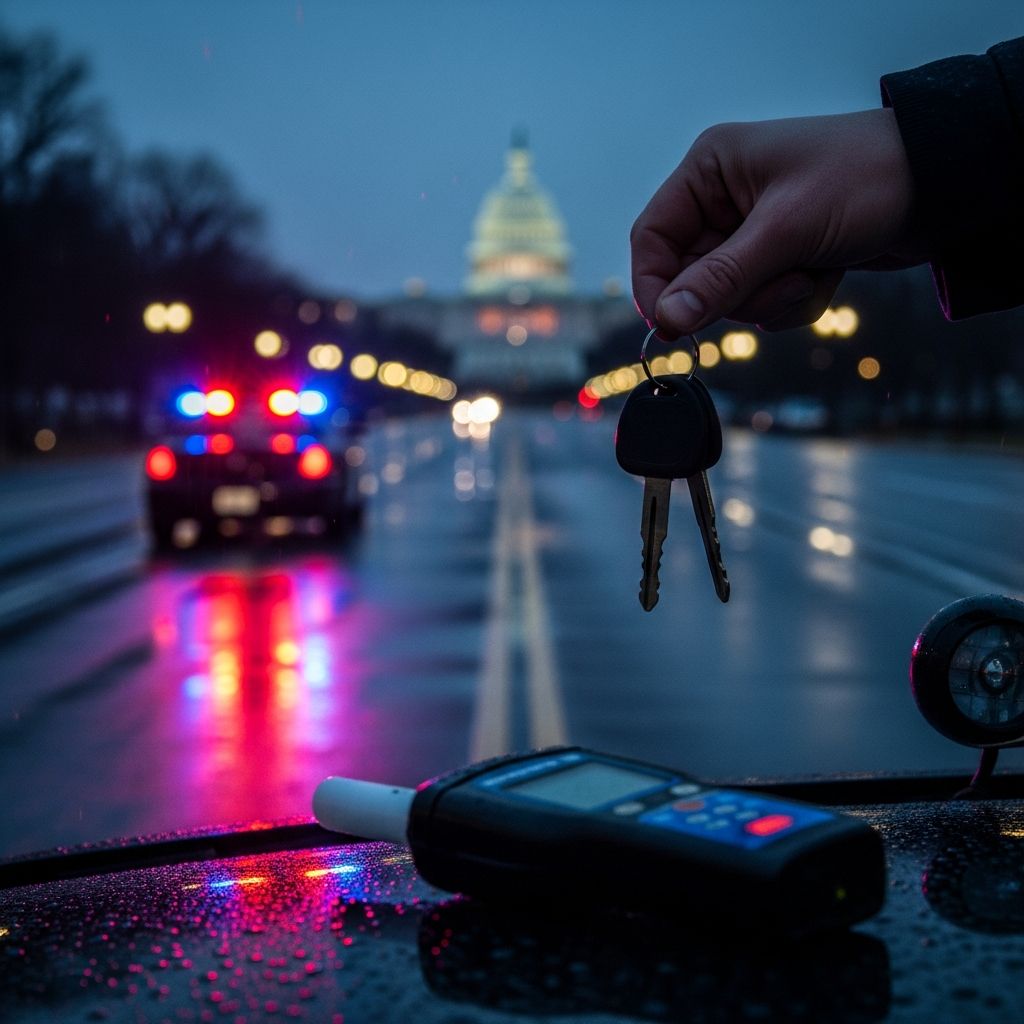
Washington D.C. maintains some of the nation’s toughest impaired driving regulations to promote road safety and deter reckless behavior. Operating a vehicle under the influence of alcohol or drugs triggers severe consequences, including fines, jail time, and long-term license restrictions. These rules apply broadly, covering both residents and visitors, with implied consent laws mandating chemical testing cooperation.
Legal Standards for Impairment in D.C.
The District defines DUI as driving while impaired by alcohol, drugs, or their combination, regardless of crash involvement. Key thresholds include a blood alcohol concentration (BAC) of 0.08% or higher for adults, with zero tolerance (0.02% BAC) for those under 21. Drug impairment lacks specific per se levels but is assessed via field sobriety tests, officer observations, and lab results for substances like marijuana or opioids.
Implied consent requires drivers to submit to breath, blood, or urine tests upon arrest suspicion. Refusal leads to automatic penalties, often worsening the case outcome.
How DUI Arrests Unfold in Washington D.C.
Enforcement typically begins with traffic stops for erratic driving, speeding, or weaving. Officers conduct standardized field sobriety tests (SFSTs), including walk-and-turn, one-leg stand, and horizontal gaze nystagmus checks. Preliminary breath tests may follow, though not always admissible in court. Probable cause prompts transport to a station for evidential breathalyzer or blood draw.
- Common arrest triggers: Swerving lanes, delayed reactions at lights, odor of alcohol, slurred speech.
- Testing sequence: SFSTs, then chemical analysis if impairment suspected.
- Refusal implications: License suspension and evidence of guilt inference.
Criminal Penalties by Offense Level
D.C. structures penalties progressively, factoring prior convictions within 15 years and BAC elevation. All offenses are misdemeanors, but repeat violations carry mandatory minimum incarceration.
| Offense | Fines | Jail Time | License Suspension | Other |
|---|---|---|---|---|
| First Offense | $300–$1,000 | Up to 90–180 days | 90 days–1 year | Community service possible |
| Second (within 15 yrs) | $1,000–$5,000 | 5 days–1 year min | 1 year | 30 days community service |
| Third+ (within 15 yrs) | $2,000–$10,000 | 10–30 days min–1 year | 2 years | 60 days community service |
Higher BAC levels impose stricter minimums: 10–30 days for 0.20%+, escalating with severity. Prior offenses amplify these, with courts lacking discretion for reductions.
Aggravating Factors Triggering Harsher Sentences
Certain conditions elevate charges to ‘enhanced’ status, mandating jail regardless of record. These include:
- BAC ≥0.20%: 10-day minimum, rising to 20–30 days over 0.25–0.30%.
- Minors in vehicle: Additional penalties for child endangerment.
- Refusal of tests: Separate suspension and case strengthening.
- Accidents/injuries: Potential felony upgrades if serious harm occurs.
Prosecutors apply these automatically upon evidence, emphasizing public safety over leniency.
Administrative Consequences for Driving Privileges
Beyond criminal court, the D.C. DMV imposes swift suspensions. First refusal: 12 months; BAC-based: 90 days minimum. Ignition interlock devices (IID) may be required post-suspension, blowing a breath sample to start the vehicle. Federal proposals like H.R. 875 could mandate IIDs for all convictions, curbing judicial discretion.
Reinstatement demands proof of sobriety education, SR-22 insurance, and fees. Multiple offenses extend revocations up to permanent.
Vehicle Forfeiture and Financial Burdens
In extreme cases, especially repeats or injury crashes, D.C. authorizes vehicle impoundment or forfeiture. Fines compound with towing, storage, and attorney costs, often exceeding $10,000 total. Probation terms include alcohol assessments and treatment programs.
Building a Defense Against DUI Charges
Skilled representation can challenge evidence validity. Common strategies include:
- Testing errors: Breathalyzer calibration faults or blood draw delays.
- Medical defenses: Conditions like acid reflux mimicking impairment.
- Stop legality: Contesting probable cause for the initial pull-over.
- Rising BAC: Arguing alcohol absorption peaked post-driving.
Plea bargains may reduce to reckless driving, preserving records. Diversion unavailable for DUIs under Second Chance Act.
Recent and Upcoming Legal Developments
D.C. laws evolve with safety priorities. A 15-year look-back for priors mirrors trends elsewhere, unlike Washington’s 2026 extension to 15 years for felonies. No major 2026 D.C. changes noted, but federal IID mandates loom.
Courts increasingly scrutinize drug tests amid legalization, requiring impairment proof beyond presence.
Preventive Steps for Responsible Driving
Avoid risks by designating sober drivers, using rideshares, or public transit. BAC apps offer estimates but aren’t court-defensible. Education programs highlight D.C.’s zero-tolerance stance.
Frequently Asked Questions
What is the legal BAC limit in D.C.?
0.08% for drivers 21+, 0.02% for under 21. Drugs have no numeric limit; impairment is key.
Can I get a restricted license after DUI suspension?
Yes, potentially for work/school after 45 days, with IID installation.
Does a first DUI mean jail time?
Not always, unless enhanced by high BAC or other factors triggering minimums.
How far back do priors count?
15 years for penalty enhancements.
Is marijuana DUI treated differently?
No; any impairing drug qualifies under the same statutes.
Long-Term Impacts on Life and Career
DUI convictions linger on records, affecting employment (especially federal jobs), insurance rates (up 300%+), and housing. Expungement barred for DUIs. Professional licenses like CDL face federal bans.
Rehabilitation via AA or court-mandated therapy aids recovery, but compliance is critical for relief.
References
- New DUI Laws Taking Effect in 2026: What You Need to Know — Centralia Law. 2026-01-01. https://centralialaw.com/new-dui-laws-taking-effect-in-2026-what-you-need-to-know/
- District of Columbia Drugged Driving — NORML. Accessed 2026. https://norml.org/laws/drugged-driving/district-of-columbia-drugged-driving/
- § 50–2206.13. Penalties for driving under the influence — D.C. Council Code. 2013-06-11. https://code.dccouncil.gov/us/dc/council/code/sections/50-2206.13
- Understanding D.C.’s Mandatory Minimums for DUI Cases — Lotze Mosley LLP. Accessed 2026. https://lotzemosley.com/blog/mandatory-minimums-dc-enhanced-dui-cases/
- New law restricts people with extreme DUI convictions from buying alcohol — WJLA. Accessed 2026. https://wjla.com/news/nation-world/new-law-restricts-people-with-extreme-dui-convictions-from-buying-alcohol
- How a New Federal DUI Bill Could Impact Drivers in Washington, D.C. — Washington DC Injury Lawyer Blog. Accessed 2026. https://www.washingtondcinjurylawyerblog.com/how-a-new-federal-dui-bill-could-impact-drivers-in-washington-d-c/
- D.C.’s Second Chance Amendment Act: How to Clear Your Criminal Record in 2025 — Scrofano Law Blog. Accessed 2026. https://blog.scrofanolaw.com/d-c-s-second-chance-amendment-act-how-to-clear-your-criminal-record-in-2025/
Similar Articles








Read full bio of Sneha Tete




