
Dangers of Texting While Driving: Shocking Stats and Lessons
Uncover alarming texting and driving stats, real-world risks, and vital safety tips to protect lives on the road.
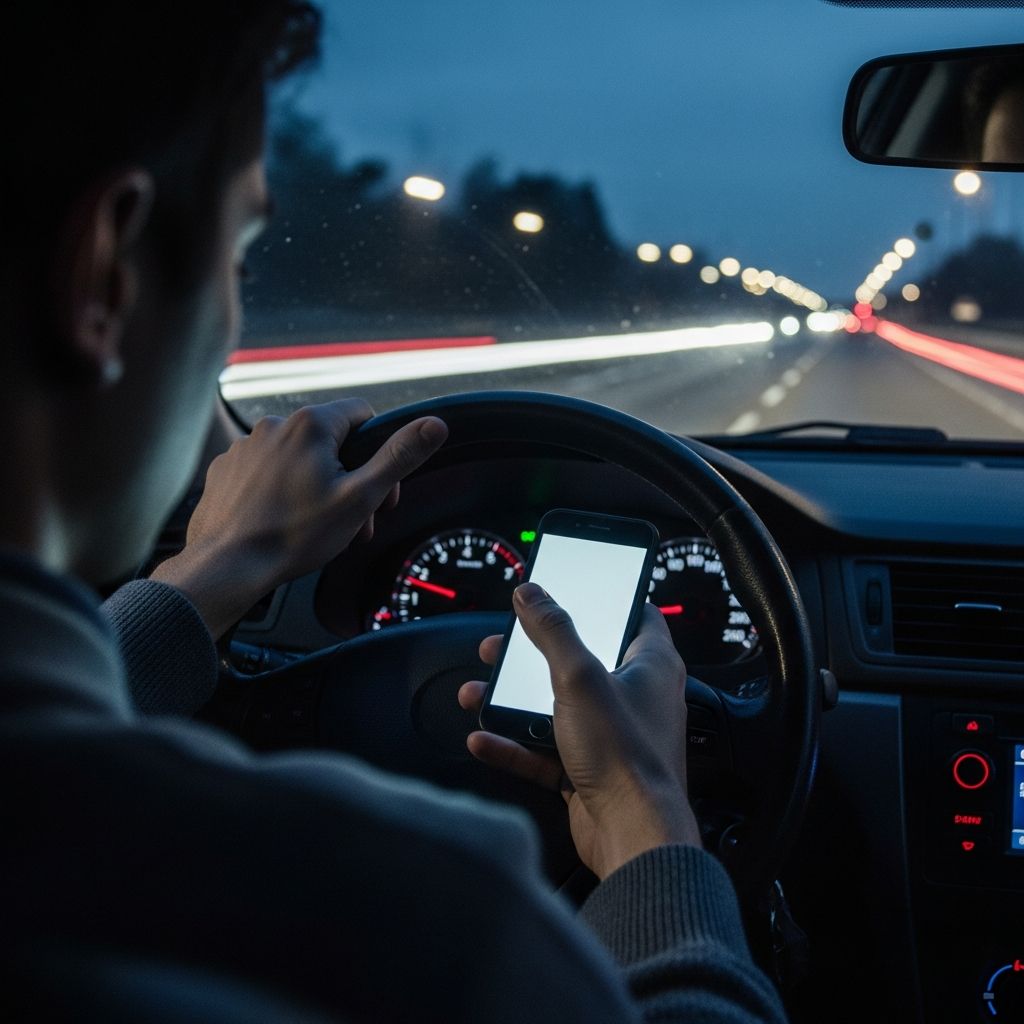
Texting while driving remains a deadly epidemic on U.S. roads, claiming thousands of lives annually despite widespread awareness campaigns and strict laws. In 2023 alone, distracted driving contributed to 3,275 fatalities, with cellphone use playing a central role in many crashes. This article delves into the latest 2026 statistics, demographic breakdowns, state variations, legal consequences, and practical prevention measures to highlight why every driver must commit to distraction-free roads.
The Alarming Rise in Distracted Driving Fatalities
Distracted driving, particularly involving mobile devices, has evolved into one of the top causes of traffic deaths. According to the National Highway Traffic Safety Administration (NHTSA), 3,275 people lost their lives in 2023 due to drivers not paying full attention to the road. This figure represents about 8% of all traffic fatalities that year, underscoring the pervasive threat. Cellphone-related incidents specifically accounted for around 397 deaths in 2023, holding steady from previous years and comprising 12% of distracted driving fatalities.
Historical trends reveal a stubborn persistence: from 397 deaths in 2020 to 423 in 2021, and back to 397 in 2023, cellphone distractions consistently hover near 400 annual fatalities. Non-fatal injuries paint an even grimmer picture, with an estimated 324,819 people harmed in distracted driving crashes in 2023. These numbers emphasize that even brief diversions—like glancing at a notification—can have catastrophic outcomes.
How Texting Multiplies Crash Risks
The science behind texting’s danger is clear: sending or reading a text takes eyes off the road for at least 5 seconds, equivalent to driving a football field’s length at 55 mph. NHTSA data shows texting increases crash risk by 6 times, while dialing raises it by 12 times. Other actions like reaching for a phone add 5% more risk, and browsing the internet contributes 3%.
Consider this comparison of crash risk elevations:
| Cellphone Action | Increase in Crash Risk |
|---|---|
| Dialing | 12% |
| Texting | 6% |
| Reaching for phone | 5% |
| Browsing internet | 3% |
| Talking | 2% |
Data from Insurify and NHTSA. These increments explain why rear-end collisions, often linked to phone distractions, dominate accident reports.
Demographic Breakdown: Who Is Most at Risk?
Age plays a critical role in texting and driving behaviors. Millennials (born 1981-1996) lead in phone use while driving, followed by declining rates in older groups. Drivers aged 25-34 accounted for 24% of fatal cellphone-related crashes in 2023, with 35-44-year-olds at 20%. Teens under 18 are alarming: 59.5% admit to texting while driving, peaking at 50.9% for 17-year-olds and dropping to 15.5% for 14-year-olds. High schoolers show 39% texting in the last 30 days, and 58% of teen crashes stem from distractions.
- 25-34 age group: 24% of cellphone fatal crashes
- 35-44: 20%
- Under 25: 15%
- Teens: 33% admit recent texting
- Overall: 80% of drivers use phones while driving
Younger high school students correlate higher texting with drinking and driving risks, amplifying dangers. Drivers using phones are 2-8 times more likely to crash.
State-by-State Hotspots for Texting Fatalities
Geographic disparities highlight problem areas. In 2023, California topped with 58 cellphone-related deaths (14.6% of national total), Texas at 41, and Arizona at 23—over 30% combined. Wyoming, Minnesota, and California exceed 36% cellphone involvement in distracted deaths. Texting is illegal in 48 states plus D.C., with penalties up to $10,000 fines and one-year jail terms.
Top states for cellphone fatalities (2023):
| State | Fatalities | % of National |
|---|---|---|
| California | 58 | 14.6% |
| Texas | 41 | 10.3% |
| Arizona | 23 | 5.8% |
Source: FinanceBuzz/NHTSA. These hotspots often see higher insurance rates due to elevated risks.
Legal Ramifications and Financial Burdens
Beyond loss of life, texting while driving invites severe repercussions. Violations can lead to misdemeanors, license suspensions, and skyrocketing insurance premiums. In fatal cases, drivers face vehicular homicide charges, especially if negligence is proven. Stricter laws since 2021 correlate with slight declines—from 3,522 distracted deaths in 2021 to 3,308 in 2022—yet behaviors lag: 93% deem it dangerous, but over 50% across ages persist. AAA surveys show 27% send texts and 37% read them while driving.
Manipulation of devices rose 82% from 2013-2022, even as handheld talking dipped. This shift demands updated enforcement and education.
Real-Life Lessons from Devastating Crashes
While videos capture in seconds what statistics summarize yearly, their visceral impact drives home the message. Imagine a family sedan swerving into oncoming traffic after a driver replies to a message, or a high-speed pileup from a ignored red light. Such incidents, often shared in awareness campaigns, show vehicles crumpling, airbags deploying, and lives shattered in blinks. These aren’t hypotheticals—NHTSA reports 44,518 phone-related accidents in 2021 alone, with 644 non-motorists killed. Pedestrians and cyclists suffer disproportionately from distracted motorists.
Proven Strategies to Eliminate Distractions
Prevention starts with personal commitment. Key steps include:
- Enable do-not-disturb modes or apps that silence notifications while driving.
- Use hands-free systems for calls, but avoid all non-essential interactions.
- Secure phones out of reach to prevent impulsive reaches.
- Lead by example: passengers should handle devices.
- Support enforcement: advocate for tech like automatic speed limiters tied to phone detection.
Observational data shows only 2.1% of drivers use handhelds at intersections in 2023, progress from stricter norms. Corporate fleets and ride-share services mandating phone mounts reduce risks further.
Broader Societal and Economic Toll
The ripple effects extend far: families grieve, economies lose productive workers, and healthcare systems strain under injury costs exceeding billions annually. IIHS research stresses that small speed hikes—21% higher in screen interactions—amplify crash severity. Addressing this requires multifaceted approaches: tech innovations like AI monitoring, school programs targeting teens, and media amplifying survivor stories.
In 2026, with smartphone penetration nearing ubiquity, complacency is the enemy. Declines in fatalities signal hope, but 397 persistent cellphone deaths demand action.
Frequently Asked Questions (FAQs)
What percentage of fatal distracted driving crashes involve texting?
Approximately 12% of distracted driving fatalities are linked to texting and cellphone use.
Which age group texts and drives the most?
Drivers aged 25-34 are involved in 24% of fatal cellphone crashes, with millennials using phones most frequently.
Is texting while driving illegal everywhere?
Yes in 48 states and D.C., with penalties including fines up to $10,000 and jail time.
How many deaths occurred from distracted driving in 2023?
3,275 people were killed.
What increases crash risk the most from phone use?
Dialing boosts risk by 12%, texting by 6%.
References
- Texting And Driving Statistics In 2026 — Insuranceopedia. 2026. https://www.insuranceopedia.com/auto-insurance/texting-and-driving-statistics
- Distracted Driving Statistics (2026) — Insurify. 2026. https://insurify.com/car-insurance/knowledge/distracted-driving-statistics/
- Texting and Driving Statistics [2026] — FinanceBuzz. 2026. https://financebuzz.com/texting-and-driving-statistics
- Distracted Driving Death Statistics: 2026 Guide — ULG Law. 2026. https://ulg.law/beyond-the-wheel-how-distracted-driving-death-statistics-impact-us-all/
- Distracted driving — IIHS. 2023. https://www.iihs.org/research-areas/distracted-driving
- Distracted Driving — Traffic Safety Marketing (NHTSA). 2026. https://www.trafficsafetymarketing.gov/safety-topics/distracted-driving
- Distracted Driving Dangers and Statistics — NHTSA. 2026. https://www.nhtsa.gov/risky-driving/distracted-driving
Similar Articles








Read full bio of medha deb


