
The Road to Recognition: DACA, State Laws, and the Fight for Driving Privileges
How state legislatures and federal courts dismantled barriers to driving privileges for DACA recipients.
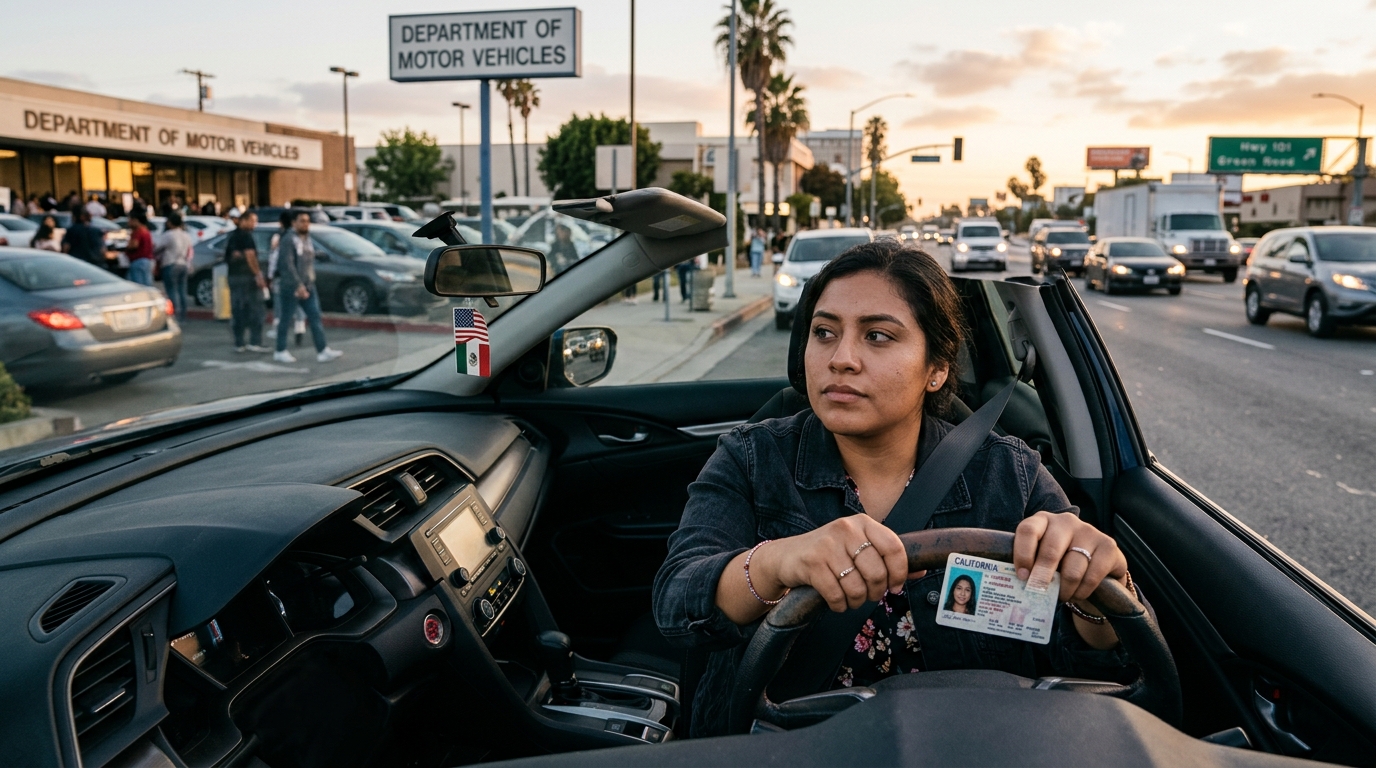
When the Deferred Action for Childhood Arrivals (DACA) program was introduced in 2012, it represented a watershed moment in United States immigration policy. By offering a temporary reprieve from deportation and granting work authorization to eligible undocumented youth brought to the country as children, the federal government provided a pathway to societal integration. However, the implementation of DACA quickly revealed a complex friction point between federal immigration authority and state-level administrative powers. One of the most consequential, heavily contested battlegrounds was not over citizenship, but over a much more routine, everyday necessity: the right to obtain a state-issued driver’s license.
In a nation where public transportation is often inadequate outside major metropolitan hubs, a driver’s license is more than an identification card; it is an economic lifeline. It dictates a person’s ability to commute to a job, attend university classes, transport family members to medical appointments, and participate fully in civic life. While the vast majority of U.S. states recognized the federally issued Employment Authorization Documents (EADs) held by DACA recipients as sufficient proof of “lawful presence” to issue driver’s licenses, a small number of states adamantly refused. This refusal ignited a series of high-stakes legislative showdowns and federal lawsuits that ultimately reshaped the landscape of immigrant rights in America.
The State-Level Resistance: Federal Directives vs. State Sovereignty
Following the executive branch’s announcement of DACA, departments of motor vehicles (DMVs) across the country had to determine how to process applications from this newly categorized demographic. Because the federal REAL ID Act of 2005 requires states to verify an applicant’s lawful status before issuing a compliant identification card, the definition of “lawful presence” became a critical point of interpretation . For most jurisdictions, the federal government’s decision to grant deferred action and work authorization definitively satisfied this requirement.
However, officials in a handful of states—most notably Arizona, Michigan, and Nebraska—issued executive directives or departmental policies specifically barring DACA recipients from obtaining driving privileges. The political leaders in these states argued that “deferred action” merely meant the federal government was temporarily choosing not to deport the individual, which they claimed did not equate to a formal “lawful status” under state law. Furthermore, some state officials characterized DACA as an executive overreach, arguing that they were not bound to alter state motor vehicle codes to accommodate a federal administrative program.
This resistance forced young immigrants, civil rights organizations, and local advocates to mobilize. They argued that denying licenses to individuals who were explicitly authorized by the federal government to work and live in the U.S. was not only illogical but fundamentally unconstitutional. The ensuing battles took two distinct paths: a grueling legal fight in the federal courts in Arizona, and an unprecedented legislative uprising in Nebraska.
The Turning Point: Nebraska’s Historic Legislative Override
By early 2015, Nebraska stood completely alone. Michigan had already yielded to pressure and reversed its exclusionary policy, and Arizona was losing its battle in the federal court system. Yet, Nebraska’s executive branch maintained its firm stance, leaving thousands of young Nebraskans—many of whom had graduated from local high schools and universities—unable to legally drive to the jobs they were now federally authorized to hold.
The situation in Nebraska was particularly unique due to the state’s distinctive political structure. Nebraska operates the only unicameral (single-chamber), officially nonpartisan state legislature in the United States. This structural quirk often allows for more fluid coalition-building across traditional party lines. Recognizing the unsustainable nature of the state’s policy, state senators introduced Legislative Bill 623 (LB 623), a measure designed to explicitly grant driving privileges to individuals holding deferred action status .
The legislative debate surrounding LB 623 highlighted a growing consensus among business leaders, agricultural advocates, and community organizers. Proponents of the bill argued that integrating DACA recipients into the legal driving population was a matter of economic pragmatism and public safety. If the state wanted to retain young, educated talent and ensure that all drivers on the road were properly tested and insured, issuing licenses was the only logical step.
Despite passing the unicameral legislature with strong support, the bill met immediate resistance from the governor’s desk. The governor vetoed LB 623, issuing a statement that reiterated his belief that the federal government had circumvented Congress in creating DACA, and that state resources should not be used to validate the program.
What followed was a historic display of legislative independence. In May 2015, the Nebraska Legislature convened to vote on overriding the governor’s veto. An override in Nebraska requires 30 votes. In a resounding bipartisan rebuke, the legislature voted 34-10 to override the veto, officially enacting LB 623 into law . This landmark vote not only provided immediate relief to thousands of young immigrants but also marked the collapse of the final state-sanctioned barrier to DACA driver’s licenses in the United States. It was a testament to the power of grassroots organizing and the practical realities of local governance prevailing over abstract partisan disputes.
The 9th Circuit Confrontation: Arizona’s Legal Defeat
While Nebraska’s path to resolution was ultimately legislative, Arizona’s battle was fiercely litigated in the federal courts. On the very day in 2012 that the federal government began accepting DACA applications, Arizona’s governor issued an executive order directing state agencies to deny driver’s licenses and other public benefits to DACA recipients. This immediate and targeted exclusion sparked a multi-year legal confrontation spearheaded by the Arizona Dream Act Coalition (ADAC) and prominent civil rights organizations.
The lawsuit, Arizona Dream Act Coalition v. Brewer, centered on two primary constitutional arguments . The first was based on the Equal Protection Clause of the Fourteenth Amendment. Plaintiffs argued that Arizona was unconstitutionally discriminating against DACA recipients by denying them licenses while simultaneously granting licenses to other non-citizens who held similar forms of federal deferred action or prosecutorial discretion.
The second, and perhaps more structurally significant argument, relied on the Supremacy Clause of the U.S. Constitution. The plaintiffs maintained that the federal government possesses exclusive authority over immigration policy and the classification of non-citizens. By attempting to define DACA recipients as “unauthorized” for the purpose of denying state benefits, Arizona was impermissibly attempting to create its own parallel immigration classification system, thereby conflicting with federal law.
In 2014, the United States Court of Appeals for the Ninth Circuit delivered a decisive blow to the state’s policy. The appellate court ruled that Arizona’s policy was preempted by federal law and that the plaintiffs were suffering irreparable harm by being denied the ability to drive. The court noted that the inability to drive severely restricted the plaintiffs’ professional and educational opportunities, effectively undermining the very purpose of the federal work authorization they had been granted. Following the denial of an emergency stay by the U.S. Supreme Court, a federal district court issued a permanent injunction in early 2015, forcing Arizona to finally open its DMV doors to DACA recipients .
Economic and Public Safety Implications
The fierce battles over DACA licensing served as a catalyst for a broader national conversation about the wisdom of restricting driving privileges based on immigration status. While the DACA debates focused on a specific subset of federally authorized youth, the arguments regarding public safety and economic efficiency apply broadly to the larger undocumented population.
Empirical research has consistently demonstrated that issuing driver’s licenses to immigrants, regardless of their legal status, yields tangible benefits for the entire community. When individuals are integrated into the formal licensing system, they are required to pass written and practical driving exams, ensuring a baseline of competence on the roads. Furthermore, licensed drivers are legally capable of purchasing auto insurance.
- Traffic Safety Enhancements: A comprehensive 2017 study analyzed the impact of California’s Assembly Bill 60 (AB60), which extended driving privileges to undocumented immigrants. The research, published in the Proceedings of the National Academy of Sciences (PNAS), found that the law led to a significant decrease in hit-and-run accidents. When drivers are licensed and insured, the fear of deportation or vehicle impoundment following a minor collision is drastically reduced, encouraging individuals to remain at the scene and report accidents properly .
- Economic Mobility: Urban economists emphasize the concept of “spatial mismatch”—the geographic separation between workers and potential employment opportunities. For immigrants without access to a vehicle, this mismatch is a massive barrier to economic mobility. Access to a driver’s license significantly increases the probability of employment and allows workers to shift into higher-paying, more stable occupations that may require a longer commute.
- Insurance Premiums: By reducing the number of uninsured motorists on the road, states that provide licenses to undocumented immigrants often see a stabilization or reduction in the costs associated with uninsured motorist coverage, financially benefiting all licensed drivers in the state .
Key Milestones in DACA Driver’s License Legislation
| Year | Event / Milestone | Significance |
|---|---|---|
| 2012 | DACA Program Announced | Federal government grants work authorization and deferred action to eligible youth. |
| 2012 | Arizona Executive Order | State issues an immediate ban on driver’s licenses for DACA recipients, sparking federal lawsuits. |
| 2014 | 9th Circuit Court Ruling | Federal appeals court strikes down Arizona’s ban, citing constitutional violations and federal supremacy . |
| 2015 | Nebraska LB 623 Override | Nebraska Legislature overrides the governor’s veto, making Nebraska the final state to grant DACA licenses . |
The Evolving Landscape of Immigrant Rights
The victories in Nebraska and Arizona between 2014 and 2015 represented a profound shift in how state administrative systems interact with federal immigration reprieves. The collapse of state-level resistance to DACA driver’s licenses set a precedent that federal authorization, even in the form of deferred action, demands recognition at the state level to ensure basic civil rights and equal protection.
Today, the conversation has expanded far beyond the parameters of DACA. Recognizing the undeniable public safety and economic benefits highlighted during these early battles, over twenty states, along with the District of Columbia, have now passed broader legislation allowing all undocumented immigrants to obtain driving privileges. These laws explicitly separate immigration enforcement from highway safety, acknowledging that safe roads require the participation of everyone who drives on them, irrespective of their country of origin or federal status.
The legacy of the DACA driver’s license battles is one of resilience. It underscores the critical importance of local advocacy, the vital function of an independent judiciary, and the capacity of state legislatures to cross partisan lines in pursuit of practical, humane policy outcomes. As federal immigration reform remains gridlocked, these state-level policies continue to serve as the primary vehicle for immigrant integration and everyday survival.
Frequently Asked Questions (FAQs)
What is the DACA program?
Deferred Action for Childhood Arrivals (DACA) is a federal administrative policy introduced in 2012 that protects eligible undocumented immigrants who were brought to the U.S. as children from deportation. It also provides them with renewable work authorization, allowing them to legally participate in the economy.
Why did some states refuse to issue licenses to DACA recipients?
States like Nebraska and Arizona initially argued that “deferred action” did not constitute a formal “lawful status” under state law. State officials viewed DACA as an executive overreach and claimed they were not constitutionally required to alter their state motor vehicle codes to align with a temporary federal administrative program.
What was Nebraska’s LB 623?
Legislative Bill 623 (LB 623) was a bill passed by the Nebraska Legislature in 2015 that explicitly allowed DACA recipients and others with deferred action to obtain driver’s licenses. The legislature famously passed the bill by overriding the state governor’s veto with a bipartisan 34-10 vote .
How did the courts rule on Arizona’s ban?
In Arizona Dream Act Coalition v. Brewer, the 9th Circuit Court of Appeals ruled against the state of Arizona . The court determined that Arizona’s policy was likely unconstitutional because it violated the Equal Protection Clause and the Supremacy Clause, noting that the state could not create its own immigration classifications that conflict with federal designations.
Does issuing licenses to undocumented immigrants improve safety?
Yes. Empirical data, including extensive studies on California’s AB60, demonstrates that allowing undocumented immigrants to obtain driver’s licenses reduces the rate of hit-and-run accidents. Licensed drivers are more likely to stay at the scene of an accident because they have passed driving tests, carry mandatory auto insurance, and do not fear immediate deportation for simply driving .
References
- Arizona Dream Act Coalition v. Brewer, 757 F.3d 1053 — United States Court of Appeals for the Ninth Circuit. 2014-07-07. https://cdn.ca9.uscourts.gov/datastore/opinions/2014/07/07/13-16248.pdf
- Legislative Bill 623 (LB 623) – 104th Legislature — Nebraska Legislature. 2015-05-28. https://nebraskalegislature.gov/bills/view_bill.php?DocumentID=24902
- Providing driver’s licenses to unauthorized immigrants in California improves traffic safety — Proceedings of the National Academy of Sciences (PNAS). 2017-04-03. https://doi.org/10.1073/pnas.1618991114
- Deciding Who Drives: State choices surrounding unauthorized immigrants and driver’s licenses — The Pew Charitable Trusts. 2015-09-03. https://www.pewtrusts.org/en/research-and-analysis/reports/2015/08/deciding-who-drives
Similar Articles








Read full bio of Sneha Tete


