
DACA Legal Battles and the Future of Dreamers
Examining the legal battles and policy shifts defining the future of DACA.
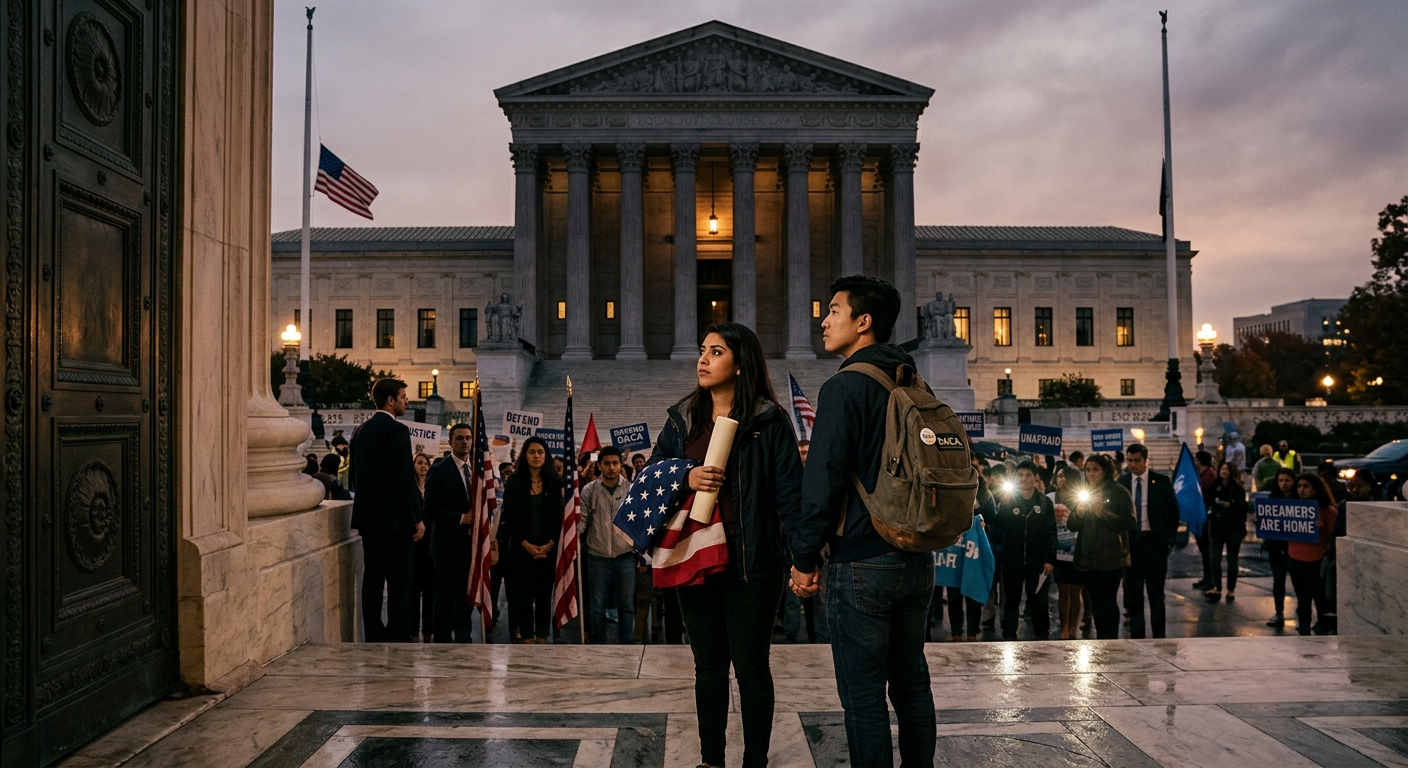
Deferred Action for Childhood Arrivals, universally known as DACA, has been one of the most hotly contested public policy initiatives in modern American history. Introduced over a decade ago, it fundamentally altered the lives of hundreds of thousands of undocumented youth, granting them a temporary reprieve from deportation and the ability to work legally in the United States. However, the program has continuously lived on borrowed time, caught in an unending tug-of-war between the executive branch, the federal judiciary, and grassroots advocacy groups.
Despite monumental courtroom victories that kept the program alive when its demise seemed imminent, the battle for the future of undocumented youth is far from over. Bureaucratic hurdles and deeply entrenched political divides have left the policy fractured, protecting current recipients while effectively locking the door behind them. To understand the current landscape of immigration rights and the prolonged fight for these young people, one must examine the legal scaffolding of the program, the landmark decisions that saved it, and the ongoing administrative resistance shaping its application today.
The Architecture of Deferred Action
To grasp the significance of courtroom clashes, one must understand the policy’s foundation. DACA was never designed to be a permanent legislative fix or a pathway to citizenship. Instead, it was an exercise in prosecutorial discretion. By recognizing that the federal government possesses limited resources for immigration enforcement, the administration chose to deprioritize the removal of individuals who were brought to the country as children and met strict guidelines.
The core requirements for eligibility included several strict benchmarks:
- Arriving in the United States before the age of 16.
- Continuously residing in the U.S. since June 15, 2007.
- Being under the age of 31 as of June 15, 2012.
- Currently being enrolled in school, having graduated, or being an honorably discharged veteran.
- Possessing a clean criminal record, free of felonies or significant misdemeanors.
For those who qualified, the impact was immediate. Recipients emerged from the shadows, securing driver’s licenses, enrolling in college without fear of deportation, and obtaining jobs matching their skills. The policy acknowledged a fundamental reality: hundreds of thousands of young people had grown up in the United States, attended its schools, and pledged allegiance to its flag, despite lacking formal paperwork. Yet, because it was born of executive action rather than an act of Congress, its existence remained precarious, vulnerable to the stroke of a pen by any subsequent president.
A Watershed Moment: The Supreme Court Intervention
The inherent fragility of the program was starkly exposed when a subsequent administration announced its formal termination. The justification provided was that the original implementation represented an unconstitutional overreach of executive power, prompting immediate legal action from civil rights organizations, universities, and state governments. The legal battle that ensued was not merely about immigration; it was a profound test of administrative law.
This confrontation reached its climax in the summer of 2020 when the Supreme Court of the United States delivered a pivotal decision. In the case of Department of Homeland Security v. Regents of the University of California, the Court ruled that the attempt to rescind the program was unlawful . The majority opinion did not evaluate whether the program itself was intrinsically legal or whether the government had the absolute right to end it. Instead, the ruling hinged on the Administrative Procedure Act (APA), a federal statute governing how administrative agencies establish or dismantle regulations.
The Court determined that the termination was arbitrary and capricious. The agency had failed to provide a reasoned explanation for its actions and, crucially, had ignored the massive reliance interests of the program’s beneficiaries. Hundreds of thousands of individuals had structured their lives around the deferral of action—buying homes, starting families, and taking on debt based on the assumption that their status was secure . The Supreme Court concluded that the government could not simply pull the rug out from under them without a thorough, legally sound consideration of these profound human consequences.
Executive Resistance and Bureaucratic Maneuvering
Following a Supreme Court mandate, the traditional expectation is swift compliance. For undocumented youth and their advocates, the ruling felt like a definitive victory that would fully restore the program to its original state, including the acceptance of new applications. However, the aftermath revealed the complexities of administrative resistance. The executive branch demonstrated that even in the face of a loss at the highest court in the land, a determined administration could utilize bureaucratic friction to delay or circumvent the full reinstatement of a policy.
Instead of reopening the application pool, the Department of Homeland Security issued internal memorandums that effectively crippled the program’s expansion. These directives instructed immigration agencies to reject all initial requests and significantly shorten the renewal period for existing beneficiaries. This maneuver highlighted a critical lesson in public policy: judicial victories are not self-executing. They require an administration willing to implement them in good faith. By erecting administrative hurdles and citing the need for further review, the government managed to keep the program frozen. While current recipients kept their protections, a new generation of eligible youth were systematically excluded, turning the victory into a deeply frustrating stalemate.
The Economic Imperative and Societal Contributions
The debate surrounding deferred action is frequently framed in moral and legal terms, but its economic implications are equally profound. Excluding a segment of the population from the formal workforce has documented negative effects on the broader national economy. Economic analyses have consistently shown that providing legal status and work authorization to undocumented immigrants boosts wages and productivity across the board.
According to research highlighted by the Congressional Budget Office, individuals authorized to work are significantly better positioned to negotiate fair compensation, avoid workplace exploitation, and seek out employment that accurately matches their skill levels . This alignment of skills with appropriate jobs increases overall economic productivity. Furthermore, individuals with employment authorization contribute more robustly to tax revenues, paying into vital systems. Conversely, when initial applications are blocked and young adults are forced into the shadows, the United States economy loses out on a massive pool of educated, bilingual, and highly motivated talent. In an era marked by labor shortages in critical sectors such as healthcare and education, preventing these young people from participating fully in the economy represents a significant barrier to national growth.
The Power of Grassroots Organizing
While legal briefs and economic data form the analytical core of the debate, the survival of the program over the past decade cannot be attributed solely to lawyers and policymakers. It is the direct result of relentless, highly coordinated grassroots advocacy. Undocumented youth transformed their vulnerability into a powerful source of political capital. Refusing to remain invisible, they stepped into the public spotlight, risking their own safety to share deeply personal narratives.
These advocates engaged in sit-ins, marched on the capital, and formed robust coalitions with civil rights groups, faith leaders, and business executives. Their organizing strategy was brilliant in its simplicity: they forced the American public to look them in the eye and recognize their shared humanity. By framing their struggle not just as a legal anomaly but as an issue of fundamental human dignity, they shifted public opinion and kept the pressure on the courts and legislatures. This movement proved that even without the right to vote, a highly organized and morally resolute constituency can profoundly influence government policy.
Navigating Ongoing Injunctions and the Future
Today, the policy remains entangled in a complex web of lower court litigation. Federal courts have repeatedly issued rulings questioning the legality of the program. According to the latest guidance from U.S. Citizenship and Immigration Services (USCIS), judicial orders currently mandate that while existing recipients can continue to process their renewals, the agency is barred from processing initial requests for those who have never previously held the status .
Key Milestones in the Policy Timeline
| Year | Milestone | Impact on Applicants |
|---|---|---|
| 2012 | Program Initiation | Provided temporary protection and work authorization for eligible youth. |
| 2017 | Termination Attempt | Sparked massive legal challenges and widespread uncertainty. |
| 2020 | Supreme Court Decision | Blocked the rescission, citing procedural violations under the APA. |
| 2021 – Present | Federal Injunctions | Renewals remain permitted, but initial applications are indefinitely frozen. |
This ongoing legal limbo emphasizes a harsh reality: executive policies, no matter how well-intentioned or beneficial, are inherently unstable. They are subject to the ideological shifts of changing administrations and the interpretations of varying judicial circuits. The continuous cycle of injunctions, stays, and appeals leaves hundreds of thousands of people in a permanent state of anxiety, unable to plan their futures with any degree of certainty.
The Necessity of Legislative Permanence
Ultimately, the resilience of deferred action is a testament to the endurance of the individuals it protects, but it also highlights a glaring failure of the legislative branch. The courts can only rule on procedural mechanics, and the executive branch can only stretch its enforcement discretion so far. A true resolution requires decisive action from Congress.
Advocates overwhelmingly agree that the only sustainable solution is the passage of comprehensive legislation that provides a definitive and irreversible pathway to permanent legal status. Until lawmakers summon the political will to codify these protections into federal law, the lives of undocumented youth will continue to be used as bargaining chips in a polarized political arena. The transition from temporary reprieve to permanent belonging is the final, essential step in ensuring that those who call the United States their only home are finally recognized as full members of its society.
Frequently Asked Questions (FAQ)
What was the basis of the 2020 Supreme Court decision?
The Supreme Court ruled that the administration’s attempt to end the program violated the Administrative Procedure Act because it was arbitrary and capricious, specifically failing to adequately consider the reliance interests of the recipients.
Can new applicants apply for the program today?
No. Due to ongoing federal court injunctions, USCIS is currently permitted to process renewals for existing beneficiaries but is legally barred from approving initial applications for those who have never been in the program.
Does this policy provide a pathway to citizenship?
No. It is an executive action that provides temporary, renewable deferral of deportation and work authorization. It does not grant lawful permanent resident status or a pathway to citizenship.
How does this program impact the economy?
Providing work authorization allows individuals to find jobs matching their skills, which increases overall productivity, raises wage floors, and generates significant tax revenue for federal and state governments.
References
- 18-587 Department of Homeland Security v. Regents of Univ. of Cal. (06/18/2020) — Supreme Court of the United States. 2020-06-18. https://www.supremecourt.gov/opinions/19pdf/18-587_5ifl.pdf
- The Foreign-Born Population and Its Effects on the U.S. Economy and the Federal Budget—An Overview — Congressional Budget Office. 2020-01-09. https://www.cbo.gov/publication/55967
- Consideration of Deferred Action for Childhood Arrivals (DACA) — U.S. Citizenship and Immigration Services (USCIS). 2025-01-24. https://www.uscis.gov/humanitarian/consideration-of-deferred-action-for-childhood-arrivals-daca
Similar Articles








Read full bio of Sneha Tete


