
When Pets Become Politicians: The Curious World of Animal Mayors
From fundraising stunts to symbolic leaders, explore how dogs, cats, goats and more end up with the title of mayor.
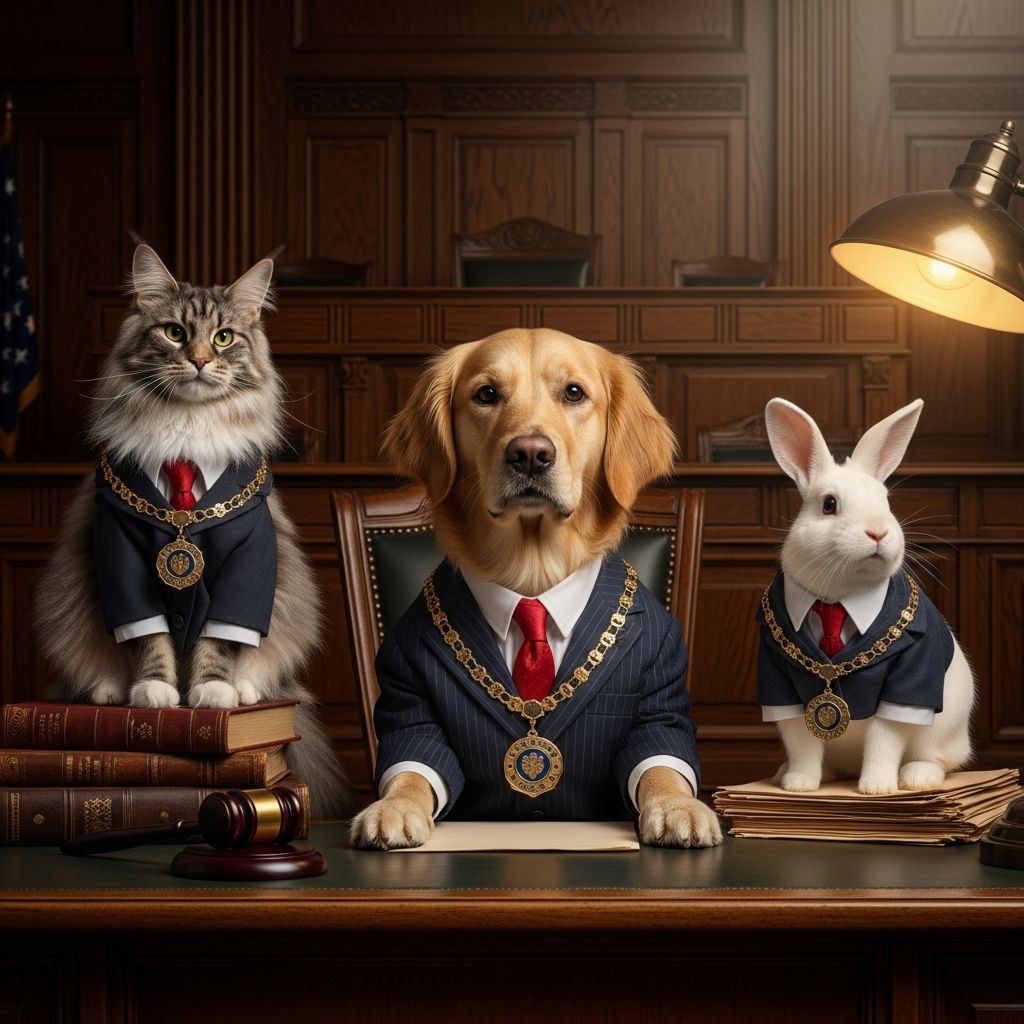
In small towns across the United States and beyond, voters have done something that sounds more like a cartoon plot than real life: they have chosen dogs, cats, goats, and even cows to serve as mayors. These “elections” raise fun — and serious — questions. Are these animals truly public officials? Do they have any legal power? Or are they simply mascots helping their communities raise money and attract attention?
This article unpacks the practice of naming animals as mayors, explaining how it works, what the law says, and why communities keep returning to the idea of putting a paw, hoof, or claw in office.
Why Towns Elect Animals in the First Place
Although the details vary from place to place, animal mayors tend to appear in very small communities, often unincorporated or with limited local government structures. In practice, several overlapping motives drive these unusual elections:
- Fundraising events for local projects, such as historical societies, playgrounds, or animal rescues.
- Tourism promotion, giving the town a quirky identity that draws media coverage and visitors.
- Community-building, providing a light-hearted local tradition that residents can rally around.
- Symbolic protest, where residents express dissatisfaction with politics by voting for a non-human candidate as a joke or statement.
In many cases, voters pay a fee per ballot, with unlimited votes allowed, turning the election into a creative donation mechanism rather than a conventional democratic contest.
Are Animal Mayors Legally Real Mayors?
The key legal issue is whether an animal can hold actual public office under state and local law. In modern U.S. practice, the answer is almost always no.
Most state constitutions and municipal charters assume that public officers are natural persons who can take an oath, sign documents, and be held legally responsible for their acts. While not always spelled out as “humans only,” the requirements to be a qualified elector, resident, and oath-taker effectively rule out animals, who cannot form legal intent or contract in the way the law requires.
As a result, animal mayors typically fall into one of two categories:
- Purely honorary titles: The town already has a human government, but ceremonially calls a dog or cat its “mayor.”
- Symbolic office in places without a formal mayor: In some unincorporated communities, there is no legally recognized mayor at all; the animal fills a social role, not a statutory one.
Even in the rare instances where local lore suggests an animal was “officially” elected decades ago, those stories usually rest on informal practices rather than a legally enforceable grant of authority.
How Animal Elections Usually Work
Although each town creates its own rules, common patterns appear across many animal mayor elections:
| Feature | Typical Human Election | Typical Animal Mayor Election |
|---|---|---|
| Legal basis | Defined in state law and municipal charter | Run as a private fundraiser or community event |
| Who can vote | Registered voters meeting residency and age rules | Often anyone willing to donate, sometimes multiple votes allowed |
| Ballot rules | One person, one vote; secret ballot | Public voting; no strict limitations on ballot quantity |
| Office powers | Executive authority over municipal government | Symbolic duties such as photo-ops and parades |
| Main purpose | Representative governance | Fundraising, publicity, local tradition |
Because the elections are structured as charity events, money raised typically funds local needs like historical preservation or school facilities.
Famous Examples of Animal Mayors
While the legal status of these figures is limited, a number of animal “officeholders” have gained national or even international attention.
Stubbs the Cat in Alaska
One of the most publicized examples is Stubbs, an orange cat associated with the small community of Talkeetna, Alaska. According to reporting on local history, Stubbs was treated by townspeople as a sort of honorary mayor for roughly 20 years, starting in the late 1990s, in a place that did not have a formal mayoral system.
Stubbs frequently appeared in media stories as a tourist attraction. Businesses featured him on merchandise, and visitors sought him out as a local celebrity, enhancing Talkeetna’s profile even though he held no legal office.
Dogs in Small-Town “Paw-litics”
Across the United States, multiple dogs have been designated as mayors in unincorporated communities or as promotional figures:
- Rabbit Hash, Kentucky has a tradition of electing dog mayors as part of fundraisers for its historical society, with residents paying per vote.
- Idyllwild, California selected a golden retriever known as Mayor Max in a charity election organized by an animal rescue group, later continuing the tradition with a successor dog.
- Some towns promote their canine leaders in parades, local festivals, and social media campaigns, turning the animals into civic mascots.
In these communities, the dog mayor often appears at ribbon-cuttings or local events wearing a tie, bandana, or sash — a visible reminder that the role is ceremonial and community driven.
Goats, Cows, and Other Hoofed Leaders
Dogs and cats are not the only contenders. Livestock and other animals have also been elevated to symbolic office.
- Goats have been used as mayors in at least two U.S. towns, sometimes as part of playful rivalries or stunts. In one Texas community, a goat mayor emerged after locals joked that an animal would be preferable to a proposed human candidate, leading to a standing tradition of goat officeholders.
- Cows and other farm animals have been selected in charity elections to benefit local children’s programs, reflecting rural communities’ close connection to agriculture and humor about local politics.
These animal leaders usually “govern” by continuing their normal routines — grazing, napping, or visiting with residents — while human organizers handle the fundraising and publicity behind the scenes.
What the Law Says About Animals in Public Office
To understand the legal limits, it is useful to consider why an animal cannot simply be sworn in as a mayor in the same way a human can.
Capacity, Oaths, and Accountability
Public officials are expected to:
- Take an oath of office, affirming that they will uphold applicable constitutions and laws.
- Exercise discretion and judgment in performing their duties.
- Be subject to legal accountability, including removal from office or even civil liability for certain acts.
Animals, however intelligent, are not recognized by the legal system as capable of forming the intent necessary for public office. Courts in common law jurisdictions generally treat animals as property or as beings with certain welfare protections, not as persons who can contract, testify, or hold office in their own right.
Because of this, so-called animal mayors function through their human handlers and event organizers, who make all practical decisions and manage funds.
Distinguishing Novelty from Fraud
Most animal mayor stories are transparent novelties. Problems would arise if organizers attempted to present an animal as a genuine statutory official, for example by:
- Issuing binding legal documents under the animal’s name.
- Handling public funds as though the animal were the legal authority.
- Misleading donors or voters about what their votes accomplish.
In reality, credible accounts emphasize that these roles are honorary and that ordinary human government remains in place wherever it exists. External watchdogs and local media coverage typically make the distinction clear, mitigating the risk of legal confusion.
Cultural and Social Meaning of Animal Mayors
Beyond legal details, animal mayors serve several symbolic functions in public life.
Comic Relief in Cynical Times
Public trust in political institutions has been strained in many democracies, and humorous political stunts can offer residents a way to express frustration while still participating in civic rituals. Voters may feel that choosing an animal is, paradoxically, a less polarizing act than backing a human candidate aligned with a particular party.
Media outlets frequently treat these stories as “odd news,” but they also highlight deeper sentiments: that people long for leaders perceived as honest, approachable, and untainted by partisan conflict — traits easily projected onto beloved animals.
Tourism and Local Branding
For small towns with limited economic bases, animal mayors can function as powerful branding tools. A resident dog or cat featured in news stories and travel blogs can:
- Draw visitors who are curious to “meet the mayor.”
- Encourage purchases of local souvenirs, such as T-shirts or postcards.
- Attract repeat media coverage, boosting name recognition far beyond what advertising budgets might allow.
Communities that have maintained the tradition over multiple generations of animal mayors often treat the position as part of their local heritage.
Education and Philanthropy
Because many animal elections direct their proceeds to schools, children’s programs, or historical projects, organizers sometimes frame them as lessons in:
- Civic participation: demonstrating that elections, even playful ones, require people to show up and make choices.
- Community responsibility: illustrating how donations and local engagement can fund public goods.
- Animal welfare: highlighting the role of shelters and rescues when the event is tied to a humane society or adoption group.
In this way, the joke about putting a dog in charge can be paired with serious conversations about local needs and collective action.
International and Historical Parallels
While the best-known modern examples are from the United States, playful or symbolic use of animals in authority roles has appeared elsewhere, too. Historically, some rulers granted ceremonial ranks to animals as a way of mocking rivals or publicly displaying their own power.
Contemporary instances include short-term “mayor for a day” promotions in tourist towns abroad, and online campaigns nominating animals for spoof offices such as “chief mouser” or “honorary ambassador.” These roles generally mirror the same pattern: they are symbolic, time-limited, and clearly separated from real decision-making.
Practical Takeaways: What Animal Mayors Can and Cannot Do
For residents, visitors, or potential donors encountering an animal mayor for the first time, a few practical points are helpful:
- The town’s legal decisions still rest with human officials, boards, or higher levels of government.
- Any money raised through animal elections is handled by the sponsoring organization (historical society, school, nonprofit), not by the animal itself.
- The title “mayor” in this context is typically unprotected and used informally, similar to calling someone an “ambassador” for a brand.
- If unsure how an event operates, citizens can ask organizers where funds go and whether the title carries any formal authority.
Understanding these distinctions allows people to enjoy the charm of animal mayors without misunderstanding their role in governance.
Frequently Asked Questions About Animal Mayors
Q: Can an animal legally sign laws or official documents?
A: No. Because animals are not recognized as legal persons capable of holding public office, any signing ceremonies they take part in are symbolic. Human officials and organizations remain responsible for all binding documents.
Q: Are votes in an animal mayor election counted like regular votes?
A: Typically not. In many such elections, people pay a fee per vote and may cast multiple ballots, so the process does not follow the one-person, one-vote principle used in governmental elections.
Q: Could a town be sued because it has an animal mayor?
A: As long as the animal’s role is clearly presented as honorary and human authorities continue to perform all official functions, the legal risk is low. Problems would arise only if the arrangement were used to misrepresent how decisions are made or how funds are handled.
Q: Do these elections help animals in shelters?
A: In some communities, animal mayor elections are organized by rescue groups or humane societies, and the entry fees or votes fund veterinary care, adoptions, or shelter improvements. In others, the money may support unrelated local causes, such as playgrounds or historical sites.
Q: Are there any real legal reforms inspired by animal mayors?
A: While animal mayors themselves do not wield legal power, the publicity they generate can help advocates spotlight issues like animal welfare, local infrastructure needs, or civic engagement. However, formal reforms still occur through traditional legislative and administrative channels.
References
- Meet the dog mayors of America — Business Insider. 2019-07-11. https://www.businessinsider.com/dog-mayors-of-america-2019-7
- Meet the Animal Mayors: A Look at 9 Unlikely Political Figures — A-Z Animals. 2023-06-22. https://a-z-animals.com/articles/meet-the-animal-mayors-a-look-at-9-unlikely-political-figures/
- 8 Animals Who Have Held Political Office — Interesting Facts. 2022-04-07. https://interestingfacts.com/animals-political-office/
- 14 Animals Who Ran for Office — Mental Floss. 2020-07-07. https://www.mentalfloss.com/article/623777/animals-who-ran-office
- The Nation’s Best Paw-liticians — Livability. 2017-08-15. https://livability.com/topics/love-where-you-live/the-nations-best-paw-liticians
- 8 Animals That Held Political Office — Explore the Archive. 2021-08-03. https://explorethearchive.com/animals-that-held-political-office
Similar Articles








Read full bio of Sneha Tete


