
Crowd Control and Civil Liberties in Modern Policing
Examining the impacts of militarized policing on civil rights and public safety.
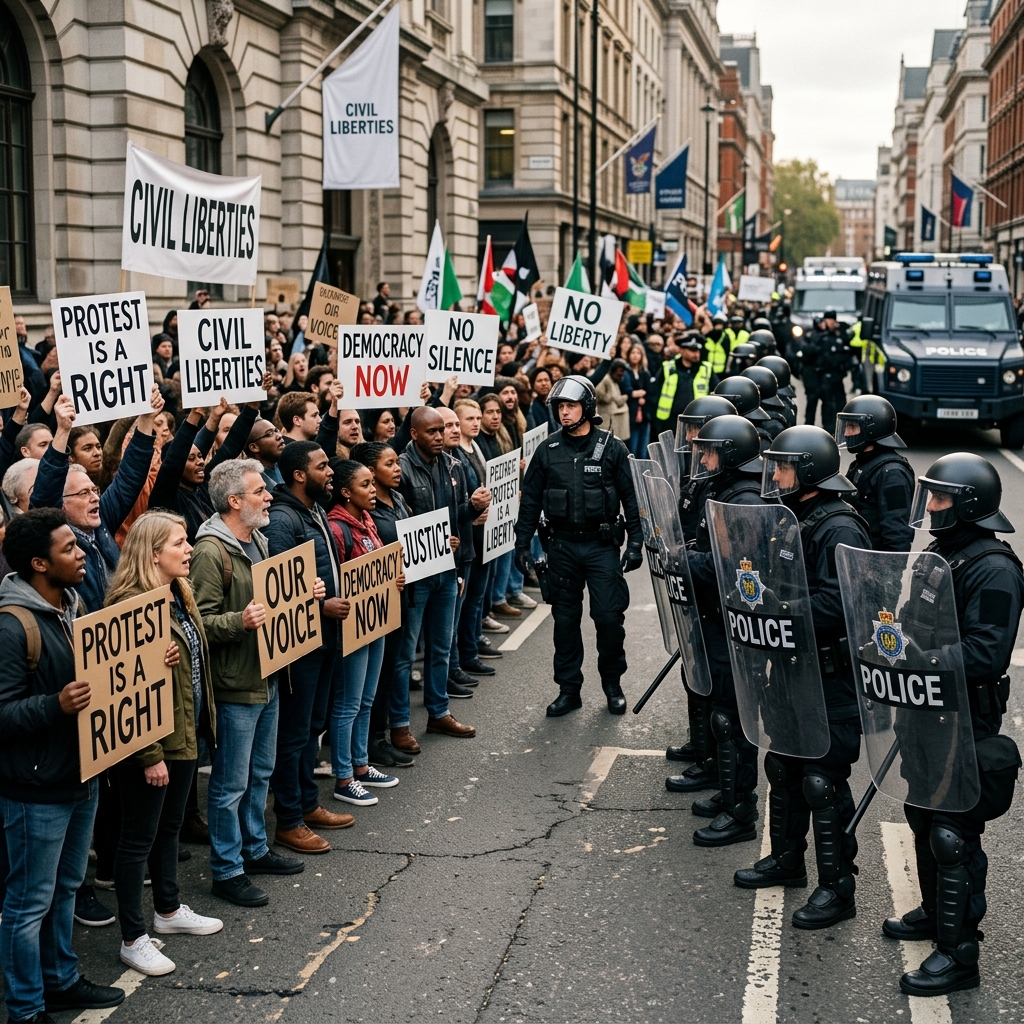
The Escalating Intersection of Protest and State Force
The fundamental right to gather, speak, and protest is a cornerstone of democratic societies. However, the modern intersection of civilian protests and law enforcement crowd control operations frequently resembles a theater of conflict rather than a peaceful civic exercise. Over the past few decades, the tactics employed by local police departments to manage assemblies have undergone a dramatic and highly visible transformation. What was once predominantly handled through negotiation and strategic crowd management has increasingly been met with heavily armored officers, chemical irritants, and projectile weaponry.
This escalation not only raises profound constitutional questions regarding the right to free expression but also introduces significant, sometimes life-altering, public health risks. The deployment of so-called “less-lethal” weapons has transformed public squares into zones of sudden, chaotic violence. This phenomenon aggressively chills democratic participation and leaves lasting physical and psychological scars on communities. As we evaluate the state of civil liberties in the modern era, it is imperative to deeply dissect the mechanisms, policies, and health impacts of militarized crowd control and its effects on the general populace.
The Architecture of Assembly: First and Fourth Amendment Considerations
The legal framework governing protests in the United States is firmly anchored in the First Amendment, which explicitly protects the right of the people peaceably to assemble and to petition the government for a redress of grievances. This constitutional guarantee is meant to ensure that citizens can collectively express their dissent, raise awareness for social issues, and demand systemic changes without the fear of state-sponsored retaliation. However, the First Amendment is not an absolute shield against regulation; federal and state courts have long held that municipalities can impose reasonable “time, place, and manner” restrictions on assemblies to maintain public safety and order.
The primary constitutional conflict arises when the enforcement of these restrictions crosses the line into aggressive suppression. When law enforcement agencies declare an assembly “unlawful” and immediately deploy forceful dispersal tactics, their actions heavily implicate the Fourth Amendment, which protects citizens against unreasonable searches and seizures. In the context of policing, the use of force—whether through physical batons, chemical sprays, or projectile weapons—constitutes a seizure under the law. If the force used is deemed excessive, arbitrary, or disproportionate to the actual threat posed by the crowd, it violates established constitutional boundaries.
The chilling effect of these violations is immediate and profound. When citizens know that attending a protest might result in arbitrary physical injury or arrest, the fundamental right to assemble is severely compromised. This dynamic creates a dangerous environment where the state’s mandate to maintain public order is weaponized, actively suppressing the democratic processes it is fundamentally supposed to protect.
From Negotiation to Militarization: A Paradigm Shift
To fully grasp the current state of crowd control, one must examine the historical evolution of law enforcement tactics. During the civil rights and anti-war movements of the mid-twentieth century, aggressive police responses—which were often televised globally—sparked immense public outrage. In the subsequent decades, many departments adopted a “negotiated management” approach. This strategy emphasized open communication between police leadership and protest organizers, aiming to facilitate peaceful demonstrations, establish clear ground rules, and avoid unnecessary physical confrontation.
However, the dawn of the twenty-first century, deeply accelerated by the post-9/11 national security apparatus, initiated a severe paradigm shift. The focus moved rapidly from protest facilitation to hyper-vigilance, risk management, and the massive militarization of local police forces. A primary driver of this shift is the Defense Logistics Agency’s 1033 Program. Authorized by the National Defense Authorization Act, this federal initiative allows the Department of Defense to transfer excess military property to local law enforcement agencies at little to no cost.
Consequently, small-town police departments and major metropolitan forces alike acquired armored vehicles, combat-grade assault rifles, and heavy riot gear originally designed for overseas conflict zones. The infusion of military hardware into domestic policing profoundly alters the psychology of both officers and civilians. When law enforcement approaches a civilian protest clad in full battle dress uniforms and backed by mine-resistant ambush-protected (MRAP) vehicles, the operational mindset shifts aggressively from “protect and serve” to “command and control.” The implicit message conveyed to the public is that they are not citizens exercising their fundamental rights, but rather adversarial combatants in a hostile scenario. This militarized posture frequently escalates tensions, turning minor infractions or isolated acts of civil disobedience into full-scale confrontations where indiscriminate force becomes the default response.
Deconstructing “Less-Lethal” Weaponry
The term “less-lethal” is inherently deceptive and often minimizes the danger these tools present. While these weapons are designed to be less likely to cause death than conventional firearms, they possess a massive capacity for inflicting severe injury, permanent disability, and, in some tragic cases, fatalities. The most common tools in the modern crowd-control arsenal include chemical irritants, kinetic impact projectiles, and acoustic devices.
Chemical Irritants: The Paradox of Tear Gas
Tear gas (most commonly known as Agent CS) and pepper spray (Agent OC) are indiscriminate chemical weapons designed to cause acute respiratory distress, severe eye pain, skin irritation, and overwhelming disorientation. A comprehensive systematic review of injuries caused by crowd-control chemical irritants analyzed data spanning over two decades. The findings revealed that out of thousands of reported injuries, nearly ten percent were severe enough to require professional medical management, with numerous cases resulting in permanent disability or death. Environmental factors such as the concentration of the gas, deployment in enclosed spaces, and the underlying health conditions of the targets drastically increase the risk of severe trauma.
Perhaps the most glaring paradox regarding tear gas is its international legal status. Under the Chemical Weapons Convention, the use of riot control agents, including tear gas, is strictly prohibited in international warfare. Yet, domestic law enforcement agencies are widely permitted to deploy these exact same chemical agents against their own citizens. The indiscriminate nature of the gas means it cannot distinguish between an active rioter, a peaceful protester, a journalist, or a passing bystander, making its use a broad-brush punishment rather than a targeted law enforcement tool.
Kinetic Impact Projectiles (KIPs)
Kinetic impact projectiles encompass a variety of munitions, including rubber-coated metal bullets, plastic bullets, beanbag rounds, and heavy sponge grenades. Under most operational guidelines, these projectiles are intended to be fired at the ground to skip into the lower extremities, or aimed exclusively at large muscle groups to incapacitate a specific, dangerous individual. However, in the chaos and dense fog of a protest, these critical safety guidelines are frequently ignored.
The United Nations Human Rights Guidance on Less-Lethal Weapons clearly stipulates that kinetic impact projectiles should never be fired indiscriminately into a general crowd. Furthermore, they must never be aimed at the head, face, neck, or torso, as the blunt force trauma can easily cause skull fractures, permanent vision loss, and catastrophic internal organ rupture. Despite these international guidelines, reports of protesters sustaining traumatic brain injuries and losing their eyes due to KIPs are alarmingly common. The erratic flight paths of these projectiles, combined with the inherently chaotic environment of a protest, render them fundamentally unsafe for general crowd dispersal.
Acoustic and Flash-Bang Devices
Stun grenades, frequently referred to as flash-bangs, are explosive devices designed to temporarily disorient the senses by producing a blinding flash of light and an intensely loud concussive noise. Originally developed for specialized hostage rescue and high-stakes counter-terrorism operations, their use in open crowds induces sheer, uncontrolled panic. The concussive blast can cause permanent hearing damage, and the explosive detonation carries a severe risk of thermal burns and shrapnel injuries. When flash-bangs are thrown into a dense, confined crowd, the resulting stampede can cause severe secondary injuries as terrified individuals scramble to escape the perceived lethal threat.
The Public Health Crisis of Crowd Control
Beyond the immediate legal and constitutional violations, the deployment of less-lethal weapons constitutes a significant and largely unaddressed public health crisis. The medical implications of chemical irritants extend far beyond temporary discomfort. For individuals with pre-existing respiratory conditions such as asthma or chronic obstructive pulmonary disease (COPD), exposure to tear gas can trigger life-threatening exacerbations. Furthermore, chemical agents heavily linger in the environment, contaminating clothing, public infrastructure, and nearby residential areas, thereby exposing non-participants—including young children and the elderly—to hazardous, lingering toxins.
The psychological toll is equally profound and destructive. Experiencing or witnessing aggressive, militarized police operations can lead to acute stress disorder, post-traumatic stress disorder (PTSD), and severe chronic anxiety. Communities that are subjected to frequent militarized policing often develop a deep-seated, generational distrust of state institutions. When the very entities tasked with ensuring public safety become primary sources of community trauma, the social contract is severely fractured. This public health perspective is absolutely essential for understanding the full scope of the damage inflicted by aggressive crowd-control tactics; the injuries are not just physical, but deeply woven into the mental and emotional fabric of the impacted community.
Reforming the Rules of Engagement
Addressing the crisis of militarized crowd control requires systemic policy reform and a fundamental re-evaluation of law enforcement’s role in democratic spaces. To effectively safeguard civil liberties, lawmakers and police departments must implement stringent, enforceable regulations governing the use of force.
- Restricting Chemical and Kinetic Weapons: There must be severe, codified restrictions on the deployment of chemical irritants and kinetic impact projectiles. These weapons should never be used for the sole purpose of dispersing a non-violent assembly. Their use must be strictly limited to situations where there is an imminent, verifiable threat to life or a risk of serious bodily injury, and only after all verbal de-escalation techniques have been entirely exhausted.
- Banning Indiscriminate Firing: The indiscriminate firing of KIPs into crowds must be outright banned at both the state and federal levels to align with international human rights standards.
- Demilitarizing Local Forces: The flow of military hardware to local police departments must be heavily curtailed. Reforming the 1033 Program to explicitly prohibit the transfer of combat-specific equipment—such as armored tracked vehicles, bayonets, and weaponized drones—would help demilitarize the operational mindset of local forces. Law enforcement should be equipped to protect their communities, not geared up to occupy them.
- Establishing Robust Accountability: There must be robust accountability mechanisms. Independent civilian oversight boards with full subpoena power should investigate all instances of force used during protests. Officers who violate use-of-force protocols must face strict disciplinary and legal consequences.
Transparency in operations, comprehensive training in crowd psychology, and a renewed emphasis on the “negotiated management” approach are vital steps toward restoring the fragile balance between maintaining public order and protecting constitutional rights.
Conclusion: Safeguarding Democratic Expression
The right to protest is the lifeblood of systemic change and democratic accountability. When this fundamental right is suppressed through the militarization of police forces and the rampant deployment of hazardous less-lethal weaponry, the foundations of a free society are gravely threatened. The physical injuries sustained by citizens attempting to exercise their First Amendment rights are a dark testament to a broken policing paradigm that prioritizes overwhelming force over peaceful facilitation. By fully acknowledging the severe health impacts of chemical and kinetic weapons, adhering strictly to international human rights standards, and implementing sweeping, enforceable policy reforms, society can dismantle the militarized response to civil dissent. Ensuring public safety should never come at the brutal cost of civil liberties; it is only through vigorously protecting the right to assemble that a democracy can truly thrive and evolve.
Frequently Asked Questions (FAQ)
What are “less-lethal” weapons?
Less-lethal weapons are specialized law enforcement tools designed to subdue individuals or disperse crowds without causing immediate fatalities. Common examples include tear gas, pepper spray, rubber bullets, beanbag rounds, and flash-bang grenades. However, the term is highly controversial because these weapons can still cause severe injuries, permanent disabilities, and death if used improperly or indiscriminately.
Is tear gas banned in war?
Yes. Under the Chemical Weapons Convention, an international arms control treaty, the use of riot control agents like tear gas is strictly prohibited as a method of warfare. Despite this global consensus on international battlefields, domestic laws currently allow local law enforcement agencies to use these same agents for civilian crowd control.
What is the 1033 Program?
The 1033 Program is a federal initiative managed by the Defense Logistics Agency that allows the Department of Defense to transfer surplus military equipment to local, state, and federal law enforcement agencies. This program has been heavily criticized for directly contributing to the militarization of local police forces by providing them with armored vehicles and military-grade combat gear.
Does the First Amendment protect all protests?
The First Amendment explicitly protects the right to “peaceably assemble.” However, the government can legally impose reasonable “time, place, and manner” restrictions, such as requiring protest permits or regulating noise levels. If a protest turns violently destructive or significantly endangers overall public safety, law enforcement can legally declare it an unlawful assembly and order a dispersal.
What are kinetic impact projectiles (KIPs)?
Kinetic impact projectiles (KIPs) are blunt-force munitions such as rubber-coated metal bullets, plastic bullets, and sponge rounds. They are fired from standard or specialized firearms. International human rights guidelines state that KIPs should never be fired indiscriminately into crowds due to the incredibly high risk of severe trauma, especially to the head, neck, and eyes.
References
- Health impacts of chemical irritants used for crowd control: a systematic review of the injuries and deaths caused by tear gas and pepper spray. — Haar, R.J., Iacopino, V., Ranadive, N. et al. (BMC Public Health). 2017-10-19. https://doi.org/10.1186/s12889-017-4814-6
- United Nations Human Rights Guidance on Less-Lethal Weapons in Law Enforcement. — Office of the High Commissioner for Human Rights (OHCHR). 2020. https://www.ohchr.org/en/publications/policy-and-methodological-publications/united-nations-human-rights-guidance-less
- LESO/1033 Program FAQs — Defense Logistics Agency (DLA). 2024. https://www.dla.mil/DispositionServices/Offers/Reutilization/LawEnforcement/ProgramFAQs.aspx
- First Amendment: Freedom of Assembly — United States Courts. 2024. https://www.uscourts.gov/about-federal-courts/educational-resources/about-educational-outreach/activity-resources/first
Similar Articles








Read full bio of Sneha Tete




