The Importance of Safe Educational Environments
Education is widely regarded as the great equalizer, meant to equip the next generation with the tools they need to navigate the world safely. For this to occur, schools must fundamentally be safe spaces. A student cannot focus on algebra, literature, or scientific inquiry if they are perpetually looking over their shoulder, fearful for their physical safety or mental well-being. Unfortunately, for countless lesbian, gay, bisexual, transgender, and queer (LGBTQ+) students across the nation, the school day is fraught with anxiety, discrimination, and targeted harassment. Ensuring that classrooms and hallways are secure, affirming environments for everyone is not a specialized interest—it is a baseline requirement for a functioning educational system.
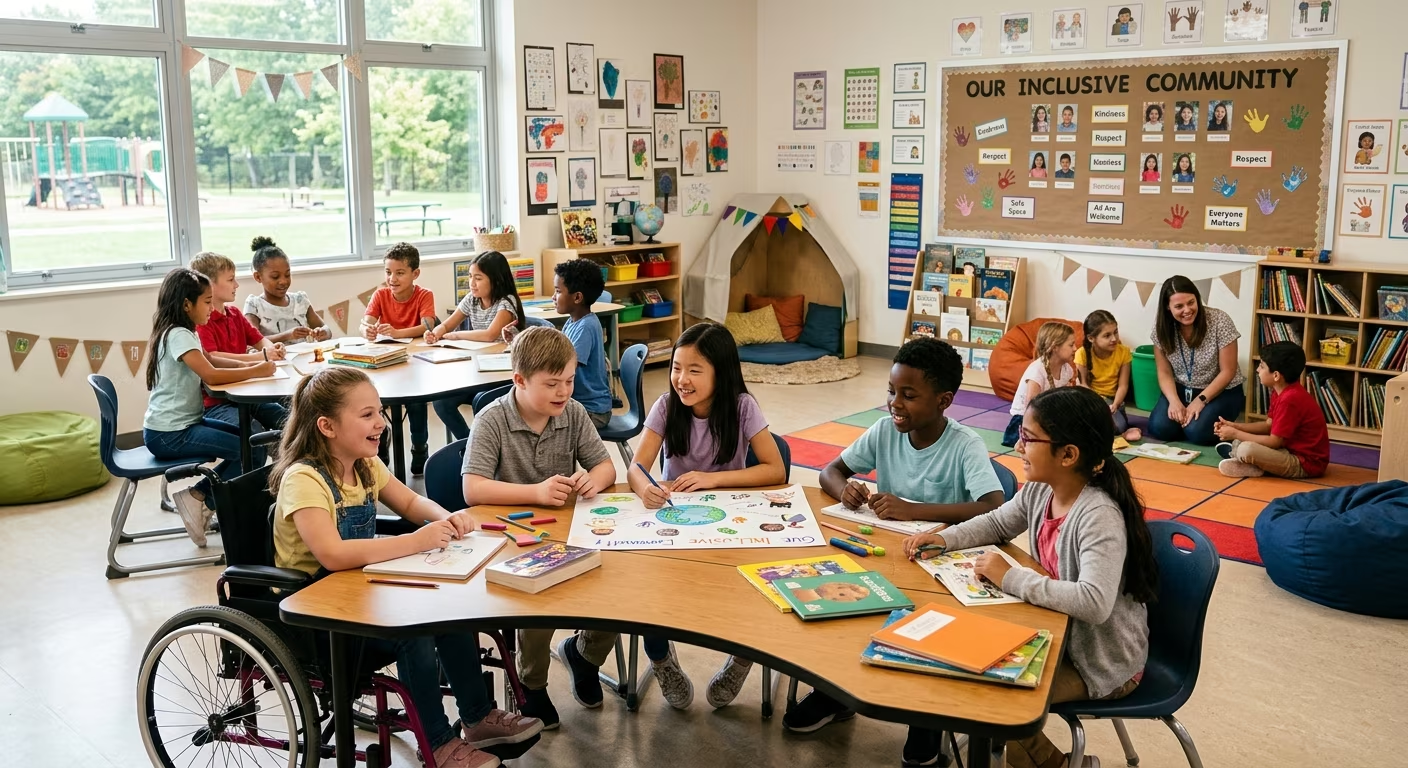
When schools take proactive measures to protect their most vulnerable populations, the benefits ripple outward. A culture of empathy, respect, and zero tolerance for bullying improves the mental health and academic performance of the entire student body. This comprehensive exploration delves into the legal frameworks that protect students, the dangerous modern legislative trends threatening these protections, and the actionable strategies that educators, parents, and community members can implement to ensure that no child is ever denied their right to a safe education.
The Current Climate: Challenges Facing LGBTQ+ Youth
Despite progress in civil rights and social acceptance, LGBTQ+ youth continue to navigate a deeply challenging landscape within school systems. Recent years have seen a disturbing surge in localized and state-level efforts to marginalize queer and transgender students, creating an urgent crisis. According to the Centers for Disease Control and Prevention (CDC), LGBTQ+ students face disproportionate health and safety disparities compared to their peers. The CDC’s Youth Risk Behavior Survey highlights that LGBTQ+ youth are at a significantly higher risk for severe depression, anxiety, and suicidal ideation, conditions directly exacerbated by hostile environments at school.
This hostility is widespread. Findings from the GLSEN 2021 National School Climate Survey revealed that approximately 80% of LGBTQ+ students experienced verbal, physical, or sexual harassment at school based on their sexual orientation or gender expression. When young people are subjected to relentless bullying, their academic performance predictably plummets. They are more likely to miss days of school to avoid abuse, experience declining grades, and abandon plans for higher education. Furthermore, school board meetings have become battlegrounds where the visibility of LGBTQ+ individuals is fiercely debated. From restricting what can be taught to policing clothing, these systemic pressures create an atmosphere where queer youth feel actively hunted. Recognizing these realities is the first step toward dismantling the structures that allow discrimination to thrive.
Understanding Legal Protections: The Role of Title IX
The fight for inclusive schools is rooted in federal civil rights law, notably Title IX of the Education Amendments of 1972. Originally recognized for ensuring equal opportunities for women in collegiate athletics, Title IX states that no person shall, on the basis of sex, be excluded from participation in, be denied the benefits of, or be subjected to discrimination under any education program receiving federal financial assistance. Over the past decades, the interpretation of “on the basis of sex” has evolved through judicial precedent.
Following the landmark 2020 Supreme Court decision in Bostock v. Clayton County, which determined that workplace discrimination based on sexual orientation and gender identity constitutes sex discrimination, the U.S. Department of Education affirmed that Title IX’s protections extend to LGBTQ+ students. This means that public schools, and private institutions receiving federal funds, have a legal obligation to address and prevent harassment targeted at students because they are gay or transgender. When schools fail to act against persistent bullying, or enact policies that disadvantage LGBTQ+ youth—such as denying access to facilities that align with their gender identity—they are potentially violating federal civil rights law. Understanding these Title IX protections equips advocates with the leverage to hold school districts accountable.
The Dangers of “Forced Outing” Policies
One of the most alarming trends in recent educational policy is the proliferation of “forced outing” mandates across school districts. These policies require teachers, administrators, and counselors to notify parents if a student requests to use a different name or set of pronouns, or if they disclose questions about their sexual orientation or gender identity. Proponents often frame them as a matter of “parental rights,” arguing that caregivers have an absolute right to know everything happening with their child during the school day.
However, child welfare advocates warn that these policies put vulnerable youth in direct peril. Not all students come from affirming, loving homes. For many LGBTQ+ youth, coming out to their family prematurely can lead to severe emotional abuse, physical violence, or being kicked out of their homes. A school should function as a safe harbor where a teenager can explore their identity without fear of immediate retaliation. When educators are forced by law to act as informants, it shatters the critical, life-saving bond of trust between student and teacher. A student experiencing a mental health crisis will simply stop seeking help. Forced outing policies prioritize political posturing over student safety, deliberately exposing youth to potential harm.
Censorship in Education: Beyond Book Bans
A genuinely safe school is not just free from physical violence; it is one where students see themselves reflected in the curriculum and the library. The recent wave of educational censorship—ranging from the aggressive banning of LGBTQ-themed books to state legislation dubbed as “Don’t Say Gay” bills—acts as a severe form of psychological erasure. These laws severely restrict classroom instruction regarding sexual orientation and gender identity, forcing educators to sanitize their teaching and avoid answering legitimate questions.
When a school removes a memoir by a queer author or punishes a teacher for displaying a pride flag, the underlying message sent to queer students is unambiguous: your existence is inappropriate and shameful. This censorship does not just harm marginalized students; it impoverishes the education of the entire student body. A comprehensive education is meant to expose young minds to diverse perspectives, fostering critical thinking and empathy. By shielding cisgender and heterosexual students from the realities of LGBTQ+ life, schools fail to prepare them for participation in a diverse adult society. Furthermore, censorship creates a chilling climate of fear among educators. This environment of surveillance and paranoia stifles genuine connection and degrades the quality of learning for everyone.
Empowering Students: The Power of Gay-Straight Alliances (GSAs)
Amidst these administrative challenges, students themselves have historically been the most powerful advocates for change through the formation of Gay-Straight Alliances, or Gender and Sexuality Alliances (GSAs). Originating in the late 1980s as grassroots efforts to combat isolation, GSAs are student-led organizations that provide a safe, affirming space for LGBTQ+ students and their allies to socialize, support one another, and advocate for more inclusive school policies.
The presence of an active GSA in a school has a profoundly positive impact on the overall campus climate. Research demonstrates that schools with GSAs see significantly lower rates of anti-LGBTQ+ slurs, reduced incidences of bullying, and higher feelings of general safety among queer students. Furthermore, these clubs empower young people by giving them invaluable leadership opportunities and a collective voice to address administrative shortcomings. Importantly, the formation of these clubs is protected by longstanding federal law. The Equal Access Act of 1984 dictates that if a public secondary school allows any non-curricular clubs to meet on campus, it cannot deny a GSA the right to assemble based on the political or religious content of their meetings. Defending the right to establish a GSA is a crucial element of ensuring marginalized youth have a sanctuary.
Actionable Steps for Educators and Administrators
Creating an inclusive educational environment requires active, intentional effort from school leadership and staff. Administrators and educators can take several concrete, research-backed steps to ensure their classrooms are genuinely safe.
- Respecting Chosen Names and Pronouns: Consistently using a student’s requested name and pronouns is a direct form of suicide prevention. Studies published in the Journal of Adolescent Health show that transgender youth who are affirmed by having their chosen name used in multiple contexts experience significantly lower rates of depressive symptoms and suicidal ideation.
- Implementing Comprehensive Anti-Bullying Policies: Schools must move beyond generic anti-bullying rules. Policies should explicitly enumerate protections against bullying based on sexual orientation, gender identity, and gender expression. This explicit language ensures staff have clear protocols for intervention.
- Providing Professional Development: Teachers cannot effectively support students if they lack the vocabulary and understanding. Mandatory professional development regarding LGBTQ+ cultural competency helps staff recognize their implicit biases and equips them to handle harassment effectively.
- Integrating Inclusive Curricula: Schools must actively incorporate the historical contributions of LGBTQ+ individuals into history, literature, and science classes. Normalizing their existence provides essential role models for queer youth.
Frequently Asked Questions
What exactly is a Gender and Sexuality Alliance (GSA)?
A GSA is a student-run, non-curricular club that provides a safe, supportive space for LGBTQ+ students and their allies. These groups focus on peer support, community building, and advocating for policies that prevent harassment.
Does Title IX definitely protect transgender students?
Yes. The U.S. Department of Education clarified that Title IX’s prohibition against sex-based discrimination encompasses discrimination based on gender identity and sexual orientation. Denying a transgender student access to facilities aligned with their gender identity violates federal civil rights.
What can parents do to support an inclusive school climate?
Parents wield significant influence in educational spaces. They can attend school board meetings to speak out against book bans and forced outing policies, vote for candidates who prioritize equity, and vocally support teachers striving to create inclusive classrooms.
Are forced outing policies legal?
This is a highly contested area of law currently moving through state and federal courts. While some states have mandated them, civil rights organizations frequently challenge these policies, arguing they violate students’ fundamental constitutional rights to privacy and equal protection.
Conclusion
Making schools safe for everyone is a moral imperative that requires the relentless commitment of educators, lawmakers, parents, and students alike. By rejecting discriminatory legislation, honoring federal civil rights protections, and fostering environments rooted in empathy, communities can transform schools into supportive sanctuaries. When LGBTQ+ students are given the freedom to learn and exist without fear, the entire educational ecosystem flourishes. A society that fiercely protects its most vulnerable children inevitably builds a more compassionate, equitable, and intelligent future for all.
References
- Title IX and Sex Discrimination — U.S. Department of Education. https://www2.ed.gov/about/offices/list/ocr/docs/tix_dis.html
- Health Disparities Among LGBTQ Youth — Centers for Disease Control and Prevention (CDC). 2024-11-29. https://www.cdc.gov/healthyyouth/disparities/health-disparities-among-lgbtq-youth.htm
- The 2021 National School Climate Survey — GLSEN. 2022-10-18. https://www.glsen.org/research/2021-national-school-climate-survey
- Chosen Name Use Is Linked to Reduced Depressive Symptoms, Suicidal Ideation, and Suicidal Behavior Among Transgender Youth — Journal of Adolescent Health (Russell, S.T., et al.). 2018-10-15. https://doi.org/10.1016/j.jadohealth.2018.02.003