
T-Shirt Business Names: Step-By-Step Guide To Brand Success
Discover essential strategies for selecting standout names for your t-shirt venture, ensuring legal compliance and brand success.
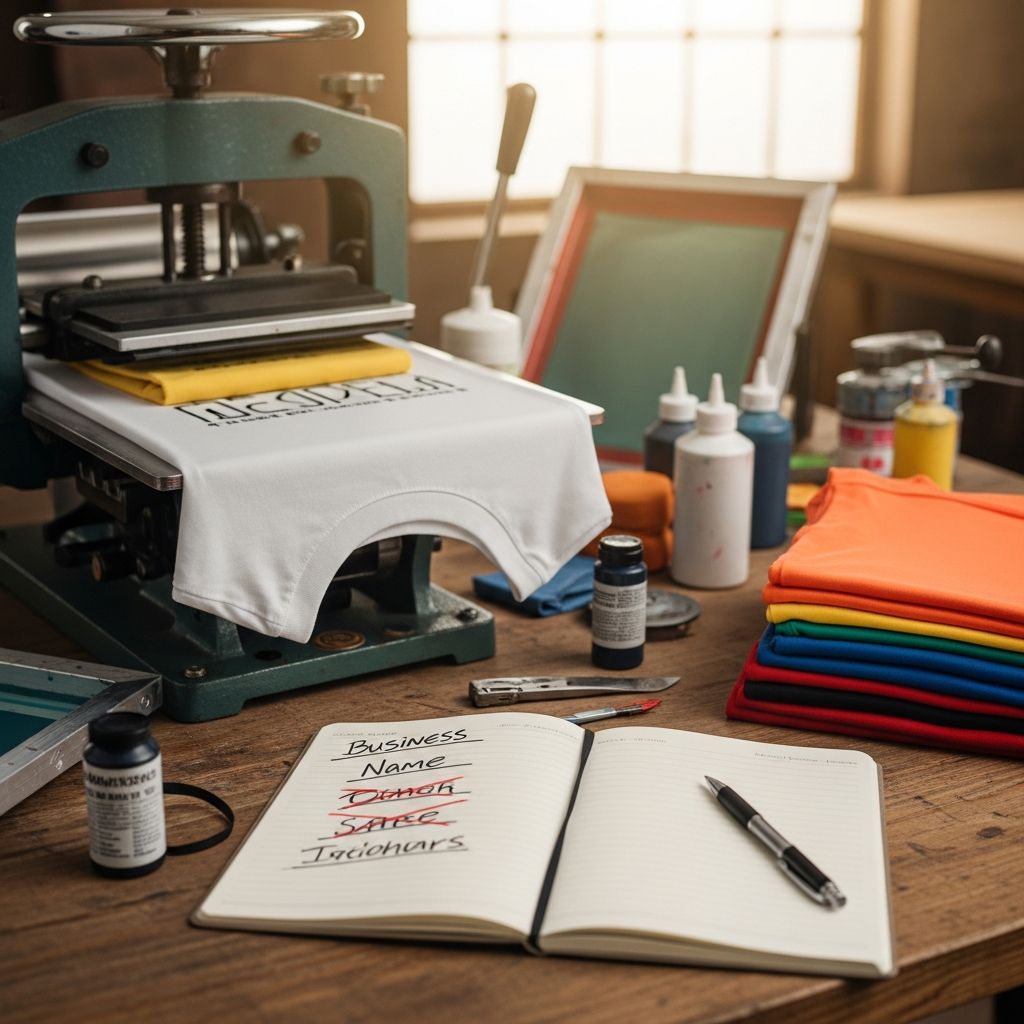
Launching a t-shirt business begins with a powerful name that captures your vision, appeals to customers, and stands out in a crowded market. A well-chosen name not only reflects your designs but also lays the foundation for legal protection and growth. This guide explores strategies for generating ideas, verifying uniqueness, navigating registrations, and safeguarding your brand.
Why Your T-Shirt Business Name Matters
The right name acts as the cornerstone of your brand identity. It influences customer recall, marketing effectiveness, and even search engine visibility. For t-shirt entrepreneurs, a name that hints at creativity, style, or niche themes—like streetwear, humor, or eco-fashion—can attract the ideal audience right away.
Consider how names like those evoking urban grit or playful puns resonate with buyers browsing online stores or markets. A strong name differentiates your products from competitors, fostering loyalty and enabling scalable expansion from local pop-ups to global e-commerce.
Brainstorming Creative Name Ideas
Start by aligning your name with your business’s core elements: target demographic, design style, and unique selling points. Jot down keywords related to apparel, printing techniques, or themes such as “ink,” “thread,” “vibe,” or “wear.”
- Combine words for uniqueness: Merge industry terms with lifestyle descriptors, e.g., “ThreadVibe Tees” or “InkRebel Apparel.”
- Incorporate puns and wordplay: Leverage t-shirt culture with clever twists like “Tee-riffic Threads” or “Printaholic Wear.”
- Draw from niches: For sustainable lines, try “EcoInk Designs”; for graphic tees, “PixelPulse Shirts.”
- Use foreign influences sparingly: Words like “fabrica” (Spanish for factory) can add flair but ensure cultural sensitivity.
- Test for memorability: Say it aloud—short, rhythmic names stick better.
Aim for 10-20 options initially, then refine based on feedback from potential customers via social media polls.
Evaluating Name Strength and Appeal
Not all ideas translate to success. Assess each against key criteria to ensure viability.
| Criteria | Description | Example Check |
|---|---|---|
| Memorability | Easy to spell and pronounce? | “TeeForge” passes; “XzyphrTees” fails. |
| Relevance | Reflects t-shirt focus? | “WearWave” ties to apparel trends. |
| Scalability | Works for expansions like hoodies? | “UrbanInk” expands beyond tees. |
| Domain Availability | .com free? | Check tools for instant verification. |
| Social Fit | Handles available on Instagram/TikTok? | Consistent across platforms boosts SEO. |
Prioritize names versatile enough for future product lines while evoking immediate t-shirt associations.
Checking Name Availability Legally
Before committing, confirm no conflicts exist. State databases list registered businesses, preventing duplicate names within jurisdictions. Search your secretary of state’s website for exact matches or confusingly similar ones.
For broader protection, query the U.S. Patent and Trademark Office (USPTO) database. Trademarks grant federal rights, blocking nationwide use of identical marks in apparel categories. Even unregistered common-law rights from prior use can pose issues.
International ambitions? Scan global registries via tools like WIPO. Always consult local rules, as requirements vary by state.
Registering Your Business Name Officially
Once cleared, formalize your name through entity formation. Sole proprietorships may use DBAs (Doing Business As) for assumed names, filed at county or state levels—costs range $10-$100.
For LLCs or corporations, include the name in Articles of Organization or Incorporation, filed with the state. This provides state-level exclusivity. Obtain an EIN from the IRS for tax purposes, free and essential for banking or hiring.
T-shirt specifics: If printing textiles, note FTC rules on labeling. Use your business name or Registered Identification Number (RN) on tags—no cost for RN, verifies manufacturer identity.
Trademarking for Long-Term Protection
Elevate security with a federal trademark via USPTO. File for your name in Class 25 (clothing), costing $250-$350 per class. This prevents others from using similar marks commercially.
Process involves a search, application, examination, and potential publication for opposition. Approval takes 12-18 months but offers nationwide priority from filing date. Renew every 10 years with proof of use.
Alternatives like state trademarks suit local operations but lack federal scope. For designs or logos, pair with copyright registration at copyright.gov.
Securing Digital Assets
A name shines online. Register matching domain names (.com preferred) immediately—tools like GoDaddy simplify this. Secure social handles across platforms for unified branding.
Implement SEO by incorporating keywords like “custom t-shirts” in your site. Consistent naming across Google Business Profile, Etsy, and Shopify enhances discoverability.
Common Pitfalls to Avoid
Steer clear of overly generic terms (e.g., “T-Shirt Shop”)—hard to trademark. Avoid celebrity or existing brand resemblances to dodge infringement suits.
Don’t skip multi-state checks if selling nationwide. Update registrations post-changes in address or structure. Budget $200-$1000 initially for filings, searches, and legal advice.
Launch Strategies Post-Naming
With your name set, build buzz. Design a logo echoing the name’s vibe, then launch on print-on-demand platforms like Printful for low-risk testing.
Market via Instagram reels showcasing designs, targeting niches like gamers or fitness enthusiasts. Track performance and iterate—your name’s flexibility allows pivots.
Frequently Asked Questions
Can I use my personal name for the business?
Yes, sole proprietors often do, but register a DBA if operating under a different moniker. This avoids personal liability confusion.
How much does trademarking cost?
USPTO fees start at $250 per class, plus attorney fees if needed. State filings are cheaper, around $50-$200.
Do I need an RN for t-shirt labels?
Not mandatory—use your business name instead. RNs are free for U.S. manufacturers via FTC.
What if my name is taken in one state?
Incorporate variations or expand to LLC for distinction. Check federally too.
How long does name registration take?
State approvals: 1-4 weeks. Trademarks: up to 18 months.
Final Thoughts on Building Your Brand
A strategic name propels your t-shirt business from hobby to empire. Invest time in ideation, diligence in checks, and commitment to protection. As markets evolve, your name remains the enduring anchor of customer connection and commercial triumph.
References
- How to Start a T-Shirt Business — Indeed. 2023-01-15. https://www.indeed.com/hire/c/info/how-to-start-a-t-shirt-company
- Registered Identification Number: Frequently Asked Questions — Federal Trade Commission (FTC). 2024-05-20. https://www.ftc.gov/business-guidance/industry/registered-identification-number-frequently-asked
- T-shirt Business Start-Up Tips: What You Need to Know — Stahls’ Blog. 2023-08-10. https://blog.stahls.com/t-shirt-business-start-up-tips/
- Trademarks — United States Patent and Trademark Office (USPTO). 2026-01-01. https://www.uspto.gov/trademarks
- 7 Licenses and Permits Required to Start a Clothing Line Business in USA — ImprintNext Blog. 2024-02-14. https://imprintnext.com/blog/what-are-the-licenses-and-permits-required-to-start-a-clothing-line-business-in-usa
- Register Your Work: Registration Portal — U.S. Copyright Office. 2025-11-15. https://www.copyright.gov/registration/
Similar Articles








Read full bio of Sneha Tete


