
Covert Border Enforcement and Civil Liberties Impact
Analyzing the privacy impacts of secretive CBP units at U.S. borders.
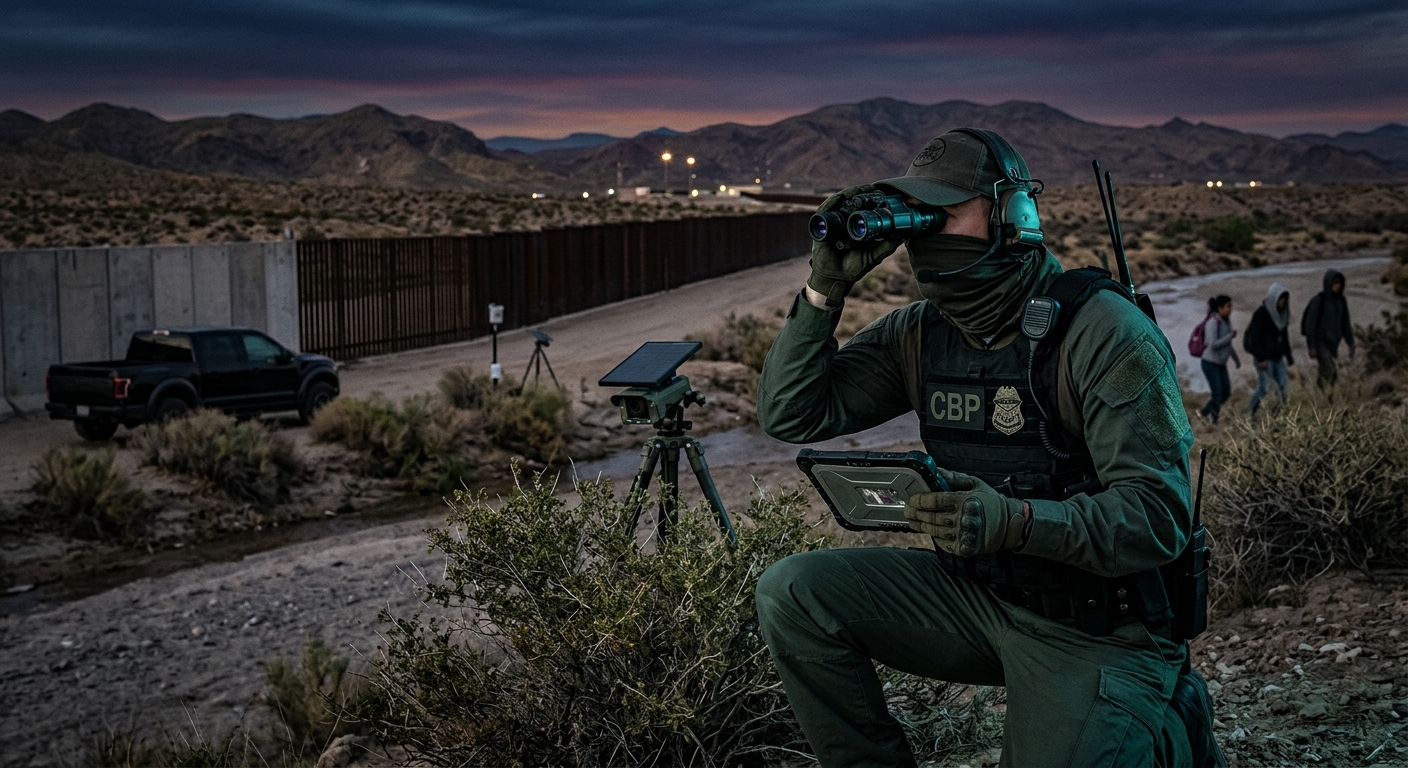
The United States border has long been viewed as a unique legal threshold, a geographical and jurisdictional boundary where the standard rules of constitutional law are frequently bent in the name of national security. For millions of international travelers, passing through a U.S. port of entry involves routine passport checks, customs declarations, and standard security screenings. However, beneath this routine administrative veneer lies a complex, highly secretive apparatus of specialized federal law enforcement. In recent years, the deployment of covert units—most notably those functioning similarly to Tactical Terrorism Response Teams (TTRT) operated by U.S. Customs and Border Protection (CBP)—has raised profound legal and ethical questions.
When individuals arrive at international airports or land crossings, they expect a degree of scrutiny. Yet, the emergence of specialized response teams operating without transparent public guidelines has shifted the landscape of border enforcement. The lack of public awareness regarding how these units select individuals for intense interrogation, combined with the extreme breadth of their search authority, has created a volatile environment for civil liberties. The intersection of covert border enforcement and constitutional rights has subsequently become a major focal point for legal scholars, privacy advocates, and civil rights organizations across the nation.
The Architecture of Covert Border Operations
Federal agencies have historically utilized specialized units to combat smuggling, human trafficking, and transnational threats. Following shifts in the global security landscape, customs authorities established specialized units around 2015 to serve as a frontline counterterrorism defense at land, air, and sea ports of entry. According to government accountability reports and strategic frameworks, officers assigned to these teams undergo specialized training to interview known or suspected threats and to gather critical intelligence that standard primary screening officers might miss.
While the stated mission of these teams is indisputably critical to national security, it is their operational methodology that alarms civil rights advocates. Unlike traditional domestic law enforcement entities that operate under strict, publicly available guidelines and require probable cause to initiate a detention or search, these specialized border teams function in a state of relative opacity. Reports suggest that officers within these units are often empowered to rely on their subjective “instincts” or hunches rather than actionable intelligence, explicit warrants, or objective evidence.
The Dangers of Subjective Profiling and Bias
When law enforcement relies heavily on subjective intuition rather than empirical evidence or specific intelligence, the risk of discriminatory profiling skyrockets. Travelers who are not on any federal terrorist watchlist and possess no criminal record have frequently found themselves abruptly pulled from routine screening lines. This phenomenon disproportionately impacts individuals from marginalized communities, including travelers of Arab descent, members of the Muslim faith, and even domestic activists, tech workers, and journalists.
Such specialized interrogations often veer far away from standard customs inquiries—which typically focus on the basic purpose of travel and the physical contents of luggage—and delve deeply into highly personal, constitutionally protected territory. Travelers have reported facing invasive questions regarding their religious practices, their political affiliations, their social media activity, and their professional networks. This kind of intense scrutiny effectively chills First Amendment rights, as individuals fear that expressing unpopular political opinions or associating with certain religious groups will subject them to prolonged detention and harassment every time they return to their home country.
The Erosion of the Fourth Amendment at the Border
To truly understand the legal foundation upon which these covert units operate, one must examine the controversial “border search exception.” The Fourth Amendment to the United States Constitution guarantees the fundamental right of the people to be secure in their persons, houses, papers, and effects against unreasonable searches and seizures. In the domestic interior of the country, police generally need a warrant signed by a neutral judge—based firmly on probable cause—to search a person’s belongings. However, the Supreme Court has long recognized a sweeping exception to this rule at the international border.
The overarching legal rationale is grounded in the sovereign right of the nation to protect its territorial integrity. Consequently, federal border officers possess broad statutory authority to conduct “routine” searches of luggage, vehicles, and personal effects without a warrant or any level of individualized suspicion. While this doctrine was initially conceived centuries ago to intercept physical contraband like illicit drugs, agricultural pests, or untaxed commercial goods, its modern application has evolved dramatically, sweeping up data and digital assets in ways the nation’s founders could never have anticipated.
The Digital Frontier: Warrantless Searches of Electronic Devices
The most contentious modern application of the border search exception involves electronic devices. Today, a smartphone or a laptop is not merely a piece of physical property; it is a profound digital repository containing a person’s entire life. These devices hold thousands of private emails, encrypted text messages, personal photographs, intimate financial records, and real-time location data.
Despite the massive privacy implications, customs agencies maintain that their authority to conduct border searches extends fully to electronic devices. Under current administrative directives, officers are permitted to conduct basic searches of electronic devices with virtually no suspicion. While agencies assert that more advanced “forensic” searches—which involve copying data or extracting deleted files via specialized software—require “reasonable suspicion” of a legal violation or a national security concern, this threshold remains significantly lower than the probable cause required for a standard warrant. The intervention of specialized covert units often exacerbates these digital encounters. Travelers detained by these teams frequently report that access to their digital devices is demanded under the explicit threat of prolonged detention, indefinite seizure of the device, or, for non-citizens, immediate denial of entry into the United States.
The Battle for Accountability: Freedom of Information Litigation
The intense secrecy surrounding the operational protocols, training manuals, and oversight mechanisms of covert border teams has led to a fierce legal battle for transparency. Because border agencies do not proactively publish comprehensive data regarding who these covert teams target, why they target them, or the ultimate outcomes of these detentions, civil liberties organizations are essentially forced to turn to the judiciary.
The Freedom of Information Act (FOIA) serves as one of the most powerful instruments available to the public and civil society for holding federal agencies accountable. By filing formal FOIA requests, advocacy groups demand access to the internal directives that govern specialized security units. When agencies ignore these requests or heavily redact the provided documents using sweeping national security exemptions, the conflict inevitably moves to federal court.
Recent litigation highlights this ongoing, high-stakes struggle. In these lawsuits, plaintiffs passionately argue that the government cannot shield the entirety of its border operations from public scrutiny. They seek to uncover the statistical realities of these stops: How many innocent travelers are subjected to hours of interrogation? How frequently are their digital devices searched without cause? Are specific religious or ethnic demographic groups bearing the brunt of this covert enforcement? Without access to this empirical data, it is impossible for lawmakers, the judiciary, or the voting public to accurately determine whether these units are operating within the bounds of the Constitution or systematically violating civil rights.
Comparing Border Encounters
To illustrate the stark differences between standard border processing and the intense scrutiny applied by specialized response teams, consider the following structural comparison:
| Feature | Standard Port of Entry Screening | Covert Specialized Interrogation |
|---|---|---|
| Basis of Interaction | Universal processing for all travelers arriving at the border. | Officer discretion, predictive analytics, or subjective “instinct.” |
| Duration of Encounter | Typically a few minutes of routine questioning. | Can last several hours to over a full day. |
| Focus of Questioning | Travel itinerary, duration of stay, customs declarations. | Religious beliefs, political affiliations, journalism, and social network. |
| Digital Privacy | Electronic devices are rarely inspected during primary checks. | Frequent demands for passwords, device unlocking, and potential data imaging. |
| Legal Representation | Not required or applicable for quick admissions. | Travelers are often denied access to legal counsel during active detention. |
Forging a Path Forward: Reconciling Security with Constitutional Liberties
The critical question facing modern policymakers and the federal courts is whether the United States can effectively secure its borders without treating every traveler as a presumptive threat. National security and constitutional liberties are not mutually exclusive concepts; they must coexist within a democratic society. Reforming the current system requires both legislative and judicial intervention.
First, Congress could explicitly mandate that digital devices are strictly exempt from routine suspicionless border searches, requiring federal agents to obtain a warrant based on probable cause before accessing a traveler’s smartphone or laptop. This would align border practices with the Supreme Court’s recognition of digital privacy in domestic policing. Second, the Department of Homeland Security must impose strict, transparent guidelines on specialized units to definitively eliminate targeting based on “instinct” or constitutionally protected characteristics like race, religion, or political speech. Lastly, enhanced reporting requirements must be established so that the public has access to anonymized demographic data regarding secondary screenings, prolonged detentions, and device seizures. Only through robust oversight can the delicate balance between necessary security and fundamental liberty be restored.
Frequently Asked Questions (FAQ)
- What is the “border search exception”?
The border search exception is a recognized legal doctrine that allows federal agents to conduct searches of international travelers and their belongings at U.S. borders and equivalent ports of entry without a warrant or probable cause. This exception is firmly based on the government’s compelling interest in protecting national sovereignty and preventing dangerous contraband from entering the country. - Can border agents legally search my smartphone or laptop without a warrant?
Yes, under current federal administrative policies, border agents claim the legal authority to conduct a basic manual search of your electronic devices without a warrant or any individualized suspicion. For a more invasive “forensic” search (which involves downloading or copying device data), internal agency guidelines require “reasonable suspicion,” but this remains a considerably lower legal standard than a formal judicial warrant. - What are specialized border response teams?
Specialized border response teams are covert units deployed at international ports of entry to focus specifically on counterterrorism and proactive intelligence gathering. Unlike standard customs officers who process everyday travelers, they are uniquely trained to conduct in-depth interrogations and have been heavily criticized for allegedly relying on subjective instincts to target individuals for prolonged, invasive detention. - How do Freedom of Information Act (FOIA) lawsuits help protect civil liberties?
The FOIA framework allows the public and advocacy groups to formally request internal records from federal agencies. When agencies refuse to voluntarily disclose how secretive units operate, civil rights groups file FOIA lawsuits to force the legal release of training manuals, operational guidelines, and demographic statistics. This effectively brings hidden government practices into the public eye for democratic oversight.
References
- Department of Homeland Security Strategic Framework for Countering Terrorism and Targeted Violence — U.S. Department of Homeland Security. 2019-09-15. https://www.dhs.gov/sites/default/files/publications/19_0920_plcy_strategic-framework-countering-terrorism-targeted-violence.pdf
- GAO-19-658, LAND PORTS OF ENTRY: CBP Should Update Policies and Enhance Analysis of Inspections — Government Accountability Office (GAO). 2019-08-06. https://www.gao.gov/products/gao-19-658
- CLEAR v. U.S. Customs & Border Prot., No. 19-7079 — U.S. Department of Justice (E.D.N.Y.). 2022-11-02. https://www.justice.gov/oip/foia-court-decisions/clear-v-us-customs-border-prot-no-19-7079-2022-wl-16636686-edny-nov-2
- CBP Directive No. 3340-049B: Border Search of Electronic Devices — U.S. Customs and Border Protection. 2026-02-02. https://www.cbp.gov/document/directives/cbp-directive-no-3340-049b-border-search-electronic-devices
- Digital Border Searches after Riley v. California — Thomas Mann Miller, Washington Law Review. 2015-01-01. https://digitalcommons.law.uw.edu/wlr/vol90/iss4/10/
Similar Articles








Read full bio of medha deb


