
Court Packing Explained: History, Risks, And Reforms 2025
Unpacking the history, legality, and heated debates surrounding efforts to reshape America's highest court.
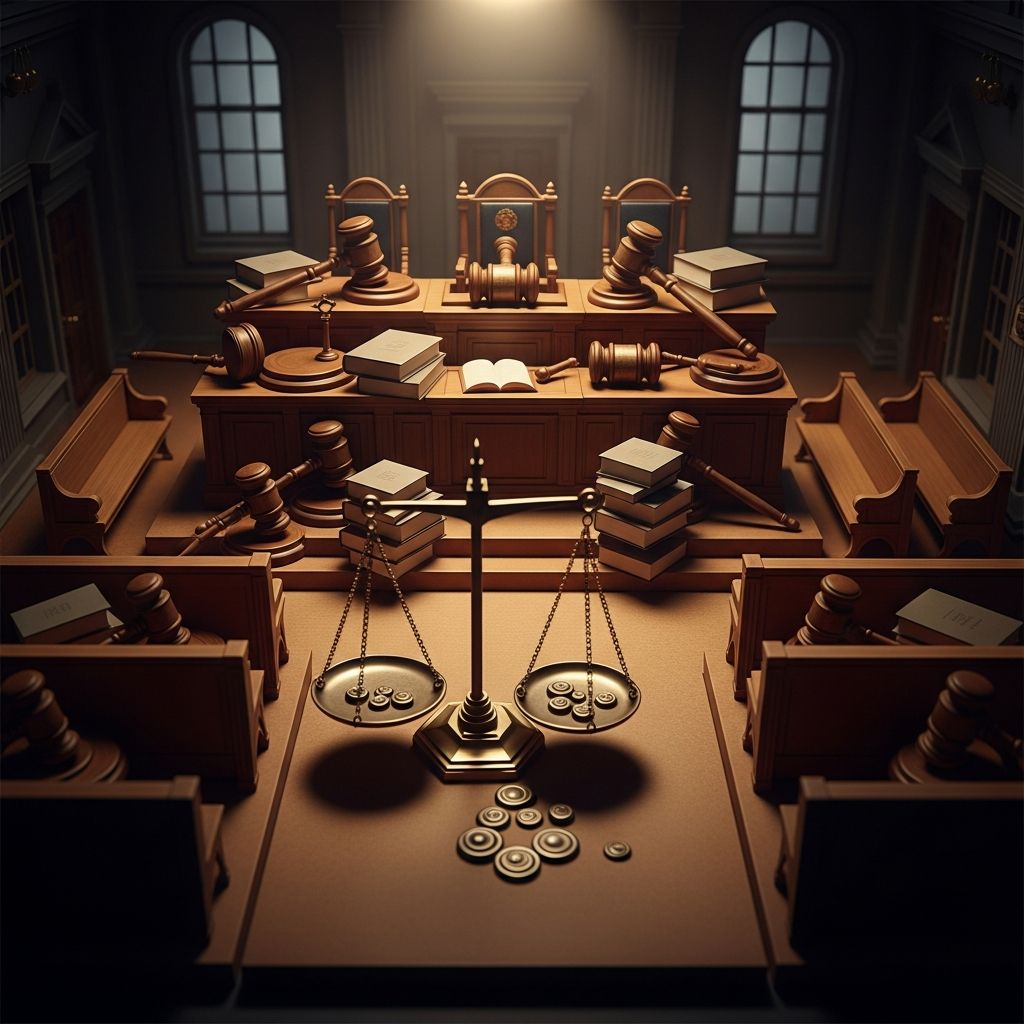
The concept of
court packing
involves expanding a court’s roster—most notably the U.S. Supreme Court—to shift its ideological leanings by appointing like-minded judges. This practice raises profound questions about the separation of powers, judicial independence, and democratic norms. Unlike routine nominations, court packing deliberately alters the bench’s composition for partisan advantage, sparking intense controversy throughout American history.Defining Court Packing in Modern Terms
At its core, court packing means increasing the number of seats on a judicial body to install judges who align with a particular political ideology, thereby influencing rulings on key issues. The term gained notoriety during President Franklin D. Roosevelt’s 1937 initiative, but its roots trace back further. Today, it encompasses not just additions but manipulations like ignoring norms on appointments during election periods or prioritizing ideology over precedent.
Merriam-Webster defines it as “the act or practice of packing a court… by increasing the number of judges or justices in an attempt to change the ideological makeup”. This distinguishes it from standard judicial appointments, which fill vacancies without altering the court’s size.
Historical Foundations: From Founding Era to Reconstruction
The U.S. Constitution grants Congress authority over the judiciary’s structure, including the Supreme Court’s size, without specifying a fixed number of justices (Article III, Section 1). Early Congresses adjusted this flexibly as the nation grew.
- In 1789, the Judiciary Act established six justices.
- By 1801, amid partisan strife post-1800 election, Federalists under John Adams reduced it to five and added lower court seats to block Thomas Jefferson’s influence—a classic “court unpacking”.
- Jefferson’s Republicans swiftly restored it to six, then expanded to seven amid growth.
- During Reconstruction, Congress shrank it from ten to seven in 1866 to thwart President Andrew Johnson’s appointments, restoring nine in 1869 under Ulysses S. Grant.
These shifts normalized size changes until the mid-20th century, viewed as legitimate checks on judicial power rather than taboo.
FDR’s Bold 1937 Gambit and Its Backlash
The most infamous episode unfolded in 1937 when President Roosevelt, frustrated by the Supreme Court’s invalidation of New Deal programs, proposed his Judicial Procedures Reform Bill. Dubbed the “court-packing plan,” it aimed to add one justice per sitting member over 70 who declined to retire, up to 15 total, ostensibly for efficiency but transparently to secure pro-New Deal majorities.
Public and political opposition was fierce. The Senate Judiciary Committee labeled it an assault on judicial integrity. Even Roosevelt’s “switch in time that saved nine”—where Justice Owen Roberts shifted stances—blunted the need, and the plan died in committee. This failure cemented a norm against overt packing, preserving the nine-justice structure unbroken since 1869.
Constitutional Legality: Can Congress Do This?
Yes, legally. Article III vests judicial power in “one supreme Court, and in such inferior Courts as the Congress may from time to time ordain and establish.” Congress sets the Supreme Court’s size, as affirmed in historical practice and legal analyses. No constitutional amendment is required; a simple majority in both houses and presidential signature suffice.
However, norms of judicial independence—evolving since the 1950s—now deem it illegitimate when ideologically driven. Critics argue it erodes public trust, while proponents see it as a democratic tool against an unrepresentative court.
| Aspect | Legal Basis | Historical Examples |
|---|---|---|
| Supreme Court Size | Congressional statute | 6 (1789) → 10 (1863) → 9 (1869) |
| Lower Courts | Article III discretion | 1801 Midnight Judges Act |
| Modern Norm | Custom, not Constitution | FDR 1937 failure |
Arguments in Favor: Restoring Balance and Representation
Supporters contend court packing counters a politicized judiciary skewed by tactics like the 2016 Merrick Garland blockade and 2020 Amy Coney Barrett rush.
- Offsetting Partisanship: A 6-3 conservative majority, they argue, demands correction to prevent rulings undermining democracy, such as on voting rights.
- Ideological Equity: The Court isn’t inherently nine; expansion reflects demographic shifts and public will.
- Democratic Check: Elected branches must counter an unelected one defying majorities, as FDR sought.
Proponents like Ian Millhiser warn a partisan Court risks eroding faith in institutions.
Arguments Against: Undermining Judicial Integrity
Opponents view packing as a perilous politicization, transforming the Court into a legislative echo.
- Threat to Independence: Frequent resizing invites endless retaliation, eroding impartiality.
- Historical Stability: Nine justices have sufficed for 150+ years; change signals crisis exploitation.
- Rule of Law Risk: Justices deliberate on legal merits, not policy; packing prioritizes ideology.
Michael H. McGinley notes broad judicial consensus on tough issues, beyond partisan divides.
Contemporary Debates: Revival in the 21st Century
Post-2020, with Barrett’s confirmation, Democrats floated expansion, echoed in 2024 rhetoric. Republicans decry it as delegitimizing, while some Democrats pivot to ethics reforms. State courts face similar “packing” via partisan maps.
Polls show divided support: many favor expansion amid distrust, but fear cycles of abuse. Scholars like Tara Grove highlight packing’s dormancy as fragile, cautioning against revival.
Potential Consequences: A Slippery Slope?
Packing could cascade: Democrats add four justices; Republicans later add more under unified control. Public trust in the Court, already low at 40-50%, might plummet further. Alternatives include term limits (18 years), rotation, or super-majority voting thresholds—less disruptive reforms gaining traction.
Frequently Asked Questions (FAQs)
What exactly is court packing?
Court packing is expanding a court’s seats to appoint ideologically aligned judges, altering its balance without constitutional change.
Has the Supreme Court always had nine justices?
No; it varied from 6 to 10 before stabilizing at nine in 1869.
Did FDR succeed in court packing?
No, his 1937 plan failed amid backlash, though it influenced a key judicial shift.
Is court packing constitutional?
Yes, Congress controls court size per Article III.
Why do critics fear court packing today?
It risks perpetual partisan reshuffling, eroding judicial independence and public confidence.
Looking Ahead: Safeguarding the Judiciary
Court packing embodies tensions between democratic accountability and institutional stability. While legally viable, its invocation tests norms forged over decades. Reforms preserving nine seats—via ethics codes or limits—may better address imbalances without unraveling the third branch. As debates persist, history warns: tampering with the Court invites unforeseen perils.
References
- COURT-PACKING Definition & Meaning — Merriam-Webster. Accessed 2026. https://www.merriam-webster.com/dictionary/court-packing
- Court-Packing Plan: Understanding Its Legal Definition — USLegalForms. Accessed 2026. https://legal-resources.uslegalforms.com/c/court-packing-plan
- What Is Court Packing? — Rutgers University. Accessed 2026. https://www.rutgers.edu/news/what-court-packing
- What Does Court Packing Mean? — Pacific Legal Foundation. 2020-10-01. https://pacificlegal.org/court-packing-explained/
- U.S. Supreme Court | Court-packing, Pros, Cons, Debate — Britannica ProCon. Accessed 2026. https://www.britannica.com/procon/US-Supreme-Court-debate
- Academic highlight: The past, present and future of court packing — SCOTUSblog. 2020-12-01. https://www.scotusblog.com/2020/12/academic-highlight-the-past-present-and-future-of-court-packing/
- “Congress’s Authority to Influence Supreme Court Packing” — Duke Law Scholarship. 2020-01-01. https://scholarship.law.duke.edu/faculty_scholarship/4007/
- “Court Packing”: Legislative Control over the Size of the Supreme Court — Congress.gov CRS. Accessed 2026. https://www.congress.gov/crs-product/LSB10562
Similar Articles








Read full bio of Sneha Tete


