
Shadows in the System: How Corporate Nursing Homes Obscured the True Toll of COVID-19
The systemic failures that allowed nursing homes to hide the pandemic's toll.
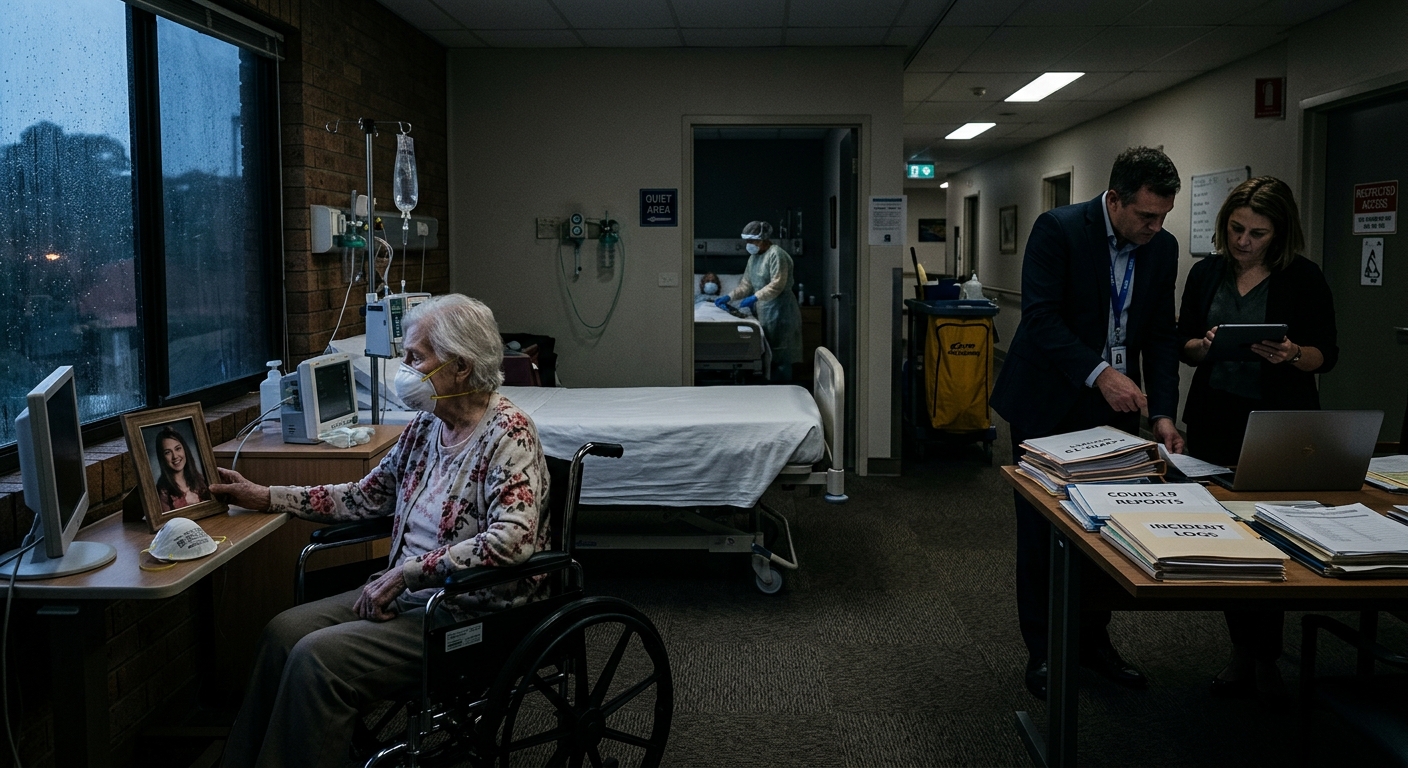
The Illusion of Safety: Unveiling a Broken Industry
In April 2020, as the novel coronavirus aggressively spread across the globe, a gruesome discovery in a quiet New Jersey township shattered the illusion of safety within long-term care facilities. Acting on an anonymous tip, local police arrived at the Andover Subacute and Rehabilitation Center to investigate claims of a body improperly stored on the premises. Instead of an isolated incident, officers discovered 17 bodies piled inside a tiny, makeshift morgue designed to hold a maximum of only four individuals . The horrifying image of human lives reduced to stacked casualties became a definitive, undeniable symbol of the catastrophic failure of the American nursing home industry.
However, this macabre incident was not a solitary anomaly; rather, it was the visible symptom of a profoundly broken ecosystem. As the pandemic unfolded, it relentlessly exposed a deeply entrenched network of profit-driven care models, systemic ableism, and state-sanctioned secrecy. These interlocking factors allowed congregate facilities to obscure the true human cost of the virus, leaving countless families in the dark. For decades, advocates for disability rights and elder care have warned that the institutionalization of vulnerable populations inherently leads to a devaluation of human life. When the COVID-19 crisis struck, these warnings materialized in the most devastating ways imaginable.
Residents with disabilities and the elderly found themselves trapped in environments uniquely suited for rapid viral transmission. Simultaneously, the corporate entities managing their daily care were granted unprecedented legal immunities that shielded them from consequence. The resulting catastrophic loss of life was largely hidden behind closed doors and bureaucratic loopholes. This article examines the intersection of corporate impunity, regulatory failure, and disability rights, exploring exactly how nursing homes managed to hide the magnitude of the tragedy and why a fundamental restructuring of long-term care is an urgent public health necessity.
The Makeshift Morgues: A Warning Sign Ignored
The tragedy at the Andover facility was a tipping point capturing national headlines, yet it represented merely a fraction of the widespread horrors inside nursing homes. Early in 2020, roughly 40% of all U.S. COVID-19 deaths were directly linked to long-term care facilities. The biological attributes of the novel coronavirus—primarily its airborne transmission and high lethality among individuals with underlying health conditions—made nursing homes ground zero for the outbreak. However, the virus alone was not entirely responsible for the staggering death toll. The physical architecture and operational protocols of the facilities themselves proved to be fatal.
Nursing homes operate as congregate settings where physical distancing is essentially impossible. Residents require daily, intimate, hands-on care, frequently delivered by staff members who must travel between multiple rooms and sometimes multiple facilities just to piece together a living wage. During the early days of the pandemic, a severe lack of personal protective equipment (PPE), combined with inadequate infection control guidelines, transformed these residential centers into incubators for illness.
Furthermore, severe understaffing—a chronic, well-documented issue long before the pandemic—reached critical levels as caretakers themselves fell ill or were forced to quarantine. In facilities like Andover, the administrative response to surging fatalities was not to seek immediate external intervention, but to conceal the crisis internally. The discovery of hidden bodies highlighted a terrifying reality: when the system broke, the default protocol for many corporate facilities was sheer silence. Families were left frantic, receiving zero updates on the deteriorating conditions of their loved ones, while local health departments remained largely unaware of the true severity of the outbreaks until the death tolls became impossible to physically hide.
Shielded from Accountability: The Role of Immunity Orders
As the crisis deepened nationwide, the legislative response in many states inadvertently created a formidable protective shield for the very corporations failing their residents. Recognizing the unprecedented strain on the healthcare system, lawmakers implemented emergency measures designed to prevent medical professionals from being sued for impossible decisions made during triage. However, under intense lobbying pressure, these immunity orders were broadly expanded to encompass the corporate owners and executives of long-term care facilities.
Lobbying groups representing the nursing home industry aggressively and successfully pushed for executive orders and legislation that granted sweeping civil and criminal immunity. Consequently, facilities that failed to procure adequate PPE, ignored basic infection control protocols, or forced sick employees to continue working were legally insulated from the consequences of their negligence. Families whose loved ones died alone in understaffed, contaminated wards found themselves suddenly stripped of their right to seek justice or demand accountability in court.
The suspension of routine regulatory inspections further exacerbated this lack of transparency. Federal and state oversight agencies drastically reduced or entirely halted in-person inspections in an attempt to prevent the spread of the virus. Without regulators physically walking the halls and families visiting to monitor the quality of care, nursing homes became impenetrable closed environments. This information blackout allowed facilities to underreport fatalities and drastically downplay the severity of their internal crises. The combination of legal immunity and suspended oversight created a perfect storm of impunity, ensuring that profit-seeking entities faced no immediate consequences for the preventable deaths of disabled and elderly individuals.
The Private Equity Problem and Profit-Driven Care
To fully comprehend how nursing homes managed to obscure the human toll of the pandemic, one must examine the corporate structures that increasingly dominate the industry. Over the past two decades, there has been a rapid influx of private equity (PE) investment in long-term care. Private equity firms acquire nursing homes, often leveraging immense amounts of debt, and aggressively seek to maximize short-term financial returns for their investors. This profit-driven model inherently conflicts with the fundamental principles of adequate healthcare, patient safety, and disability rights.
Empirical research has consistently demonstrated that the financial engineering employed by PE firms directly correlates with a steep decline in patient safety. A comprehensive study by the National Bureau of Economic Research, later highlighted by the University of Chicago Booth School of Business, revealed a chilling metric: private equity ownership of nursing homes is associated with a 10% increase in short-term mortality for Medicare patients . This statistical increase translated to thousands of additional, preventable deaths even before the unprecedented stress test of the COVID-19 pandemic began.
The core mechanisms driving this mortality spike are rooted in ruthless cost-cutting. PE-owned facilities frequently reduce nursing staff ratios to the absolute minimum allowed by law, replace highly qualified registered nurses with cheaper, less experienced assistants, and slash budgets for essential medical supplies and building maintenance. When the pandemic hit, these financially optimized, razor-thin operational models instantly collapsed. Facilities stripped of vital resources by their corporate owners were fundamentally incapable of executing effective infection control or managing widespread acute illness. Yet, because the financial structures of private equity ownership are notoriously opaque, it remained incredibly difficult for state regulators and grieving families to trace the operational failures back to the holding companies ultimately profiting from them.
A Crisis of Transparency and Underreported Data
The deliberate obfuscation of COVID-19 deaths within nursing homes was a massive, systemic issue that extended far beyond individual facilities hiding bodies in makeshift morgues. At a macro level, the data regarding long-term care fatalities was significantly and purposefully distorted. Throughout late 2020 and 2021, various independent state investigations revealed that official health department data had grossly undercounted the number of nursing home residents who ultimately died from the virus.
The discrepancies often stemmed from deceptive categorization tactics. For instance, if a nursing home resident contracted COVID-19 within the facility but was transferred to a local hospital moments before succumbing to the virus, many states deliberately did not count that death as a nursing home fatality. This administrative sleight of hand artificially deflated the mortality rates of the facilities, protecting their public image and mitigating immediate regulatory scrutiny. The Government Accountability Office (GAO) reported consistently on the fragmented, unreliable, and delayed nature of data reporting, highlighting how the lack of real-time, accurate data severely hindered the national public health response .
For families and disability rights advocates, this systemic lack of transparency was a source of profound, compounding trauma. The inability to obtain accurate information about infection rates and internal fatalities deprived individuals of the agency to make informed, life-saving decisions regarding the care of their loved ones. It also severely hampered early advocacy efforts, as the true, horrifying scale of the disaster was continuously obscured by bureaucratic manipulation. Demanding accurate, unfiltered data swiftly became a central battleground for disability rights organizations fighting to expose the lethal realities of institutional care in America.
Systemic Ableism and the Devaluation of Life
The catastrophe in long-term care during the pandemic cannot be fully comprehended without acknowledging the underlying current of systemic ableism that deeply pervades the industry. The very existence of large-scale congregate care facilities is rooted in an outdated, historical framework that actively segregates disabled and elderly individuals from the broader community. This institutional model inherently devalues the lives of its residents, treating them primarily as commodities on a balance sheet rather than individual human beings deserving of integration, respect, and autonomy.
During the height of the pandemic, this societal devaluation was starkly illuminated by emergency triage protocols and the subsequent allocation of scarce medical resources. In multiple documented instances, individuals residing in long-term care were implicitly or explicitly moved to the absolute bottom of the priority list for hospital transfers, life-saving ventilators, and eventual vaccine distribution. The quiet, pervasive assumption that the lives of disabled and elderly people were inherently less valuable—or somehow more “expendable”—permeated both the public discourse and the bureaucratic response to the crisis.
Disability rights advocates firmly argue that the failure to protect nursing home residents was not merely a logistical oversight or a supply chain failure, but rather a direct reflection of a society that views institutionalized individuals as out of sight and consequently out of mind. The chilling ease with which facilities were able to hide bodies and obscure mortality data was largely facilitated by a broader societal willingness to ignore the grim conditions behind institutional walls. The pandemic laid bare the lethal consequences of ableism, proving beyond a doubt that segregation in healthcare ultimately leads to marginalization in survival.
Forging a Path Forward: Regulatory Reform and Justice
The tragic, unprecedented loss of life in congregate care facilities during the COVID-19 pandemic must serve as an unignorable catalyst for fundamental, structural reform. Moving forward, the national focus must shift from merely attempting to patch a fundamentally broken system to entirely reimagining how society provides long-term care and actively supports disability rights.
Recent regulatory efforts indicate a necessary step in the right direction. The Biden-Harris administration has introduced new oversight mandates through the Centers for Medicare & Medicaid Services (CMS) aimed at dramatically increasing the transparency of nursing home ownership . By targeting the murky financial structures of private equity firms and real estate investment trusts, regulators hope to finally hold corporate entities publicly and legally accountable for the quality of care they provide. These disclosure requirements empower residents and their families to make informed choices about who is truly profiting from their healthcare.
However, achieving true justice and long-term safety requires a much broader paradigm shift. For decades, disability rights organizations have relentlessly championed the transition from institutional care to Home and Community-Based Services (HCBS). HCBS models prioritize keeping individuals safely in their own homes and local communities, providing the necessary medical, therapeutic, and personal support without the extreme risks associated with congregate living. Expanding funding for HCBS not only honors the autonomy, independence, and dignity of disabled and elderly individuals, but it also significantly reduces the risk of mass casualties during future public health crises.
The enduring legacy of the pandemic must not be defined solely by the tragedies hidden in makeshift morgues or the fatalities obscured by manipulated state data. Instead, it must be defined by an unwavering, collective commitment to dismantle the systems of unchecked corporate profit and systemic ableism that allowed those tragedies to occur in the first place. Ensuring robust data transparency, enforcing strict corporate accountability, and actively prioritizing community-based care are essential, non-negotiable steps toward building a society that truly values and protects every human life.
Frequently Asked Questions (FAQs)
- What happened at the Andover nursing home during the COVID-19 pandemic?
In April 2020, following an anonymous tip, local police discovered 17 bodies stacked in a small, makeshift morgue at the Andover Subacute and Rehabilitation Center in New Jersey . The facility was completely overwhelmed by the virus, suffering from severe understaffing and a dire lack of resources, leading to an inability to properly manage the rapidly escalating casualties. - Why were nursing homes granted immunity during the pandemic?
During the initial outbreak, state and federal governments enacted emergency measures designed to shield healthcare providers from liability related to rapid triage decisions. However, heavy lobbying by the nursing home industry resulted in these protections being broadly extended to corporate owners and executives, protecting facilities from lawsuits related to gross negligence, understaffing, and inadequate infection control. - How does private equity ownership affect nursing home care?
Private equity firms typically acquire nursing homes to maximize short-term financial returns through aggressive cost-cutting measures, such as reducing nursing staff and limiting essential medical supplies. Research indicates that this profit-driven model negatively impacts patient safety, with one major study linking private equity ownership to a 10% increase in short-term mortality rates for Medicare patients . - What are Home and Community-Based Services (HCBS)?
Home and Community-Based Services (HCBS) provide vital support to individuals with disabilities and the elderly directly in their own homes and communities, rather than in segregated institutional settings like nursing homes. HCBS models promote autonomy, community integration, and individualized care, significantly reducing the infection risks associated with congregate living arrangements. - How did facilities and states underreport COVID-19 deaths?
Facilities and state health departments sometimes used narrow definitions to categorize deaths to protect their public image. For example, if a resident contracted COVID-19 in a nursing home but died shortly after being transferred to a hospital, the death was often not recorded as a nursing home fatality. This lack of data transparency effectively obscured the true, devastating scale of the crisis from the public and federal regulators.
References
- Backup of bodies overwhelms nursing home amid outbreak — AP News. 2020-04-16. https://apnews.com/article/health-us-news-ap-top-news-nj-state-wire-virus-outbreak-138383f98214f4ce3d0eaeeccf588661
- Covid-19 In Nursing Homes: HHS Has Taken Steps in Response to Pandemic, but Several GAO Recommendations Have Not Been Implemented — U.S. Government Accountability Office (GAO). 2021-03-17. https://www.gao.gov/products/gao-21-322
- When Private Equity Takes over Nursing Homes, Mortality Rates Jump — Chicago Booth Review / NBER. 2021-05-18. https://www.chicagobooth.edu/review/when-private-equity-takes-over-nursing-homes-mortality-rates-jump
- Biden-Harris Administration Continues Unprecedented Efforts to Increase Transparency of Nursing Home Ownership — Centers for Medicare & Medicaid Services (CMS). 2023-02-13. https://www.cms.gov/newsroom/press-releases/biden-harris-administration-continues-unprecedented-efforts-increase-transparency-nursing-home
Similar Articles








Read full bio of Sneha Tete


