
Core Legal Procedures Every Corporation Must Maintain
Discover the essential corporate procedures that preserve limited liability, ensure regulatory compliance, and support long-term business growth.
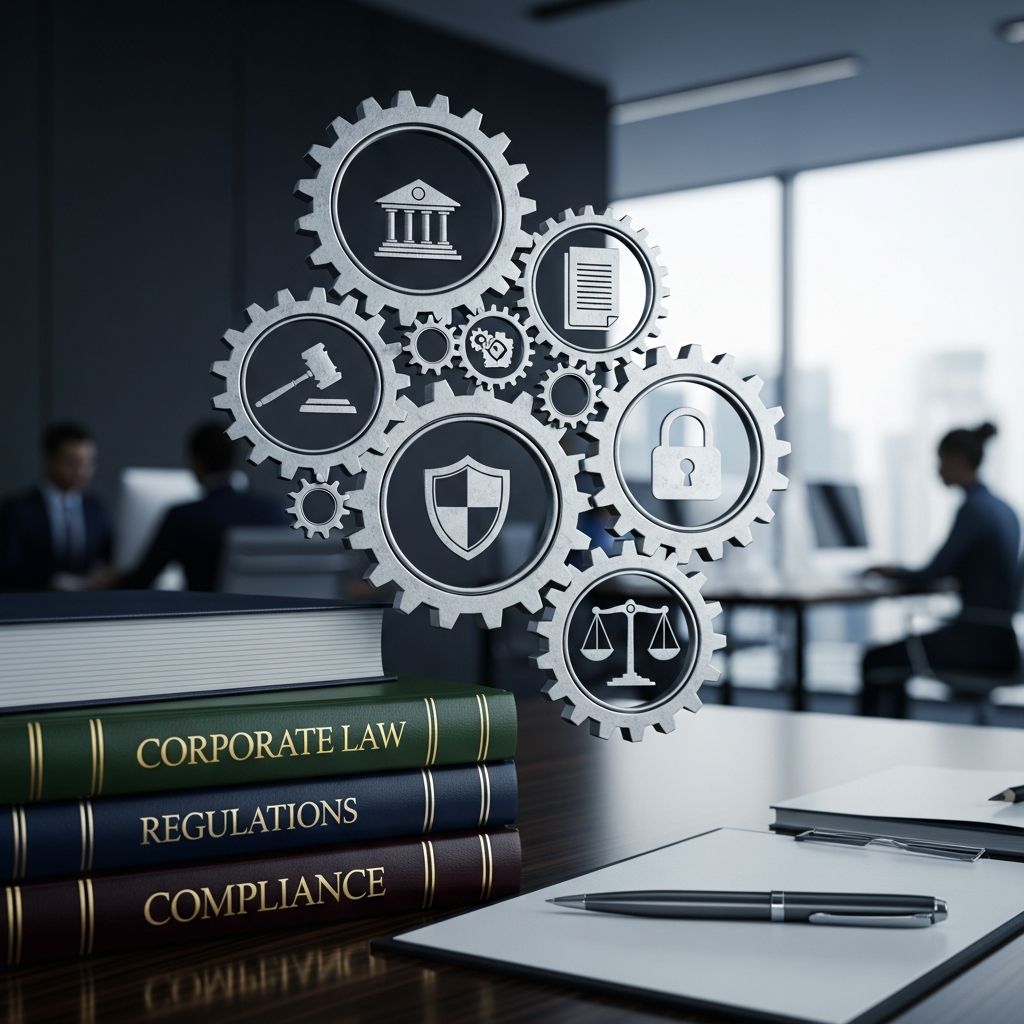
Once a corporation is formed, the legal work is not finished. To preserve limited liability, avoid penalties, and stay in good standing with regulators, corporations must follow a set of ongoing legal procedures. These procedures are not optional housekeeping; they are central to corporate governance and compliance.
This guide explains the most important legal practices every corporation should maintain, why they matter, and how to incorporate them into day-to-day operations.
1. Why Ongoing Corporate Procedures Matter
Corporate law gives owners powerful protections, including limited liability and perpetual existence. In exchange, corporations must respect certain formalities and regulatory requirements.
When a corporation ignores these obligations, it risks:
- Loss of limited liability if courts decide to “pierce the corporate veil” and hold shareholders personally responsible.
- Administrative dissolution for failure to file required reports or pay fees with the state.
- Fines and penalties for missing tax, employment, or industry filings.
- Loss of access to courts in some jurisdictions if the entity is not properly registered or in good standing.
The U.S. Small Business Administration emphasizes that corporations face the strictest internal compliance requirements, including meetings, minutes, bylaws, and stock records.
2. Internal Governance Procedures
Internal governance is the backbone of a corporation’s legal structure. It defines who makes decisions, how decisions are approved, and how records of those decisions are kept.
2.1 Maintaining Bylaws and Governance Policies
Corporate bylaws and related policies should be treated as living documents that guide the corporation’s daily operations.
Key practices include:
- Adopting detailed bylaws that address director elections, officer roles, meeting procedures, and voting rules.
- Reviewing bylaws periodically to reflect changes in law, business size, or ownership structure.
- Adopting supplemental policies such as codes of ethics, conflict-of-interest policies, and whistleblower procedures, especially in regulated industries.
Well-drafted governance documents provide clarity, reduce disputes, and demonstrate to regulators and courts that the corporation is operated responsibly.
2.2 Board of Directors and Shareholder Meetings
Regular meetings help ensure that major business decisions are properly authorized and documented.
- Initial meetings to adopt bylaws, appoint officers, authorize bank accounts, and approve initial capitalization.
- Annual shareholder meetings to elect directors and receive reports on corporate performance.
- Periodic board meetings to review strategy, approve major transactions, and oversee risk management.
Most state laws allow action by written consent instead of physical meetings, provided statutory and bylaw requirements are satisfied. However, corporations should still ensure that consents are properly prepared, signed, and filed.
2.3 Accurate Minutes and Resolutions
Minutes and resolutions serve as the official record of corporate decisions. They are often requested by auditors, lenders, regulators, and courts.
Good practices include:
- Recording attendees, quorum, and votes for all board and shareholder actions.
- Summarizing key discussions and decisions, without creating a verbatim transcript.
- Attaching exhibits such as financial reports or presentations relied on by the board.
- Storing signed minutes in a dedicated corporate records book or secure digital archive.
3. Ownership and Capitalization Records
Clear documentation of who owns the corporation and on what terms is critical for legal compliance, corporate transactions, and tax reporting.
3.1 Issuing and Tracking Shares
After formation, corporations must document the issuance and transfer of shares.
- Board approval of share issuances, including the number of shares, price, and recipients.
- Share certificates or digital records that reflect ownership, restrictions, and legends.
- A stock ledger listing all shareholders, the number and class of shares held, issue dates, and transfers.
Professional corporations and other specialized entities may also need to confirm that shareholders hold required licenses and meet statutory ownership limitations.
3.2 Capital Contributions and Distributions
Capital transactions should be carefully documented to avoid tax and legal issues.
| Transaction Type | Key Documentation | Legal Considerations |
|---|---|---|
| Initial capital contribution | Board resolution, subscription agreements, proof of payment | Compliance with securities and corporate law; accurate balance sheet |
| Additional paid-in capital | Updated capitalization table, board approval | Fair valuation, pre-emptive rights, and shareholder approvals if required |
| Dividends or distributions | Board resolution, financial statements | Solvency and surplus requirements; tax reporting obligations |
4. Recordkeeping and Document Retention
Robust recordkeeping supports compliance, facilitates audits, and makes it easier to manage legal risk. Corporate regulatory guidance highlights records such as articles, bylaws, minutes, and tax returns as core compliance items.
4.1 Core Corporate Records to Maintain
At minimum, corporations should retain:
- Articles of incorporation and all amendments.
- Bylaws and governance policies, with revision history.
- Minutes of directors’ and shareholders’ meetings, written consents, and resolutions.
- Stock ledgers, option plans, and equity agreements.
- Key contracts, including leases, major supply agreements, and loan documents.
- Federal, state, and local tax returns and correspondence.
4.2 Establishing a Document Retention Policy
A formal retention policy clarifies how long different types of records are kept and how they are destroyed.
Common elements include:
- Retention schedules for corporate, financial, HR, and compliance documents.
- Secure storage protocols for both paper and electronic records, with appropriate access controls.
- Litigation holds that suspend destruction when a dispute or investigation is reasonably anticipated.
- Regular audits to verify that records are complete and policies are followed.
5. External Compliance: Filings, Reporting, and Licenses
Beyond internal governance, corporations must meet a wide range of external obligations imposed by federal, state, and local authorities.
5.1 State Corporate Filings and Good Standing
Most states require ongoing filings to keep a corporation active and in good standing.
- Annual or biennial reports with updated information on officers, directors, and principal place of business.
- Franchise tax returns or fees, where applicable.
- Registration of assumed or “doing business as” names and renewals when required.
- Foreign qualification in other states where the corporation is “doing business”; operating without authority can trigger penalties and limit access to the courts.
5.2 Regulatory and Industry-Specific Compliance
Corporations in regulated sectors (such as healthcare, financial services, or professional practice) face additional layers of oversight. Regulatory guidance often emphasizes the importance of structured compliance programs with policies, training, monitoring, and corrective action.
Important steps include:
- Identifying all applicable federal, state, and local regulations.
- Obtaining and renewing required licenses, permits, and registrations.
- Meeting reporting duties imposed by regulators, exchanges, or industry bodies.
- Conducting regular internal audits to verify compliance and address gaps.
5.3 Tax Compliance and Reporting
Tax obligations vary with the corporation’s structure, location, and activities, but generally include:
- Filing corporate income tax returns at the federal and state level.
- Collecting and remitting payroll, employment, and withholding taxes.
- Registering and paying sales, use, or value-added taxes where required.
- Maintaining accurate accounting records to support positions taken on tax returns.
Because tax rules are complex and frequently updated, most corporations work with experienced tax advisors to establish procedures that ensure timely and accurate filings.
6. Compliance Programs and Risk Management
As corporations grow, informal compliance methods become risky and inefficient. A formal legal compliance program helps integrate regulatory obligations into daily operations.
6.1 Elements of an Effective Compliance Program
Guidance from regulators and industry experts points to several common features of strong compliance programs:
- Written policies and procedures that clearly explain legal requirements and internal standards.
- Designated compliance leadership, such as a compliance officer or committee.
- Screening and due diligence on employees, agents, and key third parties.
- Training and communication tailored to different roles and risk levels.
- Monitoring and internal audits to test whether procedures are followed.
- Disciplinary measures for violations, applied consistently.
- Investigation and remediation when issues arise, including policy changes and enhanced controls.
6.2 Third-Party and Entity Governance
Compliance obligations often extend beyond the primary corporation to subsidiaries, affiliates, and critical vendors.
Best practices include:
- Maintaining an accurate inventory of all corporate entities and their filing requirements.
- Centralizing key data such as directors, officers, and registered agents.
- Assessing third-party risks, particularly where partners interact with regulators or handle sensitive data.
- Scheduling periodic reviews to confirm that filings, licenses, and contracts remain current.
7. Service of Process and Litigation Readiness
Every corporation should be prepared for the possibility of disputes, audits, or litigation. Having processes in place before problems arise can significantly reduce risk and disruption.
7.1 Registered Agent and Service of Process
All corporations must designate a registered agent authorized to receive legal documents on the company’s behalf.
Key considerations:
- Ensuring the agent’s name and address are kept current with each state where the corporation is registered.
- Implementing internal protocols for how legal notices are routed, reviewed, and escalated.
- Training staff to recognize legal documents and forward them immediately.
7.2 Litigation Holds and Evidence Preservation
When a corporation anticipates litigation or receives a formal claim, it must preserve relevant evidence. This typically involves:
- Issuing a written litigation hold to key custodians, suspending ordinary document destruction.
- Working with IT to secure email, messaging, and other electronic records.
- Coordinating with outside counsel on the scope of preservation and collection.
8. Practical Checklist: Everyday Corporate Compliance
The following high-level checklist can help corporations integrate legal procedures into their regular operations:
- Confirm that bylaws and governance policies are up to date and reflect current practice.
- Schedule annual director and shareholder meetings; prepare agendas and minutes.
- Maintain a current stock ledger and equity records.
- Track and meet all state filing deadlines in each jurisdiction where the corporation is qualified.
- Review licenses, permits, and registrations for expiring dates or new requirements.
- Conduct at least annual reviews of key compliance policies and training.
- Perform periodic internal audits of recordkeeping, especially financial and tax records.
Frequently Asked Questions (FAQs)
Q: How often should a corporation hold formal meetings?
Most corporations are required to hold at least one annual shareholder meeting, and regular board meetings are strongly recommended. Many boards meet quarterly or more frequently, depending on the size and complexity of the business.
Q: What happens if a corporation does not follow corporate formalities?
Failure to follow formalities—such as keeping minutes, holding meetings, or maintaining separate records—can expose the corporation to penalties, loss of good standing, and, in serious cases, the risk that courts disregard limited liability protections.
Q: Do small, closely held corporations need the same procedures as large public companies?
Legal requirements apply to both, but smaller corporations often have simpler structures and fewer formal committees. Even so, they should still keep accurate minutes, maintain corporate records, and meet filing and tax obligations to preserve liability protection.
Q: Are compliance programs only necessary for heavily regulated industries?
No. While financial, healthcare, and similar sectors face heightened expectations, any corporation benefits from structured compliance policies, training, and monitoring. These systems reduce legal risk and support consistent decision-making.
Q: When should a corporation review its bylaws and policies?
A good practice is to review core governance documents at least annually and whenever there is a significant change—such as new legislation, major financing, a merger, or expansion into a new jurisdiction.
References
- Stay legally compliant — U.S. Small Business Administration. 2023-08-10. https://www.sba.gov/business-guide/manage-your-business/stay-legally-compliant
- Professional Corporations: Legal Requirements and Best Practices — Aaron Hall Law. 2022-05-18. https://aaronhall.com/professional-corporations-legal-requirements-and-best-practices-2/
- What is legal compliance? — Diligent. 2022-11-03. https://www.diligent.com/resources/blog/steps-evaluating-legal-compliance
- What is Corporate Regulatory Compliance? — Wolters Kluwer. 2021-09-15. https://www.wolterskluwer.com/en/expert-insights/what-is-corporate-regulatory-compliance
- Starting a business in the US: Legal Requirements — L&E Global. 2023-02-01. https://leglobal.law/countries/usa/opening-in-the-usa/
Similar Articles








Read full bio of Sneha Tete


