Understanding Business Entity Conversion Fundamentals
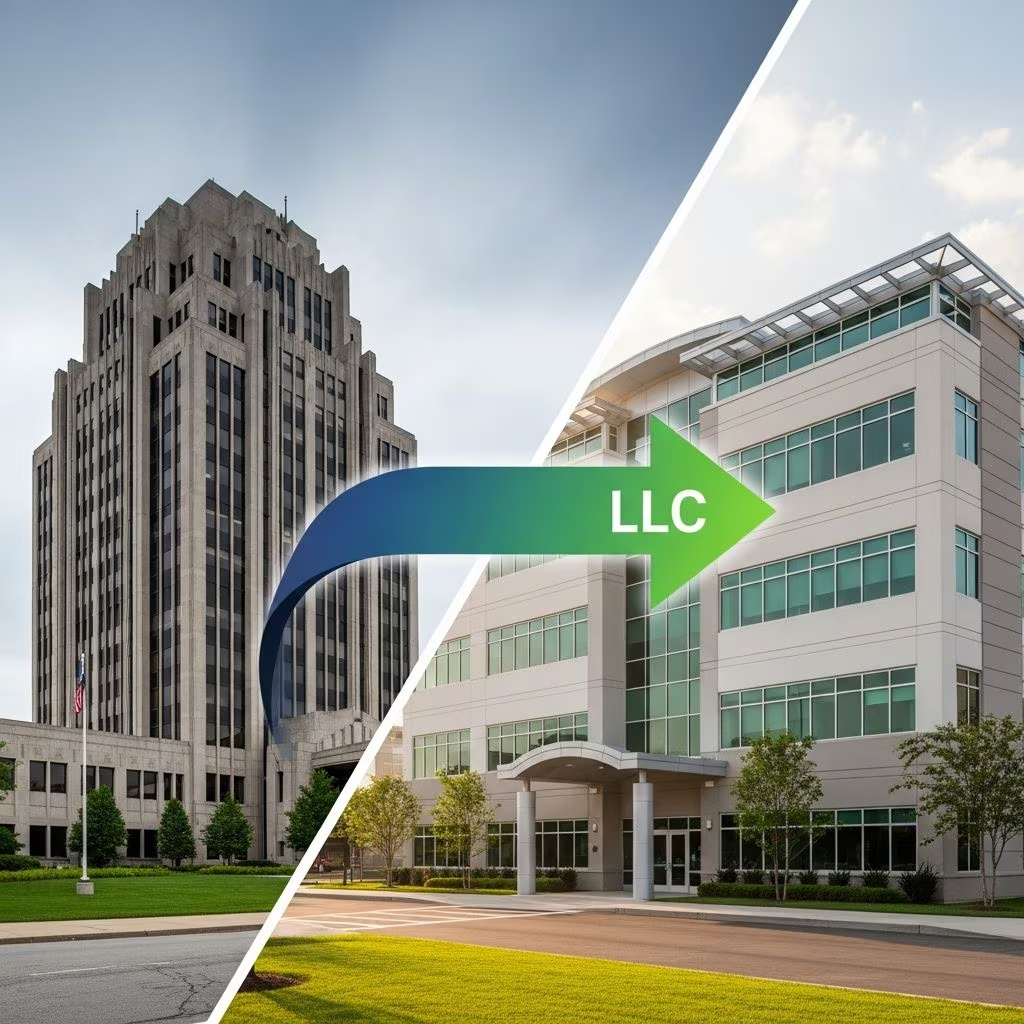
Business ownership structures evolve as companies grow and circumstances change. Many corporations discover that a limited liability company structure better serves their operational and tax needs. The transition from a corporate entity to an LLC represents a significant organizational decision that requires careful planning and adherence to state-specific procedures.
The conversion process has evolved considerably over the past two decades. Rather than relying exclusively on complex asset transfers and entity dissolution, most states now recognize streamlined conversion procedures that preserve business continuity while simplifying administrative requirements. Understanding these modern pathways enables business owners to restructure their enterprises with minimal disruption to operations and stakeholder relationships.
The Evolution of Conversion Methods Available to Corporations
State legislatures have recognized the practical need for efficient business conversion procedures. This recognition has resulted in the development of three primary methodologies that corporations can employ when transitioning to LLC status. Each method varies significantly in complexity, cost, and timeline, allowing business owners to select an approach aligned with their specific circumstances and state regulations.
The availability and mechanics of each conversion method depend substantially on your state’s business legislation. Corporations planning a conversion must first investigate whether their state recognizes modern statutory procedures or requires reliance on traditional conversion approaches. This foundational research determines the feasibility and cost-effectiveness of the entire conversion strategy.
Statutory Conversion: The Modern Streamlined Approach
Statutory conversion represents the most efficient conversion methodology available in jurisdictions that have adopted modern business law frameworks. This approach permits corporations to transform directly into LLC entities through the filing of specific forms with the state secretary’s office, without requiring the creation of intermediate entities or complex asset transfers.
Under statutory conversion procedures, the corporation maintains its legal identity while simultaneously changing its organizational classification. The existing business entity continues to hold all assets, maintain all obligations, and preserve contractual relationships without interruption. This continuity eliminates the necessity for third-party consent, asset reassignment, or creditor notification processes that characterize traditional conversion methods.
The efficiency of statutory conversion translates directly into cost savings and reduced administrative burden. Most jurisdictions permitting statutory conversion require only the filing of conversion documentation with filing fees that typically range from modest amounts to several hundred dollars, depending on the state. The streamlined nature of this procedure makes it the preferred conversion method where available, often requiring only several weeks to complete the entire transformation.
Statutory Merger: A Consolidation-Based Transition
When states do not permit direct statutory conversion, statutory merger provides an alternative structured approach. Under this methodology, the existing corporation and a newly created LLC merge into a consolidated entity that operates under LLC classification. While more complex than statutory conversion, statutory merger remains more manageable than traditional conversion approaches.
The statutory merger process requires shareholders to vote in favor of merger documentation. Upon approval, the corporation’s shareholders exchange their stock holdings for membership interests in the resulting LLC. The newly formed LLC entity assumes all corporate assets and liabilities through the automatic operation of merger law, eliminating the need for manual asset transfers.
Statutory merger necessitates preparation of merger agreements and shareholder approval resolutions, increasing documentation requirements compared to statutory conversion. However, the procedural framework remains well-established in state law, and the transition occurs through recognized legal mechanisms rather than ad-hoc arrangements.
Manual Conversion: The Complex Traditional Method
In states lacking statutory conversion and merger provisions, or when specific circumstances preclude use of streamlined procedures, corporations must pursue manual conversion. This methodology requires the corporation to establish a new LLC, manually transfer all assets from the corporation to the newly created entity, and ensure all liabilities transition appropriately to the LLC structure.
Manual conversion demands explicit asset-by-asset transfer documentation. Real property requires deed preparation and recording. Tangible personal property necessitates bill of sale documentation. Intangible assets including intellectual property, customer lists, and contractual rights require specific assignment agreements. Each transfer category may involve distinct legal considerations and potential tax implications.
Following asset and liability transfer completion, the original corporation must undergo formal dissolution. This process involves filing dissolution documents with the state secretary’s office and ensuring satisfaction of all outstanding obligations. The complexity and expense of manual conversion typically exceeds $5,000 to $10,000 when accounting for legal fees, filing costs, and transaction-specific expenses.
State-Specific Requirements and Procedural Framework
Conversion procedures vary substantially across jurisdictions. Some states provide comprehensive statutory conversion frameworks with detailed procedural guidance, while others maintain minimal conversion provisions. Corporations must investigate their specific state’s approach before committing to a conversion timeline.
States that permit statutory conversion typically require corporations to prepare formal conversion documentation. This documentation generally includes a plan of conversion that specifies the conversion terms and conditions, describes how stock interests will convert to LLC membership interests, and identifies both the converting corporation and the resulting LLC entity.
Documentation Requirements for Conversion Planning
The conversion plan serves as the foundational document governing the entire transformation process. This plan must address several essential elements:
- The complete legal name and jurisdiction of incorporation of the converting corporation
- The proposed legal name and jurisdiction of organization for the resulting LLC
- Detailed terms and conditions governing the conversion
- Specific provisions addressing the conversion of stock to membership interests
- Management structure and member authority arrangements
- Capital contribution provisions and profit allocation mechanisms
- Effective date of the conversion
- Confirmation that the conversion complies with state law requirements
Many states requiring statutory conversion also mandate preparation of articles of organization or similar formation documents for the resulting LLC. These articles operate similarly to corporate articles of incorporation and establish the fundamental operating framework for the converted entity.
Shareholder Approval and Voting Requirements
Shareholder approval represents a critical procedural element in the conversion process. State statutes typically require approval by a simple majority of shareholders, though corporations should verify whether their articles of incorporation or bylaws mandate a higher approval threshold.
The board of directors typically initiates the conversion process by recommending the conversion plan to shareholders. Shareholders then vote on whether to approve the proposed conversion. If corporate governance documents require supermajority approval for fundamental business changes, that same standard applies to conversion approval.
Corporations should ensure shareholders receive comprehensive information about the conversion before voting. This disclosure should explain the operational mechanics of the conversion, anticipated tax consequences, changes to membership interests compared to stock holdings, and the governance structure of the resulting LLC.
Filing Procedures and Government Requirements
After shareholder approval, the corporation must prepare and file specific documentation with the state secretary’s office. The precise requirements depend on whether the state permits statutory conversion or requires statutory merger procedures.
Certificate of Conversion Filing
States employing statutory conversion procedures typically require filing of a certificate of conversion. This document, sometimes called articles of conversion or statement of conversion depending on the jurisdiction, formally notifies the state of the entity’s conversion from corporate to LLC status.
The certificate of conversion must include information such as the corporation’s legal name, a statement indicating the conversion to LLC status, the proposed LLC name, confirmation of approval through proper shareholder voting, and the effective date of conversion. An officer or authorized representative must execute the certificate, attesting to the accuracy and authorization of the filing.
Articles of Organization Requirements
Most states require the converted entity to file articles of organization establishing the LLC’s fundamental operating parameters. These articles typically require identification of the LLC’s legal name, principal place of business, registered agent information, and management structure (manager-managed or member-managed).
The articles of organization establish the LLC’s basic governance framework and provide public notice of the entity’s organizational structure. Filing fees for articles of organization typically range from $100 to $300, depending on the state.
Tax Considerations and Financial Implications
The conversion from corporate to LLC status triggers important tax consequences that require careful analysis before proceeding. The IRS treats most corporate-to-LLC conversions as complete corporation liquidations, resulting in recognition of gain or loss at the corporate level.
C-corporations converting to LLC status face particularly complex tax situations. The corporation recognizes gain on the difference between the fair market value of assets and their adjusted basis. Additionally, shareholders recognize gain on the difference between the value of their LLC membership interests and their adjusted basis in their corporate stock.
S-corporation conversions present different tax dynamics. If the conversion qualifies as a statutory conversion under Section 368(a)(2)(E) of the Internal Revenue Code, the corporation may avoid recognition of gain if properly structured. However, individual shareholders still recognize gain or loss based on the excess of membership interest value over their stock basis.
The employer identification number question deserves particular attention. Most conversions preserve the corporation’s existing EIN for the LLC, providing continuity with employer records, business relationships, and government filings. Corporations should coordinate with their accountants to confirm EIN retention and address any related tax filing adjustments.
Practical Considerations and Timeline Management
Successful conversions require coordination among multiple stakeholders and attention to numerous procedural details. The timeline from initial conversion planning to effective conversion typically extends from six weeks to four months, depending on the conversion method and state procedures.
Corporations should begin the conversion process by retaining legal counsel experienced in entity conversions within their state. An attorney can verify whether statutory conversion procedures apply, prepare necessary documentation, coordinate shareholder voting, and manage government filings. The investment in professional guidance typically costs between $1,500 and $3,500 but prevents costly errors and ensures compliance with all legal requirements.
During the conversion process, corporations must maintain careful attention to ongoing operational requirements. Tax filings, regulatory compliance, and normal business obligations continue uninterrupted throughout the conversion period. Corporations should ensure that conversion activities do not create gaps in regulatory filings or compliance requirements.
Post-Conversion Operational Requirements
After the conversion becomes effective, several important tasks remain to complete the organizational transition. These post-conversion obligations ensure seamless operation and prevent operational disruptions arising from incomplete administrative updates.
Converted entities must update all business licenses and permits to reflect the new LLC status. Professional licenses, if required for the business activities, may require separate updating to reflect the new organizational structure. Trade names and assumed business names need updating with state authorities to ensure consistency with the new legal entity name.
Banking relationships typically require account updates to reflect the LLC status. While many financial institutions can accommodate account modifications without requiring complete account closure, some may require opening new accounts in the LLC name. Converted entities should contact their banking partners to understand specific requirements and timelines.
Insurance policies merit particular attention during the post-conversion period. Many policies contain entity change clauses that require notice of conversion. Failure to provide prompt notice might result in coverage gaps. Converted entities should contact insurance providers and provide updated documentation reflecting the new organizational structure.
Common Conversion Challenges and Risk Mitigation
Several recurring issues emerge during conversion processes that corporations should anticipate and address proactively. Understanding these challenges enables more effective conversion planning and reduces the likelihood of post-conversion complications.
Lender consent requirements present substantial conversion challenges in many situations. Commercial loans and lines of credit frequently contain provisions requiring lender consent before fundamental changes to entity structure. Corporations with outstanding debt should contact lenders early in the conversion planning process to understand approval requirements and timelines.
Contractual relationships involving the corporation may contain provisions triggered by entity conversion. Customer contracts, supplier agreements, and service arrangements sometimes require third-party notification or approval when organizational changes occur. Systematic review of material contracts before conversion prevents unwanted surprises and ensures continuity of critical business relationships.
Minority shareholder rights and appraisal rights deserve careful attention. Some corporations’ articles of incorporation may provide dissenting shareholders with appraisal rights allowing them to demand the fair value of their shares if they oppose the conversion. Corporations should review their governance documents and analyze potential appraisal liability before proceeding with conversion.
Comparing Conversion Methods: A Practical Framework
| Conversion Method | Complexity Level | Estimated Cost | Timeline | Best Used When |
|---|---|---|---|---|
| Statutory Conversion | Low | $500–$2,000 | 4–8 weeks | Your state permits and you have uncomplicated ownership structure |
| Statutory Merger | Moderate | $2,000–$5,000 | 8–12 weeks | Statutory conversion unavailable but statutory merger permitted |
| Manual Conversion | High | $5,000–$15,000+ | 12–16 weeks | Statutory procedures unavailable or complex asset situations exist |
Frequently Asked Questions About Corporation-to-LLC Conversion
Q: Can a corporation convert to an LLC without shareholder approval?
A: No. State law and most corporate governance documents require shareholder approval of conversions. Shareholders must vote on and approve the conversion plan or resolution before the corporation can proceed with filing conversion documentation.
Q: Will the LLC maintain the corporation’s existing business relationships and contracts?
A: Generally yes, under statutory conversion procedures. The converted LLC assumes all corporate assets and liabilities automatically. However, some contracts contain change-of-control provisions requiring third-party notification or consent. You should review material contracts before conversion.
Q: How long does the conversion process typically take?
A: Statutory conversions usually complete within 4 to 8 weeks. Statutory mergers typically require 8 to 12 weeks. Manual conversions may extend 12 to 16 weeks or longer, depending on asset complexity and regulatory requirements.
Q: Will converting to an LLC affect my business’s federal tax ID?
A: In most cases, the LLC can retain the corporation’s existing EIN. This preserves continuity with employer records and government relationships. However, specific tax situations may require EIN changes. Consult with a tax professional about your particular circumstances.
Q: Does conversion eliminate the corporation’s existing debt obligations?
A: No. The converted LLC assumes all corporate liabilities. Creditors’ rights remain unaffected. However, some loan agreements may require lender consent for entity conversion. Contact your lenders early in the conversion planning process.
Q: What happens to stockholder shares during conversion?
A: Stockholder shares automatically convert to LLC membership interests according to the terms specified in the conversion plan. The conversion plan should clearly specify the conversion ratio or methodology.
Q: Can a corporation with multiple classes of stock convert to an LLC?
A: Yes, but the conversion plan must carefully address how each stock class converts to membership interests. Complex capital structures require detailed planning to ensure equitable conversion and maintain intended ownership relationships.
References
- Converting a Corporation to an LLC: An Overview — Nolo. 2025. https://www.nolo.com/legal-encyclopedia/converting-corporation-s-corporation-llc.html
- Conversion of a C corporation to an LLC — The Tax Adviser, American Institute of CPAs. 2019. https://www.thetaxadviser.com/issues/2019/jun/conversion-c-corporation-llc/
- How to Convert a C Corp or S Corp to an LLC in Florida — FL Patel Law. 2025. https://www.flpatellaw.com/converting-c-s-corporation-into-an-llc-in-florida/
- Switching From Corporation To LLC: 4 Things To Know — Acquisition International. 2025. https://www.acquisition-international.com/switching-from-corporation-to-llc-4-things-to-know/
- Converting to (or From) an LLC — Wolters Kluwer. 2025. https://www.wolterskluwer.com/en/expert-insights/converting-to-or-from-an-llc
- Conversion of Corporation to LLC Raises EIN Retention Questions — The Tax Adviser, American Institute of CPAs. 2010. https://www.thetaxadviser.com/issues/2010/jul/clinic-story-06-jul-2010/