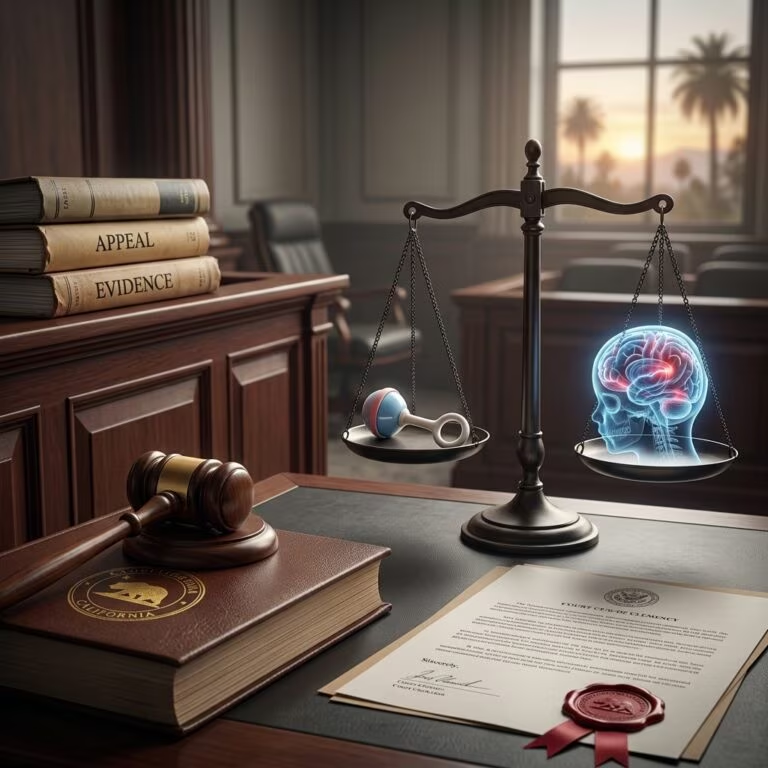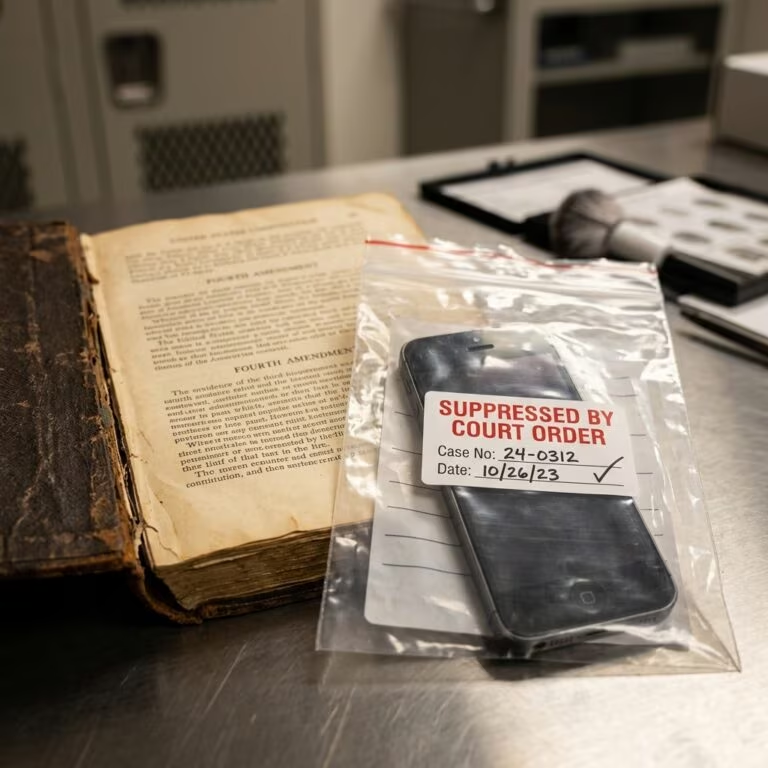
Two people can be stopped on the same road, on the same night, with the same blood alcohol concentration, and yet walk away from court with very different results. Understanding why this happens is critical for anyone facing a drunk driving charge or trying to make sense of the DUI system.
This article uses the idea of two contrasting DUI cases to explain how facts, legal rules, and defense strategy shape real-world outcomes. It does not describe a specific real case, but draws on common patterns from drunk driving litigation, major court decisions, and typical courtroom practice.
Baseline: What a Typical DUI Case Involves
Although every jurisdiction has its own statutes, most drunk driving prosecutions follow a familiar pattern:
- Traffic stop – An officer pulls a driver over for a traffic violation or suspected impairment.
- Initial observations – The officer looks for signs of alcohol or drug use, such as odor, slurred speech, or bloodshot eyes.
- Field sobriety tests – Standardized roadside tests may be requested to estimate impairment.
- Chemical testing – Breath, blood, or sometimes urine tests are used to measure alcohol or drugs in the body.
- Arrest and booking – If the officer believes there is probable cause, the driver is arrested and processed.
- License consequences – Administrative license suspension can occur even before a criminal conviction, especially after a failed or refused test.
From this basic framework, small differences can dramatically change whether a case ends in a conviction, a reduced charge, or a dismissal.
Case One vs. Case Two: A Comparative Snapshot
Consider two hypothetical drivers, both stopped late at night after leaving a bar. They are on the same road, within minutes of each other, and both end up in court. Yet their stories diverge.
| Feature | Driver A | Driver B |
|---|---|---|
| Reason for stop | Speeding & weaving in lane | Broken taillight, brief lane drift |
| Interaction with officer | Nervous, argumentative | Polite, cooperative |
| Field sobriety tests | Attempts tests, does poorly | Declines tests after asking if required |
| Chemical test | Breath test with clear 0.11 result | Hospital blood draw ordered after crash; chain-of-custody issues |
| Prior record | No prior DUI | One prior DUI several years ago |
| Legal representation | Delays in hiring counsel | Retains DUI-focused attorney immediately |
| Outcome | Convicted of DUI; standard sentence | DUI dismissed; plea to lesser traffic offense |
The key lesson is not that one driver was luckier, but that seemingly minor details in evidence, procedure, and strategy can alter the legal narrative.
How the Traffic Stop Shapes the Entire Case
Defending a DUI often begins with the question: Was the stop lawful? Police usually need at least reasonable suspicion of a traffic or criminal violation to pull a driver over.
Stops Based on Driving Behavior
Common driving cues that may justify a stop include:
- Drifting or weaving across lane lines
- Nearly hitting other vehicles or the curb
- Unusually slow driving without explanation
- Running a red light or stop sign
If the officer can clearly describe dangerous or erratic behavior, courts are more likely to uphold the stop. When driving was mostly normal and the violation minor, defense attorneys sometimes argue there was no adequate basis to stop the vehicle at all.
Equipment Violations and Technical Issues
Many DUI investigations start with simple equipment problems:
- Burned-out headlight or taillight
- Obscured license plate
- Expired registration tab
If the violation was mistakenly identified or the officer misread the law, the defense may challenge the legality of the stop. Suppression of evidence obtained after an unlawful stop can lead to dismissal or major reductions.
The Power and Pitfalls of Officer Observations
After a stop, the officer’s observations form the backbone of most drunk driving cases. Typical details recorded in reports include:
- Smell of alcohol or marijuana
- Bloodshot, watery, or glassy eyes
- Slurred or mumbled speech
- Unsteady balance or fumbling with documents
- Admissions such as “I had a few drinks”
These facts are highly subjective. One officer may describe mild nervousness as severe impairment, while another calls it normal. Skilled cross-examination can highlight inconsistencies, lack of detail, or boilerplate language.
Impact on Case Outcomes
Officer testimony often explains why the officer believed the driver was intoxicated, which supports the legal finding of probable cause to arrest. Cases with crisp, detailed, and consistent reports are harder to attack. Reports that are vague, copied from templates, or contradicted by video or other evidence open the door to stronger defenses.
Field Sobriety Tests: Helpful Evidence or Legal Trap?
Standardized field sobriety tests (SFSTs) are designed to reveal signs of impairment by measuring balance, eye movements, and the ability to follow instructions. Many jurisdictions rely on three main tests:
- Horizontal Gaze Nystagmus (HGN) test
- Walk-and-Turn test
- One-Leg Stand test
Research funded by U.S. transportation agencies has attempted to validate these tests under controlled conditions, although their accuracy in real roadside environments remains contentious in some courts.
Why Two Drivers May Get Different Results
- Medical conditions – Inner ear disorders, prior injuries, or neurological issues can mimic impairment.
- Environmental factors – Uneven pavement, poor lighting, traffic, or weather can influence performance.
- Instructions and demonstrations – If the officer gives confusing or incomplete instructions, the driver’s errors may be less meaningful.
- Language barriers – Misunderstandings can result in apparent non-compliance.
Some drivers decline these tests where the law allows, reducing the amount of potentially damaging evidence. Others attempt them, creating a detailed record for prosecutors.
Chemical Testing: Breath and Blood as Critical Evidence
Chemical tests—especially blood and breath tests—often determine whether a DUI case is strong or fragile. Modern DUI statutes commonly create per se offenses for driving at or above a specified blood alcohol concentration (BAC), often 0.08 percent.
Breath Test Issues
Breath-testing devices must be properly maintained and operated according to regulation. Common points of challenge include:
- Failure to observe the driver for a required waiting period before testing
- Improper calibration or maintenance logs
- Medical conditions or substances that might affect results
If defense counsel can show that regulations were not followed, courts may exclude the test or reduce its weight.
Blood Draws and Constitutional Limits
Blood tests raise significant constitutional questions because they involve a physical intrusion into the body. In Schmerber v. California, the U.S. Supreme Court held that a warrantless blood draw in a DUI case could be permissible when officers reasonably believed that waiting for a warrant would risk the destruction of evidence due to the natural dissipation of alcohol in the bloodstream. Later cases have further refined when warrants are required and what counts as an emergency.
Errors in how the sample is taken, stored, labeled, or analyzed can create doubt about the accuracy of the BAC. Problems with chain of custody, contamination, or lab procedures are frequent areas of attack for experienced defense attorneys.
Role of Prior Record, Aggravating Factors, and Mitigation
Even when evidence of intoxication is strong, sentencing outcomes can diverge sharply based on the driver’s history and the circumstances of the incident.
Aggravating Factors That Increase Penalties
- High BAC levels (for example, at or far above 0.15 percent)
- Injury or death to another person
- Presence of a minor passenger
- Excessive speed or reckless driving
- Prior DUI convictions within a statutory lookback period
Some states label these as aggravated or enhanced DUIs, with higher mandatory minimums or felony exposure.
Mitigating Circumstances That May Help
- No prior criminal record
- Voluntary enrollment in alcohol or drug treatment
- Prompt restitution if an accident caused property damage
- Cooperative behavior with police and the court
- Stable employment and community ties
Courts sometimes consider such factors in deciding whether to allow reduced charges, alternative sentencing, or diversion programs, where available.
Defense Strategy: Why Timing and Expertise Matter
The contrast between two DUI outcomes often reflects underlying differences in legal representation and timing.
Early Intervention
Hiring counsel quickly can influence:
- Preservation of video and audio evidence (such as dashcam or bodycam footage)
- Requests for independent blood testing when appropriate
- Challenging administrative license suspension deadlines
- Collection of witness statements while memories are fresh
An early, targeted strategy gives defense counsel more tools to test the prosecution’s case.
Targeted Legal Challenges
DUI defense often revolves around focused motions and negotiations, including:
- Motions to suppress evidence obtained from an unlawful stop or arrest
- Challenges to the admissibility of chemical test results
- Requests to exclude certain statements if rights were violated
- Arguments that the prosecution failed to meet essential procedural requirements
Where these motions succeed, prosecutors may agree to reduce charges to reckless driving or other non-DUI offenses, sometimes avoiding mandatory license loss or ignition interlock requirements.
Plea Bargains, Trials, and Divergent Endings
Most DUI cases resolve through plea agreements rather than jury trials. That does not mean the outcome is pre-determined. Prosecutors evaluate:
- The strength of the evidence
- The driver’s criminal and driving history
- Victim impact, if any
- Court and office policies on plea reductions
If a case appears vulnerable—due to questionable stops, shaky tests, or constitutional issues—prosecutors may offer more favorable terms, while solid cases typically draw tougher offers. Some defendants accept responsibility quickly for reduced penalties; others proceed to trial seeking acquittal.
Practical Takeaways for Drivers and Families
Viewing DUI law through the lens of two contrasting cases highlights several practical lessons:
- Small facts loom large – Details like the exact wording of instructions, the timing of a blood draw, or the condition of the roadway can drive entire legal arguments.
- Constitutional rights are central – Courts closely scrutinize bodily intrusions and evidence-gathering methods in DUI cases, especially with blood tests.
- Procedure is as important as outcome – Even when a driver appears impaired, failure to follow required laws and regulations can lead to dismissals or reductions.
- Legal advice is critical – Because DUI law blends traffic rules, criminal procedure, and constitutional law, tailored legal counsel is almost always necessary.
Ultimately, two drivers who appear equally impaired at first glance may face very different futures based on the evidence collected, how officials respected legal limits, and how the defense framed the story.
Frequently Asked Questions About Divergent DUI Outcomes
Q: Why can one driver with a higher BAC get a better outcome than another with a lower BAC?
A: Courts and prosecutors do not look at BAC in isolation. They consider how the evidence was obtained, whether procedures were followed, the driver’s record, and the presence of aggravating or mitigating factors. Strong constitutional or evidentiary challenges can outweigh a high test result in some cases.
Q: Are field sobriety tests mandatory?
A: In many jurisdictions, roadside field sobriety tests are voluntary, but chemical testing (breath or blood) may be governed by implied consent laws that impose license penalties for refusals. The exact rules depend on local law, so drivers should consult an attorney in their state.
Q: How important is dashcam or bodycam footage in DUI cases?
A: Video can either reinforce or undercut the officer’s written description. When footage contradicts key claims about driving behavior or field sobriety performance, it can be a powerful tool for the defense and may lead to dismissals or reductions.
Q: Does refusing a blood test always help the defense?
A: Not necessarily. Refusal can result in administrative license suspensions and may be admitted as evidence in some jurisdictions. At the same time, forced or warrantless blood draws must comply with constitutional standards, and courts carefully examine these intrusions.
Q: Can a first-time DUI be reduced to a lesser offense?
A: It depends on the jurisdiction’s laws, the facts of the case, and prosecutorial policies. Where evidence is weak or procedural errors exist, reductions to reckless driving or similar offenses are not uncommon, but they are never guaranteed.
References
- Schmerber v. California, 384 U.S. 757 — Supreme Court of the United States. 1966-06-20. https://supreme.justia.com/cases/federal/us/384/757/
- Impactful Supreme Court DUI Decisions — Law Offices of Lawrence Taylor. 2023-05-10 (approx.). https://www.duicentral.com/dui/impactful-supreme-court-decisions/
- DUI/DWI Case Results — Law Offices of Roger P. Foley. 2024-01-01 (approx. updated). https://www.rpfoley.com/dui-dwi-case-results.html
- Case Results | Lexington Drunk Driving Lawyer — The Law Office of James R. Snell, Jr., LLC. 2023-10-01 (approx. updated). https://www.duilexington.com/case-results/
- Sample Cases | Maryland DUI Lawyer Goldstein & Stamm — Goldstein & Stamm, P.A. 2022-06-01 (approx. updated). https://www.lstamm.com/resources/sample-cases/
- Two Maryland cases shed light on aggravated DUI charges and punishments — Carey Law Office. 2018-10-02. https://ccc-law.com/two-maryland-cases-shed-light-on-aggravated-dui-charges-and-punishments/