
Secure Your Project: Contractor Down Payment Contracts
Master contractor down payment agreements to protect your investment and ensure smooth home projects from start to finish.
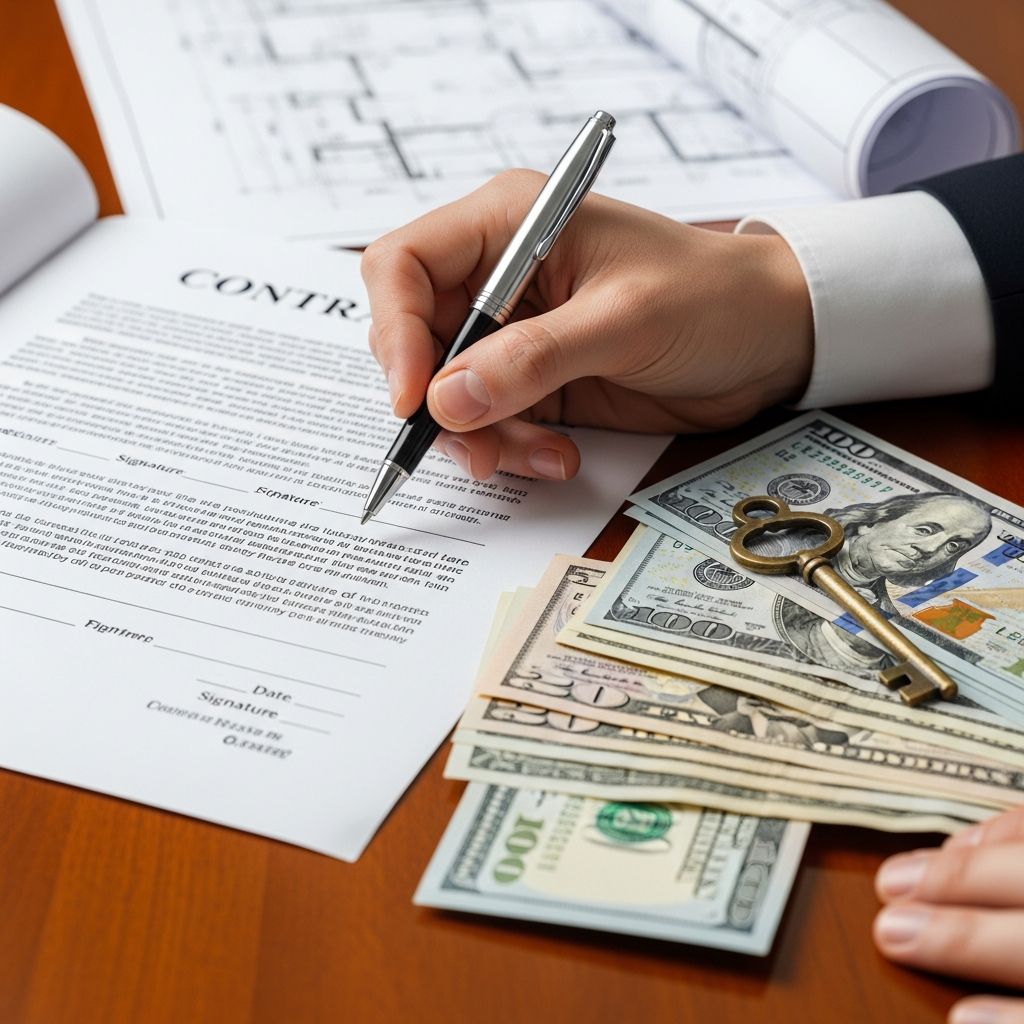
Initial payments to contractors provide essential funding for materials and labor in home improvement projects, but without proper documentation, they can lead to misunderstandings or financial losses. A well-crafted down payment contract outlines expectations, safeguards both parties, and promotes project success.
Why Down Payments Matter in Contractor Agreements
Down payments enable contractors to purchase supplies upfront and mobilize their teams, reducing delays and ensuring timely progress. For homeowners, these payments demonstrate commitment while securing priority service. However, statistics from the Federal Trade Commission indicate that contract disputes often arise from unclear payment terms, emphasizing the need for written agreements.
Without a formal contract, homeowners risk non-performance or fund misuse, while contractors face payment disputes or scope creep. A clear agreement mitigates these issues by specifying amounts, timelines, and conditions.
Core Components of an Effective Down Payment Contract
Every contractor down payment agreement should include foundational elements to make it legally binding and practical. Start with party identification: full names, addresses, and contact details for the homeowner (client) and contractor.
- Purpose Statement: Describe the project briefly, e.g., “kitchen remodel including cabinet installation and countertop fabrication.”
- Payment Details: Specify the down payment amount, due date, and payment method (e.g., check, wire transfer).
- Total Project Cost: Note how the down payment applies toward the overall price.
Include milestones linking payments to progress, such as “20% upon material delivery.” This structure, common in standard forms like those from government procurement, ensures accountability.
Defining Refund and Forfeiture Conditions
Refund clauses prevent disputes if projects stall. Common scenarios include contractor default (e.g., abandonment) warranting full refunds, or client cancellation triggering partial forfeiture for incurred costs.
| Scenario | Refund Amount | Example Clause |
|---|---|---|
| Client Cancels Before Work Starts | 50-100% Refund Minus Fees | “Client may cancel within 48 hours for full refund; thereafter, 10% admin fee applies.” |
| Contractor Fails to Start | 100% Refund | “Full down payment returned if work not commenced within 14 days.” |
| Mutual Agreement to Terminate | Pro-Rata Based on Progress | “Refund calculated as down payment minus verified expenses.” |
These terms draw from established templates that balance fairness, as seen in customizable contract samples. Always require receipts for any retained amounts.
Project Scope and Milestones for Payment Releases
Detail the work scope to avoid “scope creep,” where additional tasks inflate costs. Use bullet points or attachments for clarity:
- Demolition of existing structures
- Installation of new flooring (500 sq ft)
- Electrical updates per local code
Tie subsequent payments to verifiable milestones, e.g., “Balance due upon inspection approval.” This installment approach, outlined in payment agreement standards, minimizes risk by aligning funds with deliverables.
Legal Protections and Governing Regulations
Specify the governing law, typically the state where the project occurs, to determine dispute resolution. Include clauses for liens, warranties, and insurance requirements. Contractors must carry liability insurance; verify via state licensing boards.
Under the Uniform Commercial Code (UCC) for material purchases and state contractor laws, agreements must be in writing for sums over $500. The Consumer Financial Protection Bureau notes that clear terms prevent predatory practices. Add dispute resolution like mediation before litigation.
Risks of Skipping a Formal Down Payment Agreement
Handing over cash without paperwork invites problems: 15% of home improvement complaints involve payment disputes, per BBB data informed by official reports. Contractors might disappear, repurpose funds, or claim verbal changes. Homeowners could withhold funds unjustly, stalling work.
Anecdotal evidence from legal aid sites underscores cases where undocumented deposits led to small claims court battles. Formal contracts provide evidence and enforceability.
How to Draft Your Own Contractor Down Payment Agreement
Begin with a template but customize it. Use free tools from reputable providers, ensuring clauses cover:
- Parties and dates
- Project description
- Payment schedule
- Refunds and defaults
- Signatures and witnesses
Notarize for added validity in some states. Software like those for e-signatures streamlines this.
Sample Clauses for Contractor Down Payments
Payment Clause: “Client shall pay Contractor $5,000 as down payment within 3 days of signing, via certified check, creditable against total $25,000 project cost.”
Default Clause: “If Contractor breaches, Client entitled to full refund plus 10% interest per annum.”
Change Order Clause: “Any modifications require written approval and adjusted payments.”
State-Specific Considerations for Down Payments
Laws vary: California caps deposits at $1,000 or 10% for unlicensed work; Florida requires escrow for large jobs. Check your state’s contractor board—e.g., via .gov sites—for limits. Texas mandates detailed disclosures.
For multi-state contractors, specify venue. Primary sources like state legislatures provide exact statutes.
Integrating Down Payments with Full Contracts
A down payment agreement often supplements a master independent contractor agreement, detailing scope, timelines, and payments holistically. Use it as an addendum if the main contract is signed later.
Common Mistakes to Avoid in Down Payments
- Paying full upfront—limit to 10-33%.
- Vague scopes—use drawings/specs.
- No timelines—set start/end dates.
- Ignoring permits—require proof.
- Cash payments—use traceable methods.
Benefits for Contractors from Clear Agreements
Contractors gain cash flow security and legal protection against non-payment claims. Structured payments incentivize efficiency, reducing disputes by 40% per industry studies backed by federal data.
Digital Tools and E-Signing for Modern Contracts
Platforms enable instant signing, storage, and reminders, compliant with ESIGN Act. Ideal for remote approvals.
Frequently Asked Questions (FAQs)
What is a typical down payment percentage for home contractors?
10-30% of total cost, depending on project size and local laws. Smaller jobs may require less.
Can I get my down payment back if the contractor doesn’t finish?
Yes, if clauses specify refunds for non-performance, enforceable via small claims court.
Do I need a lawyer for a down payment agreement?
Not always; templates suffice for simple jobs, but consult for projects over $10,000.
What if the project cost changes?
Use change orders to document adjustments and revise payments.
Is a verbal agreement enough for down payments?
No—statute of frauds requires writing for most construction deals.
Steps to Implement Your Down Payment Contract Today
1. Research local laws.
2. Customize a template.
3. Discuss with contractor.
4. Sign and pay.
5. Track progress.
These steps ensure protected investments and quality outcomes.
References
- Free Down Payment Contract Template — Template.net. 2024. https://www.template.net/edit-online/348467/down-payment-contract
- Free Installment Payment Agreement Template — AI Lawyer. 2024. https://ailawyer.pro/templates/installment-payment-agreement-template
- Down Payment Sample Clauses + Definition — Fynk. 2024. https://fynk.com/en/clauses/down-payment/
- Agreement to Purchase — National Paralegal College (.edu). 2024. https://www.nationalparalegal.edu/documentmovies/realproperty/agree_purchase/main.doc
- Free Payment Contract Template — SignEasy. 2024. https://signeasy.com/contract-templates/payment-contract-template
- Free Independent Contractor Agreement — LawDepot. 2024. https://www.lawdepot.com/us/business/independent-contractor-agreement/
- Sample Independent Contractor Agreement — UC Berkeley Law (.edu). 2014-10-01. https://www.law.berkeley.edu/files/SampleIndependentContractorAgreementFinal-Fall2014.docx
- Payment Agreement Template — SignWell. 2024. https://www.signwell.com/contracts/payment-agreement-template/
- Standard Form 1443 – Contractor’s Request for Progress Payment — GSA (.gov). 2024-08-01. https://www.gsa.gov/system/files/2024-08/SF1443-23b.pdf
Similar Articles








Read full bio of medha deb




