
Constitutional Standards in Jail Confinement
Analyzing legal mechanisms to reform jail conditions and protect civil rights.
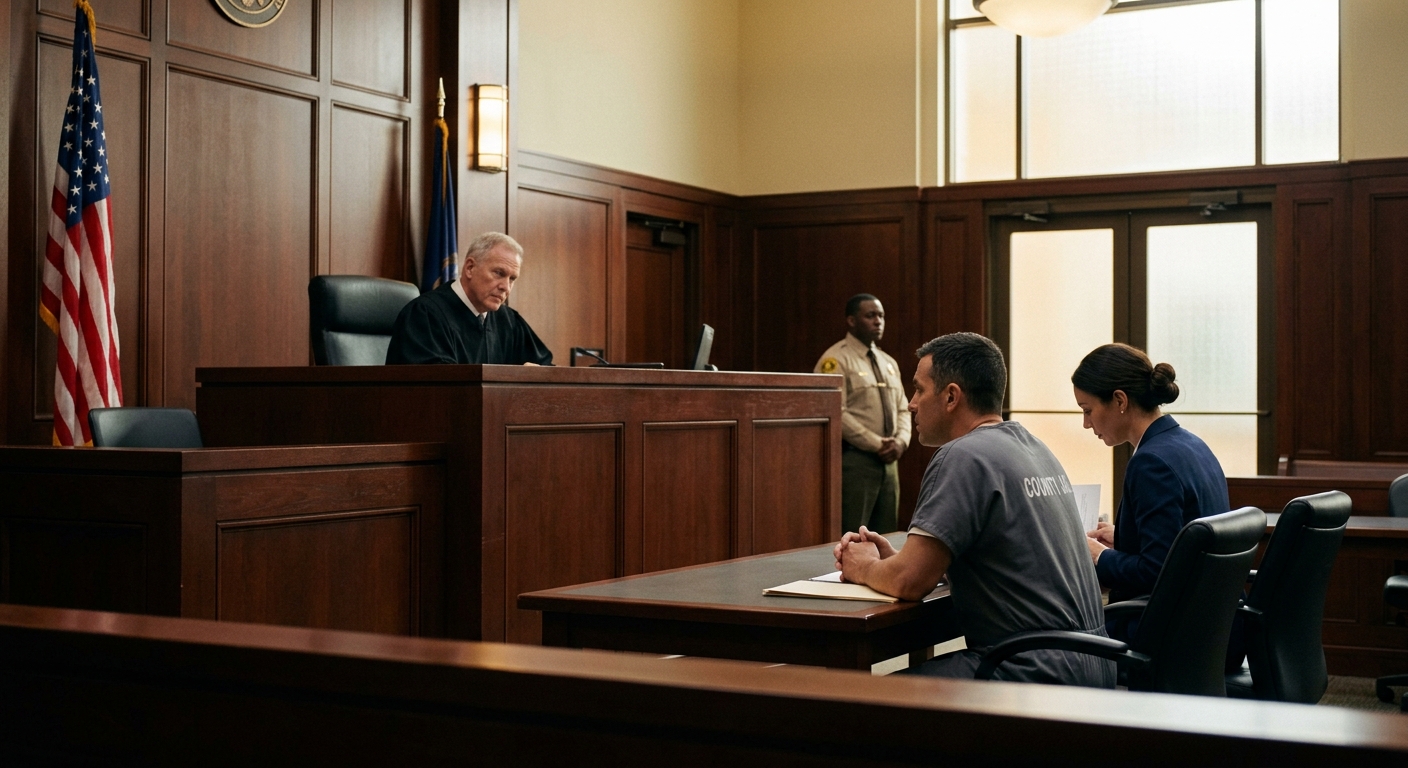
Introduction to Institutional Reform Litigation in Detention Centers
The local jail is a unique and often misunderstood pillar of the American criminal justice system. Unlike state or federal prisons, which primarily house individuals who have been convicted of crimes and are serving long-term sentences, local county jails are largely populated by pretrial detainees. These are individuals who have been accused of a crime but have not yet been convicted, meaning they retain the presumption of innocence. Despite this fundamental legal distinction, the conditions within many local jails have historically mirrored, or even worsened, those found in maximum-security prisons. When municipal governments fail to provide humane living conditions, adequate healthcare, or basic safety, the federal court system often becomes the final arbiter of justice through a mechanism known as institutional reform litigation.
Institutional reform litigation involves sweeping civil rights lawsuits designed not just to win financial compensation for a single victim, but to force systemic, structural changes within a government agency. In the context of county jails, these lawsuits are critical tools for enforcing the bare minimum standards of human decency mandated by the United States Constitution. By examining historical interventions, such as those undertaken by the Department of Justice and various civil liberties organizations, we can better understand the immense legal frameworks required to transform failing penal systems into compliant, constitutionally sound institutions.
The Intersection of the Eighth and Fourteenth Amendments
To grasp the legal foundation of jail reform, one must first understand the distinct constitutional protections afforded to different classes of incarcerated individuals. The Eighth Amendment to the U.S. Constitution prohibits the infliction of “cruel and unusual punishments.” However, the Supreme Court has ruled that the Eighth Amendment applies exclusively to individuals who have been formally convicted of a crime. For this demographic, a facility’s conditions violate the Constitution if authorities act with “deliberate indifference” to a substantial risk of serious harm, essentially meaning the jailers knew of a severe danger and intentionally ignored it.
Pretrial detainees, conversely, are protected by the Due Process Clause of the Fourteenth Amendment. Because they are legally innocent, the government cannot “punish” them at all prior to an adjudication of guilt. Under the Fourteenth Amendment, conditions of confinement for pretrial detainees must not amount to punishment. If a condition or restriction is not reasonably related to a legitimate governmental objective—such as maintaining facility security or ensuring the detainee’s presence at trial—it is considered an unconstitutional punishment. Despite this higher standard of protection on paper, the reality inside many county jails often subjects pretrial detainees to extreme deprivations that blur the line between administrative detention and punitive abuse.
A Case Study in Systemic Failures: Maricopa County’s Penal Experiment
One of the most notable modern examples of systemic constitutional failure in a local jail system occurred in Maricopa County, Arizona. For years, the county’s penal system operated under highly controversial and widely publicized punitive philosophies. While popular with some political factions, these policies eventually triggered massive federal scrutiny. The culmination of this scrutiny was a comprehensive investigation launched by the U.S. Department of Justice (DOJ) in 2008, which sought to uncover whether the county’s law enforcement and jail practices violated federal law.
In December 2011, the DOJ released a detailed letter of findings concluding that there was reasonable cause to believe the Maricopa County Sheriff’s Office was engaging in a pattern or practice of unconstitutional conduct . The findings highlighted systemic deficiencies, including discriminatory policing, unlawful retaliation against critics, and severe discrimination against limited-English-proficiency inmates within the jails . The DOJ noted that the agency suffered from entrenched systemic deficiencies, including inadequate training, poor supervision, and a lack of accountability systems . When attempts to reach a collaborative settlement failed, the DOJ took the rare step of filing a contested lawsuit in 2012 to mandate constitutional compliance and independent oversight .
Environmental Hazards and the Physical Toll
One of the hallmark issues in jail reform litigation is the physical environment in which detainees are housed. In extreme cases, facilities have utilized outdoor or semi-outdoor structures to house inmates, exposing them to severe environmental hazards. In desert climates, forcing detainees to live in canvas tents or un-air-conditioned units during summer months when temperatures routinely exceed 100 degrees Fahrenheit poses a direct and immediate threat to human life. Federal courts have consistently recognized that subjecting human beings to extreme temperatures without adequate relief—such as sufficient cooling, hydration, or medical monitoring—constitutes an objective deprivation of basic human needs.
Furthermore, overcrowding acts as a threat multiplier. When a jail exceeds its maximum capacity, every other system within the facility is strained. Sanitation systems fail, leading to outbreaks of infectious diseases. Violence increases as inmates are forced into close quarters with limited resources. Food service operations struggle to meet nutritional minimums. In these environments, the physical toll on detainees is immense, often leading to severe illness, permanent injury, or death.
The Crisis in Medical and Psychiatric Care
Perhaps the most common trigger for institutional reform litigation in local jails is the systemic denial of adequate medical and psychiatric care. Local jails have inadvertently become the largest mental health facilities in many counties, tasked with managing complex psychiatric conditions, substance withdrawal, and chronic medical ailments. When a jail lacks sufficient medical staffing, standardized intake screening protocols, and emergency triage systems, the results are catastrophic.
The statistical reality of these failures is grim. According to the Bureau of Justice Statistics, the mortality rate in local jails reached 167 deaths per 100,000 inmates in 2019, representing an 11% increase since the year 2000 . A significant portion of these fatalities is driven by suicides, drug and alcohol intoxication, and untreated medical emergencies . In systemic reform cases, plaintiffs often prove that jail administrators demonstrated deliberate indifference by failing to provide prescribed medications, ignoring urgent requests for medical attention, or isolating mentally ill detainees in solitary confinement without psychiatric supervision, which drastically increases the risk of self-harm.
The Mechanics of Court-Ordered Remediation
When systemic violations are proven, or when a county agrees to settle a massive civil rights lawsuit to avoid trial, the resolution usually takes the form of a Consent Decree or a court-ordered injunction. These are legally binding agreements enforced by a federal judge that dictate specific, measurable changes the county must make. However, managing the execution of these changes is a complex legal and administrative hurdle, heavily influenced by federal statutes like the Prison Litigation Reform Act (PLRA).
The Role of the Prison Litigation Reform Act (PLRA)
Enacted in 1996, the PLRA was designed to limit frivolous lawsuits by incarcerated individuals, but it fundamentally altered how institutional reform is managed. Under the PLRA, any prospective relief (such as an ongoing court order requiring a jail to improve its conditions) must be narrowly drawn, extend no further than necessary to correct the violation of the federal right, and be the least intrusive means necessary to correct the violation. Furthermore, defendants can periodically move to terminate the court orders unless plaintiffs can prove that an ongoing, current violation of federal rights exists. This creates a high, continuous evidentiary burden for civil rights attorneys seeking to maintain oversight.
Federal Oversight and Independent Monitoring
Because federal judges cannot personally inspect jails daily, Consent Decrees almost always require the appointment of an Independent Monitor. The monitor is an expert—often a former corrections executive, physician, or auditor—who acts as the eyes and ears of the court. Their duties include:
- Conducting unannounced site visits to inspect facility infrastructure and sanitation.
- Reviewing hundreds of medical charts to ensure doctors are adequately treating chronic illnesses and psychiatric episodes.
- Interviewing detainees and staff to verify that new constitutional policies are being followed in practice, not just on paper.
- Filing quarterly or bi-annual compliance reports to the federal judge, detailing where the county has succeeded and where it remains deficient.
Establishing Minimum Standards of Care
Court-ordered remediation replaces vague, unconstitutional practices with highly specific standards of care. For example, a court order might dictate that any detainee experiencing drug withdrawal must be evaluated by a licensed nurse within two hours of intake. It might mandate specific calorie counts for meals, strict limits on the ambient temperature within housing units, or a strict prohibition on the use of solitary confinement for inmates diagnosed with severe mental illness. These granular mandates force the institutionalization of humane practices.
Broader Implications for Municipal Liability and Penal Policy
The ripple effects of institutional reform litigation extend far beyond the walls of the specific jail being sued. For county governments, the financial implications of unconstitutional jails are staggering. Counties are often forced to spend tens of millions of taxpayer dollars not only on plaintiff attorney fees and independent monitoring costs, but on massive emergency infrastructure overhauls and the hiring of private medical contractors. When municipal leaders calculate the astronomical costs of defending and remediating a broken jail system, it frequently forces a broader reckoning regarding penal policy.
This financial and legal pressure has accelerated the “Smart Justice” movement in many jurisdictions. Rather than continually funding the expansion of constitutionally deficient jails, policymakers are increasingly turning toward decarceration strategies. By implementing robust pretrial release programs, eliminating cash bail for non-violent offenses, and investing heavily in community-based behavioral health and addiction centers, counties can reduce their jail populations. A smaller jail population is inherently easier to manage, less dangerous, and far less likely to trigger federal civil rights interventions.
The Path Forward: Preventing Future Constitutional Crises in Detention
The ultimate goal of any civil rights intervention is to create a self-sustaining system of constitutional compliance that outlives federal oversight. Achieving this requires a fundamental cultural shift within law enforcement agencies. Agencies must prioritize transparency, adopting external review boards and civilian oversight committees that can identify and address dangerous conditions before they escalate into federal lawsuits.
Furthermore, local jails must pursue accreditation from rigorous third-party organizations, such as the National Commission on Correctional Health Care (NCCHC), which sets the national standard for jail medicine. Continuous staff training on de-escalation, implicit bias, and psychiatric crisis management is essential. Ultimately, ensuring that county jails uphold the Eighth and Fourteenth Amendments is not merely a legal obligation, but a fundamental moral imperative that defines the character of the American justice system.
Frequently Asked Questions (FAQ)
What is the difference between the Eighth and Fourteenth Amendments in the context of jail conditions?
The Eighth Amendment prohibits cruel and unusual punishment and applies to individuals who have been convicted of a crime and are serving a sentence. The Fourteenth Amendment’s Due Process Clause applies to pretrial detainees—those awaiting trial who are presumed innocent. Legally, pretrial detainees cannot be subjected to any conditions that amount to “punishment,” offering them a theoretically higher standard of protection than convicted inmates.
What does “deliberate indifference” mean in a legal context?
Deliberate indifference is a legal standard used to determine if a jail official violated an inmate’s constitutional rights. It means the official possessed actual knowledge of a substantial risk of serious harm to the inmate (such as a severe medical emergency or a threat from another inmate) and intentionally disregarded that risk, failing to take reasonable measures to prevent harm.
Why does the federal government intervene in local county jails?
The federal government, typically through the Department of Justice’s Civil Rights Division, intervenes when there is evidence of a “pattern or practice” of unconstitutional conduct that local authorities refuse to or cannot correct. The DOJ utilizes federal statutes to investigate and sue municipalities to enforce compliance with the U.S. Constitution and federal civil rights laws.
What is the role of an independent monitor in jail reform?
An independent monitor is a neutral expert appointed by a federal judge to oversee a county’s compliance with a court-ordered settlement or injunction. They conduct inspections, review records, evaluate medical care, and report back to the court on whether the jail is meeting the legally mandated constitutional standards.
References
- Department of Justice Releases Investigative Findings on the Maricopa County Sheriff’s Office — U.S. Department of Justice. 2011-12-15. https://www.justice.gov/opa/pr/department-justice-releases-investigative-findings-maricopa-county-sheriffs-office
- Mortality in Local Jails, 2000–2019 – Statistical Tables — Bureau of Justice Statistics. 2021-12-01. https://bjs.ojp.gov/library/publications/mortality-local-jails-2000-2019-statistical-tables
- Assistant Attorney General for the Civil Rights Division Thomas E. Perez Speaks at the Maricopa County Press Conference — U.S. Department of Justice. 2012-05-10. https://www.justice.gov/opa/speech/assistant-attorney-general-civil-rights-division-thomas-e-perez-speaks-maricopa-county
Similar Articles








Read full bio of Sneha Tete




