
The Constitutional Crisis Inside State Penitentiaries: Analyzing Systemic Healthcare Failures
Uncovering the devastating impacts of inadequate medical care and solitary confinement behind bars.
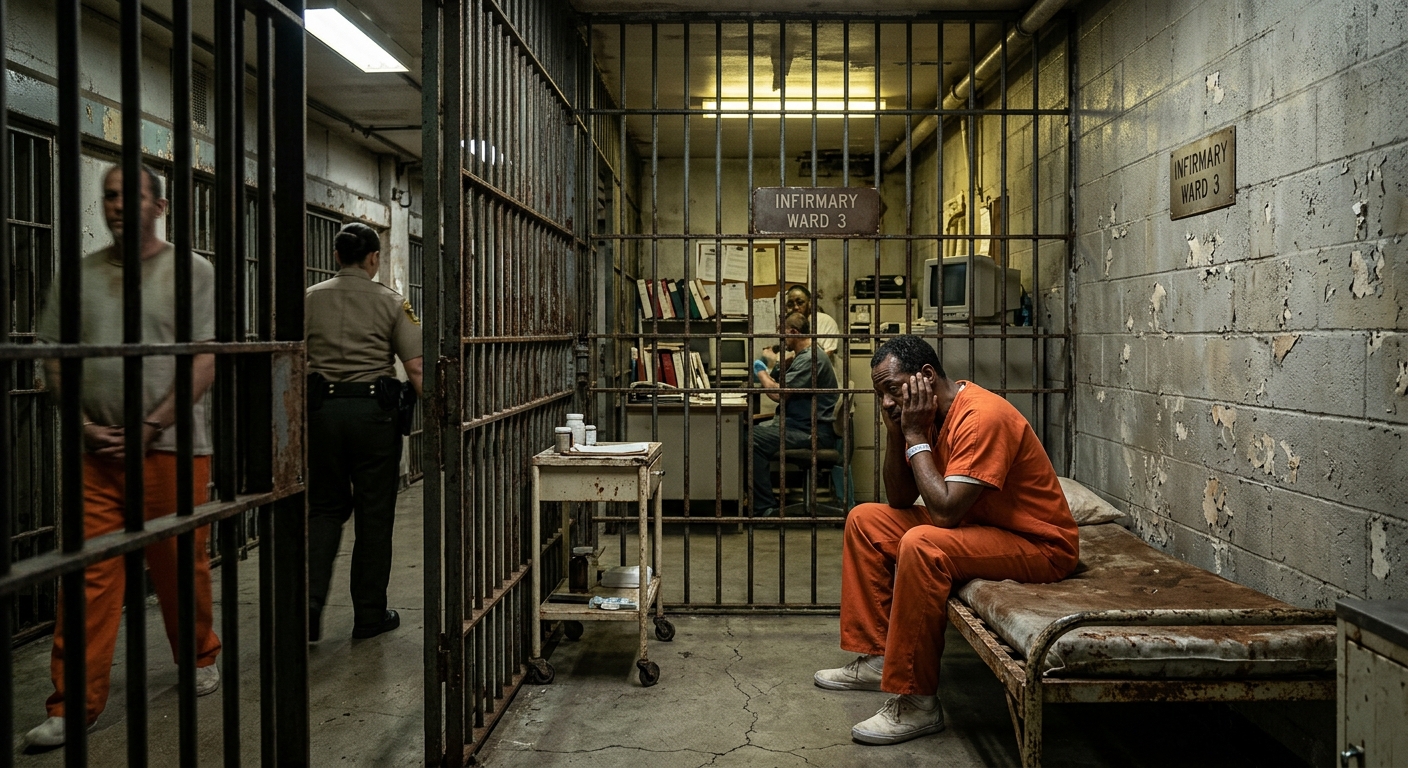
Introduction: The Intersection of Incarceration and Human Rights
The modern penal system in the United States faces unprecedented scrutiny, largely driven by systemic failures to provide constitutionally mandated standards of care to incarcerated individuals. Over the past several decades, a series of comprehensive legal challenges has pulled back the curtain on the harsh realities hidden within state penitentiaries. These cases illuminate a troubling pattern where state departments of corrections repeatedly fall short of their legal obligations, leading to preventable suffering, exacerbated mental illnesses, and, tragically, loss of life. One of the most glaring examples of this crisis involves protracted legal battles over prison healthcare systems, where federal courts have been forced to intervene aggressively. By examining the legal frameworks, the operational breakdowns of prison healthcare, and the devastating impacts of solitary confinement, we can better understand the urgent need for comprehensive reform in how correctional facilities manage the health and well-being of the populations they serve.
The Legal Foundation: The Eighth Amendment and Prisoner Welfare
The United States Constitution establishes clear boundaries regarding the treatment of those held in state custody, primarily through the Eighth Amendment. This crucial constitutional provision prohibits the infliction of “cruel and unusual punishments,” a standard that has evolved significantly through modern jurisprudence.
Defining “Deliberate Indifference” in the Courts
The turning point for prisoner rights regarding healthcare came with the landmark 1976 Supreme Court decision, Estelle v. Gamble . The Court ruled that the government has a definitive obligation to provide medical care for those it incarcerates. More importantly, the ruling established the legal standard of “deliberate indifference.” Under this standard, a prison official violates the Eighth Amendment if they know of and disregard an excessive risk to an inmate’s health or safety. This is not merely medical malpractice or general negligence; it represents a reckless disregard for human life and wellbeing.
What Constitutes Cruel and Unusual Punishment Today?
In contemporary legal contexts, cruel and unusual punishment extends far beyond physical torture. Courts have repeatedly recognized that severe overcrowding, chronic understaffing of medical professionals, and the systematic denial of necessary medications or mental health treatments meet the strict threshold of constitutional violation . When correctional facilities persistently fail to provide treatments for chronic diseases, fatally delay emergency medical responses, or house severely mentally ill individuals in prolonged isolation, these actions are increasingly classified by federal judges as clear violations of the Eighth Amendment, prompting sweeping judicial interventions and strict oversight.
Anatomy of a Systemic Failure: Healthcare Behind Bars
The systemic failure of healthcare behind bars rarely happens overnight; it is the culmination of years of massive underfunding, administrative neglect, and an institutional culture that frequently prioritizes punitive measures over rehabilitation and care. In many state facilities, the medical infrastructure is profoundly inadequate to handle the complex needs of the incarcerated population. A significant portion of this population enters the justice system with pre-existing conditions, severe substance use disorders, or chronic illnesses that require consistent, high-level management. However, independent audits and reports frequently detail agonizing delays in receiving fundamental medical attention.
Key systemic breakdowns often include:
- Diagnostic Delays: Inmates frequently face months-long wait times for basic imaging, laboratory work, and specialist consultations, turning treatable conditions into terminal ones.
- Continuity of Care Failures: Crucial regimens for chronic diseases such as diabetes, HIV, or heart disease are routinely and dangerously interrupted during facility transfers or lockdowns.
- Scope of Practice Violations: The chronic shortage of fully licensed physicians forces facilities to over-rely on under-credentialed staff to make complex, sometimes life-or-death, medical decisions.
The Mental Health Crisis and Solitary Confinement
Perhaps even more alarming than the physical healthcare deficits is the profound crisis in mental health management within correctional walls. A disproportionately large number of incarcerated individuals suffer from serious mental illnesses (SMI). Instead of receiving evidence-based therapeutic interventions, these vulnerable individuals are frequently funneled into solitary confinement—often sanitized as “restrictive housing” or “maximum custody isolation units”—as a blunt behavioral management tool.
The severe lack of psychiatric staff, combined with wholly inadequate screening processes upon intake, means that mental health deterioration is often met with harsh disciplinary action rather than clinical treatment. When individuals exhibiting symptoms of psychosis or severe depression are isolated in tiny cells for 23 hours a day, the results are overwhelmingly catastrophic. This hostile environment not only strips away necessary therapeutic support but actively exacerbates psychological distress, creating a vicious, inescapable cycle of behavioral infractions and prolonged isolation.
A Decade of Legal Battles: Holding State Departments Accountable
Holding state departments of corrections accountable is a notoriously difficult, fiercely contested, and protracted process. Class-action lawsuits challenging prison conditions often span a decade or more, characterized by relentless legal maneuvering, repeatedly broken promises, and the agonizingly slow pace of bureaucratic change. These settlements typically outline highly specific benchmarks for improving healthcare delivery, increasing facility staffing levels, and drastically reducing the use of solitary confinement. However, history shows that signing a settlement agreement is vastly different from implementing systemic change.
State agencies frequently fail to meet the stipulated benchmarks. Monitoring reports in various high-profile cases have repeatedly exposed the manipulation of data, the chronic failure to fill vacant medical positions, and the persistent denial of care despite direct court mandates. When states consistently demonstrate an inability or willful unwillingness to abide by settlement terms, federal courts are forced to heavily escalate their interventions to protect human lives.
The Role of Federal Interventions and Receiverships
When state compliance completely breaks down, the judiciary possesses powerful, albeit rarely used, tools to force compliance. Judges can issue sweeping permanent injunctions that dictate specific operational changes, appoint independent monitors to oversee daily prison operations, and levy substantial financial sanctions for contempt of court. In extreme cases—such as the landmark Jensen v. Thornell litigation, which stretched for over fourteen years—courts have explicitly concluded that a state’s prison healthcare system is so fundamentally broken that it cannot fix itself .
In such unprecedented situations, a federal judge may entirely strip control of the healthcare system away from the state, placing it into a legal “receivership” . A court-appointed receiver has the extraordinary, overarching authority to aggressively restructure the system, forcefully renegotiate vendor contracts, bypass typical state procurement delays, and legally mandate budget expenditures to ensure that healthcare delivery finally meets minimum constitutional standards.
The Human Cost of Prolonged Isolation
The operational use of solitary confinement is one of the most heavily scrutinized, hotly debated practices in modern penology. While prison administrators often argue it is a necessary, unavoidable measure for maintaining institutional security and protecting the general prison population, psychological experts, medical professionals, and human rights advocates universally condemn it as a form of psychological torture, particularly when utilized for extended periods.
Psychological Consequences of Restrictive Housing
The human brain fundamentally requires social interaction, environmental stimulation, and a stable sense of routine to function healthily. Solitary confinement systematically deprives individuals of all these essential biological elements. Extensive clinical research has consistently demonstrated that spending 22 to 24 hours a day in a barren, concrete cell the size of a parking space leads to severe and often irreversible psychological damage .
Symptoms of what is commonly categorized as “prison psychosis” can emerge within mere days of strict isolation. Incarcerated individuals frequently experience severe anxiety, intense paranoia, cognitive impairments, major depressive episodes, and vivid visual or auditory hallucinations. The absolute lack of sensory input can cause individuals to lose their grip on reality entirely, leading to alarming increases in self-harm, bodily mutilation, and suicide attempts. Furthermore, individuals with pre-existing mental health conditions are vastly disproportionately placed in solitary confinement, where their symptoms inevitably worsen rather than stabilize . The heavy reliance on isolation as a default management strategy, rather than an absolute, temporary last resort, highlights a fundamental failure to provide adequate, humane psychiatric care within the broader correctional system. Treating illness with isolation is not merely ineffective; it is fundamentally destructive.
Reforming the Correctional Healthcare Model
The path to constitutional compliance and humane treatment requires a radical, uncompromising restructuring of how correctional healthcare is conceptualized, funded, and delivered. Piecemeal fixes, temporary staffing surges, and superficial policy tweaks are entirely insufficient to address decades of institutional rot. At the very heart of the crisis is the severe shortage of qualified medical and mental health professionals willing to work in correctional settings. Prisons are inherently stressful, restrictive, and dangerous environments, often located in rural areas far from major medical hubs.
To attract and retain competent doctors, nurses, and psychiatrists, states must aggressively offer highly competitive salaries, vastly improve physical working conditions, and guarantee that medical staff have the absolute clinical independence to make healthcare decisions without arbitrary interference from security personnel. Additionally, the widespread trend of privatizing prison healthcare has proven deeply problematic in multiple jurisdictions. For-profit medical contractors are fundamentally incentivized to minimize operational costs to maximize shareholder returns. Moving forward, reforming the system will likely require abandoning profit-driven models, or at the very least, implementing merciless, data-driven oversight of private entities, and re-establishing direct public accountability for health outcomes.
Building a Sustainable Accountability Framework
Real reform requires total, unvarnished transparency. Legislative bodies must enact rigorous oversight mechanisms that operate entirely independent from the departments of corrections. This includes frequent, unannounced facility inspections, the mandatory public reporting of mortality and morbidity data within prisons, and the establishment of independent ombudsman offices where incarcerated people and their families can report medical neglect without the pervasive fear of systemic retaliation.
| Area of Reform | Description of Action Required |
|---|---|
| Staffing & Recruitment | Increase base pay, offer student loan forgiveness for medical professionals working in prisons, and establish absolute clinical independence from security staff. |
| Mental Health Interventions | Mandate comprehensive psychological screening at intake and legally prohibit the use of solitary confinement for any individuals diagnosed with serious mental illness. |
| Oversight & Transparency | Implement independent civilian review boards, regular public reporting of healthcare metrics, and unannounced, thorough facility audits. |
| Contractual Accountability | Move away from profit-driven private medical contracts; implement strict, non-negotiable financial penalties for contractors failing to meet constitutional care standards. |
Frequently Asked Questions (FAQs)
What is the Eighth Amendment and how does it relate to prison healthcare?
The Eighth Amendment of the U.S. Constitution prohibits the federal government and states from imposing “cruel and unusual punishments.” The Supreme Court has legally interpreted this to mean that failing to provide adequate medical and mental health care to incarcerated individuals, who cannot physically seek external care on their own, constitutes cruel and unusual punishment.
What does “deliberate indifference” mean in a legal context?
“Deliberate indifference” is the strict legal standard used by federal courts to determine if a constitutional violation has occurred regarding prison conditions. It means that a prison official was explicitly aware of a substantial risk of serious harm to an inmate’s health or safety and intentionally ignored or failed to take reasonable, timely measures to address that known risk.
Why is solitary confinement considered a healthcare issue?
Solitary confinement severely and directly impacts mental health. Prolonged isolation deprives individuals of necessary social interaction and sensory stimulation, frequently leading to severe psychological distress, paranoia, depression, and self-harm. Because it profoundly damages mental wellbeing, its overuse—especially for those already suffering from mental illness—is recognized as a major clinical and healthcare rights issue.
What is a federal receivership in the context of prisons?
A federal receivership occurs when a judge strips a state agency of its control over a specific system (like prison healthcare) due to persistent, uncorrected constitutional violations. The court appoints an independent “receiver” who has the executive authority to overhaul the system, hire staff, and direct state funds to ensure legal standards are met.
Conclusion: The Path Toward Dignity and Reform
The prolonged legal battles over prison conditions serve as a stark reminder of the fragile state of human rights within the criminal justice system. When the state removes an individual’s liberty, it inherently assumes the absolute, non-negotiable responsibility for their basic survival and health needs. The rampant medical neglect, systemic healthcare failures, and psychological devastation wrought by prolonged isolation are not mere administrative oversights—they are profound moral and constitutional crises that reflect society’s deepest values. Achieving lasting, meaningful reform will require substantially more than just periodic judicial mandates; it demands a fundamental societal shift in how we view the dignity, worth, and inherent humanity of the incarcerated population. True justice simply cannot coexist with deliberate indifference.
References
- Case: Jensen v. Thornell — Civil Rights Litigation Clearinghouse, University of Michigan Law School. 2026-03-19. https://clearinghouse.net/case/11734/
- Estelle v. Gamble, 429 U.S. 97 (1976) — Justia U.S. Supreme Court Center. 1976-11-30. https://supreme.justia.com/cases/federal/us/429/97/
- Mental Health Disparities in Solitary Confinement — Columbia Justice Lab. 2024-10-17. https://justicelab.columbia.edu/content/mental-health-disparities-solitary-confinement
- Eighth Amendment Prison Litigation — Federal Judicial Center. 2024-01-01. https://www.fjc.gov/history/timeline/eighth-amendment-prison-litigation
Similar Articles








Read full bio of Sneha Tete


