
Connecticut Service Dogs and ESAs: Legal Rights Guide
Comprehensive guide to Connecticut laws protecting service dogs and emotional support animals in public spaces, housing, and transport.
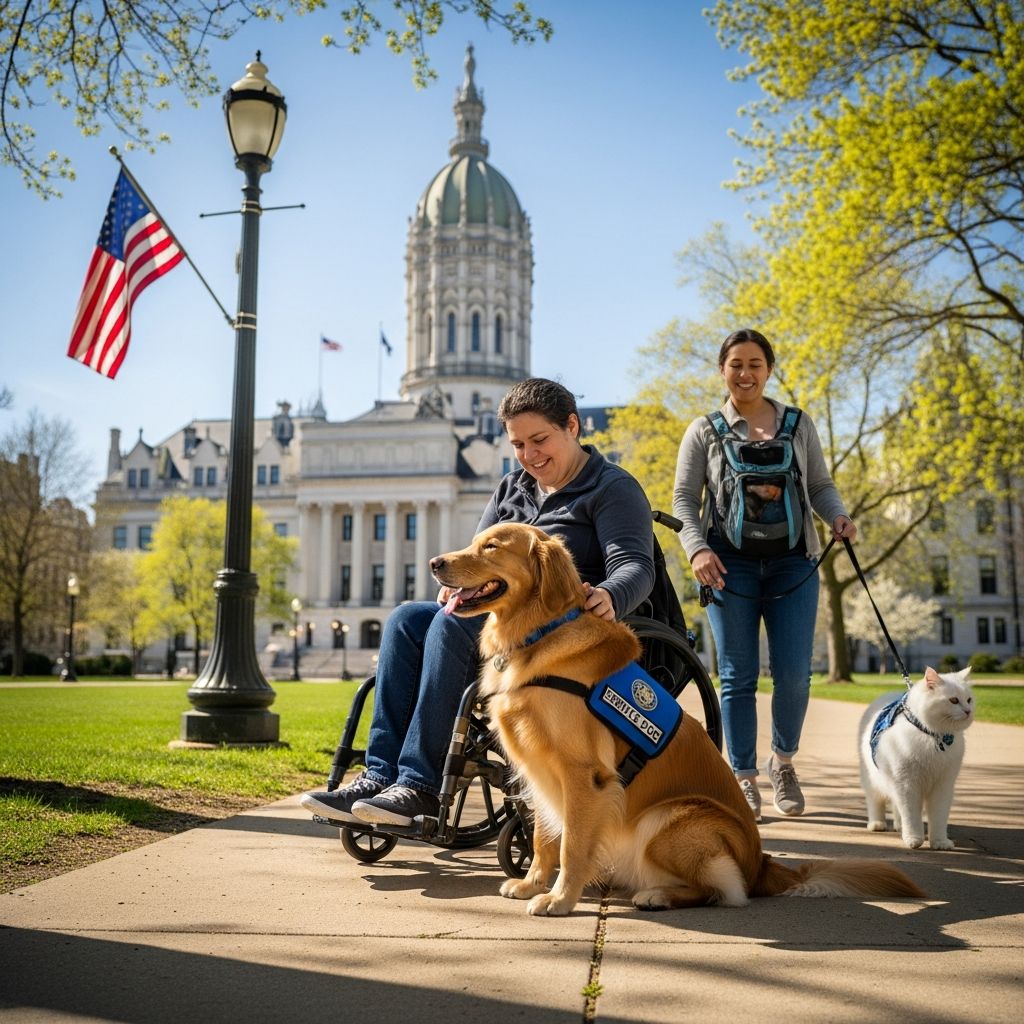
Individuals with disabilities in Connecticut benefit from both state-specific regulations and federal protections when it comes to service animals. These laws ensure access to public spaces, housing, and transportation while distinguishing between trained service dogs and emotional support animals (ESAs). This guide explores the nuances of these rights, helping handlers, businesses, and property owners understand their obligations.
Defining Service Animals Under Applicable Laws
Service animals are individually trained to perform specific tasks that mitigate a person’s disability. Federally, the Americans with Disabilities Act (ADA) defines them primarily as dogs, with miniature horses occasionally qualifying, trained for physical or mental disabilities. Connecticut’s statutes narrow this further, focusing on dogs aiding those who are blind, deaf, or have mobility impairments.
- Dogs for visual or hearing impairments: Guide dogs lead individuals safely, while hearing dogs alert to sounds.
- Mobility assistance dogs: Help with balance, retrieving items, or opening doors.
- Exclusions: State law does not extend to psychiatric service dogs or those for other conditions, though ADA provides broader coverage.
Emotional support animals, by contrast, offer comfort through presence alone, without task training. They lack public access rights under ADA or state law but may qualify for housing accommodations.
Access Rights in Public Venues and Businesses
Connecticut businesses, restaurants, hotels, theaters, and stores classified as public accommodations must permit service dogs. Both ADA and state law mandate this, with ADA overriding where state rules are narrower. Private clubs selective in membership and not open to the public are exempt, unless facilities are available to non-members.
| Aspect | ADA Rules | Connecticut State Rules |
|---|---|---|
| Covered Disabilities | All physical/mental | Blindness, deafness, mobility impairment |
| Animal Types | Dogs (mini horses) | Dogs only |
| Identification Required | No | Harness or orange leash/collar |
| Extra Fees | Prohibited (except damage) | Prohibited (except damage) |
Staff may inquire only if the animal’s role is not obvious: (1) Is it a service animal required due to disability? (2) What tasks does it perform? No proof or certification demands allowed under ADA. State law adds a visible identifier for compliance.
Public Transportation Protections
All public transit modes—buses, trains, ferries—must accommodate qualifying service dogs under Connecticut law for blindness, deafness, or mobility needs. ADA extends this nationwide. Animals must remain under control, leashed or harnessed unless task performance requires otherwise.
- Operators cannot charge extra fares for the animal.
- Exclusion possible if the dog endangers safety, is uncontrolled, or unclean.
- Handler retains entry rights sans animal if excluded.
Housing Accommodations for Animals
Connecticut’s fair housing laws prohibit disability discrimination, requiring reasonable modifications like waiving no-pet policies for service animals. The federal Fair Housing Act (FHA) bolsters this, covering service animals and ESAs.
For service animals, no extra fees or deposits apply beyond standard damage liability. “No pets” clauses do not bind. ESAs qualify if a healthcare provider verifies the animal’s necessity to alleviate disability-related emotional symptoms, enabling equal housing use.
Verification Process for ESAs
- Reliable documentation from licensed professional (not internet certificates).
- Explains disability-related need without detailing diagnosis.
- Landlords may request but cannot demand specific formats or trainer proof.
Potential Exclusions and Responsibilities
Businesses and housing providers can exclude animals posing direct threats, uncontrolled behavior, or lacking housebreaking. Owners must maintain control; aggressive barking or snapping justifies removal, but not the handler’s exclusion.
Cleaning up after the animal and covering damages remain handler duties. Recent legislative efforts address misrepresentation, with Connecticut exploring fines for falsely claiming pets as service dogs to protect legitimate users.
Workplace Considerations for Service Animals
Employers must provide reasonable accommodations under ADA, potentially including service dogs in workplaces if no undue hardship. This applies to offices where public access isn’t the norm, requiring dialogue on needs.
Addressing Misrepresentation and Fraud
Fraudulent service dog claims undermine trust, complicating access for true handlers. Connecticut’s Senate has advanced bills prohibiting breed-based insurance discrimination and penalizing fake service animal representations. Over 20 states criminalize this as a misdemeanor, with fines up to $500; Connecticut may follow.
Businesses risk ADA violations by improper questioning but can observe behavior. Long-term, national certification discussions aim to standardize verification.
Frequently Asked Questions (FAQs)
Can restaurants in Connecticut deny my service dog entry?
No, public accommodations must allow service dogs trained for covered disabilities. Only two questions permitted under ADA; state requires orange identifiers.
Do ESAs have the same public access rights as service dogs?
No, ESAs lack public accommodation protections under ADA or Connecticut law. They are limited to housing under FHA.
What if my service dog damages property?
You are liable for repairs or cleaning, but no extra pet fees allowed.
Are miniature horses service animals in Connecticut?
ADA allows them federally, but state law specifies dogs only for its protections.
How do I request a housing accommodation for my ESA?
Submit a letter from a healthcare provider detailing the need; landlords must reasonably accommodate.
State Resources and Enforcement
Report violations to the Connecticut Commission on Human Rights and Opportunities or federal DOJ for ADA. Fair housing complaints go to HUD. Interactive guides from Connecticut Fair Housing Center assist with requests.
Owners should train animals thoroughly, ensuring public behavior aligns with legal expectations. Businesses benefit from staff training on distinctions to avoid lawsuits.
References
- Connecticut Laws on Service Dogs and Emotional Support Animals — Nolo. 2023. https://www.nolo.com/legal-encyclopedia/connecticut-laws-on-service-dogs-and-emotional-support-animals.html
- CT Update: Senate Passes Bill Prohibiting Dog Breed Insurance Discrimination — American Kennel Club. 2024-05-20. https://www.akc.org/legislative-alerts/ct-update-senate-passes-bill-prohibiting-dog-breed-insurance-discrimination-exploring-service-dog-misrepresentation-penalties/
- Service Animal Laws — Somers Post 101. 2023. https://www.somerspost101.com/index.php?id=238
- Connecticut Law About Service Animals and the ADA — Judicial Branch of Connecticut. 2025-01-10. https://www.jud.ct.gov/lawlib/law/serviceanimals.htm
- Bringing Your Dog to Work: Service Animals as Disability Accommodation — Pullman & Comley. 2024. https://www.pullcom.com/working-together/bringing-your-dog-to-work-service-animals-as-disability-accommodation
- Service Animal Policy — U.S. General Services Administration. 2024-06-15. https://www.gsa.gov/real-estate/facilities-management/facilities-operations/service-animal-policy
Similar Articles








Read full bio of medha deb


