Driving under the influence (DUI), also known as operating under the influence (OUI) or driving while intoxicated (DWI), represents a serious criminal offense in Connecticut. These laws aim to protect public safety by deterring impaired driving through stringent penalties and administrative measures. Connecticut enforces a zero-tolerance approach, with legal blood alcohol concentration (BAC) limits at 0.08% for adults and 0.02% for those under 21. Violations trigger immediate consequences like license suspension and potential jail time, escalating for repeat offenders or cases involving minors.
Legal Definitions and Impairment Standards
Connecticut statutes define DUI under CGS § 14-227a as operating a motor vehicle while impaired by alcohol, drugs, or both to an appreciable degree that affects mental, physical, or nervous processes. Impairment need not reach complete incapacitation; even slight effects preventing operation like a sober driver suffice for charges. Prosecutors can pursue cases without BAC evidence if field sobriety tests or officer observations indicate impairment.
The state’s Implied Consent Law presumes all drivers agree to chemical testing (breath, blood, or urine) upon lawful arrest. Refusal leads to automatic penalties, underscoring that driving is a privilege, not a right.
The Arrest Process: From Stop to Booking
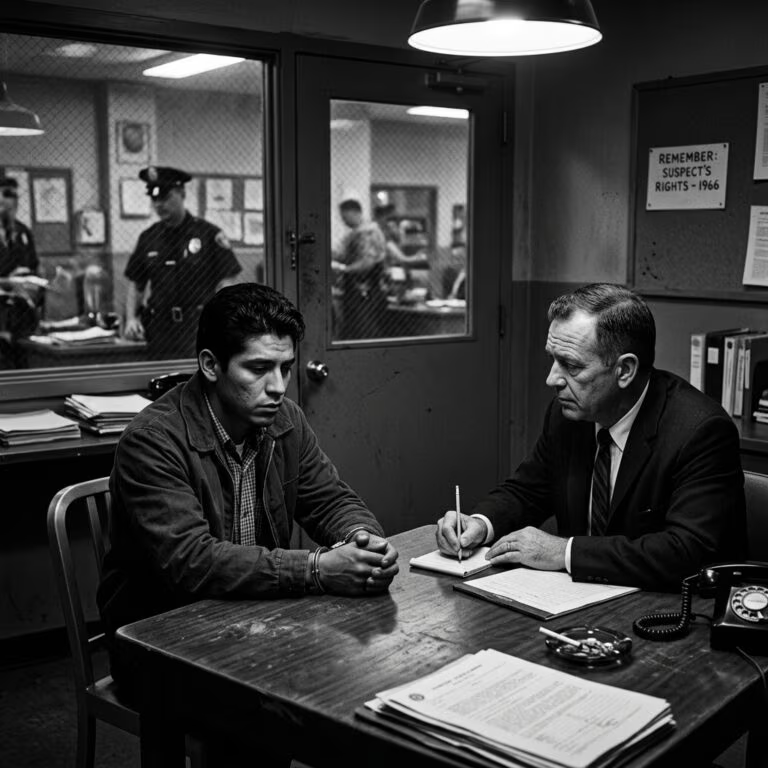
A typical DUI encounter begins with an officer observing erratic driving, such as swerving or speeding, prompting a traffic stop. Officers administer field sobriety tests, including walk-and-turn, one-leg stand, and horizontal gaze nystagmus, followed by a preliminary breath test. Probable cause leads to handcuffing, vehicle towing at the driver’s expense, and transport to the station for a full chemical test.
- Station Procedures: Booking involves fingerprinting, mugshot, and rights recitation. A BAC of 0.08% or higher confirms presumption of intoxication.
- Detention: Suspects remain in lock-up until bail or release on a promise to appear.
- Underage Specifics: Drivers under 21 face charges at 0.02% BAC, with heightened scrutiny.
Post-arrest, a 45-day license suspension often starts 30 days after the incident, alongside criminal proceedings.
Administrative Consequences: DMV Hearings and Suspensions
Separate from criminal court, the Connecticut DMV conducts hearings to address driving privileges. These focus on test submission or refusal:
| Offense | Test Taken (Elevated BAC) | Test Refused |
|---|---|---|
| First Offense | 45-day suspension + 6-month ignition interlock | 45-day suspension |
| Second Offense | 120-day suspension + interlock | 3-year suspension |
| Third+ Offense | Permanent revocation possible + interlock | Permanent revocation |
DMV outcomes remain independent of criminal verdicts, emphasizing swift privilege revocation.
First-time offenders submitting to tests with elevated BAC face 45 days off the road, followed by mandatory ignition interlock devices (IID) preventing starts above 0.02% BAC.
Criminal Penalties: Fines, Jail, and Probation
Criminal sanctions vary by offense history and aggravating factors. First offenses carry 48 hours jail (or 100 hours community service), $500-$1,000 fines, 6-12 months probation, and alcohol education. Second offenses escalate to 120 days jail, higher fines, and longer probation. Third convictions mandate one-year imprisonment.
Probation often includes substance abuse treatment, random testing, and IID installation. Records linger 10 years, inflating insurance rates for 3-5 years.
Child Endangerment: Harsher Penalties for Minors in Vehicle
Public Act No. 16-126, effective 2016, targets DUI with passengers under 18, imposing sentence enhancements. First offenses require 30 days mandatory jail (no community service alternative), versus prior 2-day minimum. Seconds demand 6 months, thirds 2 years. All include 100 hours community service, extended fines, probation, and Department of Children and Families (DCF) evaluation.
Teen drivers (under 21) face adult-level enhancements if impairing with peers under 18, at 0.02% BAC.
Unique Scenarios: Private Property and Driveway DUIs
Connecticut’s broad “anywhere in the state” jurisdiction since 2006 encompasses private property, including driveways. Operating (or capable of operating) while impaired qualifies, even sleeping in the driver’s seat with keys in ignition. Officers need probable cause from observed impairment during operation.
This surprises many, as penalties mirror public road DUIs, reinforcing vigilance everywhere.
Proposed and Recent Legislative Changes
Connecticut continually tightens DUI enforcement. “Benny’s Law” proposes no bail for fatal DUIs, enhanced repeat penalties, and manslaughter upgrades for deadly repeats. A DOT bill seeks lowering BAC to 0.05%.
Ignition interlocks became mandatory post-arrest (even pre-conviction) via prior reforms. 2025 bills address reciprocal suspensions for out-of-state offenses. As of 2026, monitor new laws on housing, wages, and prisons indirectly impacting enforcement.
Defense Strategies and Legal Options
Experienced attorneys challenge probable cause, test accuracy, or field test validity. Refusal defenses weigh against suspension risks. DMV hearings demand prompt requests (within 7 days). Plea bargains may reduce charges to reckless driving, avoiding DUI records.
- Common Defenses: Medical conditions mimicking impairment, faulty equipment, illegal stops.
- DMV Hearings: Request within 7 days; attorney representation crucial.
Frequently Asked Questions (FAQs)
What is the BAC limit in Connecticut?
0.08% for adults; 0.02% for under 21. Impairment without BAC evidence can still lead to conviction.
Can I get a DUI in my own driveway?
Yes, if operating or positioned to operate while impaired on private property.
What happens if I refuse a breath test?
Automatic license suspension (45 days first offense), independent of criminal outcome.
Are penalties worse with kids in the car?
Yes, mandatory longer jail, community service, and DCF involvement.
How long does a DUI stay on my record?
10 years for driving record; insurance impact 3-5 years.
Do I need a lawyer for a DMV hearing?
Highly recommended; outcomes affect driving privileges separately from court.
Preventing DUI: Safe Driving Tips
Avoid risks by designating sober drivers, using rideshares, or staying hydrated during events. Ignition interlocks offer monitored reentry for convicted drivers. Education programs reduce recidivism.
(Word count: 1678)
References
- New Connecticut Criminal Law for Kids-in-Car DUIs / DWIs — Mark Sherman Law. 2016-10-01. https://markshermanlaw.com/blog/new-connecticut-criminal-law-for-kids-in-car-duis/
- Driving Under the Influence (DUI) in Connecticut — Connecticut DMV Portal. Accessed 2026. https://portal.ct.gov/dmv/licenses-permits-ids/license-suspension/driving-under-influence
- Connecticut Considers New DUI and Distracted Driving Laws — Connecticut Criminal Lawyer Blog. 2023. https://www.connecticutcriminallawyer.com/blog/connecticut-considers-new-dui-and-distracted-driving-laws
- The DUI Charge Process in CT: A Guide — Law Offices of Pat Brown. Accessed 2026. https://www.patbrownlaw.com/dui/dui-process-in-ct
- DUI in Your Driveway: Connecticut’s Surprising Law — DP Weiner Law. Accessed 2026. https://www.dpweinerlaw.com/stamford-criminal-law-blog/dui-in-your-driveway-connecticut-s-surprising-law
- Connecticut OUI Laws — National College for DUI Defense. Accessed 2026. https://www.ncdd.com/connecticut-oui-laws
- 2025HB-07160-R000567-BA.pdf — Connecticut General Assembly. 2025. https://www.cga.ct.gov/2025/ba/pdf/2025HB-07160-R000567-BA.pdf