
Defending Democracy: How Congress Can Stop Voter Suppression
Discover how federal legislation and constitutional authority can be leveraged to counter the rising tide of state-level voting restrictions.
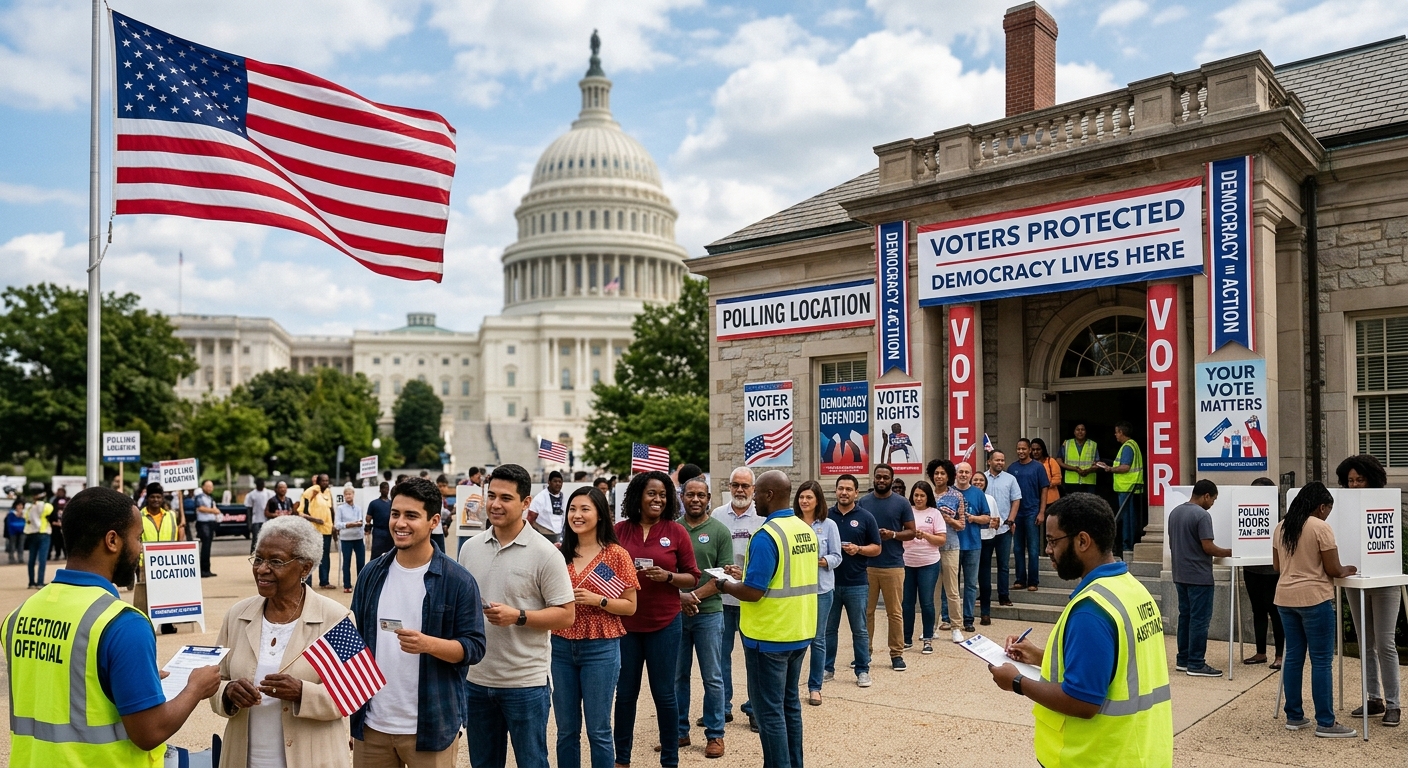
The Modern Crisis of Ballot Access
Voting is the foundational mechanism of a democratic republic, serving as the primary vehicle through which citizens express their political will and hold elected officials accountable. However, the United States is currently witnessing a dramatic contraction of ballot access. In the American federalist system, states have historically possessed broad leeway in the administration of elections. They dictate the rules regarding voter registration, the availability of polling locations, and the permissible methods for casting a ballot. While this decentralized system allows for localized administration, it also creates vulnerabilities when state legislatures choose to erect barriers to the franchise.
Since the 2020 election, an unprecedented wave of restrictive voting legislation has swept across the nation. Lawmakers in various states have aggressively pursued policies that make it demonstrably harder for eligible citizens to cast a ballot that counts. According to the Brennan Center for Justice, this trend is only accelerating; between January 2025 and April 2026 alone, at least 44 restrictive voting laws were enacted across the country, setting a new high for a two-year federal election cycle. These restrictions are not isolated incidents but represent a coordinated, systemic effort to alter the electoral landscape, raising fundamental questions about the role of the federal government in safeguarding the right to vote.
Tactics of Disenfranchisement
Modern voter suppression rarely looks like the overt, explicitly discriminatory laws of the Jim Crow era. Instead, it relies on complex administrative burdens and bureaucratic hurdles that disproportionately impact specific demographics while operating under the guise of election security. To understand the gravity of the situation, it is necessary to examine the specific legislative tactics currently being deployed.
- Strict Voter Identification Requirements: Many states have tightened the rules surrounding which forms of identification are acceptable at the polls. Often, these laws exclude identification commonly held by younger or marginalized voters. For example, recent legislation in New Hampshire explicitly eliminated the ability of students to use their college or university identification cards to vote, a move that critics argue directly suppresses youth civic participation.
- Reductions in Early and Mail-In Voting: Following the surge in mail-in voting during the 2020 pandemic, numerous state legislatures moved swiftly to curtail these options. This includes shortening the window to apply for an absentee ballot, strictly limiting the number and placement of secure ballot drop boxes, and reducing the number of early voting days.
- Aggressive Voter Roll Purges: While regular maintenance of voter rolls is a standard administrative necessity, some states have implemented highly aggressive “use-it-or-lose-it” policies. Under these rules, registered voters who fail to participate in a few consecutive elections are systematically removed from the rolls, often without adequate notification, forcing them to jump through hoops to re-register.
- Criminalization of Election Assistance: A deeply concerning trend involves the penalization of civic engagement organizations. New laws in several states impose severe fines or even criminal charges on groups that assist voters in filling out registration forms or returning absentee ballots, effectively chilling nonpartisan voter registration drives.
The Historical Precedent: The Voting Rights Act of 1965
To fully grasp the significance of today’s voting rights battles, one must look back to the federal government’s most successful intervention in electoral fairness: the Voting Rights Act (VRA) of 1965. Prior to its passage, southern states utilized poll taxes, literacy tests, and violent intimidation to disenfranchise Black citizens almost entirely. The VRA was enacted to enforce the Fifteenth Amendment, which explicitly forbids the denial of the right to vote based on race or color.
The most powerful and revolutionary mechanism within the VRA was Section 5, known as the preclearance provision. This statute mandated that states and jurisdictions with a documented, egregious history of racial discrimination in voting could not implement any changes to their election laws without first receiving approval—or “preclearance”—from the U.S. Department of Justice or a federal court in Washington, D.C.. If a state wanted to move a polling place, change its voter ID laws, or redraw a district map, it had to prove that the change would not negatively impact minority voters.
Section 5 fundamentally transformed American democracy. It acted as a powerful deterrent, blocking thousands of discriminatory laws before they could take effect and allowing minority registration and turnout to soar over the subsequent decades.
The Turning Point: Shelby County v. Holder (2013)
The robust protections of the VRA remained intact until a landmark Supreme Court ruling fractured the legal framework defending the franchise. In the 2013 case Shelby County v. Holder, the Supreme Court delivered a devastating blow to the Voting Rights Act. The Court did not strike down Section 5 (the preclearance requirement itself); rather, it invalidated Section 4(b), which was the coverage formula used to determine exactly which states and jurisdictions were subject to preclearance.
Writing for the 5-4 majority, Chief Justice John Roberts argued that the formula, which was largely based on data from the 1960s and 1970s, was outdated and unconstitutional because it violated the principle of “equal sovereignty” among the states. The Court effectively stated that the rampant discrimination of the past had been cured, and the old formula no longer reflected the current reality of the country.
However, by striking down the coverage formula, the Supreme Court rendered the preclearance requirement entirely dormant. Without a formula to identify who must seek federal approval, no jurisdiction had to do so. The immediate aftermath was stark and immediate. Within hours of the Shelby County decision, several states that were previously subject to federal oversight announced the implementation of strict voter ID laws and other restrictive measures that had previously been blocked by the Justice Department.
The Shift in Electoral Oversight
| Era | Federal Oversight Mechanism | State Autonomy in Covered Regions | Burden of Proof |
|---|---|---|---|
| Pre-2013 (Before Shelby) | DOJ Preclearance required for covered states. | Severely limited; all election changes required federal approval. | States had to prove the new law was not discriminatory before enactment. |
| Post-2013 (After Shelby) | Preclearance rendered inactive. | High autonomy; states can pass and implement laws immediately. | Voters/advocates must prove a law is discriminatory after it takes effect. |
The Disproportionate Toll on Marginalized Communities
The legislative frenzy following the Shelby decision has not impacted all demographics equally. Voter suppression is a precision instrument, often surgically targeting communities of color, young voters, and those in lower socioeconomic brackets. Because minority voters heavily utilize early voting, Sunday voting programs (such as “Souls to the Polls”), and mail-in ballots, restrictions on these specific avenues result in profound disenfranchisement.
Native American voters face uniquely severe challenges that are exacerbated by state-level restrictions. Many reservations are located in deeply rural, geographically isolated areas with limited access to public transportation or government offices. Furthermore, many Native Americans do not have traditional residential street addresses, relying instead on non-standard addresses or P.O. boxes. When state legislatures pass laws requiring IDs with traditional street addresses or drastically reduce the number of polling places in rural counties, Native voters are heavily disenfranchised. The removal of federal oversight has allowed states to ignore these nuanced realities, resulting in a system where the ease of voting is dictated largely by zip code and demographic background.
Federal Solutions: The John Lewis Voting Rights Advancement Act
Despite the aggressive posture of state legislatures, the U.S. Constitution provides Congress with the ultimate authority to regulate federal elections and protect civil rights. The Elections Clause of the Constitution (Article I, Section 4) explicitly grants Congress the power to alter state regulations concerning the “Times, Places and Manner of holding Elections” for federal office. Furthermore, the Enforcement Clauses of the Fourteenth and Fifteenth Amendments empower Congress to pass legislation preventing racial discrimination.
To combat the post-Shelby wave of voter suppression, lawmakers have proposed significant federal reforms, most notably the John Lewis Voting Rights Advancement Act (VRAA). This critical piece of legislation is designed specifically to repair the damage done by the Supreme Court in 2013 and restore the full strength of the Voting Rights Act.
Instead of relying on decades-old data, the VRAA creates a new, dynamic, and rolling coverage formula. Under this proposed law, a state would be subjected to preclearance if it has a documented history of voting rights violations within the past 25 years. Because this formula is continuously updated based on recent, proven infractions, it directly answers the Supreme Court’s complaint in Shelby County that the old formula was obsolete. By re-establishing federal oversight, the VRAA would once again place the burden on states with a history of discrimination to prove that their proposed election laws are fair and equitable before they can be implemented.
Frequently Asked Questions (FAQ)
What exactly is “preclearance” in election law?
Preclearance is a legal requirement that forces certain states or local governments to obtain approval from the federal government (either the Department of Justice or a federal court) before making any changes to their voting laws or election procedures. It acts as a preventative measure to ensure new laws do not disproportionately harm minority voters.
Why did the Supreme Court strike down the original preclearance formula?
In the 2013 Shelby County v. Holder decision, the Court ruled that the formula used to determine which states needed preclearance was based on outdated data from the 1960s and 1970s. The Court stated that because the country had changed, relying on fifty-year-old data violated the constitutional principle of equal sovereignty among the states.
How does the John Lewis Voting Rights Advancement Act address the Supreme Court’s concerns?
The VRAA establishes a modern, rolling formula based on recent history. A state would only be subjected to preclearance if it has committed a certain number of voting rights violations within the last 25 years. This dynamic approach ensures the federal oversight is based on current realities rather than historical grievances.
Do states have the right to manage their own elections?
Yes, states have the primary responsibility to administer elections. However, the U.S. Constitution grants Congress the power to override state laws regarding federal elections and explicitly commands Congress to prevent racial discrimination in voting. When state autonomy is used to disenfranchise citizens, federal intervention is both constitutional and necessary.
Conclusion: The Urgent Need for Federal Oversight
The right to vote is not merely one civil right among many; it is the fundamental right that preserves all others. The recent surge in restrictive state voting laws represents a profound threat to the integrity of the American democratic system. The data is clear: when federal oversight is removed, partisan state legislatures are highly motivated to manipulate the rules of election administration to control the electorate.
Congress possesses both the constitutional authority and the moral imperative to intervene. Passing comprehensive legislation, such as the John Lewis Voting Rights Advancement Act, is essential to restore the balance of power and protect vulnerable populations from systemic disenfranchisement. The battle against voter suppression cannot be fought solely in the courts after the damage is done; it requires robust, preventative federal legislation that guarantees every eligible citizen the unencumbered opportunity to participate in their government. Without decisive congressional action, the promise of a truly representative democracy will remain unfulfilled.
References
- State Voting Laws — Brennan Center for Justice. 2026-05. https://www.brennancenter.org/our-work/research-reports/state-voting-laws
- Policy Explainer: John Lewis Voting Rights Advancement Act — Vote.org. https://www.vote.org/policy-explainer-john-lewis-voting-rights-advancement-act/
- The John R. Lewis Voting Rights Advancement Act: An Explainer — League of Women Voters. 2024-06-25. https://www.lwv.org/blog/john-r-lewis-voting-rights-advancement-act-explainer
- Protections for Native American Voting Rights Included In Proposed John R. Lewis Voting Rights Advancement Act — Native American Rights Fund (NARF). 2021-10-05. https://narf.org/navra-vraa/
- New Hampshire’s Latest Voting Restrictions Could Impact Student Participation — Democracy Docket / Local News Outlets. 2026-05-29. https://www.democracydocket.com/
Similar Articles








Read full bio of Sneha Tete


