
Understanding Conditional Residence in U.S. Immigration
A comprehensive guide to conditional green cards, eligibility, and the path to permanent residency.
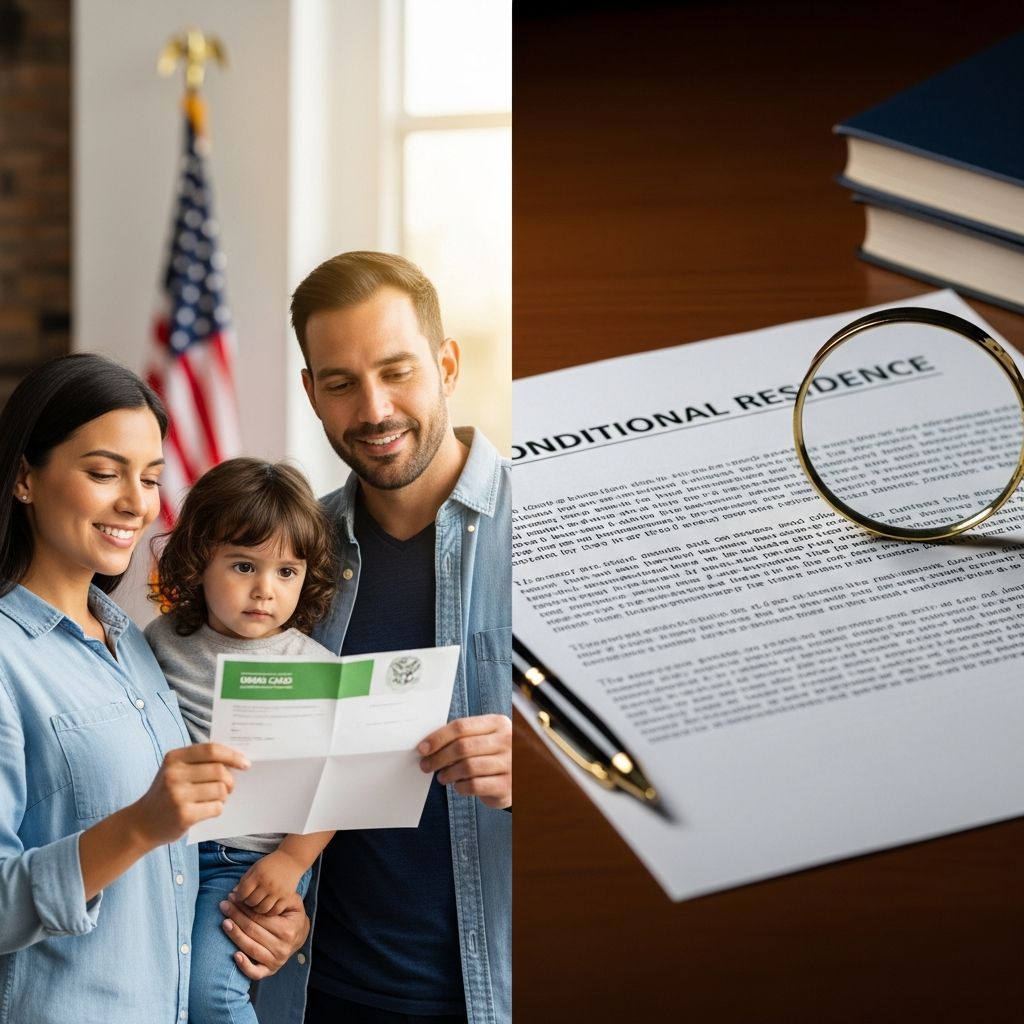
The Reality of Conditional Immigration Status in America
Within U.S. immigration law, the term “temporary green card” does not formally exist as an official designation. However, this phrase has emerged as colloquial shorthand among immigrants and legal professionals to describe what the government classifies as “conditional residence.” Understanding this distinction is crucial for foreign nationals navigating the American immigration system. Conditional residence represents a unique immigration category that functions similarly to permanent residency in many ways, yet includes specific requirements and timeframes that conditional residents must fulfill to maintain their legal status in the country.
The concept of conditional residence serves as a protective mechanism within U.S. immigration law, designed to verify the legitimacy of certain immigration pathways before granting indefinite residency rights. Rather than being truly “temporary,” conditional residence is better understood as a probationary period during which immigrants must demonstrate their continued eligibility for the immigration benefits they have received. For most conditional residents, this status eventually transitions to full permanent residency once they satisfy the required conditions.
Who Qualifies for Conditional Residence Status
The U.S. immigration system assigns conditional residence status to two primary categories of foreign nationals. The first and most common group consists of individuals who have married U.S. citizens or lawful permanent residents but have been married for fewer than two years at the time their green card application is approved. These individuals receive what is commonly referred to as a CR1 visa designation, indicating their conditional resident status through the marriage pathway.
The second category encompasses foreign investors who obtain permanent residency through the EB-5 Immigrant Investor Program. Under this employment-based immigration category, investors who commit capital to create jobs in the United States initially receive conditional green cards. This provisional status allows the government to verify that these investors have met the specific investment and job-creation requirements mandated by the program.
It is essential to note that conditional residence is not assigned arbitrarily or based on the strength of evidence presented during the initial application process. For marriage-based petitions, for example, the conditional status is automatic whenever the marriage duration falls below the two-year threshold at approval, regardless of how thoroughly the couple documented their genuine relationship. Similarly, EB-5 investors receive conditional status as a standard procedural requirement rather than as a reflection of their investment legitimacy.
Comparing Conditional and Permanent Residency
During the conditional residency period, foreign nationals enjoy virtually identical rights and privileges to those holding full permanent resident status. Conditional residents can obtain and carry a physical green card that appears nearly identical to standard permanent green cards. They retain complete authorization to work in the United States across any lawful employment sector without requiring additional work permits or special employment authorization documents.
The primary distinction between conditional and permanent residency lies in duration rather than privileges. A permanent green card remains valid for ten years and is renewable, providing indefinite residency as long as the holder maintains their status and complies with U.S. law. In contrast, a conditional green card expires after exactly two years, necessitating active intervention by the resident to extend their status. The following table illustrates key differences between these two residency categories:
| Feature | Conditional Residency | Permanent Residency |
|---|---|---|
| Validity Period | Two years | Ten years (renewable) |
| Work Authorization | Full, unrestricted | Full, unrestricted |
| Residence Requirements | Can live anywhere in U.S. | Can live anywhere in U.S. |
| International Travel | Permitted with green card | Permitted with green card |
| Status Renewal | Cannot be renewed | Automatically renewable |
| Naturalization Eligibility | Time counts toward requirement | Counts toward requirement |
The Two-Year Conditional Period and Its Implications
The two-year duration of conditional residence is not arbitrary but rather reflects a deliberate policy choice by Congress. This timeframe provides the government with an opportunity to verify that the basis for immigration sponsorship remains valid. For married couples, this period allows officials to ensure the marriage has not ended in divorce or been established solely to circumvent immigration restrictions. For EB-5 investors, the two years permit authorities to confirm that required job-creation targets have been met or are on track toward fulfillment.
Importantly, conditional residents can count their years of conditional residence toward the five-year residency requirement typically necessary for naturalization as a U.S. citizen. For those married to U.S. citizens and living with their spouse, this time may even count toward the reduced three-year naturalization eligibility period. This means that by the time conditional residents transition to permanent status and eventually apply for citizenship, the conditional period is recognized as legitimate residence, making the “temporary” designation largely academic from a citizenship perspective.
The Transition Process: Removing Conditions on Residency
The transition from conditional to permanent residency requires proactive engagement with U.S. Citizenship and Immigration Services. Conditional residents cannot passively maintain their status; they must initiate specific forms and processes during a precise timeframe. The failure to take action results in automatic loss of immigration status and potential deportation proceedings.
For marriage-based conditional residents, the required form is the I-751, “Petition to Remove Conditions on Residence.” For EB-5 investors, the appropriate form is I-829, “Petition by Entrepreneur to Remove Conditions on Permanent Resident Status.” Both forms must be filed during a critical 90-day window immediately preceding the second anniversary of when conditional status was granted. Filing too early may result in automatic rejection, while late submission without legitimate extenuating circumstances leads to denial and loss of status.
The filing process includes submission of the completed petition form, a copy of both sides of the conditional green card, and supporting documentation demonstrating ongoing eligibility. For marriage-based petitions, couples typically file jointly and must provide evidence that their marriage remains genuine and was not entered into for the purpose of circumventing immigration law. EB-5 investors must submit documentation proving their investment met job-creation requirements. A filing fee of $750 is required for marriage-based I-751 petitions.
Rights and Obligations During Conditional Status
Conditional residents bear the same fundamental rights and obligations as permanent residents throughout their two-year status period. They can travel internationally and return to the United States using their conditional green card, provided they have not abandoned their U.S. residency. They maintain full work authorization and can change employers without additional immigration approvals. They can establish businesses, pursue education, and generally conduct their lives as any permanent resident would.
Simultaneously, conditional residents must comply with all U.S. laws and immigration regulations. Criminal convictions, immigration fraud, or violations of the conditions underlying their status can trigger deportation proceedings. For married conditional residents, divorcing before removing conditions creates significant complications, though not necessarily insurmountable ones. Those facing domestic violence within their conditional marriage may file Form I-751 independently, and exceptional hardship circumstances may be considered by immigration authorities.
Special Circumstances and Exceptions
Immigration law recognizes that rigid application of conditional residency rules may produce unjust outcomes in certain circumstances. When a conditional resident’s spouse dies before the removal of conditions, the surviving spouse can still petition for permanent residency by filing Form I-751 at any time between their spouse’s death and their green card expiration date, rather than adhering to the standard 90-day window. This provision acknowledges the extraordinary nature of spousal death and prevents loss of status due to circumstances beyond the resident’s control.
Additionally, individuals who experienced domestic violence or extreme cruelty within their conditional marriage may file independently to remove conditions. Those facing removal from the United States due to loss of status may petition for relief based on extreme hardship to themselves or their U.S. citizen children. When multiple hardship circumstances apply, applicants can request that USCIS consider all relevant factors by indicating each applicable situation on their petition.
Interview Waivers and Documentation Requirements
Historically, removal of conditions interviews were routine, requiring couples to appear before immigration officers to verify marriage legitimacy. Contemporary USCIS policy has substantially shifted toward granting interview waivers when couples submit comprehensive documentation supporting their marriage’s legitimacy. This policy change reflects recognition that strong documentary evidence can adequately establish the validity of a relationship without requiring in-person verification.
Couples seeking interview waivers should gather extensive evidence of their joint life, including lease agreements, utility bills, joint bank accounts, tax returns, photographs, and testimonies from friends and family members. Medical records, children’s birth certificates, and insurance documents further substantiate claims of genuine marriage. The stronger the documentary record, the greater the likelihood of waiver approval.
Renewal of Conditional Status and Processing Times
For EB-5 investors specifically, conditional green cards must be renewed annually until Form I-829 is approved. This renewal process is distinct from the removal of conditions procedure and requires submission of evidence of continuing investment or job-creation progress. Upon receiving the Form I-829 petition, USCIS automatically extends conditional residency for up to 24 months to accommodate typical processing timeframes, ensuring that investors maintain lawful status while awaiting final determination of their investment petition.
Pathway to Citizenship and Long-Term Implications
From a long-term perspective, conditional residence should not be viewed as genuinely temporary. The vast majority of conditional residents successfully transition to permanent residency by filing appropriate petitions and providing required documentation. Upon approval, they receive a ten-year renewable green card and thereafter pursue naturalization when eligible. The conditional period ultimately becomes merely a procedural checkpoint in their journey to citizenship rather than a limitation on their residency rights.
The time spent in conditional status counts fully toward naturalization requirements, meaning that by the time a conditional resident completes the five-year (or three-year for spousal cases) residency requirement and passes the citizenship examination, their earlier conditional years have proven as valid as any permanent residency period. This retroactive validation underscores that the “temporary” classification applies only to the green card’s technical validity period, not to the legitimate nature of the residence itself.
Frequently Asked Questions About Conditional Residence
Q: What happens if I fail to file the removal of conditions petition during the 90-day window?
A: If you miss the 90-day filing window without documented extenuating circumstances, your petition will be denied, and you will lose your conditional residency status. You may become subject to removal proceedings and be required to depart the United States. Emergency circumstances such as serious illness or hospitalization may warrant consideration of late filing, but approval is not guaranteed.
Q: Can conditional residents travel outside the United States?
A: Yes, conditional residents can travel internationally using their conditional green card, similar to permanent residents. However, they should not abandon their U.S. residency, as this could result in loss of status. Extended periods abroad may trigger questions during removal of conditions processing regarding whether the resident maintained the required presence in the United States.
Q: Does a conditional marriage-based green card count toward naturalization time?
A: Yes, time spent as a conditional resident counts fully toward the naturalization residency requirement. Married individuals living with their U.S. citizen spouse can count conditional years toward the reduced three-year requirement for naturalization.
Q: What if my spouse and I divorce after receiving a conditional green card?
A: While divorce complicates the removal of conditions process, it does not necessarily eliminate your eligibility. You can still petition to remove conditions by demonstrating that your marriage was genuine at its inception. USCIS cannot retroactively deny your conditional status based on subsequent divorce. However, documentation of the legitimate marriage becomes increasingly important.
Q: Are EB-5 investors required to renew their conditional green cards annually?
A: Yes, EB-5 conditional green cards must be renewed annually until Form I-829 is approved. These renewals serve to document the investor’s continuing compliance with investment requirements and job-creation obligations.
Q: How long does USCIS take to process Form I-751 or I-829?
A: Processing times vary significantly based on individual circumstances and USCIS workload. However, upon receipt of a properly filed I-829 petition, USCIS automatically extends conditional status for up to 24 months to accommodate typical processing delays. For I-751 petitions, applicants should monitor official USCIS processing time estimates for their specific service center.
Q: Can I apply for U.S. citizenship while still holding a conditional green card?
A: Generally, you should remove the conditions on your residency before applying for naturalization. However, the time you spent as a conditional resident counts toward your eligibility requirements, so there may be situations where you can apply for citizenship around the same time you remove conditions, depending on your specific timeline and service center procedures.
References
- What’s the Definition of a Temporary Green Card? — Nolo. Accessed 2026-02-09. https://www.nolo.com/legal-encyclopedia/what-is-a-temporary-green-card.html
- Removal of Conditions and Conditional Permanent Residency — Boundless. Accessed 2026-02-09. https://www.boundless.com/immigration-resources/conditional-permanent-residency
- When Do Spouses Get a Conditional Green Card? — Goel Law. Accessed 2026-02-09. https://www.goellaw.com/what-is-a-conditional-green-card-for-a-spouse/
- What are the restrictions and limitations of conditional permanent resident status? — EB5 Visa Investments. Accessed 2026-02-09. https://eb5visainvestments.com/faq/visa-comparison-overlap/what-are-the-restrictions-and-limitations-of-conditional-permanent-resident-status/
- How Conditional Resident Status Can Legally Affect Applying for Citizenship — Justia. Accessed 2026-02-09. https://www.justia.com/immigration/naturalization-citizenship/citizenship-for-conditional-residents/
- Green Card Holders: Conditional Residents — U.S. Embassy Thailand. Accessed 2026-02-09. https://th.usembassy.gov/green-card-holders-conditional-residents/
- Conditional permanent resident status for certain alien spouses and entrepreneurs — U.S. Code Title 8, Section 1186a. https://uscode.house.gov/view.xhtml?req=granuleid%3AUSC-prelim-title8-section1186a&num=0&edition=prelim
Similar Articles








Read full bio of medha deb


