
Common Reasons Your Driver’s License Can Be Suspended
Understand the driving, financial, and legal issues that can cause a suspension and what steps may help you protect your license.
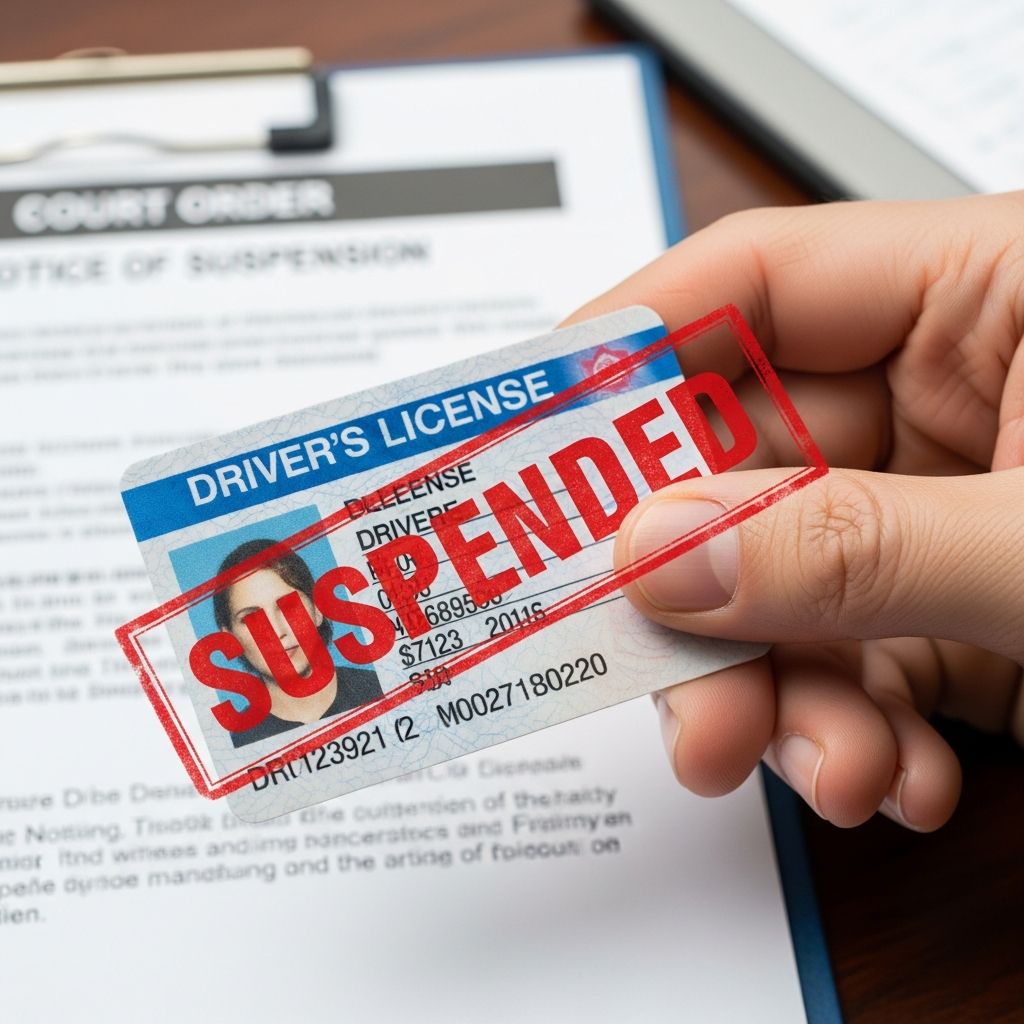
A driver’s license is more than a piece of plastic. For many people, it is essential for work, school, medical appointments, and basic daily life. At the same time, every state can suspend or revoke a driver’s license when certain traffic, financial, or legal obligations are violated. Knowing what conduct puts your license at risk can help you avoid serious disruption and, in some cases, criminal charges.
This guide explains the most common behaviors and circumstances that can lead to a license suspension, how states typically handle them, and what you might expect if your license is taken away.
Suspension vs. Revocation: Key Terms Explained
States use slightly different terminology, but two concepts appear in nearly every jurisdiction:
- Suspension: A temporary loss of driving privileges. You may be able to get your license back after a set period and after meeting specific conditions, such as paying fees or completing a course.
- Revocation: A longer-term or more serious loss of driving privileges. After a revocation period, you often must reapply for a license, meet eligibility rules again, and sometimes pass exams as if you were a new driver.
Many of the behaviors described below can lead to either suspension or revocation, depending on how severe the conduct is and whether you have prior offenses.
1. Serious Traffic Violations and Repeat Offenses
Every state authorizes its motor vehicle agency to suspend a driver’s license for serious violations of traffic law or for repeated offenses over time. Some states use a point system, adding points to a driver’s record for each moving violation until a threshold is reached that triggers suspension.
Examples of Driving Conduct That Can Trigger Suspension
- Reckless or aggressive driving, such as extreme speeding, racing on public roads, or weaving dangerously through traffic.
- Multiple speeding tickets or other moving violations within a certain time frame.
- Failure to obey traffic signals, including repeated red light or stop sign violations.
- Driving with a suspended or revoked license, which can itself lead to additional suspension or criminal penalties.
States vary in how many points or violations it takes before a suspension is imposed. For example, some point-based systems suspend a license if a driver collects a specified number of points within two years.
2. Driving Under the Influence of Alcohol or Drugs
Driving under the influence (DUI) or driving while intoxicated (DWI) is one of the most serious reasons a license can be suspended or revoked. All states allow license sanctions when a driver operates a vehicle while impaired by alcohol, illegal drugs, or certain medications.
How DUI/DWI Typically Affects Your License
- Administrative suspension by the motor vehicle agency, often based on a failed or refused chemical test, separate from any criminal court case.
- Court-ordered suspension or revocation if you are convicted of DUI/DWI in criminal court.
- Longer suspension periods for repeat DUI offenses, high blood alcohol concentration, or crashes that cause injury or death.
In many states, even a first DUI can result in a significant license suspension, mandatory fees, and conditions such as installation of an ignition interlock device.
3. Lack of Required Auto Insurance
Nearly every state requires drivers to maintain a minimum level of auto liability insurance or to demonstrate financial responsibility in another approved way. Operating or allowing a vehicle to be operated without the required insurance is a common basis for suspending or revoking a license.
Insurance-Related Conduct That Risks Your License
- Driving without proof of insurance where insurance is legally required.
- Allowing someone to drive your uninsured vehicle.
- Being involved in an uninsured accident, even if you were not at fault, depending on state law.
In some states, suspension can also apply to vehicle registration in addition to the driver’s license. Reinstatement often requires proof of current insurance and payment of fees.
4. Failure to Handle Traffic Tickets, Fines, and Fees
Ignoring traffic tickets or failing to pay court-ordered fines and fees is one of the most widespread non-driving reasons for license suspension in the United States. Research for the National Highway Traffic Safety Administration (NHTSA) found that many jurisdictions suspend licenses when drivers fail to appear in court, fail to pay fines, or do not comply with financial obligations tied to traffic cases.
Common Financial-Related Triggers
- Failure to pay traffic tickets for moving violations.
- Failure to pay surcharges, court fees, or administrative fees arising from a traffic case.
- Failure to appear in court after being cited or summoned for a traffic offense.
Some states have begun to reform these practices, especially where suspensions for unpaid debt disproportionately affect people with low incomes. However, in many places, missed payments or court dates still result in automatic suspensions.
5. Unpaid Child Support and Other Non-Traffic Debts
Many states extend license suspension beyond traffic conduct to enforce compliance with certain legal and financial obligations. According to nationwide research, failure to comply with a child support order is a license-suspension ground in the vast majority of U.S. jurisdictions.
Non-Driving Reasons That Can Lead to Suspension
- Failure to pay child support or falling seriously behind on court-ordered payments.
- Other court-ordered financial obligations, such as some criminal justice fees, depending on state law.
- Unpaid fines and fees beyond the traffic context, where statutes allow license suspension as a collection tool.
Civil rights advocates and federal authorities have criticized suspensions that occur without adequate notice, due process, or consideration of whether the person is simply unable to pay. Some states have passed reforms to curb or end debt-based suspensions, while others still rely heavily on them.
6. Failure to Appear in Court
When a driver ignores a summons or does not show up for a required court appearance, many states require their motor vehicle agency to suspend that driver’s license until the matter is resolved.
What “Failure to Appear” Can Look Like
- Not appearing for a scheduled hearing on a traffic ticket.
- Missing a court date on a related criminal or civil matter involving driving.
- Failing to respond at all to a mailed notice of citation.
Some jurisdictions also suspend licenses for failing to appear on parking tickets or other non-moving violations, though research indicates this is less common.
7. Fraud, Misuse, and Identity-Related Issues
Because a driver’s license is widely used as an identification document, most states penalize fraudulent or unlawful use with license suspension or revocation.
Fraud-Related Conduct That Can Cost You Your License
- Providing false information on a license or vehicle registration application.
- Using someone else’s license or permitting another person to use yours unlawfully.
- Altering or forging license documents or registration materials.
- Using fictitious license plates or inspection stickers, in states that treat this as a license-related offense.
Because these behaviors can also be crimes, a driver may face both criminal penalties and license sanctions at the same time.
8. Certain Criminal Offenses and Public Safety Concerns
Some states link license suspensions to broader public safety goals. For certain criminal offenses, a court or agency can suspend or revoke a license even when the crime did not involve driving.
Examples of Non-Driving Conduct Connected to License Loss
- Certain drug-related offenses that are not DUI, if state law authorizes license sanctions.
- Crimes involving vehicles indirectly, such as fuel theft or use of stolen license plates.
- In a few states, other offenses identified by statute, such as graffiti or failure to register as a sex offender.
These rules vary widely by jurisdiction and are often subject to change as legislatures reassess when license suspensions genuinely promote safety.
9. Medical Conditions and Fitness to Drive
States also have an interest in ensuring that drivers are medically able to operate vehicles safely. Many jurisdictions allow their motor vehicle agencies to suspend or restrict a license when a medical condition creates a significant safety risk.
Health Issues That May Affect Licensing
- Serious vision problems that make it impossible to meet minimum eyesight standards.
- Seizure disorders or conditions that cause sudden loss of consciousness, unless controlled or cleared by a medical professional.
- Cognitive impairments, such as advanced dementia, that interfere with safe driving judgment.
In many cases, the agency may impose restrictions—such as requiring corrective lenses, limiting driving to daylight, or requiring periodic medical reports—rather than immediately suspending the license.
10. Comparing Common Suspension Reasons
The table below summarizes some of the most frequent reasons licenses are suspended across the United States, based on research and state-level regulations.
| Category | Typical Examples | Possible Result |
|---|---|---|
| Traffic safety violations | Reckless driving, repeated speeding, serious crash | Point-based suspension or direct court-ordered suspension |
| DUI / DWI | Driving impaired by alcohol or drugs | Administrative and criminal suspensions; potential revocation |
| Insurance issues | Driving without required insurance, uninsured crash | Suspension of license and/or registration until proof of insurance |
| Debt and court compliance | Unpaid fines, failure to appear, unpaid child support | Suspension until debts are addressed or court cleared |
| Fraud & misuse | Fake information on license applications, altered plates | License suspension or revocation; sometimes criminal charges |
11. What Happens After Your License Is Suspended?
Exact procedures vary from state to state, but several general steps commonly apply once a license has been suspended.
Typical Suspension Process
- Notice: You are usually notified by mail or in court that your license will be or has been suspended, often with an effective date.
- Period of ineligibility: You must wait out the suspension period, which might range from days to years depending on the violation.
- Reinstatement requirements: Before driving again, you may need to pay a reinstatement fee, show proof of insurance, complete classes (such as a DUI program), or provide medical forms.
- Possible re-examination: For some revocations or serious safety concerns, you may need to retake written and road tests.
Driving while your license is suspended is itself a serious offense and can result in additional suspension time, fines, and even jail in some cases.
12. Debt-Based Suspensions and Recent Reforms
License suspensions for unpaid fines, fees, and child support have been criticized as punishing poverty rather than improving road safety. Civil rights organizations and policy researchers note that many people lose their licenses not because they are dangerous drivers, but because they are unable to pay debts.
Key Reform Trends
- Eliminating suspensions for unpaid fines and fees in some states, especially for non-driving debts.
- Requiring ability-to-pay assessments before suspending a license for nonpayment.
- Providing payment plans or alternatives, like community service, to avoid automatic suspension.
Because these laws are changing rapidly in many states, drivers facing a possible suspension for unpaid debt may benefit from checking current state statutes or seeking legal advice.
Frequently Asked Questions (FAQs)
Can my license be suspended for something that did not happen on the road?
Yes. In many states, licenses can be suspended for non-driving issues such as unpaid child support, failure to pay court fines, or certain criminal offenses specified by statute.
Is a suspension the same everywhere in the United States?
No. Each state has its own suspension rules, lengths, and reinstatement requirements. Even for similar conduct, one state might impose a short suspension while another imposes a longer suspension or a revocation.
What happens if I drive while my license is suspended?
Driving on a suspended license is typically a separate offense that can bring fines, additional suspension time, and potential criminal charges, especially for repeat violations.
How can I find out why my license was suspended?
You can usually request your driving record or status from your state’s motor vehicle agency. The record often lists each suspension, the reason, and what you must do to reinstate your license.
Can I get a restricted or occupational license while suspended?
Many states allow some drivers to apply for a restricted or occupational license that permits limited driving, often to work, school, or medical appointments. Eligibility and conditions depend on the reason for suspension and state law.
References
- Suspensions and Revocations — New York State Department of Motor Vehicles. 2024-01-10. https://dmv.ny.gov/points-and-penalties/suspensions-and-revocations
- Reasons for Driver License Suspension, Recidivism, and Crash Involvement — National Highway Traffic Safety Administration (NHTSA). 2008-03-01. https://www.nhtsa.gov/sites/nhtsa.gov/files/documents/811092_driver-license.pdf
- State Approaches to Addressing Debt-Based Driver’s License Suspensions — National Conference of State Legislatures (NCSL). 2023-02-15. https://www.ncsl.org/civil-and-criminal-justice/road-to-reform-state-approaches-to-addressing-debt-based-drivers-license-suspensions
- My Driver’s License Has Been Suspended. Now What? — Ohio State Bar Association. 2022-06-01. https://www.ohiobar.org/public-resources/commonly-asked-law-questions-results/criminal-justice/my-drivers-license-has-been-suspended.-now-what/
- End States’ Suspensions of Drivers’ Licenses Without Notice or Reasonable Cause — NAACP. 2017-07-01. https://naacp.org/resources/end-states-suspensions-drivers-licenses-without-notice-or-reasonable-cause
- Driver’s License Suspensions for Unpaid Debt: Punishing Poverty — Vera Institute of Justice. 2020-10-20. https://www.vera.org/news/drivers-license-suspensions-for-unpaid-debt
- Suspension of Drivers’ Licenses in All 50 States — Matthiesen, Wickert & Lehrer, S.C. 2021-05-01. https://www.mwl-law.com/resources/drivers-license-suspension-laws-50-states/
Similar Articles








Read full bio of medha deb


