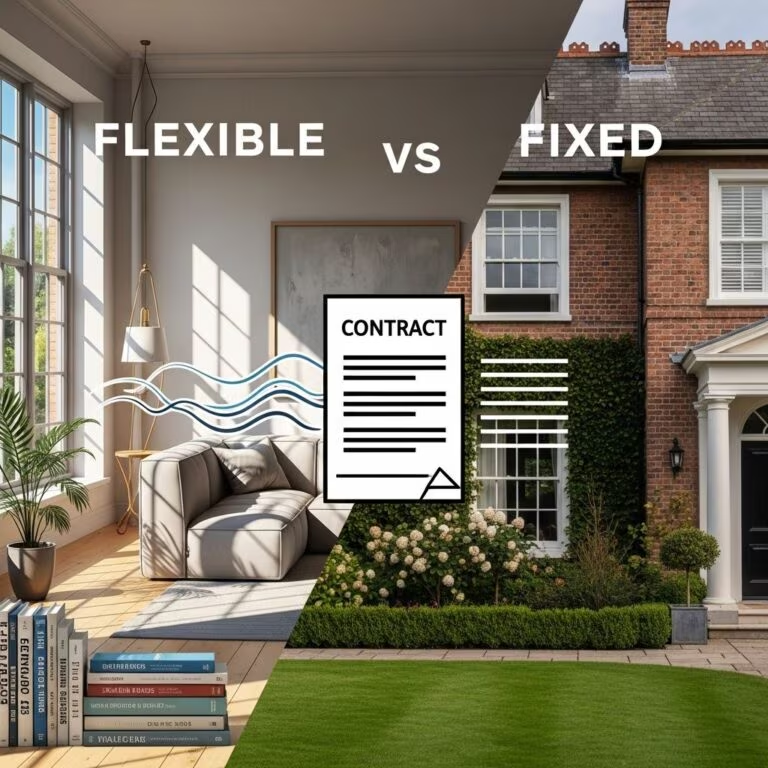
Commercial leases form the backbone of business operations by granting companies the right to occupy and utilize property for profit-making activities. Unlike residential agreements, these contracts emphasize flexibility, customization, and shared responsibilities, often spanning multiple years and involving complex financial arrangements. Business owners must grasp these leases’ intricacies to avoid costly pitfalls and ensure alignment with operational needs.
Defining Commercial Leases and Their Importance
A commercial lease is a binding contract where a landlord provides a tenant with possession of space for business purposes in exchange for rent and other obligations. These agreements differ significantly from residential ones, lacking statutory protections for tenants and placing greater emphasis on negotiated terms. For instance, tenants frequently handle maintenance, taxes, and insurance, shifting costs that residential renters avoid.
The stakes are high: a poorly structured lease can lead to disputes, unexpected expenses, or eviction. Businesses rely on these documents to stabilize locations, support growth, and mitigate risks. Key to success is identifying core components early, such as property details, payment structures, and termination clauses, which dictate long-term viability.
Primary Types of Commercial Lease Structures
Commercial leases vary by expense allocation, influencing budgeting and risk. Understanding these categories empowers tenants to select options matching their financial profile.
- Gross Leases: Tenants pay a fixed rent covering most expenses; landlords manage taxes, insurance, and upkeep. Ideal for startups seeking predictability, though base rates may be higher.
- Net Leases: Tenants cover additional costs beyond base rent. Subtypes include:
- Single Net (N): Tenant pays property taxes.
- Double Net (NN): Adds insurance.
- Triple Net (NNN): Includes maintenance—most common, transferring nearly all operating costs to tenants for lower base rents.
- Modified Gross Leases: Hybrid blending fixed rent with shared variable expenses, offering compromise.
- Percentage Leases: Rent ties to sales volume, suiting retail with base plus percentage over thresholds.
Choosing the right type depends on location, business model, and market norms. Retail often favors NNN, while offices lean toward gross.
Critical Components Every Lease Must Include
Robust leases detail essentials to prevent ambiguity. Here’s a breakdown:
| Component | Description | Key Considerations |
|---|---|---|
| Property Description | Precise address, square footage, common areas, parking. | Include expansions or exclusives; verify boundaries. |
| Parties Involved | Landlord, tenant, managers, owners. | List entities accurately, especially for LLCs or REITs. |
| Lease Duration | Start/end dates, renewal options. | Typically 3-10 years; define notice for extensions. |
| Rent Structure | Base rent, escalations, additional fees. | Specify due dates, methods, late fees. |
These elements ensure enforceability. Omissions can void clauses or lead to court battles.
Financial Obligations Beyond Base Rent
Rent encompasses more than monthly payments. Tenants often shoulder operating expenses (OpEx), prorated by leased space percentage. Common categories:
- Common Area Maintenance (CAM): Shared spaces like lobbies, parking—exclude capital improvements.
- Property Taxes and Insurance: Triple net shifts these fully.
- Utilities: Tenant-direct or submetered.
- Escalations: Annual increases via CPI or fixed percent.
Review for caps, audits rights on landlord charges. Net effective rent—total costs divided by space—reveals true affordability.
Permitted Use and Operational Restrictions
The use clause defines allowable activities, e.g., “retail sales of apparel only.” Violations risk default. Related terms include:
- Exclusive Use: Prevents landlord leasing similar businesses nearby.
- Going Dark: Bans ceasing operations, protecting tenant mix.
- Hours of Operation: Mandates schedules for malls.
- Signage and Alterations: Approval processes for changes.
Negotiate broadly to accommodate pivots, like e-commerce shifts.
Maintenance, Repairs, and Improvements
Responsibility splits vary: tenants handle interiors, landlords exteriors/structures. Key provisions:
- Tenant Improvements (TI): Build-outs for fit-out; landlord may offer allowances ($/sq ft).
- Free Rent Periods: Abate early months for setup.
- HVAC/Security: Operating hours, maintenance duties.
End-of-lease restoration clauses require returning space “broom clean,” potentially costly.
Assignment, Subletting, and Expansion Rights
Flexibility clauses enable growth:
- Assignment/Sublet: Transfer lease/sublease portions; landlords often retain approval but can’t unreasonably withhold.
- Expansion/Right of First Refusal: Priority on adjacent/vacant space.
- Renewal Options: Fixed or market-rate extensions.
These protect against relocation needs.
Risk Management: Insurance, Defaults, and Termination
Leases mandate insurance—tenant liability, property coverage—with waiver of subrogation preventing insurer lawsuits. Defaults trigger cures (notice + time), then remedies like eviction. Security deposits secure obligations, refundable post-term.
Subordination clauses prioritize lender interests but include non-disturbance for tenant protection. Holdover tenants face penalty rents (150-200% normal).
Negotiation Strategies for Favorable Terms
Approach leases as negotiations. Tenants gain leverage via market data, creditworthiness. Tactics:
- Request caps on CAM/controllable expenses.
- Secure TI allowances, free rent.
- Audit OpEx annually.
- Define “market rent” via appraisers for renewals.
- Include force majeure for unforeseen events.
Always involve attorneys; commercial tenants lack residential safeguards.
Common Pitfalls and How to Avoid Them
Avoid these traps:
- Ambiguous Language: Precise definitions prevent disputes.
- Overlooking CAM Pass-Throughs: Scrutinize inclusions.
- No Exit Strategy: Negotiate early termination rights.
- Ignoring Personal Guarantees: Owners may sign, risking assets.
Conduct due diligence: zoning, environmental reports, traffic studies.
Frequently Asked Questions About Commercial Leases
What distinguishes commercial from residential leases?
Commercial leases offer fewer protections, emphasize negotiation, and allocate more costs to tenants.
Who pays for property taxes in a commercial lease?
Often tenants in net leases; specify in agreement.
Can I sublet my commercial space?
Typically yes, with landlord consent.
What is a triple net lease?
Tenant pays rent plus taxes, insurance, maintenance.
How long do commercial leases last?
Usually 5-10 years, with renewal options.
Do I need a lawyer for a commercial lease?
Strongly recommended due to complexity.
References
- The 4 Elements of Commercial Lease Agreements — BFLawOffice. 2023. https://bflawoffice.com/blog/4-elements-commercial-lease-agreements/
- Commercial Lease Agreements: Everything Tenants Need to Know — Occupier. 2024-03-28. https://www.occupier.com/blog/commercial-lease-agreements/
- Chapter 4: The Fundamentals of Commercial Leases — Real Estate Financial Modeling. N/A. https://textbook.getrefm.com/chapter-4-the-fundamentals-of-commercial-leases/
- The ABCs of Commercial Real Estate Leases – Part 1: Lease Basics — Realogic. N/A. https://www.realogicinc.com/the-abcs-of-commercial-real-estate-leases-part-1-lease-basics/
- The Basics: Commercial Leases — Cozen O’Connor. 2010-07-22. https://www.cozen.com/admin/files/publications/thebasics_commercialleases_072210.pdf
- What to Know About Commercial Leases — Business News Daily. N/A. https://www.businessnewsdaily.com/15101-commercial-lease-guide.html
- Different Types of Commercial Lease Agreements — Prologis. N/A. https://www.prologis.com/what-we-do/resources/different-types-of-commercial-leases