
Understanding Service Animals and Support Pets in Colorado
Navigate Colorado's laws governing service animals, support pets, and your rights.
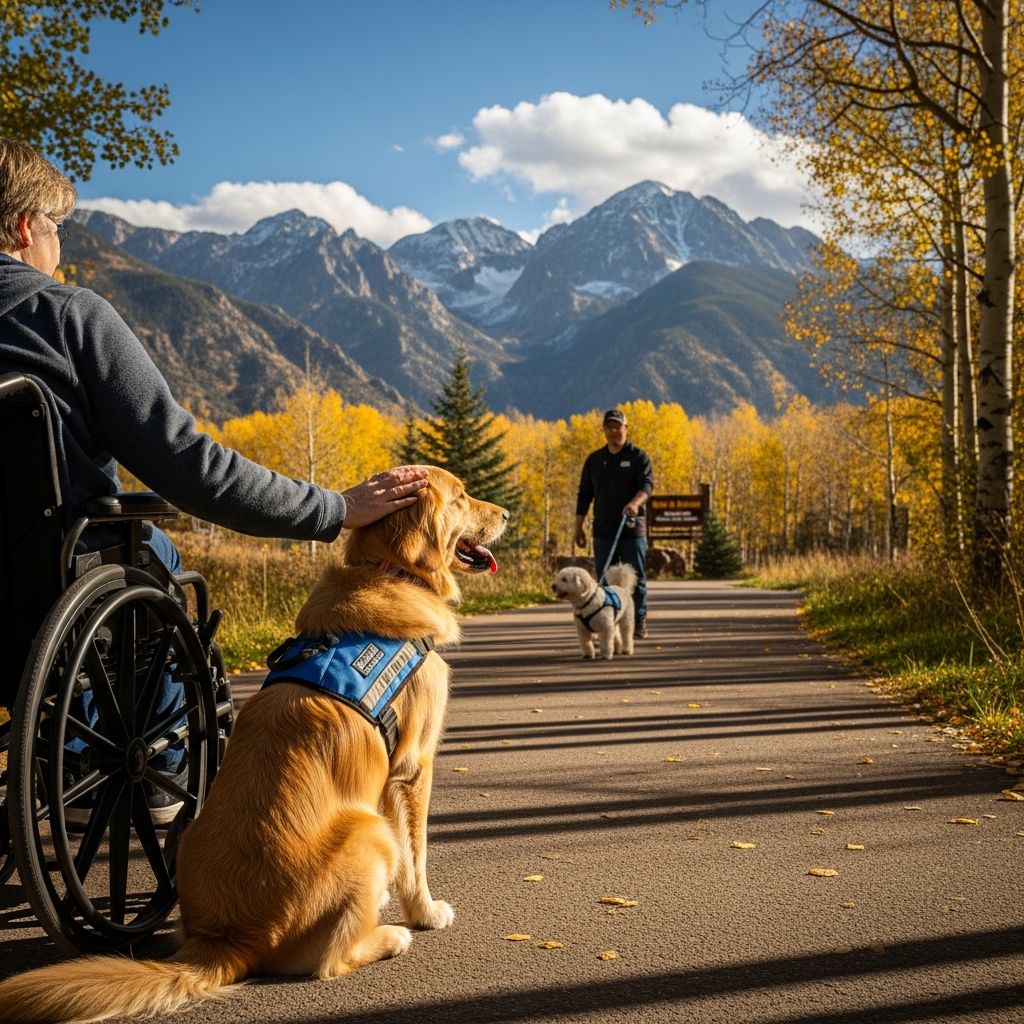
Introduction to Service and Support Animals in Colorado
Colorado residents with disabilities have legal protections regarding service animals and emotional support animals. Understanding the distinctions between these categories and knowing your rights under both state and federal law is essential for navigating public spaces, housing, and employment. This guide clarifies the legal framework governing these animals, the accommodations required by law, and the penalties for fraudulent misrepresentation.
Defining Service Animals Under Colorado and Federal Law
A service animal, according to both Colorado state law and the Americans with Disabilities Act (ADA), is a dog specifically trained to perform tasks or work directly related to a person’s disability. These tasks might include guiding individuals who are blind, alerting people who are deaf to sounds, assisting those with mobility impairments, or alerting individuals to oncoming seizures. In limited circumstances, a miniature horse that has been individually trained can also qualify as a service animal.
The critical distinction is that service animals are working animals, not pets. The animal must be individually trained for a specific person, and that training must address the handler’s disability. Generic obedience training or socialization alone does not qualify an animal as a service animal. Colorado law does not require service animals to be licensed, certified, or registered with any government agency or training program to be considered legitimate service animals.
Emotional Support Animals Versus Service Animals
Emotional support animals (ESAs) differ significantly from service animals in both their training requirements and legal protections. Unlike service animals, ESAs do not require any specialized training. Instead, they provide comfort through their presence alone, helping individuals manage symptoms of mental health conditions such as anxiety, depression, or post-traumatic stress disorder.
However, this distinction affects where these animals are permitted. Service animals enjoy broad access rights across public spaces, housing, and employment settings. Emotional support animals, by contrast, have more limited legal protections. Under federal housing law, ESAs are permitted in housing even where “no pets” policies exist, provided the owner has a documented disability-related need. However, ESAs are generally not permitted in public accommodations like restaurants, stores, or offices beyond housing situations. On college campuses and other institutional settings, ESAs are typically restricted to residential areas only.
Public Access Rights for Service Animal Handlers
Colorado law grants individuals with disabilities the right to be accompanied by their service animals in public accommodations without paying additional fees. This access extends to:
- Retail establishments including restaurants, shops, and entertainment venues
- Public transportation services
- Government buildings and facilities
- Workplaces and employment settings
- Educational institutions
- Healthcare facilities
Importantly, handlers cannot be charged special admission fees or extra costs for having a service animal present. However, property owners or business operators can require handlers to pay for any damage their service animal causes beyond normal wear and tear.
There is one significant exception: businesses serving food and beverages must comply with Colorado’s retail food regulations, which prohibit non-service animals inside dining areas. Colorado restaurants can, however, permit dogs in outdoor patio areas if they follow specific variance criteria established by the Colorado Department of Public Health and Environment.
When Service Animals May Be Excluded
Although service animals have broad access rights, Colorado law and the ADA allow facilities to exclude a service animal if it poses a direct threat to the health or safety of others. For example, a service dog that is aggressively barking or lunging at other customers could be excluded. Additionally, an animal may be excluded if it is not under control and the handler fails to take corrective action after being warned.
However, it is important to note that merely being nervous, anxious, or showing typical dog behaviors does not constitute grounds for exclusion. The animal must present an actual, demonstrable threat. Furthermore, facility managers cannot exclude a service animal based on breed stereotypes, prior incidents involving other dogs, or general discomfort with animals.
Housing Protections for Service and Support Animal Handlers
Both federal law under the Fair Housing Act (FHA) and Colorado state law provide robust protections for individuals with disabilities who use service animals or emotional support animals in housing. Landlords cannot refuse to rent to a person with a service or support animal, nor can they charge additional pet fees or deposits specifically because of the animal’s presence.
Like public accommodations, landlords can require handlers to pay for damage caused by the animal beyond reasonable wear and tear. However, they cannot charge standard pet deposits or monthly pet fees when the animal serves a disability-related purpose. This protection applies to both service dogs and, under the broader protections of the FHA, emotional support animals.
Housing providers also cannot inquire into the nature or severity of a person’s disability or require medical documentation simply to verify that an animal qualifies as a service or support animal. They may ask two questions: whether the animal is required because of a disability and, for service animals specifically, what task the animal performs.
Employment Rights with Service Animals
Colorado law requires employers to allow employees with disabilities to keep their service animals with them at all times in the workplace. Service animals must be accommodated in common work areas, break rooms, and during work-related activities. Employers cannot segregate the employee or the service animal or require the handler to keep the animal in a separate location.
Like other settings, employers cannot charge the employee for the service animal’s presence. However, if the animal causes damage, the employee can be held responsible for repair or replacement costs. Employers also have the right to exclude a service animal only if it poses a direct threat that cannot be mitigated or if it is out of control.
Fee Exemptions and Licensing Requirements
Colorado law exempts individuals who own service animals from paying state or local licensing fees that might otherwise apply to similar animals. This exemption recognizes service animals as working aids rather than pets. However, service dogs must still comply with other local ordinances regarding vaccinations, restraint requirements, and noise regulations.
Dogs must wear current rabies vaccination tags and licensing tags as required by local law. These requirements exist regardless of whether the dog is a service animal, reflecting public health and safety standards that apply universally.
Identifying Service Animals: What Businesses and Facilities Can Ask
One common source of confusion involves how much businesses can inquire about a service animal’s credentials. Colorado and federal law are clear on this point: covered entities cannot require documentation proving that an animal is trained, certified, or licensed as a service animal.
Instead, facility managers may ask only two questions:
- Is this animal required because of a disability?
- What work or task has the animal been trained to perform?
After receiving answers to these two questions, further questioning must stop. A business cannot demand proof of certification, require medical records, ask for identification cards, or insist on documentation from a trainer. A notable Colorado court case reinforced this principle, holding that the “legitimate suspicions doctrine” does not apply even when a business has concerns about whether an animal is truly a service animal.
This limitation reflects the reality that many service animals are legitimately trained without formal certification programs. An animal’s lack of a vest, ID card, or official documentation does not make it any less valid as a service animal.
Behavioral Standards and Control Requirements
Service animals must be under control at all times in public areas. The ADA requires that service animals be harnessed, leashed, tethered, or otherwise controlled. However, exceptions exist when these control methods would interfere with the animal’s ability to perform its trained tasks or when the handler’s disability prevents them from using such devices.
In cases where traditional restraint devices cannot be used, the handler must maintain complete control through alternative means such as verbal commands, hand signals, or other effective control methods. The animal’s behavior must demonstrate responsiveness to its handler’s commands.
Service Animals in Training
Colorado law extends certain protections to animals in the process of being trained as service animals, as well as to the trainers working with them. Both the trainer and an individual with a disability who is training an animal enjoy the same public access rights as handlers of fully trained service animals. This accommodation recognizes the necessity of training service animals in real-world settings to ensure they will function properly when fully trained.
Penalties for Misrepresenting Animals as Service Animals
Colorado takes fraud regarding service animals seriously. Under Colorado House Bill 16-1426, it is illegal to knowingly misrepresent an animal as a service animal. This prohibition extends to misusing service animal vests, ID cards, or tags, as well as falsely claiming or exaggerating a disability to justify an animal’s presence.
Penalties for misrepresentation are as follows:
- First offense: Fine of $45
- Second offense: Fine between $50 and $200
- Third or subsequent offense: Fine between $100 and $500
Additionally, misrepresenting an animal as a service animal may violate student conduct codes at educational institutions and could result in disciplinary action beyond monetary fines. This reflects the harm that fraudulent claims cause to individuals with disabilities and to businesses attempting to comply with the law.
Sanitation and Health Code Considerations
The mere presence of a service animal in a public accommodation does not constitute a violation of sanitary standards or health regulations. Service animals are held to the same hygiene expectations as human patrons and are exempt from standard animal exclusion rules that apply to pets. However, service animals must still comply with local health and safety codes regarding behavior and cleanliness.
Key Distinctions at a Glance
| Characteristic | Service Animals | Emotional Support Animals |
|---|---|---|
| Training Required | Yes—specific tasks related to disability | No—comfort through presence alone |
| Public Accommodation Access | Yes—broad access to most public places | No—limited to housing |
| Housing Access | Yes—no pet fees allowed | Yes—under Fair Housing Act protections |
| Employment Rights | Yes—must be allowed in workplace | No formal employment protections |
| Leash Requirements | Yes—unless interferes with task performance | Not applicable to housing situations |
| Registration Required | No—certification not required by law | No registration requirement |
Frequently Asked Questions
Q: Do service animals need to wear a vest or ID tag?
A: No. While vests and ID tags are common aids used by handlers to identify their animals, they are not legally required. Businesses cannot demand documentation or identification to verify a service animal’s status.
Q: Can my emotional support animal accompany me to a restaurant in Colorado?
A: Emotional support animals are not permitted in restaurants, with the exception of outdoor patio areas where businesses have applied for variance approval. Service animals, however, are permitted inside restaurants regardless of “no pets” policies.
Q: What if my service dog misbehaves in a public place?
A: If your service animal is out of control and poses a threat to others, the facility manager may exclude the animal. However, they must first give you an opportunity to address the behavior. If the animal cannot be controlled, exclusion is permissible under law.
Q: Can I claim a pet as an emotional support animal to bypass pet restrictions?
A: Doing so would constitute fraud under Colorado HB16-1426. Falsely claiming or exaggerating a disability to justify an animal’s presence can result in fines ranging from $45 to $500 depending on the number of offenses.
Q: Am I required to register my service animal with Colorado?
A: No. Service animals do not need to be registered, certified, or licensed by any government agency. However, you should still comply with local vaccination and licensing requirements that apply to all dogs.
Q: Can my landlord charge a pet deposit for my service animal?
A: No. Landlords cannot charge pet fees, deposits, or additional monthly costs for service animals or emotional support animals when the animal serves a disability-related purpose. They can charge for damage beyond normal wear and tear.
Q: What documentation should I carry regarding my service animal?
A: While not legally required, many handlers find it helpful to carry documentation from their disability healthcare provider explaining the animal’s necessity. However, businesses cannot demand such documentation by law.
Conclusion
Colorado’s laws, in alignment with federal ADA and Fair Housing Act protections, establish comprehensive rights for individuals with disabilities who rely on service animals. These laws balance the legitimate access needs of disabled individuals with the reasonable concerns of businesses and property owners. Understanding the distinction between service animals and emotional support animals, knowing what questions can be asked, and being aware of penalties for fraud helps ensure that both handlers and facilities can comply with the law. Whether navigating housing, employment, or public accommodations, Colorado residents with disabilities should be familiar with these protections and their responsibilities under state and federal law.
References
- Service Animals – Colorado College — Colorado College Accessibility Resources. 2024. https://www.coloradocollege.edu/offices/accessibilityresources/student-resources/accommodations/service-animals.html
- Colorado Laws on Service Dogs and Emotional Support Animals — Nolo Legal Encyclopedia. 2024. https://www.nolo.com/legal-encyclopedia/colorado-laws-on-service-dogs-and-emotional-support-animals.html
- Colorado Revised Statutes Section 24-34-803 — Colorado General Assembly. 2024. https://law.justia.com/codes/colorado/title-24/principal-departments/article-34/part-8/section-24-34-803/
- Support Animals – Student Disability Center — Colorado State University. 2024. https://disabilitycenter.colostate.edu/supportanimals/
- When Can You Ask If a Service Dog is a “Service Dog”? — Clark Hill LLP. 2023. https://www.clarkhill.com/news-events/news/when-can-you-ask-if-a-service-dog-is-a-service-dog/
- ADA Requirements: Service Animals — U.S. Department of Justice, Civil Rights Division. 2010. https://www.ada.gov/resources/service-animals-2010-requirements/
- Issue Brief: Service Animals and Assistance Animals — Colorado Legislative Council Staff. 2017-05-12. https://content.leg.colorado.gov/sites/default/files/issue_brief_-_service_animals_and_assistance_animals_5122017.pdf
Similar Articles








Read full bio of medha deb


