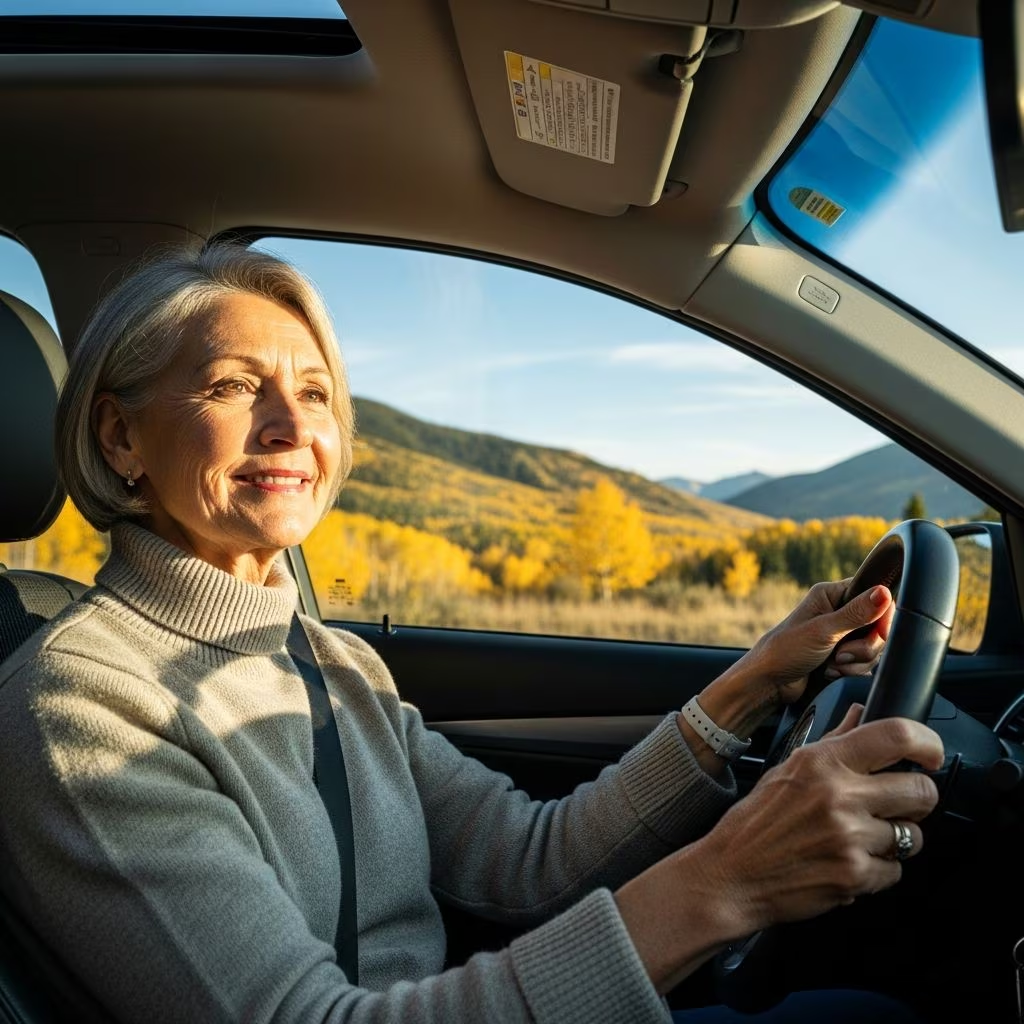
Colorado’s roads are shared by a growing number of senior drivers, with over 21% of licensed motorists aged 65 or older as of recent years. This demographic shift underscores the importance of tailored regulations to balance mobility with public safety. The state’s Division of Motor Vehicles (DMV) under the Department of Revenue implements measures focused on vision, competency, and restrictions without blanket age-based revocations.
Understanding License Renewal for Mature Drivers
Adult drivers in Colorado, including seniors, typically renew their licenses every five years once they reach age 21. This standardized cycle applies universally, with no differentiation until age 80 for additional scrutiny. Renewal options include online, mail, or in-person methods, provided eligibility criteria are met.
For those under 80 renewing remotely, a self-certification of a recent eye exam is required. Drivers aged 80 and above must submit a formal Optometrist or Ophthalmologist Statement (Form DR 2498) verifying an exam within the prior six months. The DMV reviews these applications before approval, ensuring visual acuity meets safety standards.
- Online/Mail Renewal (21-79): Confirm eye exam within one year; Real ID-compliant photo needed.
- In-Person Renewal (All Ages): Mandatory vision screening at DMV; appointments required.
- 80+ Specifics: DMV approval post-eye exam submission; no remote renewal without prior in-person vision pass.
These processes aim to identify potential impairments early, allowing seniors to maintain independence while mitigating risks.
Vision Requirements and Screenings Explained
Visual acuity is a cornerstone of Colorado’s senior driving policies. Every in-person renewal demands a DMV-administered vision test, targeting 20/40 acuity with or without correction. Failures prompt corrective lens restrictions or further evaluation.
Seniors renewing remotely between 21 and 79 attest to a one-year-old eye exam under penalty of perjury. Those 80+ face heightened standards with the six-month exam form, which details acuity, field of vision, and any progressive conditions.
| Age Group | Renewal Vision Rule | Method |
|---|---|---|
| 21-79 | Self-certify 1-year exam (remote); DMV test (in-person) | Online/Mail/In-Person |
| 80+ | Submit DR 2498 (6-month exam); DMV review | In-Person Preferred |
Common restrictions include mandatory glasses/contacts. Persistent failures may lead to license denial until resolved.
When Re-Examinations Become Necessary
Colorado law empowers the DMV to mandate re-exams upon evidence of impairment, independent of age. Triggers include physician reports, law enforcement citations, family concerns, or self-referrals. Notifications arrive via mail, granting 20 days to complete vision, written, and/or road tests.
Failure consequences vary: vision/written test flops result in immediate privilege loss; road test failures allow a 60-day learner’s permit for retake. Eligible requesters for re-exams encompass:
- Physicians or healthcare providers noting conditions like dementia or severe vision loss.
- Police officers observing unsafe maneuvers.
- Family members or guardians via email to [email protected].
- The driver themselves.
Reports must detail specific behaviors or medical issues, not mere age. Physicians are encouraged—but not mandated—to report lapses in judgment, seizures, or syncope.
Common License Restrictions for Seniors
To preserve driving privileges amid limitations, the DMV imposes targeted restrictions. These ‘special conditions’ enable continued mobility under compliance. Beyond corrective lenses, frequent impositions include:
- Daylight Hours Only: Addresses night vision decline.
- No Interstate Highways: Limits high-speed exposure.
- Geographic Limits: Confines driving to local areas.
- Automatic Transmission: For those unable to manage manuals.
- Hand Controls: For physical mobility issues.
Restrictions stem from exam outcomes or reports, with violations risking suspension. Drivers may petition for removal via re-testing.
Reinstatement After Suspension or Revocation
Lost privileges due to failures or medical issues can be reclaimed. Post-resolution, applicants submit:
- Proof of cleared conditions (e.g., new medical/eye exams within 180 days).
- Reinstatement fees.
- SR-22 insurance proof for three years.
- Full re-testing: vision, knowledge, skills.
This structured path prioritizes safety verification before restoration.
Recognizing Signs of Impaired Driving in Seniors
Families play a pivotal role in monitoring. The Colorado DMV’s Guide for Aging Drivers (available online) offers self-assessments for:
- Physical: Reduced neck flexibility, weak braking response.
- Mental: Confusion at intersections, route disorientation.
- Visual: Glare sensitivity, missed signs.
- Behavioral: Frequent dents, improper signaling, ‘two-footed’ braking.
Two or more tickets/warnings in two years signal concern. Early conversations foster voluntary surrender, preserving dignity.
National Context and Colorado’s Approach
Unlike states with graduated renewals (e.g., Illinois’ 1-2 year cycles for 81+), Colorado’s five-year uniformity post-21 simplifies administration. No age-alone road tests align with IIHS findings that renewal restrictions yield mixed safety gains. Emphasis on reports and visions targets at-risk individuals efficiently.
With seniors driving fewer miles yet ranking high in safety per AAA, Colorado balances access and caution.
Practical Tips for Senior Drivers and Families
For Seniors:
- Schedule annual eye exams beyond DMV needs.
- Practice defensive driving courses via AARP.
- Adapt vehicles with mirrors, seats for better visibility.
For Families:
- Use DMV guide for honest assessments.
- Explore alternatives: rideshares, community shuttles.
- Report promptly if safety wanes; surrender eases at DMV offices.
Proactive steps extend safe driving tenures.
Frequently Asked Questions (FAQs)
Q: Do Colorado seniors need road tests at renewal?
A: No, not based on age alone. Only if DMV orders re-exam due to impairment reports.
Q: Can family report unsafe senior driving?
A: Yes, email [email protected] with specifics; anonymity protected.
Q: What if an 80+ driver fails vision screening?
A: License denied until passing exam and DMV approval; restrictions may apply.
Q: Are doctors required to report unfit patients?
A: Encouraged, not required, for conditions like dementia or epilepsy.
Q: How to surrender a license voluntarily?
A: Visit any DMV office; facilitates insurance discounts, alternatives.
Staying Compliant: Resources and Updates
Monitor DMV Mature Drivers page for changes. As of 2026, no major overhauls noted, but verify eligibility tools online. Independence thrives with informed compliance.
References
- Colorado Driving Laws for Seniors and Older Drivers — Nolo. 2023. https://www.nolo.com/legal-encyclopedia/colorado-driving-laws-seniors-older-drivers.html
- License Renewals: What Are the New Rules for Senior Drivers? — Elder Law Answers. Accessed 2026. https://www.elderlawanswers.com/aging-drivers-and-the-law-1094
- Concerns about the Elderly Driving — Stuckey Injury Law LLC. Accessed 2026. https://www.stuckeyinjurylaw.com/elderly-drivers/
- Mature Drivers — Colorado Department of Revenue, Division of Motor Vehicles. Accessed 2026. https://dmv.colorado.gov/mature-drivers
- Request a Retest — Colorado DMV. Accessed 2026. https://dmv.colorado.gov/request-a-retest
- Older drivers: License renewal procedures — Insurance Institute for Highway Safety (IIHS). Accessed 2026. https://www.iihs.org/research-areas/older-drivers/license-renewal-laws-table