
Unlawful Confinement: Colorado Juvenile Justice Lawsuit
A landmark civil rights lawsuit alleges Colorado is illegally detaining youths.
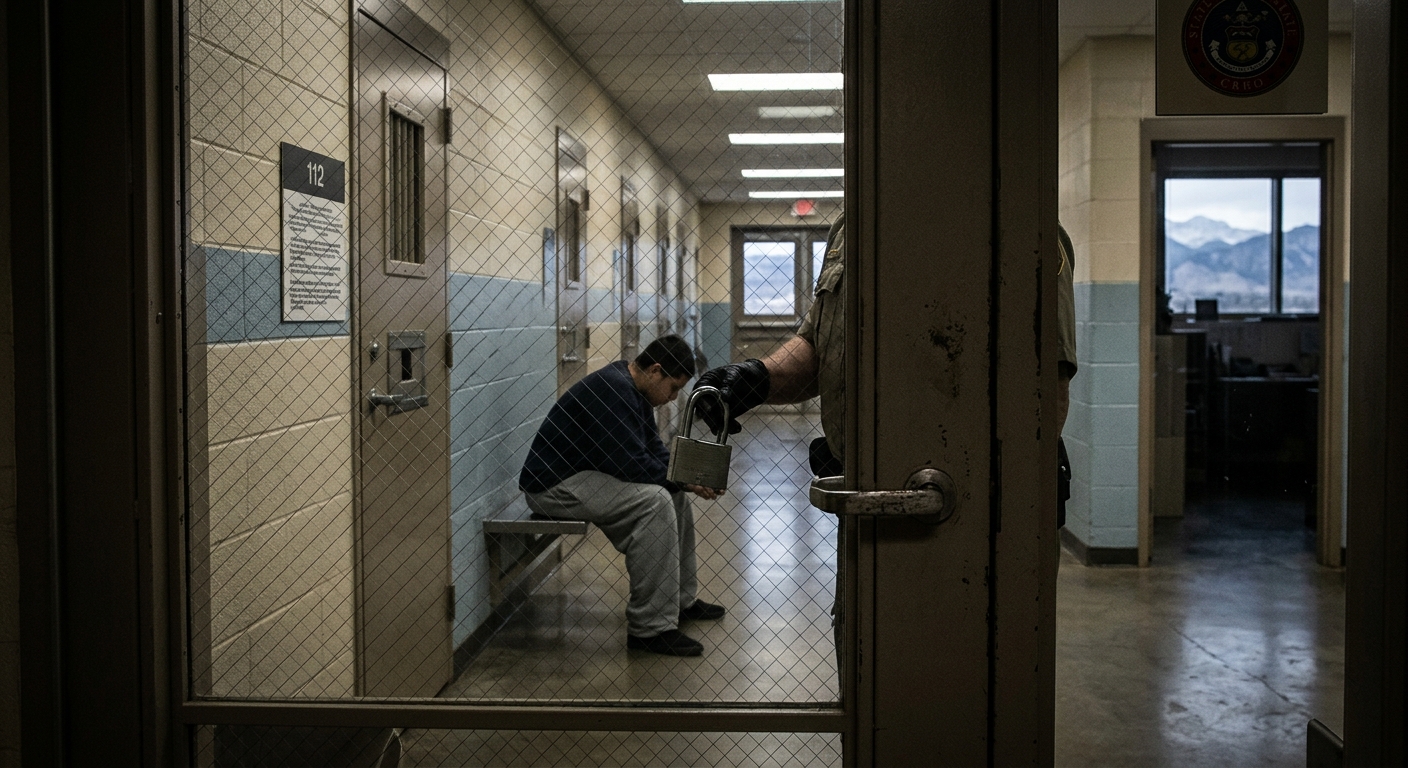
The juvenile justice system was fundamentally designed around the principles of rehabilitation and community integration, aiming to redirect troubled youth toward a productive future rather than subjecting them to punitive, long-term incarceration. However, a profound administrative failure in the state of Colorado has ignited a severe legal and moral controversy. A sweeping class-action lawsuit filed in federal court asserts that state officials are systematically ignoring judicial mandates. Instead of being returned to their families, placed in foster care, or transferred to therapeutic community centers, hundreds of minors are languishing in secure juvenile detention facilities long after judges have officially declared them eligible for release. This phenomenon of holding children past their court-ordered release dates transforms a system intended for temporary, pre-trial holding into one of unlawful, indefinite confinement.
The Genesis of the Federal Legal Challenge
Brought before the United States District Court for the District of Colorado, this landmark litigation exposes deep-rooted bureaucratic paralysis. The legal action is spearheaded by an alliance of prominent civil rights organizations, including the American Civil Liberties Union (ACLU), Disability Law Colorado, and Children’s Rights. These organizations represent the most vulnerable members of the justice system, asserting that the state’s negligence violates core constitutional protections. The plaintiffs have named high-ranking state officials, including Governor Jared Polis and the executive leadership of the Colorado Department of Human Services, as defendants. The primary allegation is that the state is fully aware of its failure to release these children but has not taken the necessary steps to create or fund the infrastructure required to facilitate their lawful discharge. The attorneys argue that bureaucratic bottlenecks and budget constraints can never justify the unconstitutional deprivation of a child’s liberty.
Statistical Scope of the Crisis
To comprehend the magnitude of this issue, one must look at the alarming statistics that outline the state’s retention rates. The lawsuit relies on the state’s own internal data to demonstrate a widespread pattern of prolonged, unlawful detention. In the 2024-2025 fiscal year alone, nearly 700 youths remained in secure detention facilities for one or more days after a juvenile court explicitly deemed them releasable. For many, the delay was not merely a brief administrative hiccup. More than a hundred of these children were confined for over thirty days past their judge-ordered release.
| Metric | Fiscal Year 2024-2025 Data |
|---|---|
| Total Youth Held Post-Release Order | 693 |
| Youth Held Over 30 Days Post-Release | 140+ |
| Primary Reason for Detention Delay | Lack of Community Placements |
These numbers represent actual children missing out on schooling, family bonding, and essential developmental milestones. The designation “releasable” means that a judge has evaluated the minor’s case, assessed the risk to public safety, and concluded that the youth can safely await their trial in a less restrictive environment. By ignoring these judicial findings, the state essentially overrides the court’s authority, replacing a judge’s individualized assessment with a blanket, systemic failure that traps children in cells.
The Missing Link: A Severe Lack of Community Placements
Why is the state holding children who have been cleared to leave? The root cause, according to the complaint, is a catastrophic shortage of available placements outside of secure facilities. When a judge orders a child’s release, that release is often contingent on the youth being transferred to a specific environment, such as a therapeutic foster home, a mental health treatment center, or a specialized community-based program. Because Colorado has failed to invest adequately in these community resources, the beds simply do not exist. Consequently, the children are essentially held hostage by the state’s lack of preparedness.
Civil rights advocates point out that state agencies are obligated to establish and maintain a network of community-based services to accommodate youths navigating the juvenile justice system. When these services are unavailable, the default action cannot be to lock the child in a maximum-security environment. Instead of expanding community services, state officials have allowed the burden of this administrative shortfall to fall squarely on disenfranchised youth, forcing them to endure conditions akin to adult prisons while waiting for suitable placements to open up.
The Harsh Realities of Secure Juvenile Detention
To fully grasp the damage inflicted by these delayed releases, it is essential to understand the environment inside Colorado’s juvenile detention centers. The lawsuit describes these facilities not as therapeutic or rehabilitative spaces, but as locked, highly punitive environments that closely mirror adult jails. Children confined in these facilities are stripped of their individuality. They are issued standardized uniforms, subjected to invasive strip searches, and isolated from their families, peers, and support networks.
Reports cited in the litigation indicate that the use of physical restraints on children has spiked significantly. The atmosphere is characterized by rigid control and a constant underlying threat of force. A vast body of psychological research confirms that exposing adolescents to such environments can cause severe, long-lasting harm, exacerbating pre-existing mental health conditions and increasing the likelihood that a child will re-offend. By locking “releasable” youth in these facilities, the state actively traumatizes children and undermines rehabilitative goals.
Disproportionate Impact on Youth with Disabilities
The tragedy of unlawful detention is compounded when analyzing which demographics are most affected. The coalition bringing the lawsuit emphasizes that a significant majority of the youths trapped in this systemic limbo have diagnosed disabilities, including learning disorders, behavioral challenges, and severe mental health conditions. These are the children who are most in need of specialized, therapeutic care, yet they are the ones suffering the most profound consequences of the state’s failures.
Federal disability rights laws mandate that individuals must receive care in the least restrictive environment possible. By housing disabled youth in high-security detention centers, Colorado potentially infringes on federal civil rights laws. In secure settings, these children are often denied prescribed medications and subjected to punitive measures for behaviors manifesting from their disabilities. Instead of receiving treatment, they are met with handcuffs and isolation.
Constitutional Violations and Due Process
At the heart of the litigation is a fundamental question of constitutional law. The Fourteenth Amendment to the United States Constitution guarantees the right to due process, which inherently protects individuals—including minors—from being subjected to punishment prior to a trial or formal adjudication. The plaintiffs argue that keeping a child locked in a jail-like facility after a judge has cleared them for release constitutes an egregious violation of their substantive and procedural due process rights.
The liberty interest at stake is profound. In the American legal framework, freedom from physical restraint is a paramount right. Once a juvenile court judge rules that a child does not pose a danger, the legal justification for their secure detention evaporates. By incarcerating these youth, the state effectively holds them in contempt of their constitutional rights, citing logistical inconvenience as an excuse. Legal experts assert that administrative hurdles do not grant the government a free pass to ignore the Constitution.
Real-World Consequences: The Plaintiffs’ Plea
While the legal and statistical arguments are compelling, the human toll of this crisis is devastating. The lawsuit was filed on behalf of specific named plaintiffs—including a 17-year-old and a 12-year-old—who serve as representatives for the hundreds of other affected youths. One plaintiff reportedly spent months locked away simply because a bed in a community program was unavailable, during which time the youth was allegedly denied access to vital medication and forced to witness traumatic events.
These children have aspirations that are being derailed by unlawful confinement. They express a desire to return to school, finish their education, learn vocational trades, and reintegrate into their communities. Instead, they are left wondering why they are trapped in a system punishing them for the government’s inability to manage its resources, fostering a deep sense of despair and distrust in the legal system.
Demanding Accountability: The Path Forward
The coalition of advocacy groups is not merely seeking financial damages; they are demanding a fundamental overhaul of how Colorado manages its juvenile justice and child welfare systems. The lawsuit seeks a declaratory judgment affirming that the state’s actions are unconstitutional, alongside a permanent injunction that would legally compel the state to stop holding children past their release dates.
To achieve this, the state must rapidly and aggressively expand its network of community-based services, therapeutic placements, and specialized foster homes. Advocates argue that the funds currently used to incarcerate these youth in expensive, high-security facilities could be reallocated to build the community infrastructure that is so desperately needed. Ultimately, the goal is to force Colorado to align its practices with its own statutes and constitutional obligations, ensuring that children are treated with the dignity, care, and rehabilitative focus they deserve, rather than being warehoused in dangerous detention centers.
Frequently Asked Questions
Navigating the complexities of juvenile justice and class-action litigation can be challenging. Below are several frequently asked questions regarding the legal standards surrounding youth detention and the specific allegations raised against the state of Colorado.
What does it mean when a youth is deemed “releasable” by a judge?
When a juvenile court judge deems a minor “releasable,” it means the court has reviewed the circumstances of the child’s case and determined that they do not pose a significant risk to public safety or a flight risk. The judge authorizes their release from a secure, jail-like detention facility, typically under the condition that they are placed with family, in foster care, or in a specialized community-based therapeutic program pending their trial.
Why is the state failing to release these children?
According to the lawsuit, the primary bottleneck is a severe lack of community-based placements and therapeutic beds. Because the state has not adequately funded or developed these necessary resources, there is often nowhere for the children to go. The executive branch ends up keeping them in secure detention facilities simply because it lacks the logistical infrastructure to facilitate the judge’s release order.
How does unlawful detention affect a child’s mental health?
Extended periods in secure detention can be highly traumatic, especially for adolescents. The environment often involves isolation, rigid disciplinary structures, and potential exposure to violence or restraints. Research indicates that such incarceration can cause long-term psychological harm, exacerbate existing mental health conditions, hinder neurological development, and increase the likelihood of future criminal behavior.
What constitutional rights are allegedly being violated?
The lawsuit argues that holding children past their court-ordered release dates violates the Due Process Clause of the Fourteenth Amendment to the U.S. Constitution. Due process protects individuals from being punished before a trial and guarantees a fundamental liberty interest in being free from unwarranted physical restraint. Once a judge rules a child can be released, holding them indefinitely without legal justification breaches these constitutional protections.
References
- Colorado state officials keep hundreds of children in juvenile detention for longer than law allows, lawsuit alleges — CBS News. 2026-03-19. https://www.cbsnews.com/colorado/news/colorado-state-officials-keep-hundreds-of-children-in-juvenile-detention-for-longer-than-law-allows-lawsuit-alleges/
- Doe, et al. v. Polis, et al. — ACLU of Colorado. 2026-03-18. https://www.aclu-co.org/en/cases/doe-et-al-v-polis-et-al
- Colorado lawsuit claims hundreds of children held past release dates in juvenile detention — 9News. 2026-03-23. https://www.9news.com/article/news/crime/colorado-lawsuit-children-held-past-release-dates-juvenile-detention/73-9a3c9b74-3a5c-48c2-a4f6-8c4d12c85e2b
- ‘Releasable youths’ sue Colorado for a path to pretrial freedom — Courthouse News Service. 2026-03-19. https://www.courthousenews.com/releasable-youths-sue-colorado-for-a-path-to-pretrial-freedom/
Similar Articles








Read full bio of Sneha Tete




