
Colorado Home Funeral Regulations & Legal Requirements
Understanding Colorado's regulations for home funerals, family care, and final disposition of deceased loved ones.
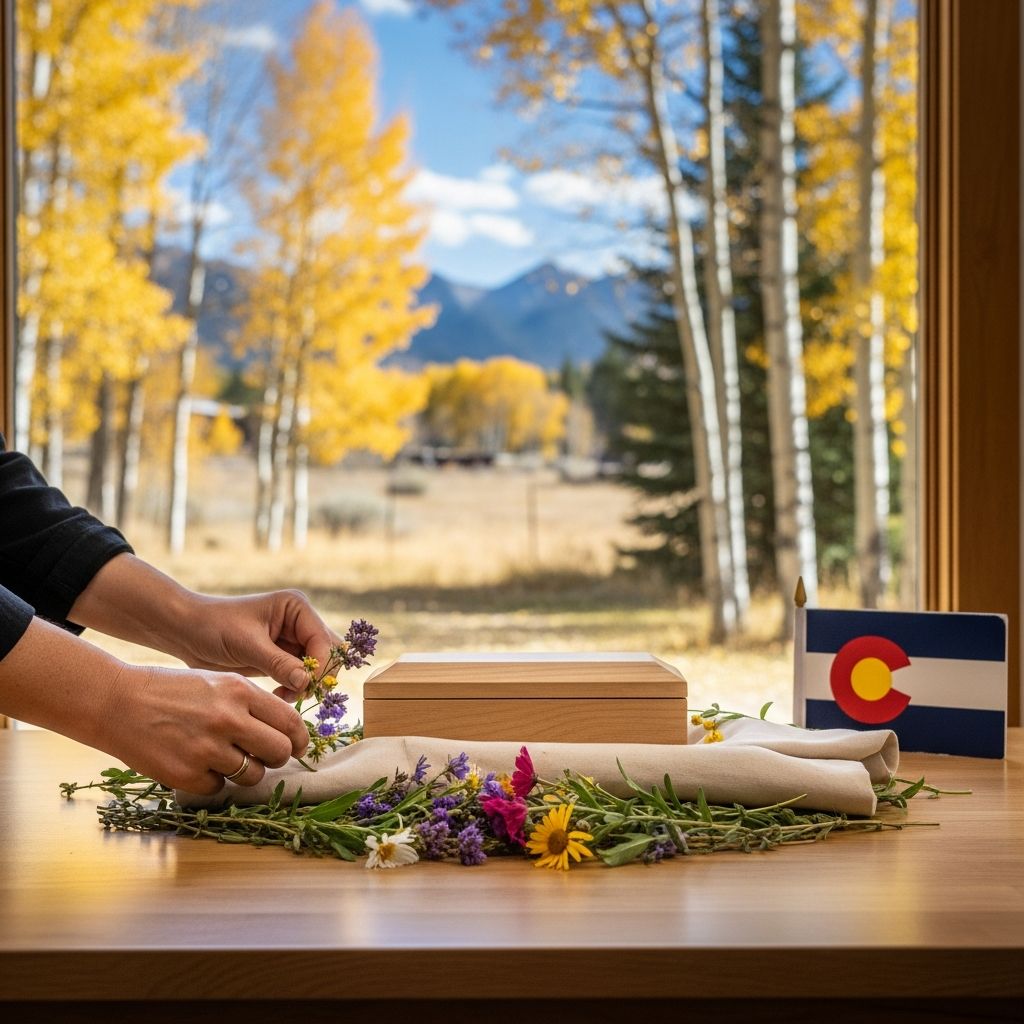
Understanding Colorado’s Framework for Home-Based Funeral Care
Colorado maintains a comprehensive legal structure governing how families and individuals may care for their deceased loved ones outside of traditional funeral establishments. Unlike many states with restrictive funeral industry regulations, Colorado recognizes certain family rights and religious traditions in managing final disposition. The state’s approach balances public health protections with recognition of cultural and religious practices, while also establishing clear procedural requirements that families must follow to ensure compliance with state law.
The legal foundation for these regulations derives from Colorado Revised Statutes Section 12-135-109 and related administrative codes administered by the Colorado Department of Regulatory Agencies. Recent legislative changes, particularly those implemented through 2024 regulatory updates, have refined these requirements to establish clearer guidelines for both traditional funeral establishments and family-directed care arrangements.
Religious and Cultural Exemptions in Colorado Law
Colorado law explicitly recognizes the rights of religious communities to manage the final disposition of their members’ remains according to their own customs and practices. This exemption is foundational to the state’s approach and reflects respect for diverse spiritual traditions.
Under Colorado statutes, members and followers of any religious sect may continue to provide memorial services, prepare bodies, and arrange for final disposition free from standard regulatory requirements, provided they adhere to specific timelines. This exemption applies to religious organizations across all faith traditions—including but not limited to Jewish burial societies, Muslim funeral practices, Christian denominations with specific burial traditions, and indigenous spiritual practices.
The religious exemption does not eliminate all state involvement; rather, it creates a parallel pathway that still requires adherence to public health timelines and authorization procedures. Religious organizations exercising this exemption must still obtain proper authorization for final disposition and comply with timeframe requirements, but they are relieved from standard funeral establishment operational rules.
Timeline Requirements for Body Disposition
Colorado establishes a two-tier timeline system for the disposition of human remains, with different deadlines depending on the preservation method selected:
- Initial preservation window: All human remains must be refrigerated, frozen, embalmed, interred, cremated, or the natural reduction process must begin within seven days after death.
- Extended timeline: If a body is refrigerated or embalmed, it must be interred, frozen, or cremated within thirty days after death, or the natural reduction process must commence within thirty days.
These timelines provide families with reasonable periods to make arrangements while ensuring remains are not left indefinitely without proper preservation or disposition. The seven-day initial requirement is relatively generous compared to many states, allowing families adequate time to notify relatives, make decisions, and arrange services.
The Colorado coroner may authorize exceptions to the thirty-day timeline, but only when the applicant can demonstrate a legitimate delay caused by unforeseen, uncontrollable circumstances or an ongoing criminal investigation. Requests for extensions must be approved in writing, and the coroner has discretion to deny extensions that lack sufficient justification.
Authorization and Permit Requirements
No body may be buried, cremated, placed in a vault or tomb, or otherwise disposed of—and no body may be removed from Colorado—until authorization for final disposition has been obtained, completed, and approved. This requirement applies universally, regardless of whether a family is working with a funeral establishment or managing arrangements independently.
The person assuming custody of the deceased, whether a funeral director or family member acting in that capacity, must secure this authorization before any disposition occurs. The coroner or the coroner’s designee issues authorization documentation that includes specific requirements and conditions for final disposition.
Information Required in Authorization Documents
Authorization for final disposition must include comprehensive information to ensure proper tracking and compliance:
- Full name and identifying information of the deceased
- Date, time, and location of death
- Cause of death as determined by attending physician or coroner
- Name and ownership details of the property where interment will occur (if applicable)
- Legal description of private property used for burial
- Reception number from the death certificate
- Description of the disposition method (burial, cremation, etc.)
Private Property Burial Requirements
Families choosing to bury a deceased relative on private property must comply with specific registration and documentation requirements. Colorado law requires that property owners record the burial within thirty days after interment occurs. This registration process creates an official record of the burial location and ensures future property owners are aware of the burial site.
The burial record must include the legal description of the property, the names of all property owners, and other identifying information specified in state regulations. This requirement serves important purposes: it prevents accidental disturbance of remains during future property development, provides documentation for genealogical records, and ensures public health tracking of burial locations.
Families considering home burial should understand that this creates a permanent restriction on the property. Future sale, development, or property division must account for the burial site, and the documentation follows the property indefinitely.
Restrictions on Casket and Container Requirements
Colorado law provides important consumer protections regarding casket and container requirements. It is unlawful in Colorado for any funeral establishment or person handling remains to refuse to accept human remains that are not in a casket, or to require that remains be placed in a casket. This prohibition extends to situations where families express a preference for direct cremation—funeral establishments cannot tell families that a casket is required for such arrangements.
These restrictions protect families’ rights to choose alternative containers, eco-friendly options, or simple arrangements without being coerced into purchasing unnecessary caskets. Families may opt for direct cremation with an alternative container, and some funeral establishments offer casket rentals for viewings followed by cremation, providing flexibility and cost savings.
Custody, Chain of Custody, and Identification Requirements
When remains are transferred between locations or handlers, Colorado requires documentation of a proper chain of custody. This requirement applies particularly to funeral homes and crematories, which must maintain detailed records of all transfers of human remains from the time they take custody until release.
Positive identification of remains must be established through identification markers or tags affixed by the coroner’s office or authorized personnel. For cremated remains, identification must be certified and documented in crematory records. This safeguard prevents mix-ups and ensures that the correct remains are released to the appropriate family member or representative.
Funeral homes and crematories are responsible for identifying and tracking remains throughout their custody and making every reasonable effort to fulfill the wishes of the person with the right of final disposition. Custody terminates only when cremated or prepared remains are properly released to the person or representative with right of final disposition.
Embalming and Preservation Standards
When funeral establishments take custody of remains, Colorado requires that bodies be embalmed, refrigerated, cremated, buried, or entombed within 24 hours after taking custody. These establishments must maintain appropriate sanitary conditions and follow specific handling protocols throughout the disposition process.
For families managing home funerals, the same timeline applies—bodies must be placed in preservation within the initial seven-day window. Families typically accomplish this through refrigeration at home, dry ice, or embalming services obtained from licensed practitioners.
Contagious Disease Protocols and Public Health Overrides
Colorado’s Department of Public Health and Environment, the State Board of Health, or local health departments may issue orders overriding standard disposition timelines when there is evidence that remains contained a serious contagious disease. Such orders protect public health by requiring accelerated disposition or imposing additional handling restrictions.
These public health interventions are relatively rare but represent an important exception to otherwise inflexible timelines. Families would be notified of such requirements by health authorities, and compliance is mandatory regardless of personal or religious preferences.
Record Retention and Documentation Requirements
Funeral homes must retain all documents and records concerning final disposition for at least seven years after the disposition occurs. Crematories must maintain permanent records of each cremation at the facility. These record-keeping requirements ensure that disposition information remains accessible for legal, genealogical, and administrative purposes.
For families handling home funerals, while formal record retention requirements may not apply as strictly, maintaining documentation of the death certificate, authorization papers, and burial records is advisable for property and estate purposes.
Recent Legislative Changes and 2026 Regulatory Updates
Colorado significantly reformed its funeral industry regulations in 2024 through the passage of legislation addressing concerns about funeral home operations and consumer protection. House Bill 24-1173 created new licensure structures for mortuary science practitioners, funeral directors, embalmers, and cremationists, implementing reforms that take effect in 2026.
These updates establish clearer professional standards, enhance oversight mechanisms, and provide additional consumer protections. Families planning home funerals should remain aware of these evolving requirements and consult current resources to ensure compliance with the most recent regulatory framework.
Disinterment and Reinterment Procedures
If circumstances require that a body be removed from a burial site for reburial elsewhere, Colorado requires authorization for both disinterment and reinterment. This requirement prevents unauthorized disturbance of burial sites and ensures proper documentation when remains are relocated.
The coroner must approve disinterment requests, and families must provide legitimate justification for the need to relocate remains. Once approved, a new authorization for reinterment at the new location must be obtained before the body is placed in the ground again.
Obtaining Authorization and Working with County Officials
Families pursuing home funerals must initiate contact with their county coroner’s office or the designated death certificate authorized office in their county. These officials guide families through the authorization process, explain requirements, and ensure that all paperwork is properly completed.
The process typically involves submitting the death certificate (or a verification of death document certified by the state registrar), completing authorization forms, providing information about the chosen disposition method, and receiving approval before proceeding with burial, cremation, or other final arrangements.
Different Colorado counties may have slightly different procedures, though the statutory requirements remain consistent statewide. Contacting the coroner’s office early in the process helps families understand local procedures and timelines.
Frequently Asked Questions About Colorado Home Funerals
Q: Can I legally bury a family member on my own property in Colorado?
A: Yes, Colorado permits home burial on private property provided you obtain authorization for final disposition, comply with the seven-day preservation timeline, and register the burial with the county within thirty days. You should verify that local zoning or homeowners association restrictions do not prohibit burials.
Q: What happens if I cannot meet the seven-day timeline for disposition?
A: You must place the body in preservation (refrigeration, freezing, or embalming) within seven days. This extends your timeline to thirty days if the body is refrigerated or embalmed. Extensions beyond thirty days require written approval from the coroner, who may grant exceptions only for legitimate delays caused by uncontrollable circumstances or criminal investigations.
Q: Does Colorado require embalming for home funerals?
A: No. Colorado does not require embalming. You may use refrigeration, dry ice, or other preservation methods. You must simply ensure the body is preserved or disposed of according to the timeline requirements.
Q: Can funeral homes force me to buy a casket?
A: No. Colorado law explicitly prohibits funeral establishments from refusing remains that are not in a casket or requiring caskets when cremation is planned. You have the right to choose alternative containers or direct cremation without a casket.
Q: Are there religious exemptions to Colorado’s funeral regulations?
A: Yes. Members of religious sects may manage final disposition according to their traditions without complying with standard funeral establishment regulations, though they must still meet preservation timelines and obtain authorization for final disposition.
Q: What records must I keep if I arrange a home funeral?
A: Maintain copies of the death certificate, authorization for final disposition, and burial registration documents (if applicable). These documents protect you legally and provide necessary documentation for property and estate matters.
References
- Colorado Revised Statutes Section 12-135-109 – Final Disposition of Human Remains — Colorado General Assembly. Accessed via https://web.sos.state.co.us/CCR/GenerateRulePdf.do
- Code of Colorado Regulations 4 CCR 742-1 – Funeral Home and Crematory Registration Rules — Office of Funeral Home and Crematory Registration, Colorado Department of Regulatory Agencies. https://www.sos.state.co.us/CCR/GenerateRulePdf.do?ruleVersionId=8231
- Laws Concerning Funeral Homes, Crematories, Organ and Tissue Donations — Colorado General Assembly Legislative Services. https://content.leg.colorado.gov/sites/default/files/finallaws_concerning_funeral_homescrematoriesorgan_and_tissue_donations1-accessible.pdf
- Colorado Funeral Consumer Guide 2024 — New Jersey State Funeral Directors Association. https://web.njsfda.org/public/Portals/0/Production/Forum/2024/Colorado_consumer_guide.pdf
- Colorado Funeral Home and Mortuary Science Regulations — Colorado Department of Regulatory Agencies, Division of Professions and Occupations. https://dpo.colorado.gov/MortuaryScience
- House Bill 24-1173: Mortuary Science Practitioner Licensure — Colorado General Assembly, 2024 Legislative Session.
Similar Articles








Read full bio of Sneha Tete


