
Colorado Civil Statutes of Limitations Explained
Understand the key Colorado civil deadlines that can make or break your right to sue and protect your legal claims.
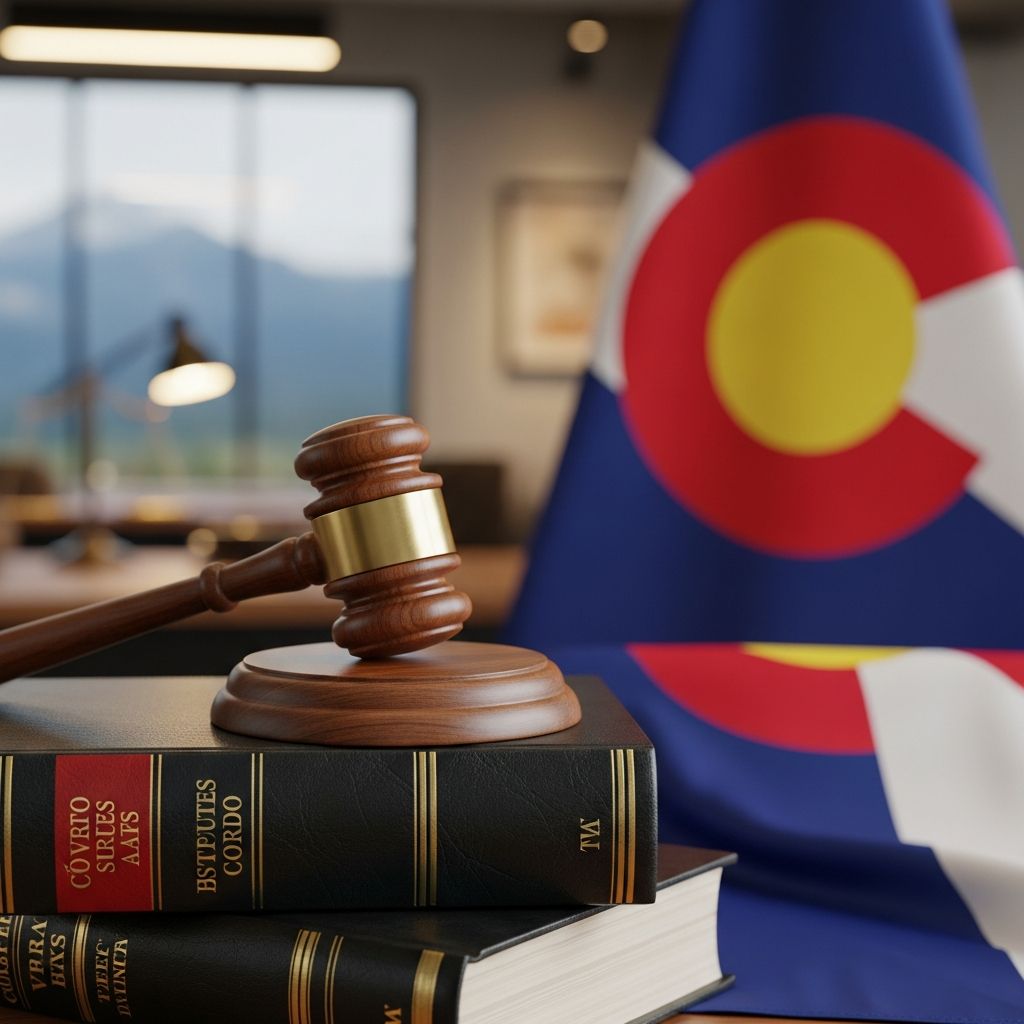
Colorado law places strict time limits on when you can file a civil lawsuit. These rules, called statutes of limitations, control how long you have to bring claims for injuries, contract disputes, property loss, and many other civil matters.
Missing a deadline can permanently destroy an otherwise valid claim, so understanding these time frames is essential if you have been harmed or are involved in a dispute.
What Is a Statute of Limitations?
A statute of limitations is a law that sets the maximum amount of time after an event that legal proceedings may be started based on that event. In Colorado, these deadlines are primarily found in Title 13, Article 80 of the Colorado Revised Statutes, including general two-year limitations and specialized rules for other claims.
Why These Deadlines Exist
- Fairness to defendants – Evidence becomes stale, memories fade, and witnesses move or forget details over time.
- Certainty and finality – People and businesses should not face indefinite risk of being sued over old events.
- Judicial efficiency – Courts function better when cases are brought while facts are relatively fresh.
Once a statute of limitations expires, the defendant can raise it as an affirmative defense, asking the court to dismiss the case because it is time-barred.
How Colorado Calculates Time: Accrual of the Claim
In Colorado, most civil statutes of limitations start running when the claim accrues—the point when the law considers you to have a complete claim.
Accrual Basics
- For many injury and tort claims, accrual occurs on the date of the injury or when the wrongful act causes damage.
- For hidden injuries or fraud, the clock often starts when the harm is, or reasonably should have been, discovered with due diligence.
- For contracts, accrual generally happens at the time of the breach, not when negotiations break down later.
Because accrual can be complex (especially in professional malpractice, fraud, or latent injury cases), it is common to litigate when exactly a claim should be considered to have started.
Overview Table: Common Colorado Civil Limitation Periods
The exact period depends on the type of claim and sometimes on special circumstances. Below is a high-level summary of frequent Colorado civil deadlines; specific statutes and exceptions may adjust these time frames.
| Type of Civil Claim | Typical Deadline in Colorado | General Starting Point |
|---|---|---|
| Assault, battery, false imprisonment, defamation and some other intentional torts | 1 year | Date of act or when reasonably discovered |
| Most tort claims (general personal injury, negligence, property damage not involving vehicles) | 2 years | Date of injury or accrual |
| Motor vehicle-related personal injury and property damage | 3 years | Date of crash or injury |
| Wrongful death (standard cases) | 2 years | Date of death |
| Written or oral contract breach | Generally 3 years | Date of breach |
| Certain liquidated debts and some contract-related monetary claims | Up to 6 years | Date of default or breach |
| Many professional malpractice claims | 2 years (often with outer limit) | Discovery of malpractice or when reasonably discovered |
Note: This table is a simplified overview. Always consult the controlling statute or a qualified lawyer for a precise analysis.
Key Colorado Time Limits by Claim Category
1. Intentional Torts and Certain Short-Deadline Claims (Often 1 Year)
Colorado imposes relatively short time frames for claims involving deliberate acts, reputational harm, and some actions involving public officials.
- Assault and battery
- False imprisonment and false arrest
- Libel and slander (defamation)
- Certain actions involving law enforcement or officers
These claims generally must be filed within one year of accrual. Because they often arise from emotionally charged events, it is easy for people to focus on immediate fallout and accidentally miss the legal deadline.
2. General Tort and Personal Injury Claims (Usually 2 Years)
Colorado’s general limitation for many civil wrongs is two years from accrual, regardless of the specific legal theory used.
This broad category typically covers:
- Negligence (slip and fall, non-vehicle accidents)
- Trespass and property damage (not tied to vehicle use)
- Malicious prosecution and abuse of process
- Outrageous conduct or intentional infliction of emotional distress
- Interference with contractual or business relationships
- Many claims against fiduciaries (such as certain breach of trust claims)
Colorado’s two-year statute is phrased broadly to capture nearly all tort actions where no more specific limitation period is provided.
3. Motor Vehicle Injury and Property Claims (3 Years)
Unlike many other states, Colorado provides a longer deadline—typically three years—for injuries and property damage arising out of the use or operation of a motor vehicle.
- Car, truck, motorcycle, and bicycle crashes
- Pedestrian accidents involving vehicles
- Vehicle-caused damage to property
However, related claims—such as uninsured/underinsured motorist coverage disputes or claims against government entities—may involve additional shorter notice requirements and separate limitations periods.
Special Rules, Tolling, and Extensions
Colorado law provides situations in which the limitations period may be paused (“tolled”) or extended. These rules are technical and vary based on claim type.
Legal Disabilities and Minors
- Individuals who are legally minors or deemed mentally incompetent at the time of the injury often benefit from extended time to sue.
- In many cases, the statute does not start, or is tolled, until the disability ends (for example, when a minor turns 18) or a representative is appointed.
Fraud, Concealment, and Discovery
- Where the defendant fraudulently conceals wrongdoing, the deadline may run from the date the fraud was or should have been discovered through reasonable diligence.
- Claims based on fraud itself often incorporate a discovery rule so that victims have time to uncover complex or hidden schemes.
Practical Tips to Protect Your Rights
- Document events early – Keep medical records, photographs, contracts, emails, letters, and notes of conversations while events are still fresh.
- Identify the claim type – Pay attention to whether your issue is an injury, contract, property, or professional issue; each category can trigger different timelines.
- Watch for multiple deadlines – A single event (such as a car crash involving a public vehicle) can trigger several overlapping time frames, including special notice requirements.
- Avoid relying on informal promises – Negotiations, apologies, or promises to “make things right” do not usually stop the statute from running unless formal legal agreements are made.
- Consult counsel early – Experienced attorneys often start analysis by identifying all potential limitation periods before deciding strategy.
Frequently Asked Questions About Colorado Civil Deadlines
Q1: What happens if I file my lawsuit after the statute of limitations expires?
If you sue after the deadline has passed, the defendant can raise the statute of limitations as a defense and ask the court to dismiss your case as time-barred. Courts generally enforce these deadlines strictly, even if the underlying claim appears strong.
Q2: Can the statute of limitations be waived or extended by agreement?
Defendants can waive or fail to assert the statute of limitations defense, which allows a case to proceed despite being late. In some situations parties may sign written agreements to toll (temporarily suspend) the limitation period, but these agreements should be drafted carefully and may not be effective in all contexts.
Q3: Do criminal and civil statutes of limitations work the same way in Colorado?
No. Civil statutes of limitations apply to disputes between private parties (such as injury and contract cases), while criminal statutes of limitations govern how long prosecutors have to file charges. Colorado’s criminal limitation periods differ by offense and are found in separate statutes.
Q4: If I am negotiating with an insurance company, does that pause the deadline?
Generally, no. Negotiations with an insurer or the other party rarely stop the statute of limitations clock unless there is a valid tolling agreement or a specific statute that applies. You can be in active settlement talks and still lose your right to sue if you let the deadline pass.
Q5: How do I know which Colorado statute of limitations applies to my case?
Identifying the correct limitation period often requires analyzing:
- The legal theory (negligence, contract, fraud, product liability, professional malpractice, etc.)
- Where and when the harm occurred
- Whether any special statutes (such as governmental immunity or wrongful death provisions) apply
- Whether discovery rules, tolling provisions, or statutes of repose are involved
Because of this complexity, many people seek legal advice soon after an injury or dispute so the relevant deadlines can be accurately identified.
When to Seek Legal Help
Colorado’s civil statutes of limitations are more than technical details—they are often case-dispositive rules that decide whether you can pursue relief at all. The same set of facts can sometimes support several claims, each with different deadlines and procedural requirements. A delay of even a few weeks can mean the difference between a fair recovery and having no remedy at all.
If you believe you have a civil claim in Colorado—whether from an accident, professional error, contract breach, or another dispute—acting promptly and understanding these time limits is critical to preserving your rights.
References
- Colorado Revised Statutes § 13-80-102: General Limitation of Actions – Two Years — State of Colorado (via Justia). 2024. https://law.justia.com/codes/colorado/title-13/limitation-of-actions/article-80/section-13-80-102/
- Statutes of Limitations for Civil Claims in Colorado — JD Porter LLC. 2023. https://www.jdporterlaw.com/285-2/statutes-limitations-civil-claims-colorado/
- Statute of Limitations for Civil Cases in Colorado — Baker Law Group. 2023. https://jbakerlawgroup.com/statute-of-limitations-for-civil-cases-in-colorado/
- Statute of Limitations for Colorado Personal Injury Claims — Wilhite Law Firm. 2023. https://www.wilhitelawfirm.com/blog/statute-of-limitations-colorado-personal-injury-claims/
- Common Litigation Deadlines in Colorado Civil Cases — Baumgartner Law. 2022. https://baumgartnerlaw.com/common-litigation-deadlines-in-colorado-civil-cases/
Similar Articles








Read full bio of Sneha Tete


