
Colorado Burial and Cremation Regulations
Essential guide to Colorado's rules on burials, cremations, permits, and final disposition options for families.
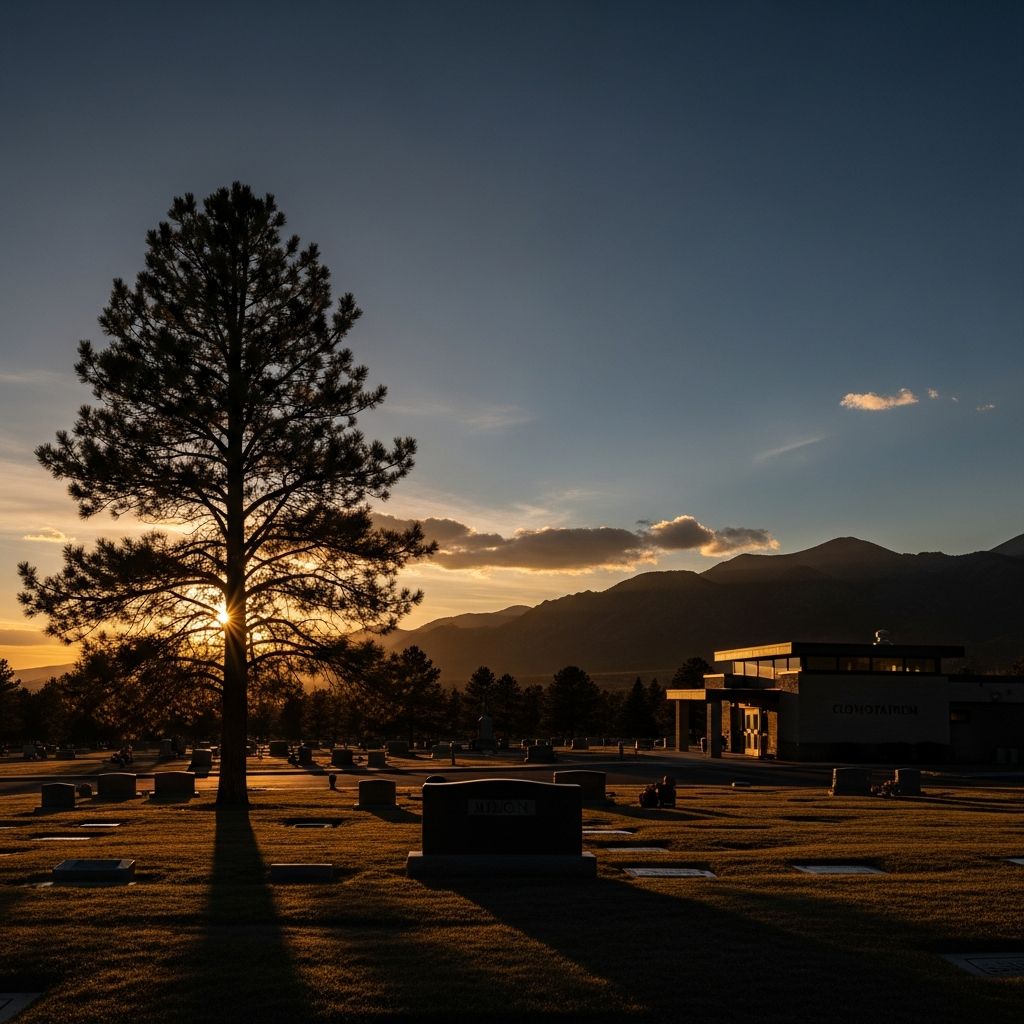
Colorado’s regulations on handling deceased individuals emphasize timely processing, proper authorization, and respect for remains. Families must address death certificates, disposition permits, and specific protocols for burial or cremation to ensure compliance. These rules balance public health, family rights, and operational standards for funeral providers.
Initial Steps After Death: Certificates and Permits
Upon a person’s passing, registering the death certificate with local or state vital records offices is mandatory within 72 hours and prior to any burial or cremation. Typically, funeral homes or those managing remains collect details from relatives to complete and submit this document.
Authorization for disposition, whether burial or cremation, requires approval from a county health unit or coroner. This permit ensures legal handling before final placement occurs.
- Death certificate filing: Within 72 hours, before disposition.
- Disposition permit: Obtained by funeral director or custodian from health authorities.
- Responsible party: Usually the funeral establishment gathers family information.
Time-Sensitive Handling of Remains
Funeral establishments, crematories, or custodians must process human remains—via embalming, refrigeration, cremation, burial, or entombment—within 24 hours of custody. This prevents health risks and mandates sanitary conditions throughout.
If disposition exceeds 24 hours, embalming or refrigeration becomes necessary unless cremation proceeds promptly. No embalming is required otherwise, offering flexibility for direct cremations or burials.
| Time Frame | Required Action | Exceptions |
|---|---|---|
| Within 24 hours of custody | Embalm, refrigerate, cremate, bury, or entomb | None specified |
| After 24 hours | Embalm or refrigerate required if not disposed | Cremation may bypass if immediate |
Burial Options: Cemeteries and Private Property
Most burials occur in designated cemeteries, but Colorado permits interment on private land without statewide prohibitions. Such burials demand recording with the county clerk within 30 days using a specific affidavit form, available from the county recorder or coroner.
Private burials prioritize privacy to minimize odor or particulate issues. The landowner must file the Private Burial Affidavit post-interment, ensuring public records track the site.
- No casket mandated by state law, though cemeteries may impose container rules.
- Private land: Record burial within 30 days; obtain disposition permit first.
- Disinterment: Requires state registrar permit from the Health Department.
Cremation Protocols: Authorization and Processes
A mandatory 24-hour waiting period follows death before cremation, allowing paperwork finalization and permit acquisition. Cremation authorization forms must bear the signature of the immediate next of kin, confirming disposition wishes. Pre-planning permits pre-signing these forms.
Crematories require detailed statements from funeral establishments or authorizing persons, verifying decedent identity, death date, cremation approval, absence of implanted devices, and more. This includes affidavits per Title 15, Article 19, disposition permits, and signatures warranting accuracy.
Human remains must arrive in approved cremation containers: leak-resistant, rigid, combustible, and exclusively for one use. Crematories cannot cremate multiple remains simultaneously without next-of-kin consent for commingling, nor process remains with pacemakers or implants—responsibility falls on the authorizing party if undisclosed.
Identification and Processing Safeguards
Tagging systems identify remains pre-cremation; tags stay by the chamber until completion. Post-cremation, all recoverable cremains and residue are processed, placed in marked temporary containers or urns. Excess cremains go into secondary containers, with disclosures on temporary storage limits. Shipping demands tracked methods with receipts.
Records: Crematories maintain permanent logs of each cremation for seven years; funeral homes retain disposition documents similarly.
Handling Cremated Remains (Cremains)
Colorado imposes no restrictions on cremains disposition, allowing keepsakes, burial, scattering, or other uses at family discretion. Commingling requires written next-of-kin approval, except in dedicated cemetery areas.
At-sea scattering follows federal Clean Water Act: at least three nautical miles offshore, biodegradable containers only, with EPA notification within 30 days. Beaches and wading pools are prohibited.
- Release: Promptly to authorized recipients.
- Storage: Temporary containers noted as non-permanent.
- Commingling: Authorized in writing or in consecrated grounds.
Alternative Disposition Methods
Colorado pioneered alkaline hydrolysis (aquamation) by broadening ‘cremation’ to encompass reduction via non-heat methods, processing remains into bone-like elements for urn placement. This eco-friendly option aligns with evolving preferences.
Family Rights and Order of Priority
The ‘right of final disposition’ prioritizes spouses, adult children, parents, siblings, and others per statute, ensuring clear decision-making. Pre-need directives can designate preferences, easing burdens.
Frequently Asked Questions
Is embalming required in Colorado before burial or cremation?
No, except if disposition delays beyond 24 hours without refrigeration. Direct cremations often skip it entirely.
Can I bury someone on my private property in Colorado?
Yes, with a disposition permit and recording the burial affidavit in the county within 30 days.
What is the waiting period for cremation?
24 hours after death, plus time for permits and paperwork.
Do I need a casket for burial or cremation?
No state requirement; cemeteries may specify for burials, and alternative containers suffice for cremation.
How should cremains be scattered at sea?
Three nautical miles from shore, notify EPA within 30 days, use decomposable containers.
Who authorizes cremation if there’s no will?
Next of kin in statutory order: spouse, adult children, etc., via signed statement.
Practical Advice for Families
Consult licensed professionals early; pre-planning clarifies wishes via directives. Verify provider compliance with seven-year record retention and sanitary standards. For private burials, contact county offices promptly.
Understanding these laws empowers informed choices, honoring loved ones while meeting legal obligations. Changes may occur; check official sources for updates.
References
- Colorado Revised Statutes Section 12-54-307 (2018) — Justia Law. 2018. https://law.justia.com/codes/colorado/2018/title-12/general-continued/article-54/part-3/section-12-54-307/
- Burial and Cremation Laws in Colorado — Nolo. 2024. https://www.nolo.com/legal-encyclopedia/burial-cremation-laws-colorado.html
- Laws Concerning Funeral Homes, Crematories, and Organ and Tissue Donations — Colorado Legislative Council. Accessed 2026. https://content.leg.colorado.gov/sites/default/files/finallaws_concerning_funeral_homescrematoriesorgan_and_tissue_donations1-accessible.pdf
- Arranging a Funeral or Cremation Service in Colorado — US Funerals. Accessed 2026. https://www.us-funerals.com/funeral-guide/colorado/
- Colorado Funeral Consumers Alliance Guide — Funeral Consumers Alliance. 2016-06. https://funerals.org/wp-content/uploads/2016/06/CO.pdf
- Private Land Burial Standards — Delta County, CO Official Website. Accessed 2026. https://www.deltacountyco.gov/855/Private-Land-Burial-Standards
Similar Articles








Read full bio of Sneha Tete


