
Color Trademarks: Owning Iconic Shades in Branding
Discover how brands like Louboutin protect signature colors as trademarks, from legal tests to real-world victories and strategic tips.
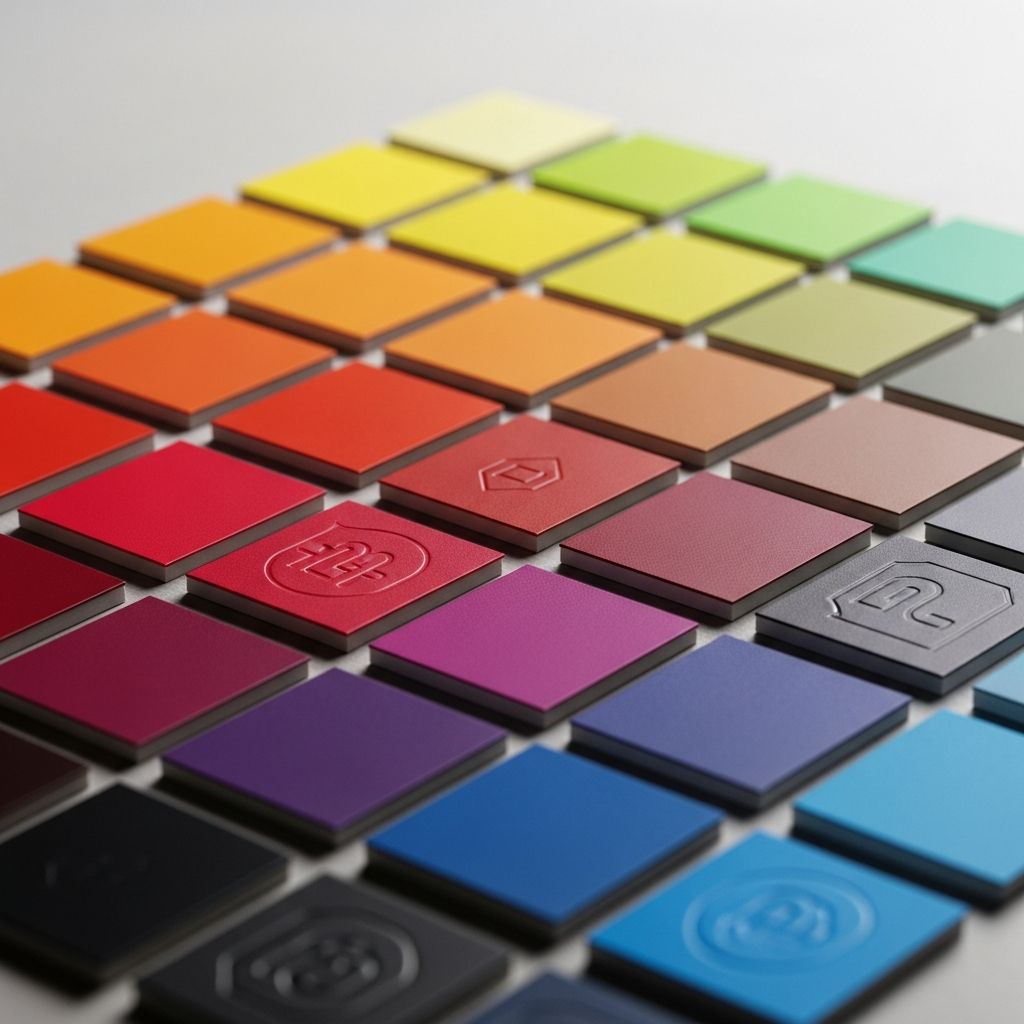
Brands worldwide leverage distinctive colors to create instant recognition and emotional connections with consumers. In the United States, color trademarks offer powerful protection for these visual signatures, allowing companies to claim exclusive rights to specific hues tied to their products or services. This form of intellectual property has evolved significantly, enabling luxury fashion houses, delivery giants, and even insulation manufacturers to safeguard their palettes from copycats.
The Legal Foundation of Color as a Trademark
The cornerstone of U.S. trademark law, the Lanham Act of 1946, defines trademarks broadly as any word, name, symbol, or device used to identify and distinguish goods from those of others. While colors were not explicitly mentioned, courts have interpreted this expansively. A pivotal moment came in 1995 with the Supreme Court’s decision in Qualitex Co. v. Jacobson Products Co., where green-gold press pads were deemed protectable. The Court ruled that no special rule bars color alone from trademark status if it meets standard criteria.
This ruling resolved a circuit split, affirming that colors can serve as source identifiers. Prior confusion among appeals courts had left businesses uncertain, but Qualitex established that hues qualify when they acquire distinctiveness through use in commerce. Today, the U.S. Patent and Trademark Office (USPTO) routinely examines color marks, requiring precise Pantone specifications and evidence of consumer association.
Essential Requirements for Trademarking a Color
Securing a color trademark demands overcoming several hurdles. Unlike inherently distinctive logos, colors start as non-distinctive and must prove their worth through rigorous tests.
- Secondary Meaning: The color must link in consumers’ minds to a specific brand. This requires substantial evidence like surveys, sales data, advertising spend, and media coverage showing recognition. For instance, long-term exclusive use builds this association over time.
- Non-Functionality: The hue cannot serve a practical purpose that impacts product quality, cost, or performance. If competitors need the color to compete effectively, it’s off-limits. Courts assess whether alternatives exist without economic disadvantage.
- Distinctiveness: It must differentiate the product from rivals, not be commonplace or generic in the industry.
- Specific Application: Protection applies only to particular goods or services, not the color universally.
These criteria ensure trademarks promote fair competition while rewarding innovative branding.
Iconic Examples of Successful Color Trademarks
Several brands have masterfully turned colors into assets, demonstrating the commercial power of protected palettes.
| Brand | Color (Pantone) | Product/Service | Year Registered |
|---|---|---|---|
| Christian Louboutin | Red Sole (Pantone 18-1663 TPX) | High-heeled shoes | 2012 (upheld) |
| Tiffany & Co. | Tiffany Blue (1837) | Jewelry boxes/packaging | 1998 |
| UPS | Pullman Brown | Delivery vehicles/packages | 1998 |
| Owens Corning | Pink | Fiberglass insulation | Early adopter |
| Reese’s | Orange | Peanut butter cups | Registered |
Louboutin’s fiery red soles, applied exclusively to outsoles of high heels, exemplify clever positioning. In 2012, the Second Circuit upheld this as a non-functional design element, distinguishing it from shoe uppers where red might serve aesthetic or functional roles. Tiffany’s robin-egg blue evokes luxury, while UPS’s brown signals reliability across its fleet.
These cases highlight how precise application—sole vs. entire shoe—avoids functionality pitfalls. Pink insulation was the first color trademark, proving even unconventional products can claim hues.
Navigating Functionality: The Biggest Hurdle
Functionality remains the primary barrier. A dark green shade for medical gloves was recently denied registration because it was deemed generic and standardized in healthcare, not a source identifier. Similarly, lawnmower colors can’t be claimed if they aid visibility or durability.
Courts apply a multi-factor test: Is the color essential to the product? Does it raise costs for rivals? Are aesthetic alternatives available? In Louboutin’s battle against Yves Saint Laurent, the court ruled the red sole functional on all-red shoes but protectable on contrasting black uppers, preserving competition while guarding the signature look.
Strategic tip: Limit claims to specific product parts. Broad claims risk rejection, as seen in failed attempts for entire product colors where industry norms prevail.
Steps to Register a Color Trademark with the USPTO
Pursuing protection involves a structured process, demanding more documentation than standard marks.
- Conduct Clearance Search: Search USPTO databases and common law uses to avoid conflicts.
- Gather Evidence: Compile proof of secondary meaning (e.g., consumer surveys showing 60%+ recognition) and non-functionality affidavits.
- Prepare Application: File as a “special form” mark with JPEG specimen, exact color claim (e.g., Pantone code), and description of color location. Standard character marks offer broader protection without color limits.
- USPTO Examination: Examiners review for refusals; respond to office actions with rebuttals.
- Publication and Opposition: Survive 30-day opposition window.
- Registration and Maintenance: Use ® symbol; file declarations of use at 5-6 years and renew every 10.
Color applications can’t be amended to change hues post-filing, so precision is key. Fees start at $250-350 per class, plus attorney costs for evidence.
Pros and Cons of Pursuing Color Protection
While potent, color trademarks have trade-offs.
- Advantages:
- Monopoly on signature look, deterring knockoffs.
- Enhances brand value; Louboutin sells red-sole dreams.
- Federal registration boosts enforcement via customs seizures.
- Disadvantages:
- Narrow scope: Only protects claimed color on specified goods.
- High proof burden; many applications fail.
- Limits flexibility: Can’t easily switch shades without reapplying.
- Enforcement costs: Monitoring infringers is ongoing.
Black-and-white filings protect logos in any color, offering versatility. Color claims suit when hue is core to identity.
International Perspectives and Emerging Trends
Color protection varies globally. The EU requires graphical representation and acquired distinctiveness. China recognizes colors if non-functional. Brands like Louboutin pursue multi-jurisdictional filings.
Trends include combinations (e.g., Paisley Park’s purple for music) and digital applications like app interfaces. AI-driven color analysis aids surveys, but genericness challenges persist in saturated industries.
Frequently Asked Questions
Can any color be trademarked?
No, it must acquire secondary meaning and be non-functional. Common industry colors like green gloves fail.
How long does color trademark protection last?
Indefinitely with continuous use and maintenance filings every 5-10 years.
Is Louboutin’s red sole protected on all shoes?
Only on shoes with contrasting uppers; all-red shoes allow red soles for functionality.
What’s cheaper: color or standard trademark?
Standard marks are simpler and broader; color requires extra evidence, increasing costs.
Can I trademark a color combination?
Yes, if it meets criteria, like specific multi-hue patterns.
Strategic Advice for Brands Eyeing Color Protection
Before investing, audit your color’s market penetration. Build secondary meaning via consistent use, packaging, and marketing. Consult IP attorneys early to assess viability. In fashion, like Louboutin, position color as ornamental flair, not utility.
Monitor rivals; enforce promptly to sustain strength. For startups, prioritize standard marks, adding color later. Ultimately, a protected color cements legacy, turning shade into shareholder value.
References
- Can a Company “Own” a Color? A Look at Trademark Protections — Purdue Global Law School. 2023-05-15. https://www.purduegloballawschool.edu/blog/news/trademark-protections-for-colors
- Can You Trademark a Color? — IPWatchdog. 2018-07-14. https://ipwatchdog.com/2018/07/14/can-you-trademark-a-color/
- Claiming Color in a Trademark Application — Wilson Legal Group. 2023-01-10. https://www.wilsonlegalgroup.com/blogs/trademark-law/claiming-color-in-a-trademark-application
- Can a corporation “own” a color? — The Hustle. 2022-11-20. https://thehustle.co/can-a-corporation-trademark-a-color
- Color as a Trademark? Not Always — Renner Otto. 2024-03-05. https://www.rennerotto.com/resources/blog/color-as-a-trademark-not-always
Similar Articles








Read full bio of Sneha Tete


